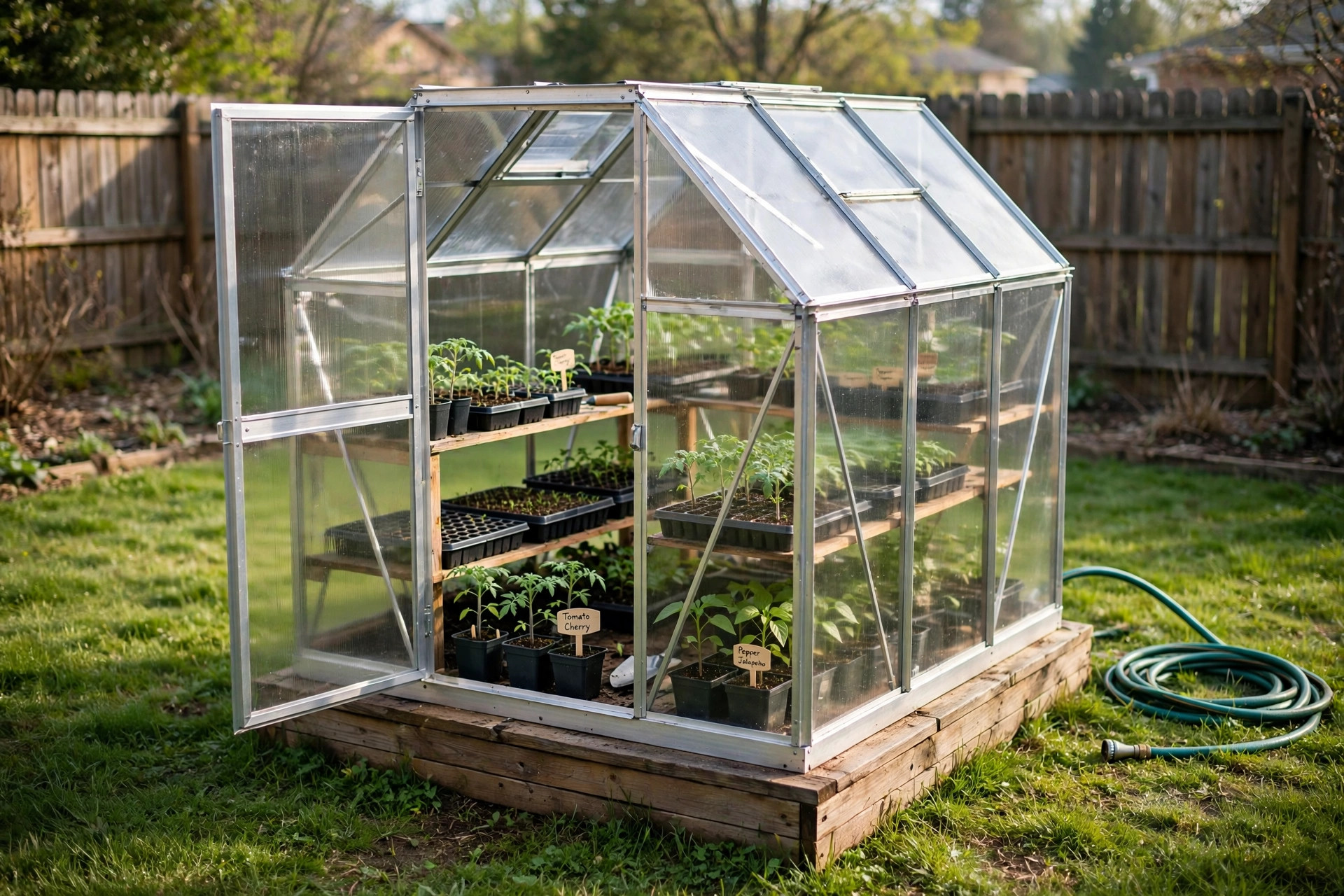
This greenhouse for backyard beginners guide is written for the person who has never owned a greenhouse before. You may have grown tomatoes in open beds. You may have kept houseplants on a windowsill. Now you want a covered space where plants grow under your care through spring, summer, and even winter. A greenhouse makes this possible. It is a structure of clear panels and a light frame. It traps the warmth of the sun and shields plants from wind, frost, and heavy rain. With one, you can start seeds weeks earlier, root cuttings in comfort, and keep tender plants alive through cold nights. This guide walks through every step in plain terms. It covers why a greenhouse helps, how to choose one, what it costs, how to care for it, and how to keep it safe. By the end, you will know exactly what to buy and what to do.
Why a Backyard Greenhouse Matters
A greenhouse changes what you can grow in your yard. In open beds, the season sets the rules. Frost ends the work in fall and delays it in spring. Inside a greenhouse, you set the rules. Air stays a few degrees warmer than the air outside. Light passes through the panels all day. Rain stays off the leaves, which keeps many leaf diseases away. These small changes add up to big results.
A beginner sees the difference first in spring. Seeds started under cover sprout in days instead of weeks. Young plants grow strong before the weather turns warm enough for the open garden. When warm days arrive, you move hardy transplants outside with a head start. Many growers pair this step with a seedling heat mat for slow crops, then finish them under the greenhouse roof. The result is an earlier harvest and healthier plants.
A greenhouse also saves money over time. A packet of seeds costs far less than a tray of store-bought transplants. When you start your own seeds under cover, one packet can fill your whole garden and your neighbors’ too. Cuttings from favorite plants root well in the steady air of a greenhouse, so you can make new plants for free. The Gardener’s Supply Company offers greenhouse kits for beginners that show how small a setup can be and still pay for itself in one season.
There is a quieter benefit as well. A greenhouse is a pleasant place to work on cold days. The air inside smells of soil and green leaves. Many owners say they visit theirs each morning with coffee in hand, checking new sprouts the way others read the paper. Gardening becomes a daily habit instead of a weekend chore. That habit builds skill fast. Within one year, a beginner knows more about plant care than most people learn in five years of casual backyard gardening. The Spruce provides greenhouse gardening basics for readers who want a second view of these early lessons.
How to Choose Your First Greenhouse: Greenhouse for Backyard Beginners Guide
Choosing sounds hard, but it comes down to three questions: where will it sit, how big should it be, and what will you grow.
Where to Place It
Put the greenhouse where it gets the most sun. Six hours of direct light is the minimum for most crops. Morning sun is best because it dries the leaves early and warms the air quickly. Avoid low spots where cold air settles and water pools. Keep it close to a water source and to your back door. You will visit daily, and a long walk in the rain discourages good care.
Check local rules before you build. Some towns treat a greenhouse as a shed and need a permit above a certain size. A quick call to the building office saves trouble later. Also think about wind. A sheltered spot near a fence or hedge loses less heat than an open hilltop. If your only site is windy, plan to anchor the frame well.
What Size to Pick
Beginners almost always buy too small. A six by eight foot greenhouse sounds fine on paper, but once benches go in, little floor space remains. An eight by ten foot model holds a comfortable work area and two benches of plants. Measure your yard and draw the footprint with a garden hose so you can see the true size. Walk around it. Make sure doors can swing open and paths stay clear.
What You Plan to Grow
List your crops. Tomatoes, peppers, and cucumbers need tall headroom and strong frames. Seed trays and herbs fit fine on simple shelves. If you want to overwinter citrus or tropical plants, you need a heater and tight seals. Match the structure to the plants, not the other way around.
Types of Beginner Greenhouses
Three types suit most beginners: lean-to, freestanding kit, and mini or pop-up.
A lean-to greenhouse stands against the wall of a house or garage. It uses the wall for support and for heat. The wall holds warmth from the house and shares it with the plants at night. Lean-to models cost less than freestanding ones and need less yard space. They suit small yards well. The main limit is that they get sun from only one side.
A freestanding kit is the classic choice. It arrives in boxes with a metal or wood frame and clear panels. Most beginners pick a kit because the parts fit together with simple tools. Kits come in glass or polycarbonate. Glass looks beautiful and lasts for decades, but it costs more and breaks if struck. Polycarbonate panels are light, tough, and keep heat in well. Many first greenhouses use twin-wall polycarbonate for this reason.
A mini or pop-up greenhouse is the smallest option. It may be a walk-in tent of clear plastic or a shelf unit with a plastic cover. These cost little and set up in an hour. They work for seed starting and for a few pots of herbs. They will not last as many years as a framed kit, and they blow over in strong wind unless staked down. Still, a mini unit is a fine first step if your budget is tight or you want to test the habit before you spend more.
Frame materials also matter. Aluminum frames resist rust and need almost no care. Wood frames look warm and natural but need paint or sealant every few years. Steel is strong but heavy. For most beginners, an aluminum frame with polycarbonate panels is the easiest mix of price, weight, and care.
Cost and Price Guide
A backyard greenhouse can cost less than a weekend trip or more than a used car. The range is wide, so it helps to see the tiers.
Mini pop-up units and small shelf greenhouses cost between fifty and two hundred dollars. They cover a few plants and last one to three seasons. Lean-to kits in small sizes run from three hundred to nine hundred dollars. Mid-size freestanding kits, the eight by ten foot models most beginners buy, run from six hundred to two thousand dollars. Large glass greenhouses with wood frames can pass five thousand dollars.
Add the hidden costs to your plan. A base or foundation keeps the frame level and dry. Simple timber bases cost little; concrete pads cost more. Family Handyman covers building a greenhouse foundation step by step for the home builder. A small heater for cold nights runs fifty to two hundred dollars, plus the cost of power. Benches, shelves, a thermometer, a hose, and a fan add another one to two hundred dollars. Soil, pots, and seeds are ongoing costs of each season.
Independent testers review some of these products each year. Consumer Reports publishes independent product tests that can help you compare heaters and tools before you buy. Read a few reviews, then choose the greenhouse that fits your yard and your budget. A modest kit used well beats an expensive one left empty.
Care and Upkeep Through the Seasons
A greenhouse needs steady care, but none of it is hard. The main jobs are watering, air flow, cleaning, and watching for pests.
Watering is the first skill to learn. Plants under cover get no rain, so they depend on you. Check soil with your finger each morning. If the top inch is dry, water well. Water early in the day so leaves dry before night. A watering can with a fine rose works for seed trays. For larger setups, drip lines save time and keep water off the leaves. The indoor seed routine is close kin to greenhouse seed care: steady moisture, gentle warmth, and good light. Our seed starting indoor guide covers the routine in detail and pairs well with this article.
Air flow is the second job. On sunny days, a closed greenhouse can reach one hundred degrees in an hour, even in spring. Open vents and doors by mid-morning. Roof vents let hot air rise out. A small fan moves air across the leaves, which strengthens stems and keeps mold away. In summer, shade cloth over the roof cuts the worst heat. Close up again in the late afternoon so warmth carries into the night.
Cleaning is the third job. Algae and soil film build up on panels and block light. Wash panels inside and out each spring with mild soap and water. Sweep floors and scrub benches before each new season. Clean tools after use so disease does not spread from plant to plant. Fiskars sells pruning shears for greenhouse tools that clean up well, and Corona Tools offers harvesting shears built for daily cutting work.
Watch for pests every time you visit. Whiteflies, aphids, and spider mites love the warm air. Check the undersides of leaves. Catching a few pests early beats fighting hundreds later. Sticky traps show what is flying around. A strong spray of water knocks many insects off. Keep the door closed when you are not working so pests and pets stay out.
Winter care is simpler than people expect. If you do not heat the space, let it rest. Clean it well in fall, store pots and tools inside, and close the vents. A cold frame for winter gardening can carry hardy greens through the cold months while the main greenhouse rests. If you do heat, keep nights just above freezing for hardy plants and near fifty degrees for tender ones. Check the heater each evening during cold snaps.
Safety in the Backyard Greenhouse
Greenhouses are safe places when a few rules are followed. First, handle glass with care if your model uses it. Keep a brush and dustpan nearby for broken pieces. Wear gloves when you replace a pane. Second, store chemicals high and locked if children visit. Fertilizers and sprays belong on a shelf out of reach, with labels facing out. Third, watch the heat. Never leave pets or children locked inside on a sunny day. A greenhouse warms faster than a car.
Electrical safety matters too. Heaters, fans, and lights need outdoor-rated cords and outlets with ground fault protection. Keep cords off wet floors. Run them along the frame and down to a raised outlet. Unplug the heater when you clean around it.
Fire safety is simple. Keep fuel, paint, and gas cans in the garage, not in the greenhouse. If you use a propane heater, follow the maker guide word for word and keep a small fire extinguisher by the door. Lowe’s lists thermometers and fans along with safety gear for greenhouse owners. Bob Vila shares ventilation and heating tips that keep both plants and people safe.
Frequently Asked Questions
How much sun does a backyard greenhouse need? Most vegetables need six to eight hours of direct sun each day. Morning sun is the most useful because it warms the space early. If your yard is shaded, pick leafy crops and herbs, which accept less light.
Can I run a greenhouse without electricity? Yes. Many beginners start with no power at all. Passive vents open by heat, water comes from a hose or can, and a thermometer on the wall tells you the temperature. Add a small solar fan later if the air feels still.
What is the cheapest way to heat a small greenhouse? A small electric space heater made for greenhouses is the simplest choice. It costs little and plugs into an outdoor outlet. For short cold snaps, a few large jugs of water absorb day heat and release it at night. Bubble wrap on the inside of the panels adds a layer of insulation for almost nothing.
Do I need a permit for a backyard greenhouse? It depends on your town. Small temporary units usually need nothing. Larger permanent structures may need a permit, especially above one hundred square feet. Call your local building office and ask before you buy.
What should I grow first in my new greenhouse? Start with fast, forgiving crops. Lettuce, radish, and basil sprout quickly and show results in weeks. Tomatoes and peppers reward the extra warmth all summer. Burpee offers seed starting supplies suited to these first crops.
How do I keep the greenhouse cool in summer? Open every vent and door in the morning. Hang shade cloth over the roof. Run a fan for air flow. Water the floor lightly; the damp surface cools the air as it dries. Move heat-loving plants outside and use the space for seed starting instead.
A Short Final Word
A backyard greenhouse rewards the beginner who starts small and learns by doing. Pick a sunny spot. Choose a kit you can afford. Grow a few easy crops first. Tend the plants each day, and let the space teach you. Within a year, the glass walls will feel like a second garden room, one that works in every season. Keep this greenhouse for backyard beginners guide nearby, mark the pages that helped you, and share what you learn with the next new grower.
References
Bob Vila. (n.d.). Home improvement advice. https://www.bobvila.com Burpee. (n.d.). Seeds, plants, and gardening supplies. https://www.burpee.com Consumer Reports. (n.d.). Product reviews and ratings. https://www.consumerreports.org Corona Tools. (n.d.). Garden and landscape tools. https://www.corona-tools.com Family Handyman. (n.d.). DIY home repair and maintenance. https://www.familyhandyman.com Fiskars. (n.d.). Garden and cutting tools. https://www.fiskars.com Gardener’s Supply Company. (n.d.). Gardening tools and supplies. https://www.gardeners.com Lowe’s. (n.d.). Home improvement products. https://www.lowes.com The Home Depot. (n.d.). Home improvement products. https://www.homedepot.com The Spruce. (n.d.). Home and garden advice. https://www.thespruce.com
Was this guide helpful?

About David Wilson
The My Garden US editorial team writes practical, in-depth home and garden guides for American homeowners — tested advice, no fluff.