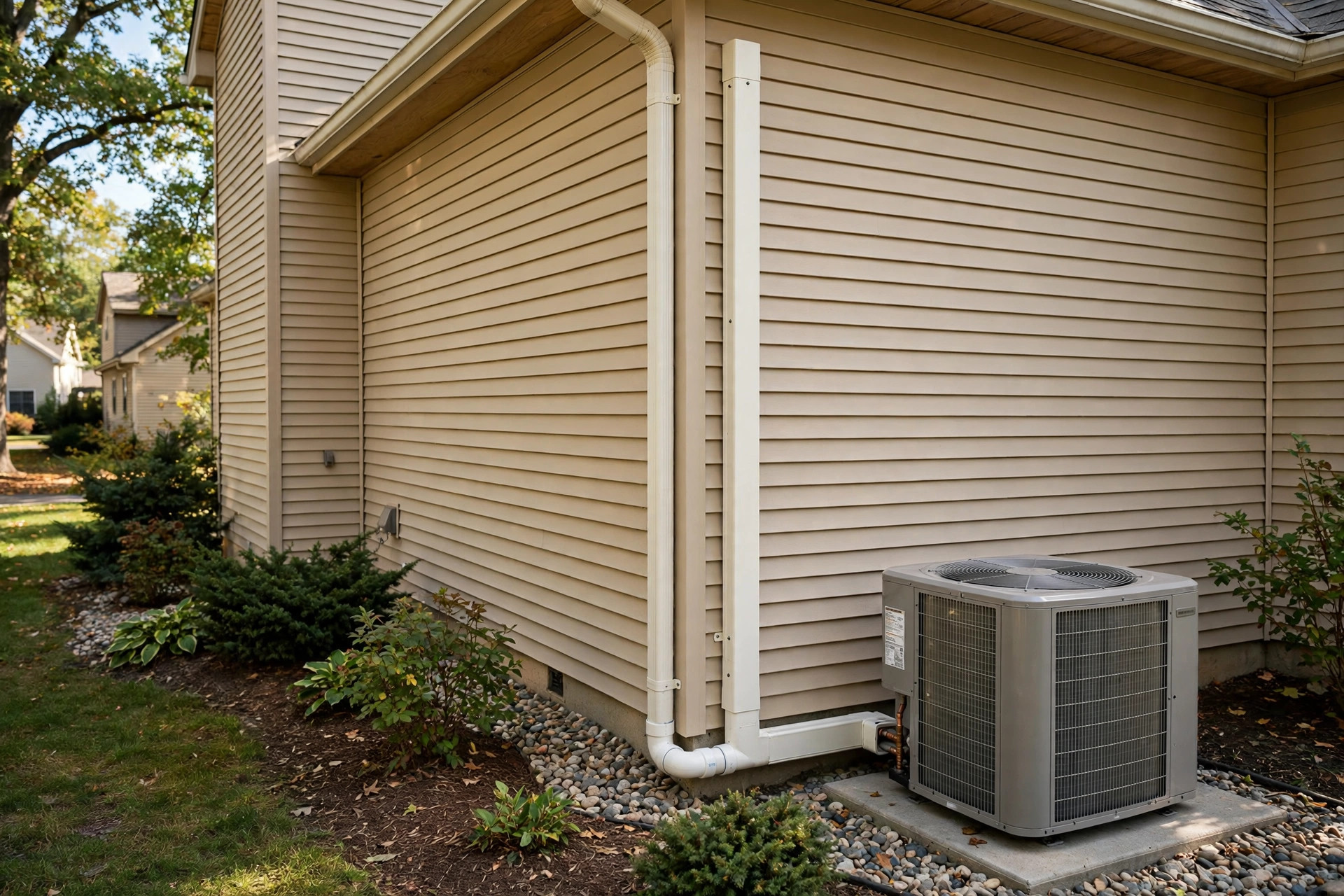
A ductless mini split system changes the way a home feels in summer and winter. Yet the lines that connect the indoor unit to the outdoor unit often run exposed along the wall. Those lines carry refrigerant, and they are wrapped in insulation that the sun and rain can wear down over time. This is why so many homeowners search for mini split line set cover kit reviews usa before they buy. A good cover hides the lines, guards the insulation, and gives the side of the house a clean finished look.
Why Line Set Covers Matter
The lines between the indoor and outdoor units of a mini split are not like ordinary wire. They carry refrigerant under pressure, and they sweat when the system cools the house. To keep them working well, installers wrap them in foam insulation. That foam breaks down in sunlight. It cracks, it dries out, and small birds and rodents may chew on it. Once the insulation fails, the line loses energy to the outside air, and the system must work harder. Over many months this can raise power bills and shorten the life of the equipment.
A line set cover kit solves these problems with a simple idea. It is a set of rigid channels that snap or slide over the lines and fasten to the wall. The channel keeps off rain, blocks sun, and keeps pests away from the foam. From the street, the house looks tidy. Many reviews written by American homeowners point out that the cover was the cheapest part of the whole mini split job, yet it made the biggest visual difference.
Covers also help during winter in cold states. Ice and snow can pile on exposed lines. A cover sheds water and snow before they can sit on the insulation. In coastal areas with salt air, the cover protects the copper lines from corrosion.
What a Line Set Cover Kit Includes: Mini Split Line Set Cover Kit Reviews Usa
A typical kit comes in a box with several parts. The main parts are straight channel sections, usually in two, three, or four inch widths. These sections run along the wall and hide the copper lines, the drain hose, and the low voltage wiring. Elbows are included for turns. A flat elbow turns the channel flat against the wall. An inside or outside corner elbow handles changes in direction around corners of the house.
Most kits also include a wall penetration cover, sometimes called a wall inlet, that hides the spot where the lines pass through the wall into the house. Couplers join two straight sections together. End caps close the channel where it meets the outdoor unit. Many kits include stainless steel screws and plastic anchors. Some also include a paintable surface so the homeowner can paint the cover to match the siding.
Good kits are made of rigid PVC plastic with UV stabilizers. This matters because the cover itself must survive the sun. Cheaper thin covers may fade or warp in a few summers. When you read reviews, look for words like “thick walls” and “UV rated.” These are signs the kit uses real outdoor-grade plastic.
How to Choose a Cover Kit
Start with the size of the line set. Most home mini splits use a three inch or four inch cover. A single-zone system with thin lines fits in a three inch channel. A multi-zone system with several lines running together may need a four inch channel or two parallel runs. Check the installer manual or ask the contractor before you order. Reviews often mention buyers who ordered the wrong size and had to reorder.
Next, look at the color. Ivory and white are the most common colors, and they blend with most siding. Some brands also sell brown, gray, or beige. If you cannot find your exact color, buy a paintable kit and use exterior paint that bonds to PVC.
Fit and build quality matter more than brand names. In reviews, homeowners praise kits with snug snap-fit lids that stay shut in wind and kits with solid mounting brackets. They warn against kits with flimsy clips that pop open after one season. Look at the thickness of the plastic in product photos. A channel with ribs or a double wall tends to be stiffer.
Also count how much channel you need. Measure the run from the indoor unit to the outdoor unit. Add extra for elbows and waste. Buying one complete kit is usually simpler than buying parts one by one. A consumer guide from Consumer Reports reminds shoppers that matching parts from one brand avoids fit problems.
Price is a factor too, but the spread is not huge. A full kit for a simple run costs less than a tank of gas. Spending a little more for UV-rated rigid PVC pays off over the years. Reviews at big home stores are a good place to compare. The Home Depot website carries several brands and lists hundreds of buyer reviews with photos.
Types and Options
Line set covers come in a few main types. The most common is the snap-on PVC channel. The base screws to the wall, the lines rest inside, and the lid snaps shut. This type is easy to install and easy to reopen if a service technician needs access to the lines.
A second type is the two-piece slide cover. It uses a base and a telescoping lid that slides over it. These often look a bit sleeker. Some brands sell slimline covers that hug the wall more tightly and look like modern trim.
A third option is a cover made for larger commercial lines. These are wider and deeper, and most homes do not need them. If your system has a long run with several zones, a wider channel keeps all the lines in one neat run.
There are also decorative covers. Some companies sell covers shaped to look like downspouts so they blend with gutters. For homes in historic districts, a painted cover that matches trim often passes review boards more easily than bare white plastic.
When comparing types, think about service access. A cover that opens without tools saves time and money for the technician. Reviews from HVAC contractors often praise covers with hinged lids for this reason. You can read contractor tips on sites like This Old House.
Cost and Price
A line set cover kit is one of the least costly parts of a mini split project. A basic kit with a few feet of channel and fittings often costs between thirty and eighty dollars in the United States. Longer runs with many elbows may cost one hundred to two hundred dollars in materials.
Professional installation adds labor. Many installers include the cover in the job quote. If they charge extra, the labor for a simple cover run is often one to two hours. Ask for the cover in the quote up front. Adding it later costs more because the technician must make a second trip.
Reviews help set honest price expectations. Shoppers who compare kits online note that the cheapest kits often need extra parts bought separately. A kit that looks cheap can end up costing the same as a mid-priced kit once you add elbows and couplers. Look for complete kits that list every part in the box. The total cost still stays small next to the cost of the mini split itself, which you can study when you learn about ductless mini split installation cost per zone. Installers who work with ductless mini splits often suggest a cover as part of every job.
Homeowners who plan for cold weather sometimes pair the cover with other upgrades. If you are sizing a system for a cold state, read about the best mini split for cold climates reviews usa to match the equipment to the climate.
Care and Upkeep
A line set cover needs very little care, but a little attention keeps it looking new. Once a year, walk the run and check that all lids are snapped shut. Wind and lawn equipment can knock a lid loose. Push it back into place and check the screws.
Wash the cover with a garden hose and a soft brush once a year. Dirt and pollen collect on the top edge. Do not use a pressure washer at close range. Strong pressure can crack the plastic or force water behind it.
If you painted the cover, touch up the paint every few years. Sun fades paint faster on the south side of the house. A small can of matching exterior paint is cheap insurance.
Safety
Line set covers are simple, but a few safety points matter. The lines inside carry refrigerant under pressure. Never cut, drill, or puncture the cover after it is installed. If you must open the cover, lift the lid gently. Do not force it.
Keep ladders and lawn equipment away from the channel. A mower thrown stone can crack thin plastic. Trim bushes back so they do not rub the cover. Plants that press against the channel can trap moisture.
If the cover runs near a walkway, make sure it is mounted firmly. A loose channel can catch a shoulder or a bag. Tighten the screws if the channel wobbles.
Electrical safety counts too. The line set often runs with a low voltage wire for the indoor unit. Turn off power at the breaker before you do any work near the indoor or outdoor unit. When in doubt, call the installer. Guidance from Energy Star on heat pump care also applies to mini split owners.
Installation Tips
Many homeowners install the cover themselves. The job is simple if you take it step by step. First, measure the run and plan the path. Keep the channel level and plumb. A crooked cover looks worse than no cover.
Mark the screw holes on the wall. Drill pilot holes and set anchors if you are fastening into brick or stucco. For wood siding, stainless screws bite well. Do not over-tighten. The plastic can crack if you drive screws too hard.
Lay the lines in the base channel before you snap the lid. Make sure the insulation is not pinched. Pinched insulation loses its value.
Work from the indoor unit toward the outdoor unit. Fit elbows as you go. Dry fit the whole run first, then fasten it. This avoids cutting a channel too short. If you must cut, use a fine tooth saw and sand the edge smooth.
Seal the wall penetration with caulk after the channel is set. This keeps rain and insects out of the wall cavity. Many kits include a wall plate for this spot. The last step is to step back and look. The run should look like part of the house trim.
For homes with larger cooling loads, check guides on energy efficient mini split for 1500 sq ft when planning bigger systems.
What Reviews Tell Us
Reading many reviews side by side reveals clear patterns. Buyers are happiest when the kit is complete, the plastic is thick, and the lids stay shut. They are unhappiest when parts are missing or when the channel is too narrow for their lines.
A common tip in reviews is to buy one extra straight section. Runs always take more channel than the first measure suggests. Reviewers in hot states like Arizona and Texas stress UV ratings, while reviewers in the north stress how the cover sheds ice. Match the review to your climate.
Manufacturer sites give useful background too. Brands like Carrier, Lennox, Rheem, and Goodman publish guides on ductless systems and their care. These help you ask smarter questions when you talk to a contractor.
FAQ
How wide should the cover channel be?
Match the channel to your line set. Most single-zone home systems fit in a three inch channel. Multi-zone systems with several lines may need a four inch channel. Check the size of the insulated lines and the drain hose, then add room for the wiring. When in doubt, choose the wider channel.
Can I install a line set cover myself?
Yes, most homeowners can. The job needs a drill, a level, a saw, and basic care. The base screws to the wall and the lid snaps on. If your lines are already in place, you simply work the channel around them. If the lines are not yet installed, let the HVAC contractor run the lines first, then add the cover.
Will the cover fit around corners?
Yes. Kits include elbows for flat turns and inside and outside corners. Plan the path before you buy so you know how many elbows you need. Dry fit the elbows before you fasten anything.
Can I paint the cover?
Yes, if the kit is paintable. Most PVC kits take exterior paint well. Clean the surface, use a primer made for plastic if the paint calls for it, and apply two light coats. Paint before installation for the neatest result.
Does a cover improve efficiency?
It protects efficiency. The cover itself does not cool the house. It guards the foam insulation on the refrigerant lines. Good insulation keeps the cold in the lines on the way to the indoor unit. Damaged insulation wastes energy. So the cover defends the efficiency you already paid for.
How long does a line set cover last?
A good UV-rated PVC cover lasts many years, often as long as the mini split itself. Cheap thin covers may fade or crack sooner. Annual checks and gentle cleaning extend the life. Replace any section that cracks so the lines stay protected.
A Final Word
A mini split line set cover kit is a small purchase with a large payoff. It guards the lines, keeps the house neat, and helps the system hold its efficiency year after year. The best way to buy is to measure well, pick a complete UV-rated kit in the right size, and read reviews from buyers in a climate like yours. Take an hour to install it with care, and the side of your house will look finished for the life of the system.
References
Carrier. (n.d.). Heating and cooling systems. https://www.carrier.com Consumer Reports. (n.d.). Product reviews and ratings. https://www.consumerreports.org ENERGY STAR. (n.d.). Energy efficient products. https://www.energystar.gov Goodman. (n.d.). Heating and cooling equipment. https://www.goodmanmfg.com Lennox. (n.d.). Heating and cooling systems. https://www.lennox.com Rheem. (n.d.). Heating, cooling, and water heating. https://www.rheem.com The Home Depot. (n.d.). Home improvement products. https://www.homedepot.com This Old House. (n.d.). Home renovation guidance. https://www.thisoldhouse.com Trane. (n.d.). Heating and air conditioning. https://www.trane.com
Was this guide helpful?

About Michael Thompson
The My Garden US editorial team writes practical, in-depth home and garden guides for American homeowners — tested advice, no fluff.