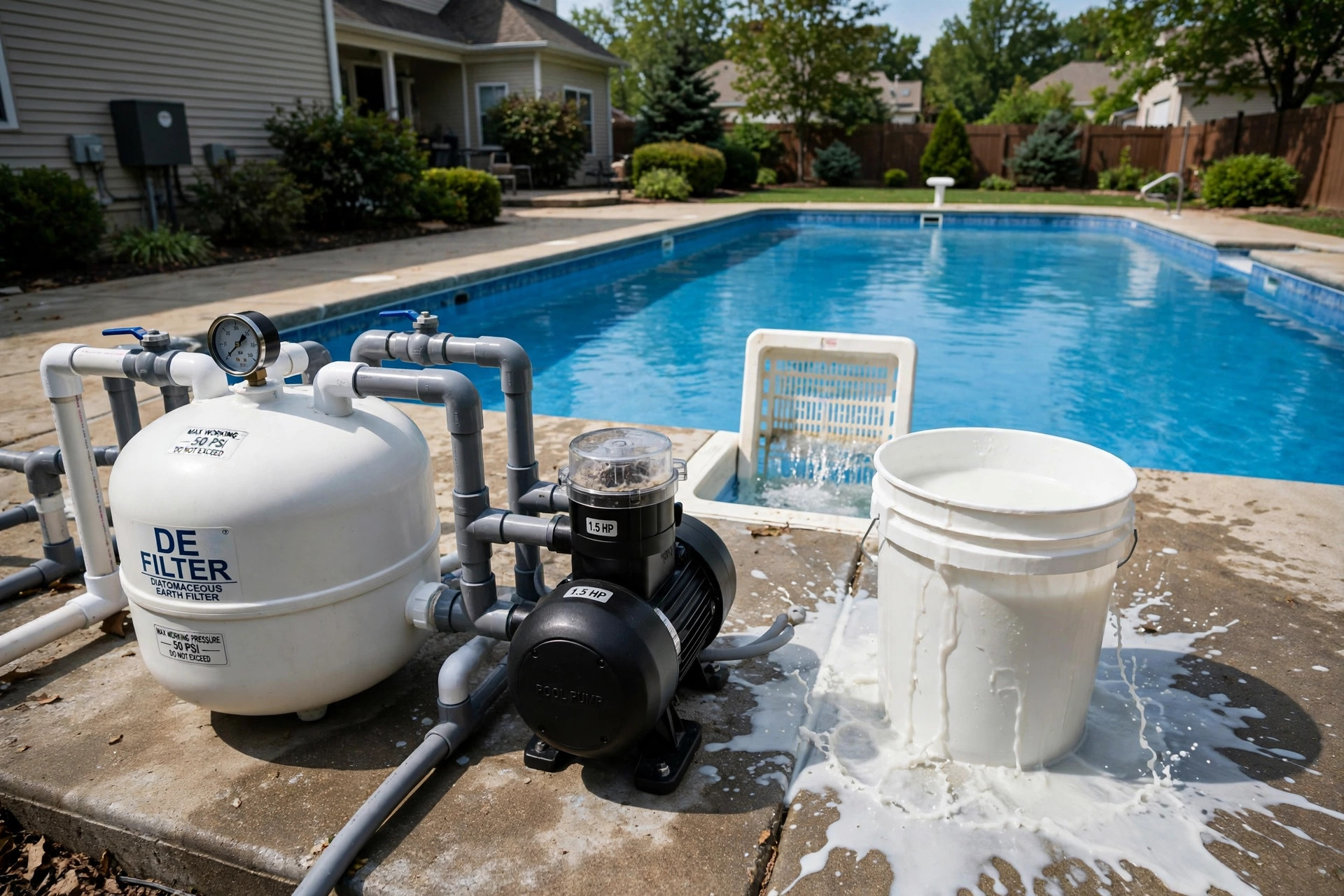
Diatomaceous earth, known as DE, is a fine powder that helps a DE filter trap the smallest dirt in a swimming pool. Many pool owners ask how to add de to pool filter systems the right way. The job is simple once you learn the steps. It takes only a few minutes. But small mistakes can harm the filter or cloud the water. This guide explains the full process in plain terms. You will learn what you need, how much powder to use, the exact steps, and how to keep the filter in good shape.
Why DE Matters for Your Pool
A DE filter is the finest filter made for home pools. Sand filters catch dirt down to about twenty microns. Cartridge filters do a little better. A DE filter catches dirt down to three microns or less. That means pollen, dead algae, and fine silt stay in the filter instead of in your pool.
The powder itself is made from fossil shells of tiny water plants. When mixed with water, it forms a thin coat on the filter grids. Water passes through the coat. Dirt does not. After a few weeks, the coat gets dirty and must be cleaned off and replaced. That is why pool owners add fresh DE after each backwash.
Clear water is the reward. A DE filter can make pool water look glassy. Many owners of high-end pools choose DE for this reason. The pool filter you own may be a DE model without you knowing it, so check the tank label first.
What You Need Before You Start: How to Add De to Pool Filter
Gather your supplies before you touch the pump. You will need food-grade or pool-grade DE powder. Only use DE made for pool filters. Never use the type sold for garden pest control. The pool type is heat-treated and safe for this job.
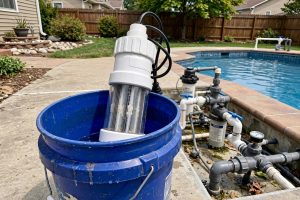
You will also need a DE scoop or a measuring cup. One pound of DE fills about a coffee can of average size. A bathroom scale can work, but most owners measure by scoops. Keep a bucket or a plastic pail nearby. You will mix the powder with water in the bucket before you add it.
A helper makes the job easier but is not required. Have the pump running when you add the mixture. Turn off any heater or cleaner that might get in the way. Wear a dust mask and gloves. DE dust is not good for the lungs, as noted in safety guidance from public health sources.
Know Your Filter Size and Dose
The amount of DE depends on the square footage of your filter. Look for the label on the filter tank. It may say 24, 36, 48, 60, or 72 square feet. The rule is one pound of DE per ten square feet of filter area.
| Filter Size (sq ft) | DE to Add (lbs) | |—|—| | 24 | 2.4 | | 36 | 3.6 | | 48 | 4.8 | | 60 | 6 | | 72 | 7.2 |
Round to the nearest half pound for easy measuring. A 48-square-foot filter takes about five pounds. If you cannot find the size, check the manual that came with the unit. Guides from pool equipment makers list the sizes for each model.
Too little DE lets dirt pass through. Too much DE clogs the grids and raises the pressure. Stay close to the chart. Your filter will run at its best.
How to Add DE to Pool Filter: The Steps
Follow these steps in order. Do not skip the backwash. Fresh DE must go onto clean grids.
Step 1: Backwash the Filter
Turn the pump off. Set the multiport valve to backwash. Turn the pump on. Run it for two to three minutes. Watch the sight glass. When the water runs clear, turn the pump off. Some owners run a rinse cycle for thirty seconds after the backwash. This settles the grids back in place.
Step 2: Mix the DE with Water
Fill the bucket half full with pool water or clean water from the hose. Add the measured DE powder slowly. Stir with a stick or a large spoon. Mix it into a thin slurry. It should look like skim milk. Do not pour dry powder straight into the skimmer. Dry powder can clump. It can also puff into the air, which is a breathing hazard.
Step 3: Pour the Slurry into the Skimmer
Turn the pump on and set the valve to filter. Remove the skimmer basket lid. Pour the slurry slowly into the skimmer opening. Keep the flow steady. Do not dump the whole bucket at once. Slow pouring lets the powder spread evenly over the grids.
If your pool has two skimmers, split the mixture between them. Pour half in one and half in the other. If you have a separate chemical feeder port, you can use that instead. Pool supply stores sell wide-mouth scoops that fit skimmer mouths well.
Step 4: Watch the Pressure Gauge
Write down the pressure on the filter gauge right after the DE is in. This is your clean starting pressure. It will rise over the coming weeks as the filter catches dirt. When it climbs eight to ten psi above the starting number, it is time to backwash and add fresh DE.
Step 5: Run the Pump
Let the pump run for at least one hour after adding DE. This gives the powder time to coat the grids. Check the pool returns. A small puff of white powder in the first minute is normal. If the cloud does not clear, the grids may be torn. Torn grids need repair before the filter can work right.
That is the full answer to how to add de to pool filter tanks. The job is done. Most owners finish it in under fifteen minutes.
Types of DE Filters and Options
Most home DE filters fall into two styles. The first is the vertical grid type. It has eight or more fabric grids inside a round tank. This is the most common style for home pools. The second is the spin or regenerative type. It uses a motor to knock dirty DE off the grids so you can reuse the powder for a time.
Both styles need the same dose of DE. Both take the powder through the skimmer. Check which style you own before you buy parts. Pool warehouse sites show pictures of both types so you can match yours.
Some owners ask about adding DE to a sand filter. Do not do this. Sand filters are not built for DE powder. The powder can damage the laterals and push white dust into the pool. If your filter is a sand type, use sand or the media it was made for. If it is a cartridge type, learn how to clean pool filter cartridge units instead.
Cost and Price
DE powder is not costly. A ten-pound bag sells for about fifteen to twenty-five dollars at most pool stores. A twenty-five-pound bag costs thirty to fifty dollars. One twenty-five-pound bag will last a full season for a medium filter.
Compare the options where you shop. Big home stores such as Home Depot carry DE in the pool section during swim season. Pool specialty shops stock it year round. Buying the larger bag is cheaper per pound. Store the bag in a dry place. Moisture makes the powder clump and hard to mix.
Grid replacement is the larger cost. A full set of grids for a home filter runs eighty to two hundred dollars. Grids last three to five years with good care. Clean handling of DE and steady pressure readings help grids last longer.
Care and Upkeep Through the Season
DE filters need steady attention. Check the pressure gauge once a week. Backwash when the gauge reads eight to ten psi over the clean starting point. Add fresh DE after every backwash. Never run the pump without DE on the grids. Bare grids let dirt press into the fabric. That shortens grid life.
Once or twice a year, open the tank and hose the grids clean. Look for tears, flat spots, or worn seams. Soak the grids in a filter cleaner if they look greasy. Rinse them well. Put them back in the same order.
At season close, drain the tank if your winters freeze. Remove the grids and store them inside if you can. Clean tanks last longer than dirty ones. Pool care guides offer checklists for opening and closing that include DE filter steps.
Safety Notes
DE powder is safe when handled with care. The main risk is breathing the dust. Always wear a dust mask when you open the bag and mix the slurry. Work upwind so the wind carries dust away from your face. Keep children and pets away while you measure.
Do not inhale the dry powder on purpose. Do not let it sit on bare skin for long. Rinse your hands after the job. Store the bag high on a shelf, out of the reach of small children. Spa and hot tub makers and pool brands alike warn that filter chemicals need cool, dry storage.
Never mix DE with other pool chemicals in the bucket. Add each chemical on its own. Keep the work area clear of open chlorine containers while you mix. Simple care keeps the job safe.
Fixing Common Problems
Powder blowing back into the pool is the most common trouble. It usually means a torn grid or a cracked manifold. Open the tank and check each grid. Replace torn ones. Also check that the DE dose was right. Too little powder can let fine dirt slip through and look like a blowback.
High pressure right after adding DE often means the grids were not fully clean. Backwash longer next time. Low pressure with cloudy water may mean the pump is weak or the impeller is clogged. Home improvement guides walk through pressure gauge reading for many filter brands.
If the water stays cloudy for days, test the chemistry. DE cannot fix bad pH or low sanitizer. Balance the water first. Then let the filter do its work. A related guide explains how to fix cloudy pool water step by step.
When to Call a Professional
Most DE jobs are do-it-yourself tasks. Call a pool technician if the tank leaks, if the clamp band looks worn, or if pressure spikes within a day of cleaning. A technician can pressure-test the tank and check the internal parts. This is cheap insurance against a tank failure.
Also call for help if you find many torn grids at once. Replacing a full set takes skill to seat the manifold right. A pro can do it in under an hour. Spa makers and pool dealers keep lists of service techs by area.
FAQ
How often should I add DE to my pool filter? Add fresh DE after every backwash. For most pools, that means every four to six weeks in swim season. Heavy use or storms can shorten the time. Watch the pressure gauge. It tells you when the filter is full.
Can I add DE through the pump basket instead of the skimmer? The skimmer is the best spot. The pump basket works in a pinch, but pour slowly so the pump does not lose prime. Never pour dry powder into any opening. Always mix a slurry first.
What happens if I run the filter without DE? Dirt presses straight into the grid fabric. The grids clog faster and wear out sooner. Water quality drops. Always add the right dose right after a backwash or a grid cleaning.
Is pool DE the same as food-grade DE? Pool-grade DE is heat-treated for filter use. Food-grade DE is made for other uses and is not right for filters. Buy powder labeled for pool filters. The label will say so in clear words.
How long does a bag of DE last? A twenty-five-pound bag lasts a full season for a 48-square-foot filter with monthly backwashes. Larger filters or more backwashes use more. Keep a spare bag on hand so you never run short.
Should I switch from DE to another filter type? DE gives the clearest water but needs the most care. Cartridge filters need less upkeep. Sand filters need the least. A guide to the best pool filter for saltwater systems can help if you are weighing a change.
A Short Final Word
Learning how to add de to pool filter units is a skill every DE owner should have. The steps are short. The cost is low. The payoff is water so clear it looks unreal. Backwash, mix a slurry, pour it in slowly, and watch the gauge. Do that through the season and your filter will serve you well for years. Keep the powder dry, wear a mask, and never skip the dose. Your pool will thank you with every swim.
References
Bullfrog Spas. (n.d.). Hot tubs and spas. https://www.bullfrogspas.com Hayward. (n.d.). Pool equipment and automation. https://www.hayward.com Hot Spring Spas. (n.d.). Hot tubs and spas. https://www.hotspring.com Leslie’s Pool Supplies. (n.d.). Pool supplies and equipment. https://www.lesliespool.com Pentair. (n.d.). Pool and spa equipment. https://www.pentair.com Pool Warehouse. (n.d.). Pool equipment and supplies. https://www.poolwarehouse.com Swim University. (n.d.). Pool and hot tub care guides. https://www.swimuniversity.com The Home Depot. (n.d.). Home improvement products. https://www.homedepot.com The Spruce. (n.d.). Home and garden advice. https://www.thespruce.com U.S. Consumer Product Safety Commission. (n.d.). Product safety information. https://www.cpsc.gov
Was this guide helpful?

About Emily Rodriguez
The My Garden US editorial team writes practical, in-depth home and garden guides for American homeowners — tested advice, no fluff.