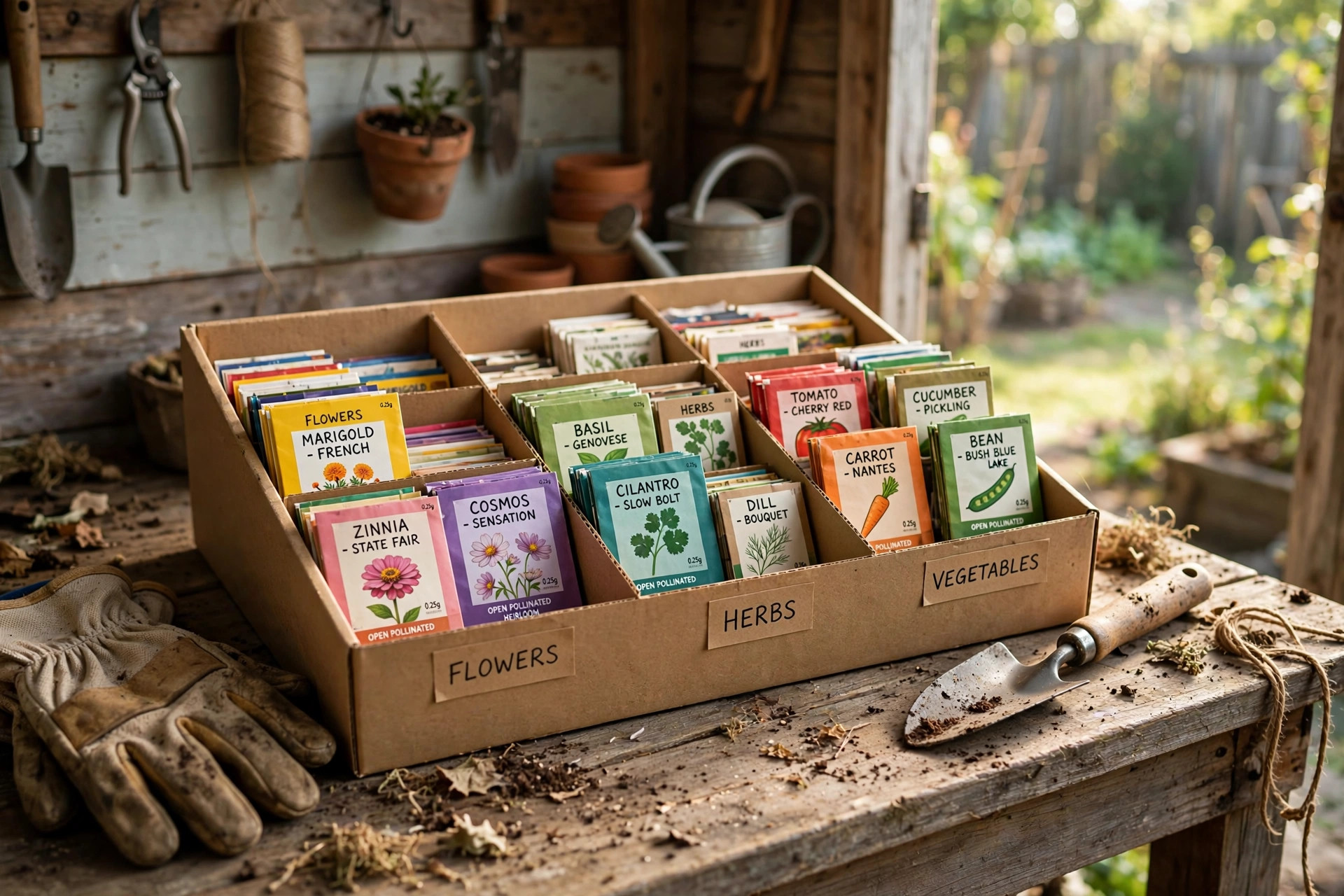
A seed packet organizer for gardeners is one of the simplest tools a grower can own. It is a box, a binder, or a case made to hold seed packets. Each packet gets its own slot or pocket. Nothing more. Yet this small item can change how a garden year goes.
Table of Contents
Table of Contents
- Why a Seed Packet Organizer for Gardeners Matters
- What to Look for When You Choose One: Seed Packet Organizer for Gardeners
- Size and Pocket Count
- Pocket and Divider Design
- Material and Build
- Label Space
- Portability
- Types of Organizers You Can Buy
- Binder Style
- Box Style
- Accordion File Style
- Tin or Canister Style
- Cost and Price
- Care and Upkeep
- Safety
- Frequently Asked Questions
- How many seed packets can one organizer hold?
- Should I sort seeds by crop or by sowing date?
- Can I store packets in the refrigerator?
- How long do seeds last in an organizer?
- What is the cheapest way to organize seed packets?
- Do I need a special organizer, or will any box work?
- A Final Word
- References
Most gardeners start small. They buy three or four packets in spring. The packets sit in a drawer. By next spring the drawer is full. Packets tear. Names blur. Nobody knows which tomato was planted last year. Money gets wasted on seeds that were already owned. A seed packet organizer for gardeners fixes this quiet problem. It puts order where there was clutter.
This guide explains what to look for when you buy one. It covers the main types, typical costs, and simple care. It also answers common questions. By the end, you will know which style fits your seed stash and your budget.
Why a Seed Packet Organizer for Gardeners Matters
When it comes to seed packet organizer for gardeners, getting the details right makes all the difference.
Many homeowners find that seed packet organizer for gardeners is easier than they expected once they know the basics.
Seeds are living things. Each packet holds a tiny promise. But promises are easy to lose in a junk drawer. Many growers find packets two years too late. Others sow the same variety twice by mistake. A small garden seed storage ideas guide from The Spruce notes that cool, dry, dark storage keeps seeds alive longer. An organizer makes that storage easy. It gives every packet a home.
There is also a money side to this. Seed prices rise a little each year. A packet of heirloom tomato seed can cost several dollars. Throw that money away once or twice and the cost of an organizer is paid back. For growers who save their own seed, the value is even higher. Those packets are one of a kind. Losing them means losing a whole season of work.
Order helps planning too. When packets stand in neat rows by crop and date, planning the spring garden takes less time. You can see at a glance what is on hand. You can see which packets are old. You can see what is missing before the garden centers fill up. Serious growers who keep raised bed planting plans lean on this kind of order.
What to Look for When You Choose One: Seed Packet Organizer for Gardeners
Many homeowners find that seed packet organizer for gardeners is easier than they expected once they know the basics.
The key to seed packet organizer for gardeners is choosing the right approach for your space and budget.
Not every organizer suits every gardener. The right choice depends on how many packets you keep and where you store them. Think through the points below before you buy.
Size and Pocket Count
Count your packets first. Most home growers keep between twenty and eighty packets. A binder with fifty clear pockets handles that range well. If you keep more than one hundred packets, look at a box style with tabbed dividers. Small growers with a dozen packets can use a simple tin. Buy a little larger than you need. The collection always grows.
Pocket and Divider Design
Packets come in odd shapes. Some are wide. Some are tall. Deep pockets hold standard packets better than shallow ones. If the pockets are too tight, corners bend when you pull packets out. Look for pockets that take a packet without force. For box styles, check that the dividers fit snugly. Loose dividers slide and mix up the order.
Material and Build
Organizers come in kraft board, tin, canvas, and plastic. Kraft board is light and cheap. It works well in dry rooms. Tin keeps out light and mice. Canvas cases travel well to community plots. Clear plastic pockets let you read packet fronts without removing them. Pick the material that fits your storage spot. A damp basement needs tin or plastic. A dry study desk can use board.
Label Space
Every good organizer lets you label sections. Some have blank tabs for writing. Others have index cards you can move around. The labels should be easy to read in low light. Many growers use simple headings like greens, roots, herbs, and flowers. Others sort by sowing month. The system matters less than the habit of using it.
Portability
Some gardeners work at one bench. Others split time between home and a rented plot. If you carry seeds to the field, pick a case with a latch or zipper. Packets bounce out of open boxes on car seats. A binder with a snap strap works well for travel.
Types of Organizers You Can Buy
The key to seed packet organizer for gardeners is choosing the right approach for your space and budget.
With a little planning, seed packet organizer for gardeners can fit even a busy schedule.
Four styles cover most needs. Each has strengths and limits.
Binder Style
The binder style looks like a photo album. Clear plastic pages hold two to four packets per page. You flip through and read packet fronts like pictures. It is the best style for seeing what you own at a glance. Many binder organizers come with blank labels and crop dividers. Retailers like Gardener’s Supply Company and Burpee carry garden gear of this kind and list plenty of examples.
The main limit is depth. Bulky packets of beans and corn strain thin pockets. Check the pocket depth if you grow large seeds.
Box Style
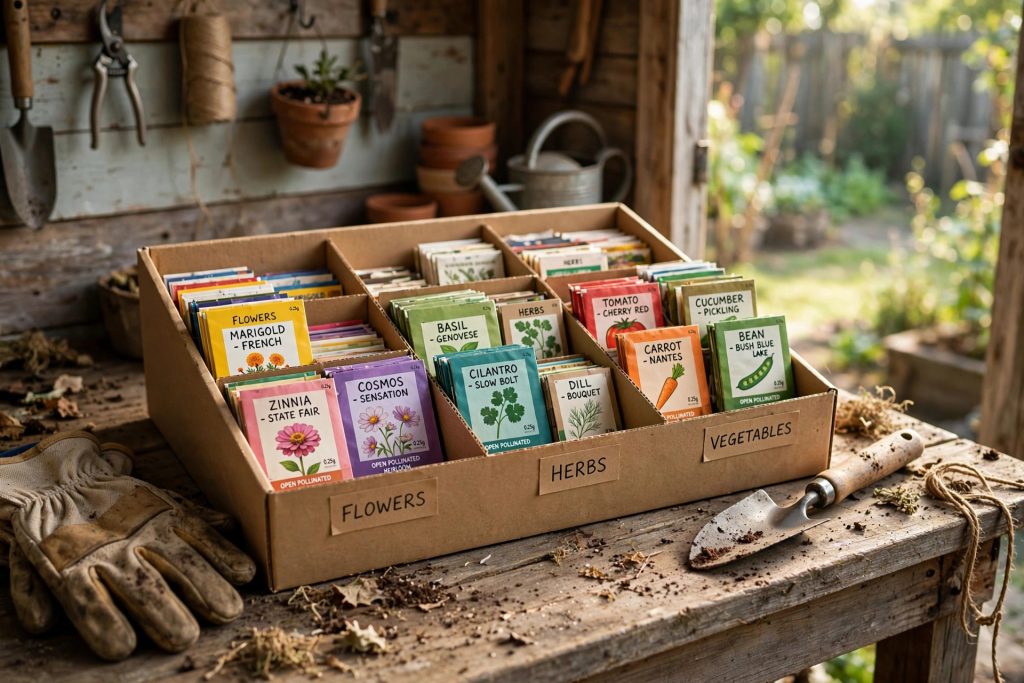
The box style is a simple file box with tabbed dividers. Packets stand upright in rows like index cards. It holds more packets than a binder and takes large packets with ease. Wood and tin boxes last for years. Many growers favor the box style for seed packet binder for vegetable seeds collections that keep growing.
The main limit is visibility. You must pull packets out to read them unless the tabs are marked well.
Accordion File Style
The accordion file is a folding case with expanding sections. It is light and cheap. It fits well in a desk drawer. Many offices sell them for receipts, but they work for seeds too. Write crop names on the section tabs.
The main limit is moisture. Paper accordion files suffer in damp rooms. Keep them dry.
Tin or Canister Style
A tin box with a tight lid keeps out light, air, and pests. Some growers use one large tin and add small envelopes inside. It is the best style for long storage. It is not the best style for browsing. You cannot see what is inside without opening it.
Many tool makers, such as Fiskars and Corona Tools, focus on hand tools rather than seed storage, but their catalogs show how gardeners pair tools with storage. A clean, sharp tool kit goes hand in hand with a tidy seed bench. Our guide on how to sharpen garden tools properly pairs well with this one.
Cost and Price
With a little planning, seed packet organizer for gardeners can fit even a busy schedule.
Before you start, it helps to understand how seed packet organizer for gardeners works in real homes.
Seed packet organizers are not costly items. Prices in 2026 fall into three bands.
A simple paper accordion file or small tin costs about five to twelve dollars. These suit beginners with fewer than thirty packets. They do their job for a year or two.
A mid range binder with fifty to eighty pockets costs about fifteen to thirty dollars. This is the sweet spot for most home growers. The build is solid and the labels are easy to use.
A large wooden or heavy tin box with dividers costs about thirty to sixty dollars. These are built to last a decade. They suit seed savers and large collections.
Add a few dollars for extras. Blank tabs, extra divider sets, and silica gel packets all cost little. Silica gel packets are worth the small price. They soak up moisture inside a closed box. Big box stores such as Home Depot and Lowe’s stock desiccant packs alongside garden supplies. Reviews at Family Handyman often cover small storage gear of this type.
Care and Upkeep
Before you start, it helps to understand how seed packet organizer for gardeners works in real homes.
A good plan for seed packet organizer for gardeners saves time, money, and frustration.
A seed packet organizer for gardeners needs little care. A few habits keep it working for years.
Keep it cool, dry, and dark. A closet shelf beats a garage in summer. Heat and damp air cut seed life short. If the organizer sits in a shed, add silica gel and check it each month.
Wipe down plastic pockets with a dry cloth now and then. Dust builds up and makes packets stick. Do not use wet cleaners inside the box. Wetness is the enemy.
Review the packets once a year. Winter is a good time. Pull out any packet older than three to four years. Some seeds, like onion and parsnip, lose life in one year. Others, like tomato and cucumber, hold for five or more. Toss the dead ones. Move the near dead ones to the front. This yearly review is the real value of the system. It turns the box into a plan.
Write sow-by dates on the divider tabs. A marker line under each crop name helps. When spring comes, you will not need to open every packet to check dates.
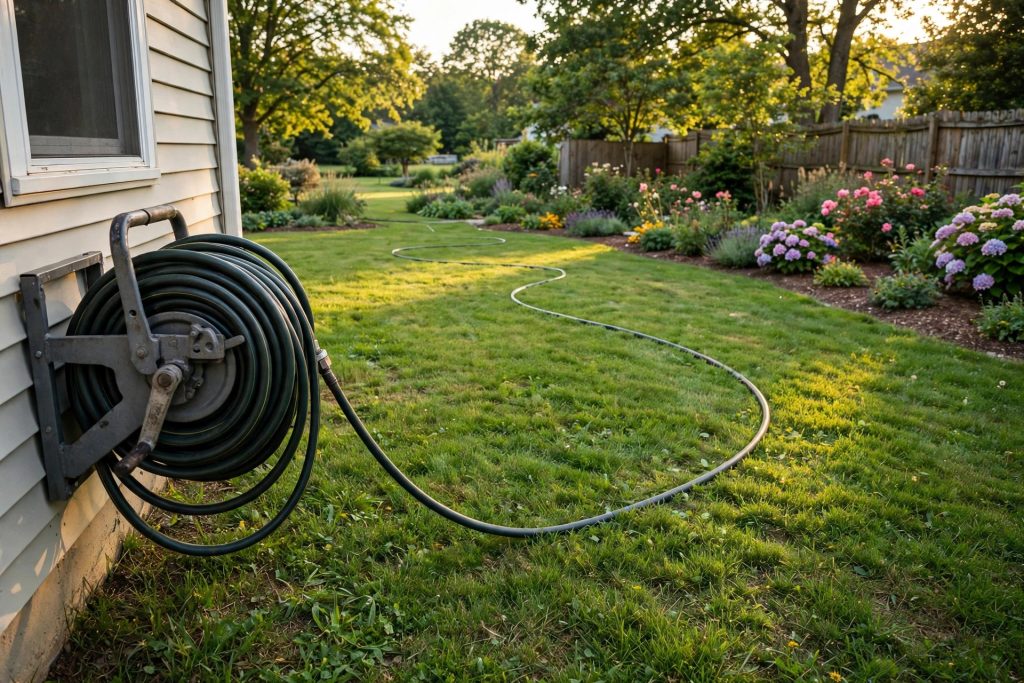
If you garden on a large plot, pair the organizer with a watering plan. Our notes on the best garden hose for large yards help with that side of the work.
Safety
A good plan for seed packet organizer for gardeners saves time, money, and frustration.
For most people, seed packet organizer for gardeners comes down to a few smart choices.
Seed storage is safe work, but a few points deserve note.
Some seed coatings contain treatments. Read packet labels before you open them. Keep treated seed packets away from food storage. Wash your hands after handling loose seed.
Keep the organizer out of reach of small children and pets. Some seeds are treated with chemicals. Others, like castor bean, are toxic by nature. A high shelf or a latched box is enough.
If you use silica gel packets inside the box, keep them whole. They are not food. Keep them away from children.
Check paper organizers for mold if the room is damp. Mold on a paper packet can spread to the seeds inside. Move the organizer to a drier spot at the first sign of musty smell.
Frequently Asked Questions
For most people, seed packet organizer for gardeners comes down to a few smart choices.
How many seed packets can one organizer hold?
It depends on the style. A fifty pocket binder holds about fifty standard packets, or more if you put two small herb packets in one pocket. A box style with ten dividers can hold one hundred or more packets. Count your packets before you shop.
Should I sort seeds by crop or by sowing date?
Both systems work. Most growers sort by crop first, then by sowing date inside each crop. This keeps like things together. If you sow in many waves, sorting by month may suit you better. Pick one system and stay with it.
Can I store packets in the refrigerator?
Yes. Many growers keep seeds in the refrigerator for longer life. Put the packets in a sealed bag or a closed tin first. The refrigerator adds moisture each time the door opens. A sealed container stops that damp air from reaching the seeds. Let the container warm to room temperature before you open it, so no water beads form on the packets.
How long do seeds last in an organizer?
Most vegetable seeds last two to five years in cool, dry storage. Tomato, cucumber, and melon seeds often last five years. Onion, parsnip, and lettuce seeds often last only one to two years. Flower seeds vary widely. Write the purchase year on each packet. This simple step makes the yearly review fast.
What is the cheapest way to organize seed packets?
A paper accordion file or a set of small envelopes in a shoe box works well. Label each section by crop. Add a silica gel packet to fight dampness. You can build a workable system for under ten dollars. Upgrade to a binder or box later if the collection grows.
Do I need a special organizer, or will any box work?
Any clean, dry box works at the start. The point of a purpose made organizer is the dividers and labels. They save time and stop mix ups. If you find yourself digging through a shoe box each spring, the upgrade is worth the small cost.
A Final Word
If you are new to seed packet organizer for gardeners, start with the simplest option and build from there.
A seed packet organizer for gardeners is a small buy with a large return. It saves money. It saves time. It keeps seeds alive longer. Most of all, it turns a drawer of doubt into a shelf of plans. Choose the size that fits your stash. Pick dividers you will actually use. Review the packets once a year. The garden will thank you.
References
When it comes to seed packet organizer for gardeners, getting the details right makes all the difference.
Bob Vila. (n.d.). Home improvement advice. https://www.bobvila.com Burpee. (n.d.). Seeds, plants, and gardening supplies. https://www.burpee.com Corona Tools. (n.d.). Garden and landscape tools. https://www.corona-tools.com Family Handyman. (n.d.). DIY home repair and maintenance. https://www.familyhandyman.com Fiskars. (n.d.). Garden and cutting tools. https://www.fiskars.com Gardener’s Supply Company. (n.d.). Gardening tools and supplies. https://www.gardeners.com Lowe’s. (n.d.). Home improvement products. https://www.lowes.com The Home Depot. (n.d.). Home improvement products. https://www.homedepot.com The Spruce. (n.d.). Home and garden advice. https://www.thespruce.com
Many homeowners find that seed packet organizer for gardeners is easier than they expected once they know the basics.
The key to seed packet organizer for gardeners is choosing the right approach for your space and budget.
With a little planning, seed packet organizer for gardeners can fit even a busy schedule.
Was this guide helpful?

About Michael Thompson
The My Garden US editorial team writes practical, in-depth home and garden guides for American homeowners — tested advice, no fluff.
You May Also Like
The Best Garden Sprayer for Deck Staining: A Plain Guide
February 12, 2026 14 views
Best Garden Thermometer for Soil Reviews: A Plain Guide for American Gardeners
January 5, 2026 17 views
Cold Hardy Plants for Zone Five: A Guide to a Strong Garden
April 28, 2026 16 views