A garden in a cold climate can still be full of color and life. Gardeners who look for cold hardy plants for zone five can build a yard that returns year after year. Zone five winters drop to about minus twenty degrees Fahrenheit. Many plants cannot stand that kind of cold. But a large number of trees, shrubs, and flowers can. This guide shows which plants work best, how to choose them, and how to keep them strong.
Why Cold Hardiness Matters
Every part of the country has its own winter. The plant hardiness map divides the country into zones by the lowest winter temperature. Zone five covers large parts of the upper Midwest, the northern plains, New England, and mountain areas of the West. Winters there bring long freezes, heavy snow, and bitter winds.
When a plant cannot take the cold, its roots freeze or its branches dry out in the wind. The plant may die in the first winter, or it may live but bloom poorly. Choosing cold hardy plants for zone five removes this risk. A plant marked hardy to zone five or lower has been tested by growers and gardeners. It can be trusted to come back in spring.
There is another point worth noting. Some plants are hardy to zone five but need extra care in their first year. New plants have small root systems. A good layer of mulch around the base helps them settle in. Once the roots grow deep, most hardy plants stand on their own.
How to Choose Plants for a Cold Garden: Cold Hardy Plants for Zone Five
Know Your Microclimate
A yard is not one single zone. The south side of a house may be a full zone warmer than the north side. Brick walls hold heat. Low spots collect cold air. Windy corners dry plants out faster than sheltered ones. Walk your yard in winter and note where the snow melts first and where it lingers. Place the least hardy plants near walls and fences that block wind.
Read the Plant Tag
Every plant sold at a nursery carries a tag with a hardiness range. Look for tags that say hardy to zone five, zone four, or zone three. Plants marked only for zones six and above are not safe for a zone five winter. When you shop at a local nursery, the stock is often suited to the area. Online sellers ship everywhere, so you must check the tag yourself.
Think About the Whole Year
Cold hardy plants for zone five do more than survive winter. The best choices give beauty in every season. Spring bulbs push up through melting snow. Summer perennials bloom for months. Fall foliage turns gold and red. Winter bark and berries keep the yard lively. A smart plan includes plants from each season so the garden never looks empty.
Types and Options for Zone Five
Hardy Shrubs
Shrubs form the backbone of a cold garden. They give shape in winter and flowers in spring and summer.
Lilacs are classic zone five shrubs. They bloom in late spring with sweet-smelling flowers in purple, white, or pink. They grow to ten feet and live for decades with little care. Forsythia is another old favorite. Its bright yellow flowers open in early spring, often before the last snow melts.
Spirea bushes bloom in summer and turn warm colors in fall. They stay compact and work well along a walk. Boxwood keeps its green leaves all winter and can be cut into neat shapes. Gardeners also plant ninebark, a tough native shrub with peeling bark and white flower clusters. A guide to garden watering tools can help you plan a simple care routine for new shrubs.
Hardy Trees
Trees give a yard its sense of place. Many strong trees grow well in zone five.
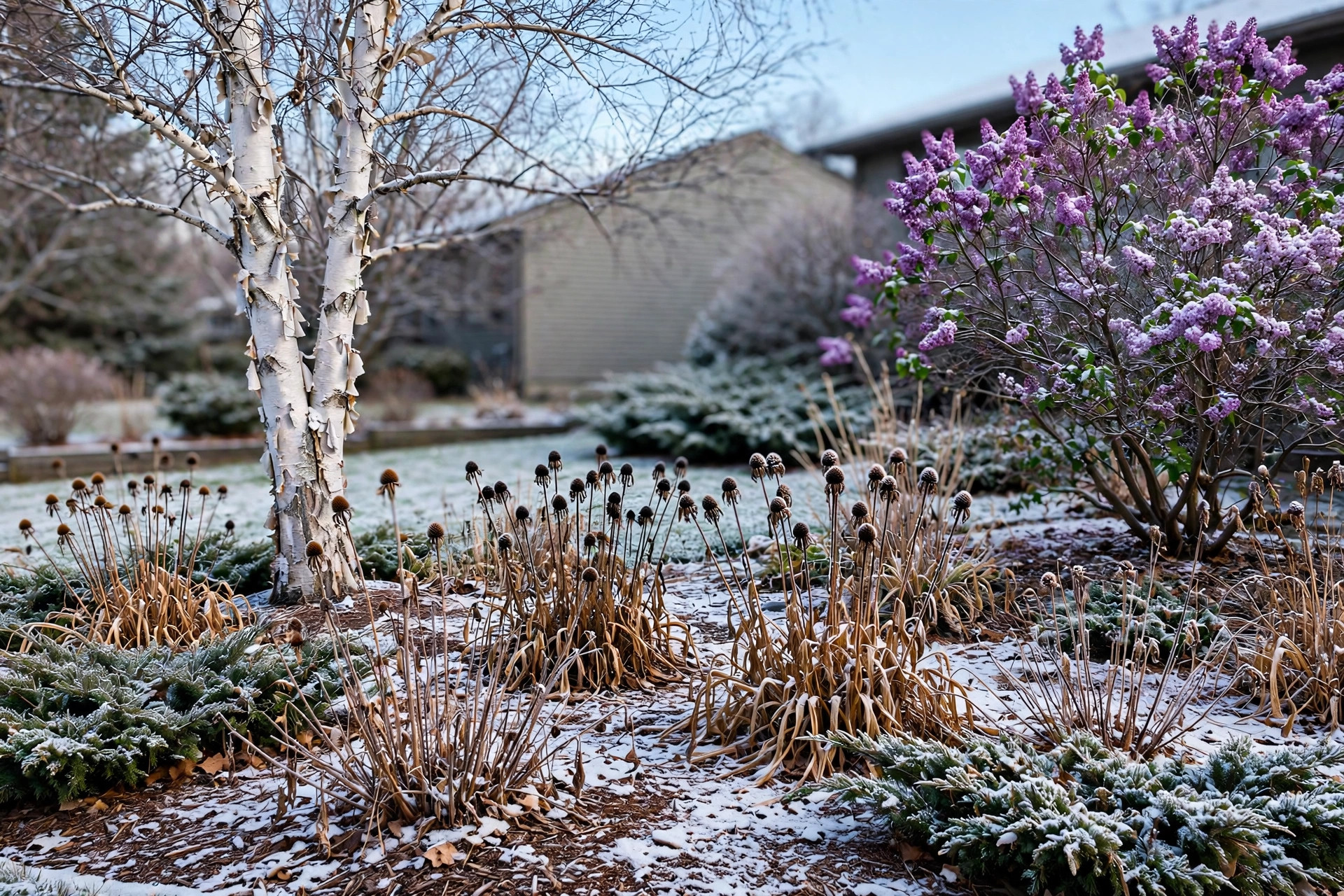
Maple trees are among the best choices. Sugar maples and red maples grow tall and give brilliant fall color. Serviceberry is a smaller tree with white spring flowers, summer berries, and orange fall leaves. It fits well in a small yard. White birch trees with peeling bark look fine in winter when everything else is bare.
Evergreens add color when the garden sleeps. Colorado blue spruce keeps its blue-green needles all year. Arborvitae grows in a neat column and works as a living screen. Junipers handle dry soil and wind with ease. More ideas on picking hardy nursery stock are easy to find at large home centers with garden departments.
Hardy Perennials
Perennials die back to the ground in winter and return each spring. They are the cheapest way to fill a flower bed.
Daylilies are almost foolproof in zone five. They bloom for weeks in summer and need little care. Hostas grow in shade and give bold leaves from spring to fall. Peonies live for fifty years or more once they settle in. Their large flowers open in early summer.
Coneflowers attract butterflies all summer and stand through light snow in fall. Black-eyed Susans bloom from July until frost. Russian sage gives clouds of blue flowers in late summer. For advice on trimming perennials, a look at hand tool reviews can point you to shears that stay sharp for years.
Hardy Bulbs
Plant bulbs in fall for spring flowers. Daffodils are fully hardy in zone five and multiply over time. Tulips bloom best when planted each fall or every two years. Crocus flowers often appear while snow is still on the ground. Alliums send up tall purple balls of flowers in late spring.
Cost and Price
The cost of cold hardy plants for zone five varies by size and type. Small perennial pots often sell for five to twelve dollars. Larger one-gallon shrubs may cost fifteen to thirty dollars. Small trees in pots can run forty to one hundred dollars, while larger balled-and-burlapped trees cost more.
Seeds are the cheapest path. A packet of perennial seeds costs a few dollars and grows many plants. Bulbs are also a good value. A bag of fifty daffodil bulbs often costs less than one large shrub. Bare-root plants, sold in spring without soil, cost less than potted plants of the same size.
Buying at the end of the season can save money. Nurseries mark down plants in late summer and fall. These plants may look tired, but their roots are sound. Plant them promptly and mulch well, and most will thrive the next spring. A review of seasonal garden tools before a big planting project can help you budget for the gear you need as well.
Planting Tips
When to Plant
Spring and fall are the best planting times in zone five. Spring planting gives roots a full summer to grow before winter. Fall planting works too, as long as it happens six weeks before the ground freezes. Summer planting is possible but requires frequent watering.
How to Plant
Dig a hole twice as wide as the pot and just as deep. Place the plant at the same depth it grew in the pot. Fill the hole with the soil you removed, and water well. Do not pile soil against the stem. A two- to three-inch layer of mulch over the root zone holds moisture and steadies soil temperature.
Watering
New plants need water often for the first season. Give them a deep soaking once or twice a week. Once the roots grow deep, most hardy plants need little extra water. If you are still learning to transplant seedlings outdoors safely, keep the soil moist but not soggy until the roots take hold.
Mulching
Mulch is a cold garden’s best friend. Wood chips, shredded bark, or straw keep the soil from freezing and thawing over and over. This cycle of freezing and thawing can push new plants out of the ground. A steady blanket of mulch stops the damage. Pull mulch back from stems in spring so air can move.
Care and Upkeep
Pruning
Most hardy shrubs need pruning once a year. Spring-flowering shrubs like lilac and forsythia should be pruned right after they bloom. Summer-flowering shrubs can be pruned in late winter or early spring. Cut out dead branches first, then shape the plant. Clean tools make clean cuts, and a guide on sharpening and cleaning garden tools shows how to keep blades in good order.
Dividing Perennials
Many perennials grow into large clumps over time. Every three to five years, dig up the clump in spring or fall and cut it into pieces. Replant the pieces and water well. This keeps the plants healthy and gives you free plants for other beds. If you want to learn how to divide perennials in fall, start with daylilies or hostas, which forgive mistakes.
Fertilizing
Most hardy plants need little fertilizer. A light feeding with a balanced garden fertilizer in spring is enough for most beds. Too much fertilizer causes weak growth that cannot stand winter cold. Compost is a safe choice. Spread an inch of compost over the beds each spring and let it feed the soil slowly.
Winter Protection
Even hardy plants may need help in a bad winter. Wrap young evergreens in burlap to block drying winds. Cover new perennials with extra mulch after the ground freezes. Water evergreens well in late fall so they enter winter with moist roots. A look at fall garden checklists can remind you of the steps to take before the first hard freeze.
Safety in the Cold Garden
Gardening in zone five means working in cold weather. Wear gloves when you handle frozen soil or rough bark. Dress in layers on planting days in early spring and late fall. Take breaks to warm your hands.
Some hardy plants have thorns. Roses, barberry, and hawthorn can scratch skin. Wear thick gloves when you prune them. Some berries on ornamental shrubs look good but are not safe to eat. Keep small children from tasting garden plants unless you know the plant is safe.
Store chemicals safely. Fertilizers and pest products should sit in a locked shed or high shelf away from children and pets. Read every label before you use a product. More safety advice for home gardens appears in household garden guides.
Frequently Asked Questions
What does “zone five” mean?
Zone five is a hardiness zone. It means winter lows fall between minus ten and minus twenty degrees Fahrenheit. The zone map is set by the average coldest winter temperature in an area. Plants rated hardy to zone five can stand those lows.
Can I grow roses in zone five?
Yes. Many shrub roses are fully hardy in zone five. Rugosa roses and most Canadian-bred roses need no winter cover. Hybrid tea roses are less hardy and need mulch piled around their bases in fall. Ask your nursery which types suit your yard.
When should I plant cold hardy plants for zone five?
Plant in spring after the last frost, or in fall at least six weeks before the ground freezes. Both times work well. Spring is best for plants that are borderline hardy, since they get a full summer to build strong roots.
Do hardy plants still need winter mulch?
Yes. Mulch steadies the soil temperature and holds moisture. Even fully hardy plants do better with mulch. Put it down after the ground freezes in late fall, and pull it back in early spring.
How do I harden off plants before they face winter?
Start young plants in shelter, then move them outside for a few hours each day over one to two weeks. Slowly give them more sun and wind. This toughens their stems. The guide to how to harden off seedlings before planting walks through the daily steps.
Where can I buy cold hardy plants for zone five?
Local nurseries are the best source. Their stock is usually chosen for the area. Garden centers at home improvement stores carry hardy plants too. Online sellers like Burpee list hardiness zones for every plant they ship. Lowes garden departments also stock hardy plants by zone.
A Short Final Word
A cold climate is no barrier to a fine garden. With cold hardy plants for zone five, you can enjoy flowers, shade, and color in every season. Start with a few strong shrubs and perennials. Give them good soil, water, and mulch. Each year the garden grows fuller and needs less from you. For help with the small jobs, from hand tools to soil care, the Family Handyman garden section offers plain advice. Over time, your zone five garden will be the strongest yard on the block.
References
Bob Vila. (n.d.). Home improvement advice. https://www.bobvila.com Burpee. (n.d.). Seeds, plants, and gardening supplies. https://www.burpee.com Consumer Reports. (n.d.). Product reviews and ratings. https://www.consumerreports.org Corona Tools. (n.d.). Garden and landscape tools. https://www.corona-tools.com Family Handyman. (n.d.). DIY home repair and maintenance. https://www.familyhandyman.com Fiskars. (n.d.). Garden and cutting tools. https://www.fiskars.com Gardener’s Supply Company. (n.d.). Gardening tools and supplies. https://www.gardeners.com Lowe’s. (n.d.). Home improvement products. https://www.lowes.com The Home Depot. (n.d.). Home improvement products. https://www.homedepot.com The Spruce. (n.d.). Home and garden advice. https://www.thespruce.com
Was this guide helpful?

About Robert Taylor
The My Garden US editorial team writes practical, in-depth home and garden guides for American homeowners — tested advice, no fluff.