
Most pool owners test for chlorine and pH each week. Fewer test for phosphates. Yet phosphates are one of the main reasons pools turn green and stay green. This guide explains how to remove phosphates from pool water in plain steps. You will learn what phosphates are, how they enter your pool, how to test for them, and how to bring them down to a safe range. You will also learn how to keep them low all season so algae has no food.
Why Phosphates Matter in Your Pool
Phosphates are a form of phosphorus. They are a nutrient that plants and algae need in order to grow. In a pool, high phosphate levels act like fertilizer for algae. Even when your chlorine is at the right level, algae can bloom fast if the phosphate level is high. The result is green water, slimy walls, and high chemical bills.
Low phosphates do not guarantee a perfect pool. You still need chlorine and the right pH. But keeping phosphates low takes away the food that algae needs. Many pool owners find that they use less chlorine after they learn how to remove phosphates from pool water and keep up the habit.
Where Do Phosphates Come From?
Phosphates reach pool water from many common sources. Wind can carry leaves, pollen, dust, and fertilizer from nearby lawns into the water. Many lawn fertilizers are rich in phosphorus. Rain can wash phosphates off decks, roofs, and garden beds and into the pool. Fill water from a well or a city supply may also carry some phosphates.
Other sources are less obvious. Some pool chemicals contain phosphates. Certain stain removers and scale products are based on phosphate salts. Body lotions, soaps, and hair products that swimmers bring into the water also add phosphates. Dead skin and sweat add small amounts too. A pool with many swimmers will gain phosphates faster than a pool that sits quiet.
How to Test for Phosphates in Pool Water: How to Remove Phosphates From Pool
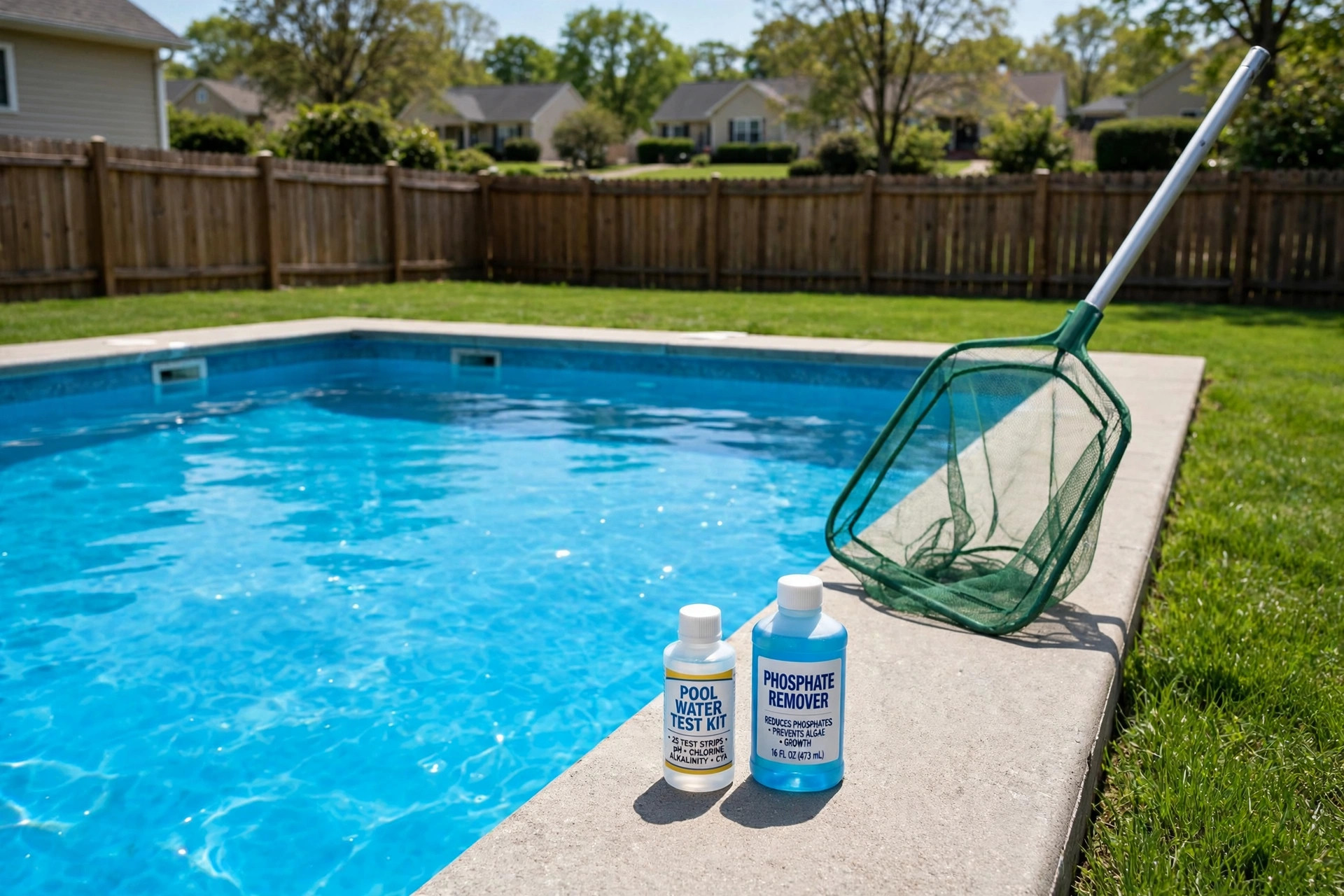
You cannot see phosphates in the water. The only way to know your level is to test. A liquid test kit for phosphates is the most trusted home option. The kit gives you a color match chart that shows parts per billion, written as ppb.
Test strips for phosphates also exist, but the color blocks are small and can be hard to read. If you already use strips for daily checks, see our guide on best pool test strips accurate reviews to pick a set that reads well.
A good rule of thumb is this:
– 0 to 100 ppb: very good. Algae has almost no food. – 100 to 500 ppb: fine for most pools. Keep an eye on it. – 500 to 1000 ppb: high. Treat soon. – Over 1000 ppb: very high. Treat at once, and look for the source.
Test for phosphates once a month in the swim season. Test more often if your pool keeps turning green, if you had a storm, or if your yard was just fertilized. The staff at a good pool store can also test your water sample with a digital meter. Sites such as Leslie’s Pool Supplies describe in-store water testing that checks phosphate levels along with chlorine and pH.
How to Remove Phosphates from Pool Water: Step by Step
Once you know your level, removal is simple. The work rests on a product called a phosphate remover. These products are made with lanthanum, a mineral salt that binds to phosphates and drops them out of the water. Your filter then catches the fallen material.
Step 1: Clean the Pool First
Before you add any remover, skim the surface, brush the walls and floor, and empty the skimmer baskets. Backwash the filter if you have a sand or DE filter. A clean pool lets the product work on the phosphates instead of on leaves and dirt.
Step 2: Balance the Basics
Test chlorine and pH. Bring pH into the 7.2 to 7.6 range and chlorine into its normal range. If your pH is off, read our guide on how to lower pool ph levels safely before you go on. A balanced pool helps the remover work well and keeps the water clear.
Step 3: Add the Phosphate Remover
Read the label on your bottle. Most removers are dosed by pool volume, often one ounce per ten thousand gallons for each one hundred ppb you wish to remove. Pour the measured dose slowly around the pool edge with the pump running. Do not add the whole bottle at once. Overdosing can cloud the water.
Step 4: Run the Filter
Run the pump and filter nonstop for 24 to 48 hours after dosing. This gives the filter time to catch the bound phosphates. If your pressure gauge rises eight to ten psi over its clean level, backwash the filter. Clean filter cartridges with a hose if you use a cartridge filter.
Step 5: Test Again
After two days, test phosphates again. If the level is still above 500 ppb, repeat the dose. Very high levels may need two or three rounds. Patience matters more than heavy doses. Two normal doses beat one heavy dose.
Step 6: Keep Chlorine Up
Phosphate removers kill no algae and kill no germs. They only remove food. Keep your normal chlorine program in place through the whole process. If your pool was green, you may need to shock first and then treat for phosphates. Our guide on how to clean green pool water fast walks through the shock process before phosphate treatment.
Types of Phosphate Removers
Most home pool owners will meet two kinds of products.
Concentrated removers. These are strong lanthanum formulas sold in small bottles. They are best for high phosphate levels, over 1000 ppb. They work fast, often in a day. They need careful measuring. They can cloud the water for a short time as the phosphates drop out.
Weekly maintenance removers. These are mild formulas added in small doses each week. They are best for keeping levels low after a full treatment. They prevent buildup instead of curing it. Many pool owners add a capful each week as part of routine care.
There are also phosphate remover tabs and enzyme blends that claim to help. Stick to plain lanthanum products from known pool brands. They have the longest record of safe use. Retailers such as Pool Warehouse and Home Depot stock remover lines from many makers, and you can compare label doses side by side.
Cost and Price of Phosphate Removal
Phosphate treatment is not costly compared with weeks of shock and algaecide. A bottle of concentrated remover costs about fifteen to forty dollars and treats a full round in most home pools. Weekly maintenance doses cost only a few dollars a month.
A phosphate test kit costs about ten to twenty dollars and lasts many tests. Digital test meters cost more, often over fifty dollars, but they give exact numbers. In-store tests at a pool shop are often free if you buy chemicals there.
Compare that with an algae bloom. One bad bloom can use up two or three cases of shock, several bottles of algaecide, and days of filter running. The electric bill alone can top fifty dollars. Keeping phosphates low is the cheaper path by far.
Care and Upkeep Through the Season
Removing phosphates once is not enough. New phosphates enter the water each week. A small upkeep routine keeps them down.
– Skim the pool each day or two. Remove leaves before they break down. – Brush the walls weekly. Brushing lifts early algae so chlorine can kill it. – Empty skimmer baskets often. Rotting debris feeds the water. – Rinse the filter as needed. A clean filter catches more. – Test phosphates once a month. Add a weekly maintenance dose if levels rise. – Watch what goes in. Rinse off lotions before swimming when you can.
If you use a pool cover, put it on when the pool is not in use. A cover keeps leaves and dust out and cuts chlorine loss from sun. It is one of the simplest tools for lower phosphates.
Seasonal care matters too. In spring, test phosphates when you open the pool. Storm debris and winter cover water often add a large load. Treat early, before the heat comes. In fall, treat before you close the pool so it does not sit all winter with high levels feeding whatever grows under the cover. Education sites such as Swim University offer clear seasonal checklists that include phosphate checks at opening and closing.
Safety Notes
Phosphate removers are safe when used as labeled. Still, follow these rules.
– Keep all pool chemicals locked away from children and pets. Store them dry and cool. – Wear gloves and eye coverings when you pour chemicals. Do not breathe in dust or mist. – Add chemicals with the pump running and the water moving. Never mix products in one bucket. – Wait the label time before swimming after dosing, often a few hours. – Do not overdose. More product does not mean faster results. It can cloud the water and strain the filter.
Pool safety goes past chemicals. The Consumer Product Safety Commission gives strong guidance on pool barriers, alarms, and drain safety for home owners. A clean pool is only half the job. A safe pool is the full job.
How to Remove Phosphates from Pool Water: Common Problems
The water turned cloudy after dosing. This is normal. The cloud is the bound phosphate falling out. Run the filter and it should clear in one to two days. If it does not clear, backwash and check that the filter media is sound.
Levels will not drop. Check that you dosed for your true pool volume. Many owners guess their gallons too low. Also check the source. A lawn that gets fertilized each month will reload the pool each month. Find and cut the source where you can.
Algae came back anyway. Low phosphates help, but they do not replace chlorine. Check chlorine, pH, and filter run time. Brush the pool. Treat the cause, not only the symptom.
The test reads high right after treatment. Some removers take two days to show a full drop. Test after 48 hours, not after two hours. Also, some kits read other phosphates, such as those in stain products, in a different way. A digital test at a store can confirm.
For hot tub owners, the same ideas apply in a smaller body of water. Makers such as Hot Spring and Bullfrog Spas note that small water volumes swing fast, so test and treat in small, careful doses.
FAQ: How to Remove Phosphates from Pool
What level of phosphates is safe for a pool? Most experts call 0 to 500 ppb fine for home pools, and under 100 ppb is ideal. Above 500 ppb, treat soon. Above 1000 ppb, treat at once.
Do phosphates cause green water by themselves? Not by themselves. Phosphates feed algae, but algae also needs warmth and low sanitizer. High phosphates with good chlorine rarely turn green. High phosphates with low chlorine often do.
Can I remove phosphates without chemicals? You can lower them a little. Drain and refill part of the water to dilute them. Keep leaves and debris out. But rain, dust, and fill water will bring them back. A remover is the sure method.
How long does a phosphate remover take to work? Most of the drop happens in 24 to 48 hours with the filter running. Test after two days and dose again if needed.
Is a phosphate remover safe for salt water pools? Yes. Lanthanum removers work in salt water, chlorine, bromine, and mineral pools. Follow the label dose for your pool size.
Will a phosphate remover hurt my filter? No, when used as labeled. The bound material is caught by sand, DE, and cartridge filters. Backwash or rinse the filter after treatment so the media stays clean.
A Final Word
Learning how to remove phosphates from pool water is one of the best small skills a pool owner can pick up. The steps are plain: test the water, clean the pool, balance the basics, add the right dose, run the filter, and test again. Keep a light weekly routine after that, and watch what enters the water. Your chlorine will last longer, your water will stay clear, and algae will have one less way to take hold.
If your pool chemistry still gives you trouble after treatment, a store with a digital tester can read your full panel in minutes. For wider reading on pool care, The Spruce keeps a deep library of pool and patio guides written for home owners. Clear water is built on small habits, and phosphate control is one of the best of them.
References
Bullfrog Spas. (n.d.). Hot tubs and spas. https://www.bullfrogspas.com Hot Spring Spas. (n.d.). Hot tubs and spas. https://www.hotspring.com Leslie’s Pool Supplies. (n.d.). Pool supplies and equipment. https://www.lesliespool.com Pool Warehouse. (n.d.). Pool equipment and supplies. https://www.poolwarehouse.com Swim University. (n.d.). Pool and hot tub care guides. https://www.swimuniversity.com The Home Depot. (n.d.). Home improvement products. https://www.homedepot.com The Spruce. (n.d.). Home and garden advice. https://www.thespruce.com U.S. Consumer Product Safety Commission. (n.d.). Product safety information. https://www.cpsc.gov
Was this guide helpful?

About Emily Rodriguez
The My Garden US editorial team writes practical, in-depth home and garden guides for American homeowners — tested advice, no fluff.
You May Also Like
Pool Opening Checklist for Spring Season: A Step-by-Step Guide for Homeowners
April 12, 2026 0 views
How to Fix Pool Pump Losing Prime: A Step-by-Step Guide
May 3, 2026 0 views
Best Pool Vacuum for Pebble Finish: How to Choose the Right One
January 13, 2026 0 views