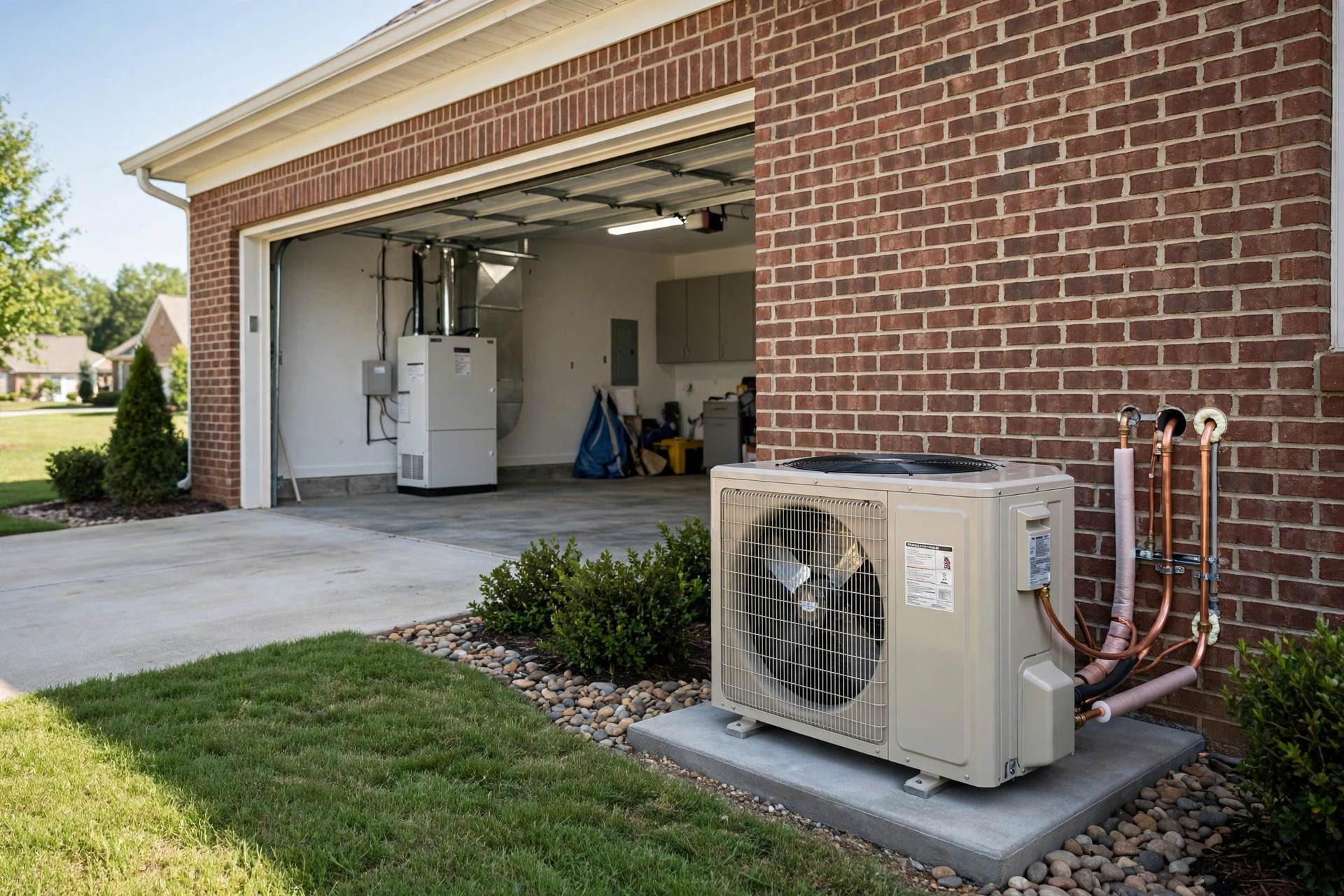

A heating and cooling system is one of the largest purchases a homeowner ever makes. A full replacement often costs between five thousand and fifteen thousand dollars, and the bill can arrive at the worst possible time, in the middle of a heat wave or a cold snap. This guide to hvac financing options for new system usa shoppers explains how American families pay for new equipment, what each method costs over time, and how to choose a path that fits the household budget.
Why HVAC Financing Options for New System USA Matter
Most furnaces and air conditioners last fifteen to twenty years. By the end of that life they lose efficiency, need frequent repairs, and can fail without warning. A new system uses less energy, keeps rooms at a steadier temperature, and often carries a full parts warranty. The barrier is rarely the need. It is the price.
Financing turns one large bill into a set of monthly payments. Done well, the monthly amount fits the budget and the total cost stays fair. Done poorly, high interest and long terms can add thousands to the price. Homeowners who compare the main hvac financing options for new system usa dealers and lenders offer usually find a plan that protects both their comfort and their wallet.
Financing also shapes what equipment a buyer can afford. A higher-efficiency unit may cost more up front yet cut energy bills for years. Payment plans let families buy the better machine now and recover part of the cost through lower monthly utility bills. The Energy Star program offers guidance on efficient equipment that can make that trade pay off.
What to Look for When You Compare Plans: Hvac Financing Options for New System Usa
A financing offer is more than the monthly payment. Read the whole agreement before you sign. The points below matter most.
Annual percentage rate. The APR is the true yearly cost of borrowing, including interest and most fees. A low advertised rate may hide a short term or a high origination fee. Compare APRs, not monthly payments.
Term length. Longer terms lower the monthly bill but raise the total interest paid. A five-year plan at seven percent may cost far less over time than a ten-year plan at nine percent.
Fees and penalties. Some plans charge an origination fee, a late fee, or a penalty for early payoff. Ask each lender what fees apply and get the answer in writing.
Promotion windows. Many HVAC dealers advertise zero-percent or low-interest plans for twelve to eighteen months. If the balance is not paid in full by the end of the promotion, interest often applies back to the start date. Know the rules before you choose such a plan.
Effect on the home. Some options, such as home equity loans, use the house as collateral. That lowers the rate but raises the risk. Unsecured options carry no lien on the home but usually charge higher rates.
The Main HVAC Financing Options for New System USA
American homeowners generally choose from the paths below. Each has a place, and each has a cost.
Contractor and Dealer Financing
Most heating and cooling contractors offer their own financing, often through a partner bank. This is the simplest route. The dealer handles the paperwork, approval often takes an hour or less, and the work can start within days. Many dealers promote same-as-cash plans for twelve or eighteen months.
The weakness is price. Dealer plans are easy to accept in a hurry, and the rate may be higher than a bank loan the homeowner could have found with a day of shopping. Some manufacturer programs, such as those promoted by Carrier and Trane, offer structured plans with set terms that are easier to compare.
Dealer financing suits buyers who need equipment now and have good credit. Even then, ask for the full terms in writing and compare the APR with one outside offer before you sign.
Personal Loans
Banks, credit unions, and online lenders offer personal loans for home projects. The money arrives as a lump sum, the borrower pays the contractor directly, and the loan is repaid in fixed monthly amounts. Rates depend on credit score, income, and loan size.
Personal loans carry no lien on the house. Terms usually run from two to seven years. Credit unions often post lower rates than large banks, so they are worth a call. A borrower with strong credit can often beat a dealer plan by several percentage points.
Home Equity Loans and Lines of Credit
Homeowners with equity can borrow against the house. A home equity loan gives a lump sum at a fixed rate, while a home equity line of credit, known as a HELOC, works like a credit card against the home’s value. Rates are usually the lowest of all options because the loan is secured.
The risk is plain: the home secures the debt. Falling behind can put the house in danger. Closing costs may add a few thousand dollars, and the process takes weeks rather than hours. This route suits large, planned projects rather than emergency replacements.
Credit Cards
A credit card can bridge a small gap or earn rewards on a large purchase, but only if the balance is paid quickly. Standard card rates are among the highest forms of borrowing. A new system put on a card and paid off over years can cost far more than the equipment is worth.
Some buyers use a card for the deposit to earn rewards, then pay the card off at once. That strategy works only for households with the cash to clear the balance in full.
Manufacturer and Utility Rebates
Rebates are not loans, but they cut the amount that must be financed. Equipment makers offer seasonal rebates on high-efficiency models. Electric and gas utilities often pay rebates for qualifying furnaces, heat pumps, and air conditioners. Some utilities also offer on-bill financing, where the monthly payment appears on the utility bill at a low rate.
Programs change by state and by season. The Energy Star rebate finder and the U.S. Department of Energy site list current offers, and major retailers such as Home Depot and Lowe’s note which models qualify for utility savings in many areas.
PACE and Government Programs
Property Assessed Clean Energy, known as PACE, lets homeowners in participating areas finance efficient equipment and repay through property tax assessments. Terms can be long and approval depends on the home’s equity rather than the borrower’s credit score. Availability varies widely by state and county.
Federal tax credits also reduce the net cost of qualifying heat pumps and efficient systems. A tax adviser or the program pages on Energy Star can confirm which credits apply in a given tax year.
Cost and Price: What a New System Really Costs
Installed prices for a new residential system vary by region, home size, and efficiency level. A simple furnace replacement may run four thousand to six thousand dollars. A full furnace and air conditioner set often costs eight thousand to twelve thousand dollars. High-efficiency heat pumps and multi-zone ductless systems can reach fifteen thousand dollars or more.
Households weighing hvac financing options for new system usa deals should also compare equipment types before they borrow. The central air conditioner replacement cost near me 2026 guide breaks down full system prices by region, the heat pump installation cost near me 2026 guide covers heat pump pricing, and the mini split vs central ac cost comparison usa guide compares ductless and central choices side by side.
Efficiency ratings change the math. A higher SEER2 air conditioner or higher AFUE furnace costs more at purchase but uses less energy every month it runs. Over fifteen years the energy savings can cover much of the price difference. Lennox and Rheem both publish efficiency charts that show expected savings at each rating tier.
A simple way to compare offers is to add the total of all payments and fees, then subtract expected rebates, credits, and energy savings. The plan with the lowest true total is usually the best one, even if its monthly payment is not the lowest.
Care and Upkeep After You Buy
A financed system deserves protection. Most new equipment includes a ten-year parts warranty when registered with the manufacturer. Register the equipment within the window the warranty requires, usually sixty to ninety days after installation.
Change or clean filters every one to three months during heavy use. A clogged filter forces the system to work harder and raises energy bills. Keep outdoor units clear of leaves, grass, and snow. Schedule a professional tune-up each year, one visit for cooling in spring and one for heating in fall. This Old House and Family Handyman publish seasonal checklists that any homeowner can follow.
Good maintenance also protects the warranty. Many manufacturers require proof of yearly service before they honor a claim. Keep invoices and dates in one folder.
Safety Notes
Heating equipment involves gas, electricity, and refrigerants. Never attempt to repair a furnace or air conditioner beyond basic filter changes and thermostat settings. Gas leaks, cracked heat exchangers, and electrical faults are jobs for licensed technicians.
Carbon monoxide detectors belong on every floor of a home with gas equipment. Test them monthly and replace them on the schedule the maker prints on the unit. After any installation, the contractor should test for gas leaks and proper venting before leaving the home.
Frequently Asked Questions
Can I get hvac financing options for new system usa with bad credit? Some dealer plans and PACE programs approve borrowers with weak credit, but rates are higher and terms are stricter. A co-signer, a smaller equipment package, or a home equity option may improve the offer. Always compare the total cost before signing.
How fast can financing be approved? Dealer financing often approves within an hour. Personal loans from banks usually take one to three days. Home equity loans and lines can take two to six weeks. In an emergency, dealer or credit card plans are the fastest, though not always the cheapest.
Is zero-percent financing really free? Promotional zero-percent plans can be genuinely low cost if the balance is paid in full before the promotion ends. If it is not, many plans charge interest from the purchase date at a high rate. Read the deferred-interest terms with care.
Should I finance a high-efficiency or a basic system? Financing makes the efficient model more affordable because the higher purchase price is spread over time while energy savings start at once. Compare the total of payments minus savings over the expected life of the equipment. In many cases the efficient unit wins. Consumer Reports publishes reliability and cost ratings that help with the choice.
Can I pay off an HVAC loan early? Most personal loans and many dealer plans allow early payoff without penalty, but some plans charge a fee. Ask before you sign and get the answer in writing.
Does financing affect my home warranty or equipment warranty? No. Equipment warranties come from the manufacturer and depend on registration and maintenance, not on how the purchase was paid for. Home warranty plans are separate and are unaffected by financing.
A Short Final Word
New heating and cooling equipment is a large expense, but it is also one of the most useful purchases a homeowner makes. The hvac financing options for new system usa buyers range from quick dealer plans to low-rate home equity loans, and from rebates to federal credits. Take a day to compare at least three offers, read every term, and choose the plan with the lowest true total cost. Comfort should not come with regret, and a careful choice now pays off for the full life of the system.
References
Carrier. (n.d.). Heating and cooling systems. https://www.carrier.com Consumer Reports. (n.d.). Product reviews and ratings. https://www.consumerreports.org ENERGY STAR. (n.d.). Energy efficient products. https://www.energystar.gov Family Handyman. (n.d.). DIY home repair and maintenance. https://www.familyhandyman.com Lennox. (n.d.). Heating and cooling systems. https://www.lennox.com Lowe’s. (n.d.). Home improvement products. https://www.lowes.com Rheem. (n.d.). Heating, cooling, and water heating. https://www.rheem.com The Home Depot. (n.d.). Home improvement products. https://www.homedepot.com This Old House. (n.d.). Home renovation guidance. https://www.thisoldhouse.com Trane. (n.d.). Heating and air conditioning. https://www.trane.com U.S. Department of Energy. (n.d.). Energy efficiency and renewable energy. https://www.energy.gov
Was this guide helpful?

About Sarah Mitchell
The My Garden US editorial team writes practical, in-depth home and garden guides for American homeowners — tested advice, no fluff.
You May Also Like

Best Hygrometer for Home Reviews 2026 USA: How to Choose the Right One
April 30, 2026 0 views
Radiant Barrier Installation Cost Near Me: A Plain Guide for Homeowners
October 5, 2026 3 views
Cold Climate Heat Pump Reviews 2026 USA: A Practical Guide for Cold-Region Homes
June 28, 2026 0 views