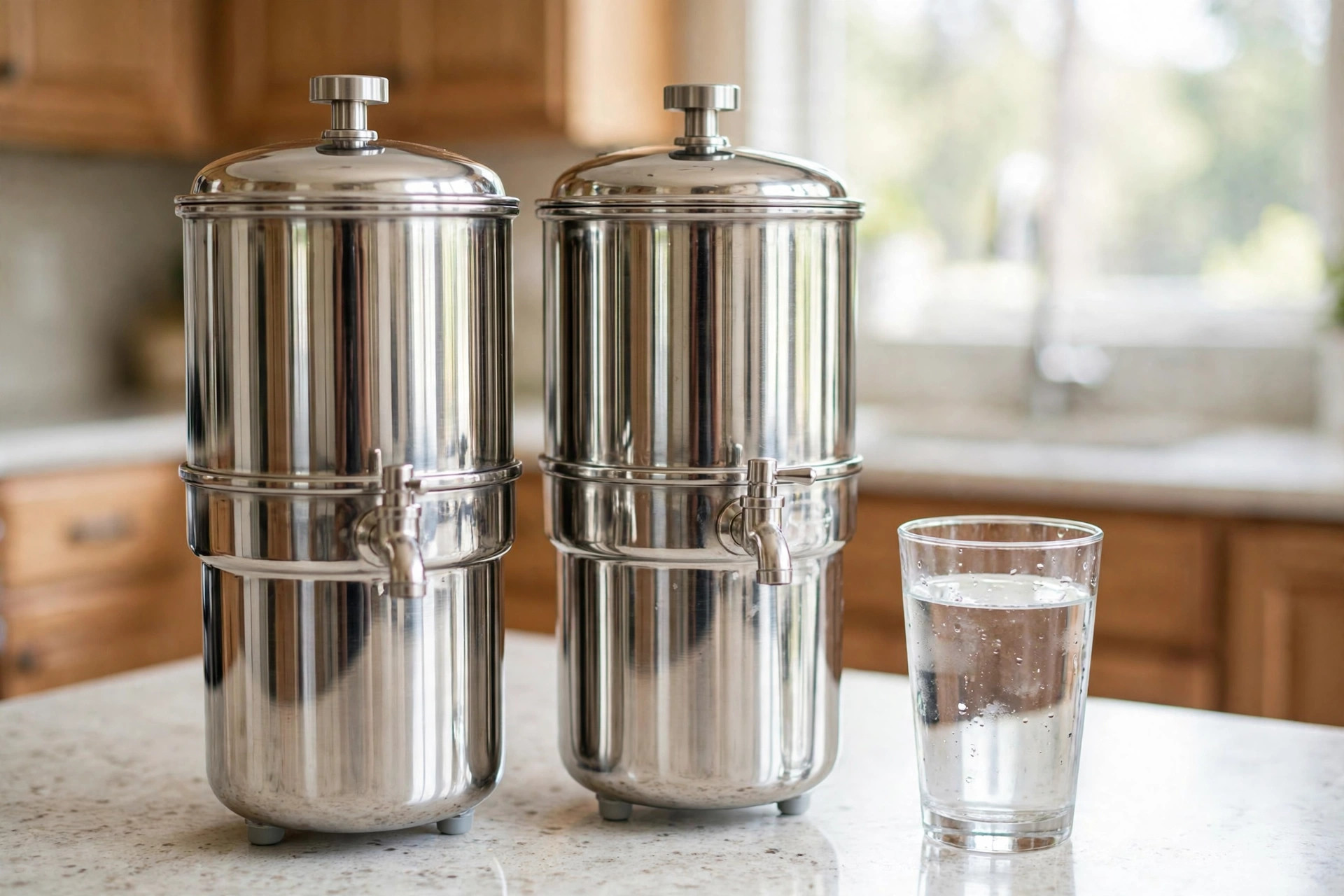

This berkey vs alexapure water filter comparison looks at two of the most talked-about gravity water filters sold in the United States. Both are stainless steel systems that sit on a kitchen counter. Both use gravity to move water through filter elements. Neither one needs plumbing or power. Shoppers often put them side by side because they look much alike. But there are real differences in how each one is built, what its filters claim to do, how much it costs over time, and how the makers stand behind it. The sections below walk through each point in plain terms. By the end, you will know which questions to ask before you buy, and which facts matter most for your own kitchen.
Why This Comparison Matters
Clean drinking water is one of the plainest needs a home can have. Tap water in most American homes meets federal standards, but many people want one more layer of care. They want to take out off tastes, odors, and certain metals. They want a backup for days when the tap runs cloudy or the news reports a boil order. Gravity filters answer this want in a simple way. You pour water in the top. Gravity pulls it down through the filter elements. Clean water waits for you in the lower chamber.
Berkey and Alexapure both serve this same need. Each one has a loyal following. Each one sells replacement elements that must be changed on a schedule. Each one makes claims about what its filters can remove. When two products look so much alike, the small differences are what count. Price per gallon, element life, ease of assembly, warranty terms, and the honesty of the claims all shape the value you get. A careful berkey vs alexapure water filter comparison saves you from buying on looks alone.
How These Gravity Filters Work: Berkey vs Alexapure Water Filter Comparison
The idea behind both systems is old and sound. Makers of home water filtration systems describe the same gravity principle. Water moves down through a filter medium under its own weight. There is no pump and no faucet connection. The upper chamber holds the unfiltered water. Two or more filter elements hang down from the floor of that chamber. Each element is a dense cartridge. As water seeps through the cartridge wall, the medium traps or holds back unwanted matter.
In both brands, the lower chamber collects the filtered water. A small spigot near the bottom lets you fill a glass. The whole unit is made of polished stainless steel in the common models, the same material trusted by leading makers of kitchen and bath fixtures. Some sizes trim cost with a plastic lower chamber. Flow is slow by design. A full upper chamber can take an hour or more to drain through. That is normal for gravity systems. Keep it filled so clean water is ready.
What the Filters Claim to Remove
Both brands describe long lists of substances their elements can reduce. Common claims include chlorine taste and odor, certain heavy metals, and sediment. The makers of each system publish test results on their own sites. A wise shopper treats company claims as a starting point, not as proof. Independent certification from a known body means far more than a chart printed by the seller.
Key Differences to Consider
The two systems differ in several places that matter day to day. Look at each one with fresh eyes before you decide.
Design and Build
Both brands use stainless steel canisters with a mirror finish. Berkey units tend to have a slightly heavier feel and thicker walls in the larger sizes. Alexapure units look similar but some buyers note a lighter gauge steel. Lids, bands, and spigots are where build quality shows. A spigot that drips will waste your filtered water. A lid that fits poorly will let dust in. Read buyer reviews that focus on these small parts rather than on star ratings alone.
Sizes also differ. Both lines offer small, medium, and large units. The usable storage in the lower chamber is the number to compare, not the total height of the unit. A tall unit with a shallow lower chamber stores less than a shorter one with a deep base. Measure your counter space and your shelf height before you order. These units are taller than most people expect.
Filter Elements and Capacity
The elements are the heart of each system, and here the two brands take different paths. Berkey systems commonly ship with two black filter elements that screw into the upper chamber. You can add more elements to speed the flow. Alexapure systems ship with their own gravity block elements, also fitted in pairs. Each brand sells its own replacements, and the parts do not mix. You cannot put one brand’s elements in the other brand’s chambers.
Element life is stated in gallons. Typical claims run into the thousands of gallons per pair. Real life depends on your water. Water that is heavy with sediment will clog elements sooner than clean city water. Both brands suggest cleaning the elements now and then with a soft scouring pad to restore flow. When flow drops to a trickle and cleaning no longer helps, it is time for new elements.
Capacity claims deserve care. A claim of thousands of gallons sounds large, but a family that drinks and cooks with filtered water can use several gallons a day. Do the math for your own home. Divide the stated element life by your daily use. That gives you a rough sense of how many months a set will last.
Certifications and Honest Claims
This is the part of the berkey vs alexapure water filter comparison that matters most. A water filter is a health device. Its claims should rest on solid ground. Look for testing by independent bodies that test to recognized standards. Read the fine print on company test reports. Note the difference between a test done in a company lab and one done by an outside lab.
Some states set their own rules for products sold as water treatment devices. If you live in such a state, check that the product you want is allowed for sale there. A product that is easy to buy online may not be registered in every state. This is not a small point. It speaks to how seriously the maker takes the rules that guard buyers.
Types and Options in Each Line
Both brands sell more than one size. The small units suit one or two people. The medium units suit a small family. The large units suit big families or use during storms and outages, when a home may lean on stored water for days.
Beyond size, both lines offer add-ons. Common extras include a stand that raises the unit so a tall glass fits under the spigot, extra filter elements for faster flow, and a priming tool that pushes water through a dry element before first use. Some buyers add a fluoride reduction attachment. If that matters to you, check whether each brand offers one and how often it must be changed. Add-on costs add up. Price the full setup you want, not just the base unit.
Replacement elements are sold in sets. Keep one spare set on hand if your home depends on the filter. During a storm or a boil order, you do not want to learn that your elements are spent.
Cost and Price
Sticker price tells only part of the story. Both systems cost more up front than a simple pitcher filter. The large units can cost several hundred dollars. But the fair way to judge price is cost per gallon over the life of the elements.
To find it, add the price of the unit to the price of one set of replacement elements. Divide by the total gallons the maker says those elements will treat. Then compare the two brands using the same math. Do this with care, because each maker states element life in its own way. If one maker is generous with its gallons and the other is modest, the math will favor the generous one on paper. Real use is the true test.
Also count the small costs. A stand, extra elements, and add-on attachments raise the total. Shipping can be high for heavy steel units. Shoppers often compare prices at large home improvement stores before they order, and DIY home improvement resources suggest tracking filter costs the same way.
Over five years, the gap between the two brands often narrows. The winner is usually the one whose elements last longer in your water and whose parts hold up without repair.
Care and Upkeep
Both systems ask for the same plain care. Wash the chambers with mild soap and water every few weeks. Rinse well so no soap stays behind. Do not put the steel parts in a dishwasher unless the maker says it is safe. Established home renovation guides recommend the same gentle cleaning routine for steel fixtures. Heat and harsh soap can harm the finish and the seals.
Scrub the filter elements lightly when flow slows. Use a clean pad and cool water. Do not use soap on the elements themselves. Prime new elements before first use, following the maker’s steps. A dry element that is not primed will flow poorly and may seem faulty when it is only thirsty.
Watch the seals and the spigot. Rubber parts wear out. A worn seal lets unfiltered water slip past the elements into the clean chamber. That defeats the whole purpose of the unit. Replace seals when they look flat or cracked. Keep spare seals with your spare elements.
Store the unit in a cool place away from sun. If you will not use it for a month or more, dry the elements fully before you put them away. Damp elements left in a warm cabinet can grow odors. When in doubt, clean everything and start fresh.
Safety Notes
Filtered water is not sterile water. Gravity filters reduce certain substances, but they do not make unsafe water safe in every case. If your water source is a private well, have the well tested by a lab before you trust any filter with it. If officials issue a boil order, follow it. A countertop filter is not a substitute for boiling during an emergency unless the maker and public health guidance say so.
Keep the unit out of reach of small children who might tip it. A full large unit is heavy and can hurt a child if it falls. Set it on a stable counter away from the edge. Clean up spills at once so no one slips.
Buy from a seller you trust. Counterfeit filter elements are a real problem online. A fake element may look right and do nothing. Buy replacements from the maker or from a retailer with a clear return policy. Check the packaging for signs of tampering when the box arrives.
Frequently Asked Questions
Do Berkey and Alexapure filters need electricity or plumbing?
No. Both are gravity systems. You pour water in the top and gravity does the work. That is why many buyers choose them for kitchens, cabins, and storm kits.
Which one filters faster?
Speed depends on the number of elements fitted and the state of your water. Both brands let you add extra elements to raise the flow. A brand-new set in clean water flows much faster than an old set in hard water. Compare the flow numbers each maker publishes, then read owner reviews for real-world reports.
Can I use one brand’s elements in the other brand’s unit?
No. The threads, seals, and chamber depths differ. Each brand’s elements fit only its own units. Plan to buy replacements from the same brand for the life of the system.
How often must the elements be replaced?
Follow the maker’s gallon rating and your own senses. If flow stays slow after cleaning, or if tastes and odors return, change the elements. Keep a log of the date you installed each set and the gallons you use each week. A simple log removes the guesswork.
Are these filters good for emergency use?
Many buyers keep a gravity filter as part of a storm kit because it needs no power. Store spare elements and seals with it. Remember that in a true emergency you should still follow public health advice for your area. A filter is one tool, not the whole plan.
Where can I learn more about water filter standards?
Public agencies publish plain guides on home water treatment. These guides explain what filters can and cannot do, and how to read test claims with care. They are a good check against sales language from any brand.
A Final Word
This berkey vs alexapure water filter comparison comes down to a few plain questions. Which unit fits your counter and your family size? Which brand’s element claims rest on the kind of testing you trust? Which one costs less per gallon in your home, not on paper? Answer those three, and the choice makes itself.
Both systems do the same basic job. Both need the same plain care. Neither one is magic. The best filter is the one you will keep filled, keep clean, and keep fitted with fresh elements. Buy from a trusted seller, read the maker’s care guide, and test your water if you have any doubt about the source. Do that, and whichever unit you choose will serve your kitchen well for years.
Shoppers comparing other home water options may also want to read our guides to the best sediment pre filter for ro system usa, the best sump pump for basement reviews usa, and practical fixes for hard water spots on dishes solutions usa.
References
Aquasana. (n.d.). Water filtration systems. https://www.aquasana.com Delta Faucet. (n.d.). Kitchen and bathroom faucets. https://www.deltafaucet.com Family Handyman. (n.d.). DIY home repair and maintenance. https://www.familyhandyman.com Kohler. (n.d.). Bathroom and kitchen fixtures. https://www.kohler.com Lowe’s. (n.d.). Home improvement products. https://www.lowes.com Moen. (n.d.). Faucets and plumbing fixtures. https://www.moen.com The Home Depot. (n.d.). Home improvement products. https://www.homedepot.com This Old House. (n.d.). Home renovation guidance. https://www.thisoldhouse.com U.S. Environmental Protection Agency. (n.d.). Protecting human health and the environment. https://www.epa.gov
Was this guide helpful?

About David Wilson
The My Garden US editorial team writes practical, in-depth home and garden guides for American homeowners — tested advice, no fluff.
You May Also Like

How to Unclog Garbage Disposal Safely: A USA Homeowner Guide
June 28, 2026 0 views
Heat Pump Water Heater Pros and Cons: A Plain Guide for American Homes
April 5, 2026 0 views
Constant Pressure Well Pump Reviews USA: A Homeowner’s Guide
June 28, 2026 0 views