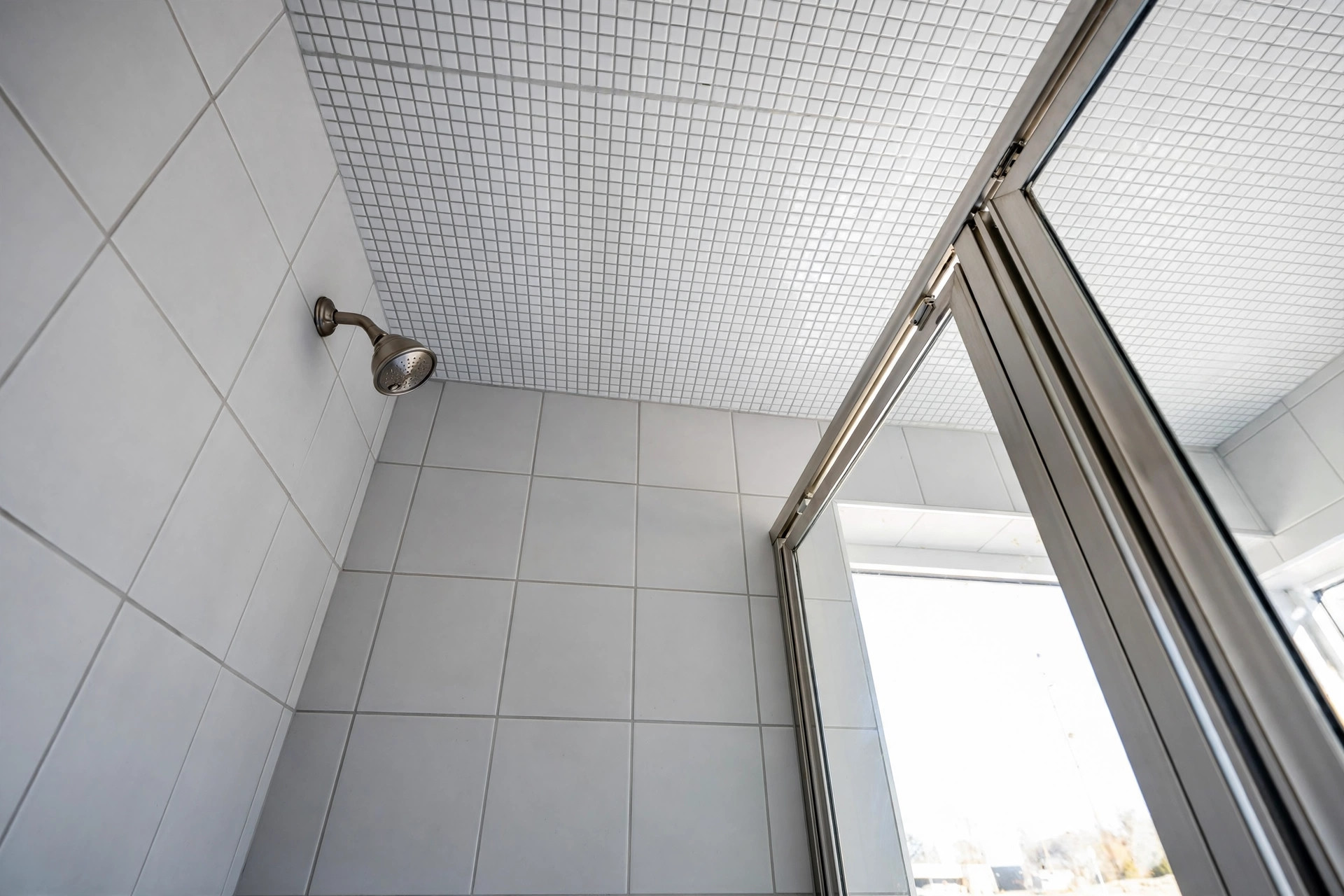

The search for the best tile for shower ceiling reviews USA homeowners can trust starts with a simple fact. A shower ceiling takes more punishment than any other tile surface in the home. Hot steam rises straight up every morning. It condenses on the cold surface above. Water droplets form, run, and sit in the grout lines. Gravity pulls down on every tile that hangs overhead. The right choice holds firm for decades. The wrong choice cracks, stains, or falls. This guide walks through the main options, the costs, and the care, in plain terms, so a homeowner can choose with confidence.
Why the Shower Ceiling Deserves Its Own Decision
Most people spend hours picking wall tile and floor tile. The ceiling gets whatever is left over. That is a mistake. Walls shed water downward. Floors drain it away. The ceiling traps it. Steam rises and cools against the surface above, turning back into water that has nowhere to go but down the walls or into the grout. A ceiling that is painted with ordinary latex paint will peel within a year or two in a steamy shower. A ceiling covered with the wrong tile can grow mold in the grout and loosen over time.
A tiled shower ceiling does more than survive steam. It finishes the room. When the ceiling matches or blends with the walls, the shower feels larger and more complete. When it contrasts, it adds a quiet note of style. Tile is also easier to wipe clean than painted drywall. A quick pass with a bathroom cleaner keeps it fresh. For these reasons, tile on the shower ceiling is common in new builds and remodels across the United States.
How to Choose: What to Look For: Best Tile for Shower Ceiling Reviews Usa
Choosing tile for the ceiling is not the same as choosing tile for the floor. Weight matters. Size matters. The way water moves across the surface matters. The points below show what to check before buying.
Weight and Size
Heavy, large tiles are a poor choice overhead. A twelve-inch square of thick stone weighs a good deal, and gravity works against the thinset every day. Smaller tiles are safer. Tiles of two inches square or smaller give the installer many edges to grip and keep the load light on each square inch. Mosaic sheets are popular for this reason. They come on mesh backing, they are easy to cut around vents and lights, and their weight spreads evenly.
Water Absorption
Tile is rated by how much water it absorbs. Porcelain tile absorbs very little, which makes it the standard pick for wet areas. Ceramic tile absorbs more. In a shower ceiling, low absorption is better. Less water inside the tile means less chance of staining, cracking in cold snaps, or mold growth behind the surface. Look for porcelain or dense glazed ceramic.
Slip and Texture
Slip ratings matter for floors, not ceilings. For the ceiling, the question is cleaning and looks. A smooth glazed surface wipes clean with ease. A rough, textured stone needs more care. Small tiles mean many grout lines, and grout needs sealing. Think about how much upkeep you want before you fall in love with a texture.
Color and Finish
Light colors make a low shower ceiling feel higher. A white or pale gray ceiling opens the space. Dark tile overhead can feel heavy in a small shower, though it can look rich in a large walk-in. Glossy finishes reflect light and brighten the space. Matte finishes hide water spots better. Many homeowners match the ceiling to the walls for a calm look, or use a simple white mosaic that goes with anything.
Reviews from American homeowners, gathered across big home improvement stores and large retail chains, point again and again to small porcelain mosaics as the most reliable pick for the ceiling. They hold well, clean well, and cost less than stone.
Types and Options for the Shower Ceiling
Several tile types work well overhead. Each has its fans. The notes below cover the most common choices.
Porcelain Mosaic
Porcelain mosaic is the workhorse of shower ceilings. The tiles are small, usually one or two inches square, and come glued to mesh sheets for fast setting. Porcelain absorbs almost no water. It comes in every color and finish. It is the top pick in most reviews because it simply lasts. If you want one safe answer, this is it.
Ceramic Tile
Ceramic tile costs less than porcelain and offers a wide range of colors. Standard glazed ceramic works fine on a ceiling that is well vented. It absorbs more water than porcelain, so a good grout seal and a working bath fan matter more. Small ceramic mosaics are a fine budget choice.
Glass Mosaic
Glass mosaic tile brings light into the shower. It shines, reflects, and comes in bright colors and soft sea tones. Glass is fully waterproof on its face. It needs a white thinset behind it so the color stays true. The grout lines are many, which means more sealing work, but the look is hard to beat in a modern bath.
Natural Stone
Marble, travertine, and slate can be used on shower ceilings, and they look grand. They are also heavy, costly, and thirsty. Stone must be sealed before and after install, and sealed again each year or two. In a steamy shower, stone needs steady care. For most homes, stone is a luxury pick, not a practical one.
Large Format Tile
Large tiles reduce grout lines, which sounds good overhead. In practice, they are hard to set on a ceiling. Each tile is heavy, and the installer must hold it in place while the mortar grabs. Most tile setters advise against tiles larger than six inches square on a ceiling. Small is safer and looks fine.
For the walls below, many readers also compare the best tile for shower walls, since wall and ceiling tile are often bought together. Matching or blending the two keeps the shower looking planned.
Cost and Price
Ceiling tile is a small job, so the total cost stays modest next to a full bathroom remodel. Still, prices vary by tile type and by who does the work.
Porcelain and ceramic mosaics are the budget end. Basic white porcelain mosaic often sells for a few dollars per square foot at specialty flooring shops. Fancy glass mosaics and designer stone can run many times that. A typical shower ceiling covers twenty to forty square feet, so even pricey tile adds only a few hundred dollars in material.
Labor is the bigger part. Setting tile overhead is slow work. The installer works with arms raised, and each sheet must be pressed and checked. Expect the labor for a shower ceiling to cost more per square foot than the same tile on a wall. Many homeowners report total ceiling jobs, tile plus labor, in the low hundreds of dollars when done as part of a larger shower remodel.
Grout and sealer add a little more. Shower grout options range from simple sanded cement grout to stain-proof epoxy. Epoxy costs more up front but resists mold and never needs sealing. Our companion piece on epoxy grout versus cement grout walks through the trade-off in detail.
To keep the budget in check, pick the tile first and ask the installer for a firm price on the ceiling alone. Prices from flooring makers and manufacturers are easy to compare online before you visit a showroom.
Care and Upkeep
A tiled shower ceiling asks for little, but it asks regularly. The grout is the weak point. Cement grout should be sealed after install and resealed once a year in a steamy shower. Epoxy grout skips this step.
Wipe the ceiling down every week or two with a bathroom cleaner and a soft cloth or sponge. This stops soap film and mildew from settling into the grout lines. Run the bath exhaust fan during every shower and for twenty minutes after. Good venting does more for a ceiling than any cleaner. It carries the steam out before it can condense and soak in.
Check the caulk where the ceiling meets the walls once a year. If it cracks or pulls away, scrape it out and lay a fresh bead of silicone made for baths. Water that sneaks behind tile causes the most costly damage in a shower.
Hard water leaves white spots on glossy tile. A mix of equal parts white vinegar and water cuts through them. Rinse well after. Avoid harsh acids on natural stone, which can etch and dull the surface.
Safety
Tile on a ceiling must stay on the ceiling. Safety starts with the substrate. Tile needs a solid cement backer board, screwed firm to the framing. Ordinary drywall softens in steam and should never sit behind shower tile.
The mortar matters too. Use a polymer-modified thinset rated for the tile you bought. For glass tile, use the white mortar the maker calls for. Press each sheet well so the bond is full. A tile that sounds hollow when tapped may be loose and should be reset.
Keep tile sizes small and weights low. Follow the tile maker’s limits on how large a piece may go overhead. If a tile ever falls, do not just glue it back. Find out why it let go. It may signal a water leak or a bad bond that needs a fuller repair.
Vent fans are a safety item in disguise. Constant damp feeds mold, and mold harms indoor air. A fan that moves enough air for the room size, vented to the outdoors and not into the attic, protects both the tile and the people who use the shower. Guidance from independent testing groups and old-house experts agrees on this point.
Electrical fixtures in the shower ceiling, such as recessed lights, must be rated for wet locations. Keep the trim sealed and never set tile so tight that it traps heat around a light can. When in doubt, ask an electrician before the tile goes up.
FAQ
What is the best tile size for a shower ceiling?
Small tiles, two inches square or smaller, work best. They are light, they bond well, and mosaic sheets make them easy to install around vents and lights. Large heavy tiles are hard to set overhead and more likely to fail.
Can I use the same tile on the ceiling as on the walls?
Yes, and many people do. Using the wall tile on the ceiling gives a clean, wrapped look. Just keep the ceiling pieces small. If your wall tile is large, pick a smaller mosaic in a matching color for the ceiling instead.
Does a shower ceiling need to be tiled at all?
No, but tile outlasts paint in a steamy shower. Painted ceilings peel and spot with mold in heavy use. Tile costs more up front and far less in upkeep over the years.
How do I stop mold on shower ceiling grout?
Vent the steam out with a good exhaust fan, seal cement grout yearly, and wipe the ceiling down often. Epoxy grout resists mold far better than cement grout and is worth the extra cost in a shower that sees daily use.
Is glass tile safe on a shower ceiling?
Yes, when it is set with the right white mortar on cement backer board. Glass is waterproof and light. The many grout lines need sealing, and the tile should be rated for wet areas by its maker.
How much does it cost to tile a shower ceiling?
Material for a small ceiling often runs under two hundred dollars for basic porcelain mosaic, more for glass or stone. Labor adds several hundred more because overhead work is slow. As part of a full shower remodel, the ceiling is a small line item.
A Short Final Word
The best tile for shower ceiling reviews USA shoppers praise most is small, light, and nearly waterproof. Porcelain mosaic leads the pack for good reason. It is kind to the budget, simple to clean, and it stays put. Glass mosaic suits those who want shine. Stone suits those who want luxury and accept the upkeep. Whatever you pick, set it on cement backer board with the right mortar, seal the grout, and run the fan. Do those four things and the ceiling will look fine for longer than you own the home.
For more background on tile choices, home advice sites and renovation guides keep large libraries of bathroom project notes. Leading tile brands also publish care sheets for their own products, which are worth reading before you buy.
References
Bob Vila. (n.d.). Home improvement advice. https://www.bobvila.com Consumer Reports. (n.d.). Product reviews and ratings. https://www.consumerreports.org Daltile. (n.d.). Ceramic and porcelain tile. https://www.daltile.com LL Flooring. (n.d.). Hardwood, vinyl, and tile flooring. https://www.llflooring.com Lowe’s. (n.d.). Home improvement products. https://www.lowes.com Mohawk Flooring. (n.d.). Flooring products. https://www.mohawkflooring.com Shaw Floors. (n.d.). Flooring products. https://www.shawfloors.com The Home Depot. (n.d.). Home improvement products. https://www.homedepot.com The Spruce. (n.d.). Home and garden advice. https://www.thespruce.com This Old House. (n.d.). Home renovation guidance. https://www.thisoldhouse.com
Was this guide helpful?

About James Carter
The My Garden US editorial team writes practical, in-depth home and garden guides for American homeowners — tested advice, no fluff.
You May Also Like

The Best Persian Rug for Living Room Use in America
May 3, 2026 0 views
Best LVP Flooring Brands 2026 USA: What Homeowners Should Know
May 29, 2026 0 views
Best Tile for Shower Walls: A 2026 Review Guide for American Homes
May 5, 2026 0 views