
Introduction
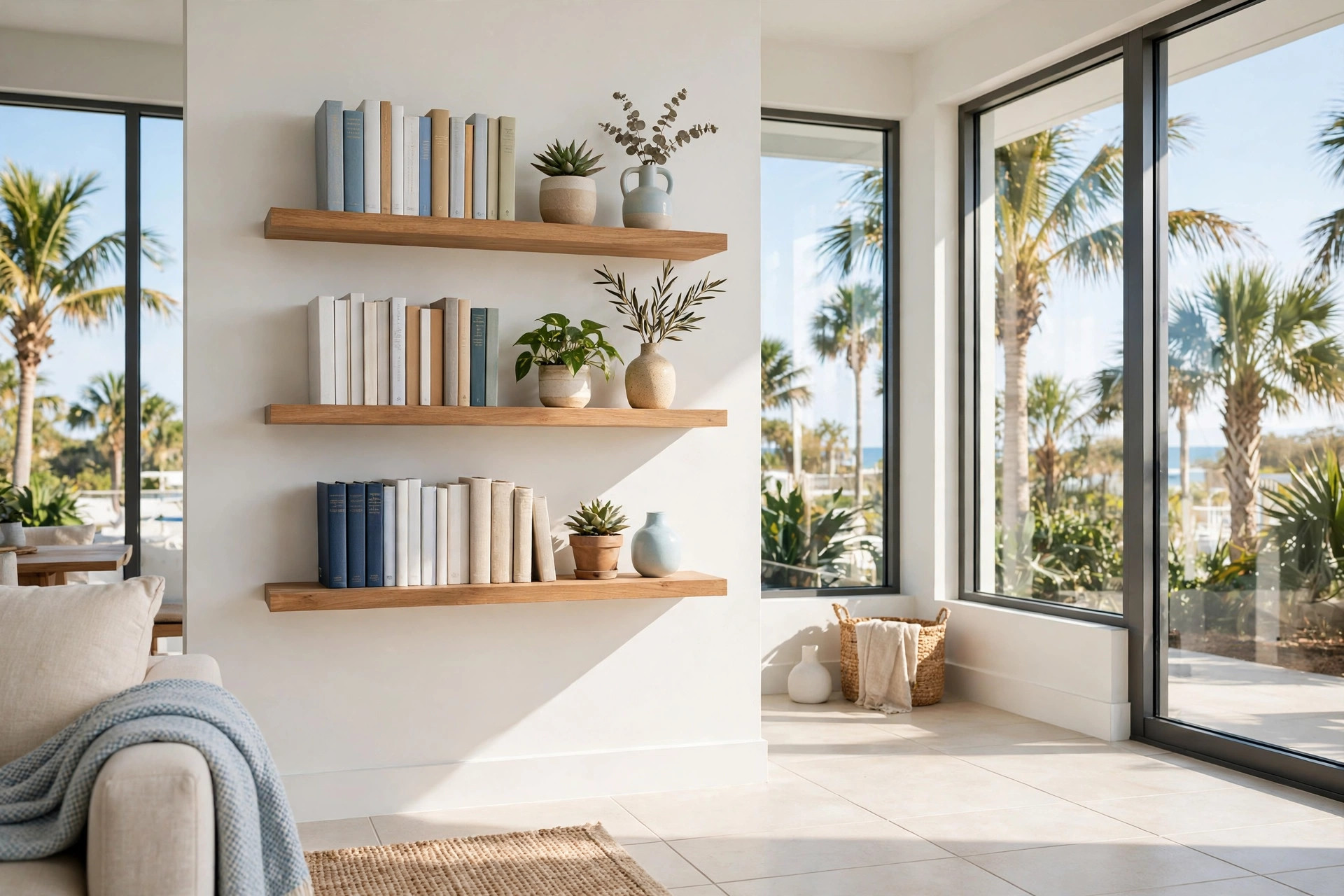
Modern wall bookshelves florida homes usa shoppers search for share one common trait. They lift books and objects off the floor and set them against the wall, which suits the bright, open rooms found across the state. From apartments in Miami to single-family homes in Tampa and Jacksonville, wall-mounted shelving gives storage without the bulk of a full bookcase.
The idea is simple. A shelf board is fixed to the wall with hidden brackets or visible hardware. Several boards make a composition. Because nothing touches the floor, the room looks larger and cleaning stays easy. In Florida, where many homes have tile or wood floors that benefit from air flow, that raised design has real value.
This guide explains what to look for, which types work best, what they cost, and how to keep them safe in a humid climate. It closes with answers to common questions.
Why Wall Bookshelves Matter in Florida Homes: Modern Wall Bookshelves Florida Homes Usa
Florida rooms tend to be bright. Large windows, sliding glass doors, and light walls are the norm. A tall dark bookcase can feel heavy in such a space. Modern wall bookshelves keep the line of sight open and let light travel. The result is a room that feels as airy as it is useful.
Humidity is the second reason. Florida air carries moisture much of the year. Furniture that sits flat on the floor can trap damp air underneath. A wall shelf leaves the floor clear, so air moves freely and floors dry faster after mopping. This matters most in ground-floor rooms and in homes near the coast.
Space is the third reason. Many Florida condominiums and townhouses have modest square footage. Wall shelving turns dead wall space into storage. A hallway wall, the space above a desk, or the wall beside a window becomes a library. No floor space is lost at all.
Style is the final reason. Modern wall bookshelves match the clean lines of contemporary Florida interiors. Simple boards in white, oak, or walnut fit with coastal and modern farmhouse looks alike. They frame a television, mark a reading corner, or turn a bare wall into a gallery of books and small art.
What to Look For When You Choose
Start with the wall itself. Drywall alone will not hold heavy books. The shelf must anchor into studs, which are the vertical wood or metal posts behind the wall surface. A stud finder, a small tool sold at most home centers, locates them. For shelves that will carry full rows of books, plan for at least two stud anchors per shelf.
Look at weight ratings next. A shelf that holds only plants and picture frames can use lighter hardware. A shelf that holds books needs more. A single foot of books can weigh several pounds, and a four-foot shelf of hardcovers adds up fast. Read the weight limit on the product page before you buy. When in doubt, choose the stronger bracket.
Check the depth. Standard shelves run eight to twelve inches deep. Eight inches holds paperbacks and small decor. Ten or twelve inches holds most hardcovers and larger art books. Measure your largest books before you order. A shelf that is too shallow forces books to lean out at an angle, which looks untidy and strains the mounts.
Think about the finish. In Florida, light finishes reflect the sun and keep rooms cool to the eye. White lacquer, light oak, and pale ash are popular. Dark walnut works too, especially as an accent against white walls. Whichever you choose, look for a sealed finish that resists moisture. Raw unfinished wood can swell in humid air.
Consider the look of the hardware. Floating shelves hide their brackets inside the board for a clean line. Bracketed shelves show the supports, which can be part of the design. Black metal brackets suit modern rooms. Brass or gold-toned brackets warm up a coastal palette. Both styles are widely stocked at IKEA and Wayfair, where you can compare lengths and finishes side by side.
Types and Options
Floating Shelves
Floating shelves are the most common modern choice. A metal rod or plate fixes to the wall, and the shelf board slides over it. From the front, no hardware shows. They look best in sets of two or three, spaced evenly. They suit light to medium loads. For heavy book rows, confirm the model is rated for the weight or add a center support.
Bracketed Shelves
These use visible L-shaped or decorative brackets under the board. They carry more weight than most floating designs and the brackets add character. Industrial black steel, brushed nickel, and wood corbels are common. They fit modern farmhouse and transitional rooms well, and pair nicely with pieces like a modern farmhouse table.
Box and Cube Shelves
Cube shelves are open boxes mounted to the wall in a grid or scattered pattern. Each cube frames its contents like a small display case. They are ideal for mixing books with vases, plants, and framed photos. Many come in modular sets so you can build the arrangement over time. Retailers such as Article and CB2 carry box-style shelving in modern profiles.
Ladder and Leaning Shelves
A leaning shelf rests its top against the wall and its feet on the floor. It is not fully wall-mounted, but it earns a place here because it serves the same purpose with almost no installation. It suits renters. The top shelves are shallow and the lower shelves deeper, which follows the natural shape of a leaning frame. Anchor the top to the wall with the included strap so it cannot tip.
Corner Shelves
Corner shelves turn an unused corner into storage. Small triangular or L-shaped boards stack up the corner at even intervals. They work well in small bedrooms and home offices. Because corner studs can be hard to find, use strong wall anchors rated for the load.
Picture Ledge Shelves
A picture ledge is a narrow shelf with a small lip at the front edge. Books face outward so their covers show. This style suits children’s rooms and reading nooks, and it makes a fine display for art prints as well. West Elm and Crate & Barrel list ledge shelves in several lengths.
Cost and Price
Prices vary with size, material, and brand. A single floating shelf in engineered wood, two to three feet long, often costs between twenty and sixty dollars. Solid wood shelves of the same length run from sixty to one hundred fifty dollars. Metal bracket sets add ten to forty dollars per shelf depending on finish and weight rating.
A full wall arrangement of three to five shelves, with hardware, commonly totals between one hundred fifty and five hundred dollars. Custom-cut solid wood or designer pieces can reach higher. Installation is often a do-it-yourself job with a drill, a level, and a stud finder, which keeps the total down. Professional mounting usually costs seventy-five to one hundred fifty dollars per visit in most Florida markets.
To keep costs in check, start with two shelves and add more later. Modular systems make this easy. Compare prices across Houzz, The Spruce, and HGTV for current styles and price ranges before you commit.
Care and Upkeep in a Humid Climate
Florida humidity asks for a little extra care. Wipe shelves with a dry or slightly damp cloth every few weeks. Dust holds moisture against the finish, so regular dusting protects the surface. Avoid soaking the wood. If you mop nearby floors, keep water off the shelf boards.
Check the mounting hardware once a year. Humidity and temperature swings can loosen screws over time. Tighten anything that has worked free. If a shelf has begun to sag, move heavy books toward the stud anchors at the ends and lighter objects to the middle.
Keep books themselves in good shape. Leave small gaps between books for air flow. Do not pack shelves tight against an exterior wall where condensation can form. In rooms without air conditioning, a small dehumidifier helps both the shelves and the books. Ideas for styling shelves around seating can be found at Apartment Therapy, which covers small-space display ideas in depth.
Sunlight is the other Florida factor. Strong sun fades book spines and wood finishes. If your shelves face large windows, rotate the books a few times a year or add sheer curtains. A faded spine is a small price for a bright room, but rotation keeps the collection looking even.
Safety
Safety starts with correct mounting. Always anchor into studs for heavy loads. If studs do not line up with your plan, use toggle bolts or other heavy-duty hollow-wall anchors rated for the weight. Never trust a simple plastic expansion anchor with a shelf full of books.
Keep shelves level during installation. A shelf that tilts forward can slide books off the front edge. Use a spirit level, not your eye alone. Mark all holes before drilling.
In homes with small children, mount shelves high enough that climbing is not tempting, and never place heavy objects where a child could pull them down. For nurseries and playrooms, prefer closed storage at low levels and keep wall shelves for light decor out of reach.
In hurricane season, remember that wall shelves near windows can catch flying debris if glass breaks. Keep valuable or fragile objects on interior walls during storm season, or move them to closed cabinets when a storm approaches. This is simple caution, and it costs nothing.
Frequently Asked Questions
How much weight can a floating shelf hold?
It depends on the shelf and the wall. A well-made floating shelf anchored into two studs can often hold thirty to fifty pounds. Lighter models on drywall anchors hold far less. Always check the rating on the product page and mount into studs for books.
Can I install wall bookshelves on a concrete block wall?
Yes. Many Florida homes have concrete block walls. Use masonry drill bits and concrete anchors or sleeve anchors. A hammer drill makes the job much faster. The hold in concrete is excellent once the anchor is set.
What is the best spacing between shelves?
For books, allow ten to twelve inches between shelves. This fits most hardcovers with room to slide them in and out. For mixed decor, twelve to fifteen inches gives objects breathing room. Mark the spacing on the wall with painter’s tape and live with it for a day before drilling.
Do wall bookshelves work in a rental?
They do, with care. Small floating shelves leave only a few holes that spackle and paint can hide. Leaning ladder shelves need only one or two anchor points. Always check your lease first. Some landlords forbid wall mounting, in which case freestanding bookcases are the safer choice.
Which wood finish lasts longest in Florida humidity?
Sealed finishes last longest. Lacquered, polyurethane-coated, or factory-sealed boards resist moisture far better than raw wood. Teak and white oak handle humidity well as species. Whatever you choose, keep the finish intact and re-seal any scratches promptly.
How do I style the shelves so they look modern, not cluttered?
Group in odd numbers and leave empty space. A stack of books, one vase, and one framed print makes a calm group. Repeat colors across shelves for rhythm. Step back often while you arrange. If a shelf feels busy, remove one object rather than adding another. Pairing shelves with the right seating, such as a well-chosen mid-century chair, completes the corner.
A Short Final Word
Modern wall bookshelves suit Florida homes because they match how these homes live. They keep rooms bright, floors clear, and walls useful. Choose shelves rated for your books, anchor them into studs or solid masonry, and pick sealed finishes that stand up to humid air. Style them with restraint and check the hardware once a year.
A bare wall is a missed chance. With a level, a drill, and a free afternoon, it becomes a library. For more ideas on furnishing the room around your new shelves, from consoles to full seating plans, browse guides like the rustic console table buying guide and keep building a home that feels both open and personal.
References
Apartment Therapy. (n.d.). Home design ideas and inspiration. https://www.apartmenttherapy.com Article. (n.d.). Modern furniture. https://www.article.com CB2. (n.d.). Modern furniture and decor. https://www.cb2.com Crate and Barrel. (n.d.). Furniture and home decor. https://www.crateandbarrel.com HGTV. (n.d.). Home and garden ideas. https://www.hgtv.com Houzz. (n.d.). Home design and remodeling. https://www.houzz.com IKEA. (n.d.). Home furnishings. https://www.ikea.com The Spruce. (n.d.). Home and garden advice. https://www.thespruce.com Wayfair. (n.d.). Furniture and home goods. https://www.wayfair.com West Elm. (n.d.). Modern furniture and home decor. https://www.westelm.com
Was this guide helpful?

About David Wilson
The My Garden US editorial team writes practical, in-depth home and garden guides for American homeowners — tested advice, no fluff.
You May Also Like
Rustic Console Tables Reviews: Buying Guide USA
February 3, 2026 0 views
Where to Buy Modern Farmhouse Tables in the USA
May 13, 2026 0 views
Bedroom Dressers With a Mirror for Texas Homes: A Plain Buying Guide
March 12, 2026 0 views