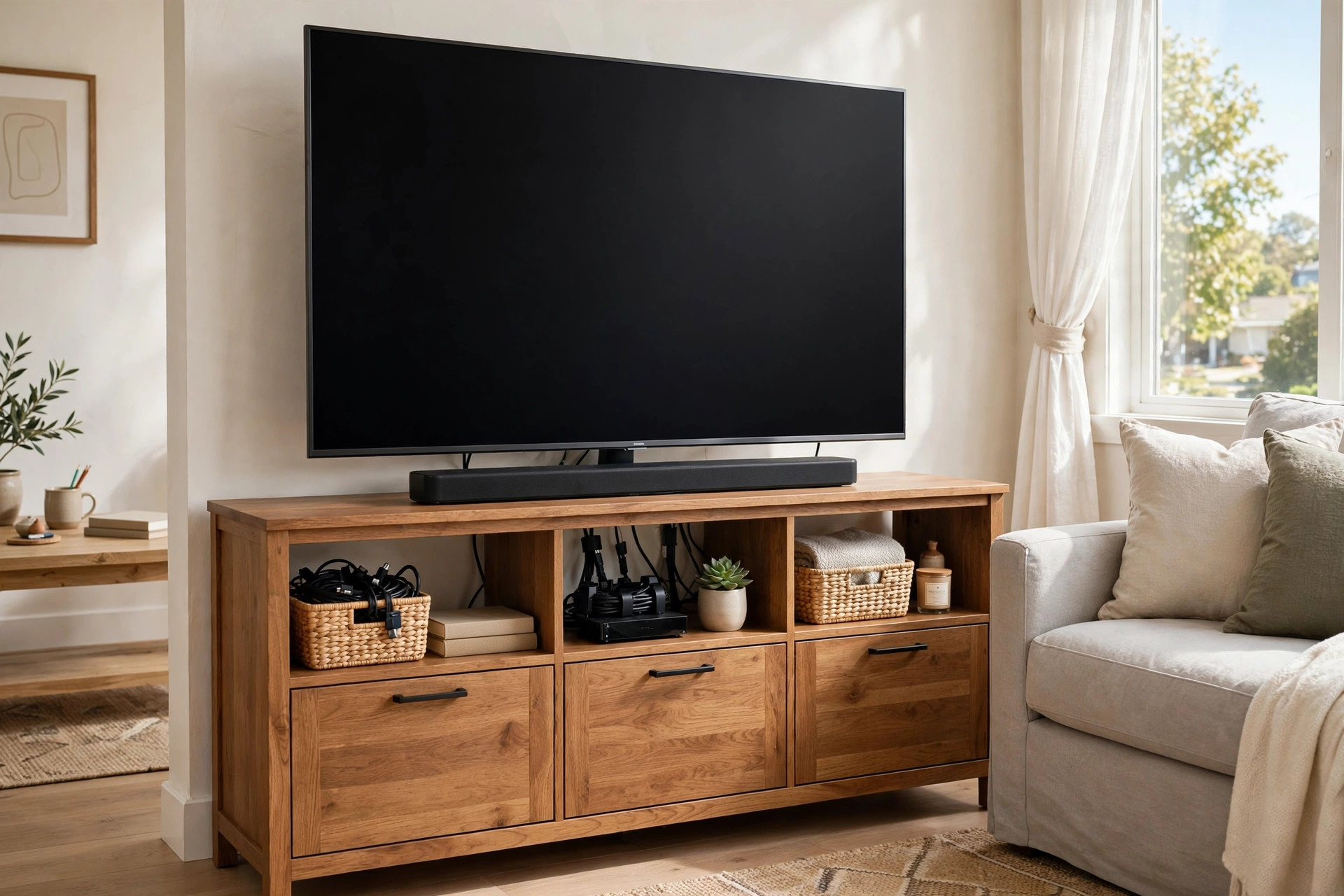

The search for living room tv stands deals near me starts with one simple wish. You want a good stand for your television at a fair price. You want it close to home. You do not want to pay too much. You do not want to wait weeks for delivery. This guide will help you.
A TV stand is more than a shelf for a screen. It holds your cable box, your game system, and your movie player. It hides wires that would otherwise run across the floor. It gives your living room a finished look. When you buy it at a good price, the whole room feels better without hurting your budget.
The tips below cover every step. You will learn what to look for, what the main types are, what they cost, and where the best local deals hide. By the end, you will know how to walk into a store near you and walk out with the right stand at the right price.
Why the Right TV Stand Matters
A television is one of the largest objects in a living room. The stand under it sets the tone for the whole space. A stand that is too small makes the screen look ready to fall. A stand that is too large eats up floor space. The right size brings balance to the room.
There are practical reasons too. A good stand keeps your equipment off the floor and away from dust. It keeps cables out of sight and out of reach of small children and pets. It gives you shelves and drawers for the small parts of modern living: remote controls, game controllers, and movie discs. A cheap, weak stand can bow under the weight of a large screen. A strong one will last for many years.
Style matters as well. Your stand is visible every time you enter the room. A living room TV stand for sale in the wrong finish can clash with your sofa and tables. One that matches your decor pulls everything together. When you shop for living room tv stands deals near me, think about how the piece will look next to what you already own.
What to Look for When You Shop: Living Room Tv Stands Deals near Me
Not every stand is worth the money, even at a low price. Use the checklist below before you buy.
Size and Fit
Measure your television first. The width of the stand should be at least as wide as the screen, and a few inches wider is better. Check the depth too. Most flat screens are thin, but sound bars and cable boxes add depth. Measure the wall space where the stand will go. Write down the numbers and take them with you. Advice columns from The Spruce often remind shoppers that a tape measure is the best tool in furniture buying.
Height matters for comfort. The center of the screen should sit near eye level when you are seated. For most sofas, a stand between 20 and 30 inches tall works well. If you mount the screen on the wall and use the stand only for equipment, height is less strict.
Material and Build
Solid wood stands cost more but last the longest. Engineered wood, such as medium-density fiberboard, costs less and looks fine when finished well. Metal frames with wood or glass shelves give a modern look and hold heavy screens with ease. Avoid stands made from very thin particle board if your television is large and heavy.
Shake the floor model in the store. A good stand feels firm and steady. Look at the finish in bright light. Scratches and rough edges on the display model often mean weak quality across the whole line.
Storage and Cable Management
Count your devices. Each one needs a shelf with room for air to flow around it. Devices that run hot, like game consoles, should not sit in tight boxes. Look for holes in the back panel where cables can pass through. Some stands have built-in wire channels that keep everything neat.
Doors and drawers add cost, but they hide clutter. Open shelves make remotes and controllers easy to reach. Think about your habits. If you dislike dusting, closed storage is worth the extra money.
Common Types of Living Room TV Stands
Stores carry many shapes. The list below covers the ones you will meet most often.
Console Stands
The console is the classic choice. It is a low, wide cabinet with doors or shelves. It fits most living rooms and most televisions. Console stands come in every style, from farmhouse wood to plain modern boxes. They are often the first item to go on sale because stores stock so many of them. Simple flat-pack designs from IKEA make this type easy to assemble at home.
Corner Stands
A corner stand is shaped to fit where two walls meet. It saves space in small rooms. The screen angles out toward the seating area. Corner stands work well in apartments and in rooms where the sofa sits at an angle. They often cost a little less than full consoles because they use less material.
Floating and Wall-Mounted Shelves
Floating stands hang on the wall and leave the floor clear. They make a small room look larger. They need a strong wall and careful mounting. If you rent your home, check your lease before you drill. These stands suit people who want a clean, modern look and own few devices.
Entertainment Centers and Hutches
An entertainment center is a large unit with side towers and sometimes a top bridge. It holds the television plus books, dishes, and decor. These pieces cost the most and need a big wall. They go on deep discount during holiday sales when stores need to clear floor space.
Where to Find Deals Near You
The phrase “near me” points to local shopping. Local stores have floor models, clearance corners, and managers who can cut prices. Start with the big furniture chains and the large home stores near you. Walk the clearance aisle first. Floor models are often sold at 30 to 50 percent off with only light wear.
Ask about price matching. Many stores will match a lower price from a rival. Bring a phone photo of the rival price tag. Ask about delivery fees before you fall in love with a piece.
Online marketplaces also run local warehouse sales. Check their sites for “open box” and “clearance” sections. These are returns and floor models sold cheap. CB2 and West Elm hold seasonal sales that are worth a visit when you want a modern look.
Do not forget the local options. Secondhand shops, estate sales, and neighborhood listings often carry solid wood stands at a small fraction of the new price. A stand from the 1990s made of real oak can outlast a new one made of thin board. Look for sturdy joints and smooth drawer slides. A coat of polish can make an old piece look new.
Timing matters. The best sales come around major holidays: Presidents Day, Memorial Day, the Fourth of July, Labor Day, and Black Friday. New models arrive in spring and fall, so stores cut prices on old stock just before. If you can wait a few weeks for the next sale, you may save a good sum.
While you shop, think about the rest of the room. A living room ottoman deal near you can match your new stand, and a sofa console table deal near you can complete the wall. Buying two pieces from the same store may earn you a bundle discount, so ask the salesperson.
For style ideas before you shop, browse the photo galleries at Houzz and HGTV. They show real living rooms with every type of stand, and Article shows modern designs at mid-range prices. Apartment Therapy offers small-space ideas that work well in apartments. Crate and Barrel shows how a simple stand can fit a classic American living room.
What TV Stands Cost in 2026
Prices vary by size, material, and brand. The ranges below reflect common prices in American stores this year.
A small basic stand for a 32-inch screen often costs between 60 and 150 dollars. These are simple designs in engineered wood. They suit a bedroom or a small apartment.
A mid-size console for a 50 to 65-inch screen usually costs between 150 and 400 dollars. This is the sweet spot for most buyers. You get solid shelves, decent finish, and enough storage for several devices. Sale prices can drop these to near 100 dollars.
Large entertainment centers and solid wood consoles range from 400 to over 1,000 dollars. Real wood, soft-close drawers, and brand names push the price up. These pieces are worth buying on sale. A 30 percent discount on a 700-dollar stand saves 210 dollars.
Used stands cost far less. Thrift shops and local listings often sell good stands for 20 to 80 dollars. Inspect them well. Check for water damage, loose joints, and missing shelves.
Watch for extra costs. Delivery can add 30 to 100 dollars. Assembly services add more. Many stands need an hour of home assembly. If you can build it yourself, you save money. Read the reviews for notes on hard assembly before you buy.
Care and Upkeep
A TV stand needs little care, but a few habits will keep it looking new for years.
Dust the top and shelves once a week with a soft cloth. Dust holds moisture against the finish and dulls it over time. For wood stands, use a polish made for wood every few months. Wipe up spills at once. Water rings form fast on wood and are hard to remove.
Keep the back of the stand clear of dust. Pull the stand out twice a year and vacuum behind it. Dust builds up around cables and vents. Good airflow keeps your devices cool and extends their life.
Do not overload the shelves. Check the weight limit in the manual. Heavy items like large speakers should sit on the bottom shelf or the floor. If a shelf starts to bow, move weight off it at once. A bowed shelf will not straighten on its own.
Tighten screws once a year. Furniture loosens with daily use. A quick check with a screwdriver keeps the stand firm and quiet. This small habit prevents wobbles that can stress the joints.
Safety Tips for Families
Televisions and stands can tip. This is a real danger for small children who climb. Anchor tall or narrow stands to the wall with anti-tip straps. These straps cost little and take minutes to install. The CPSC urges parents to secure heavy furniture, and the same advice applies to TV stands.
Place the television as far back on the stand as you can. Use the safety strap that comes with many new screens. Keep remote controls and toys off the top of the stand so children are not tempted to climb.
Check the weight rating. The stand must hold the screen plus every device on it. A 65-inch television can weigh 50 to 70 pounds. Add a sound bar, a cable box, and a game console, and the total climbs fast. Buy a stand rated well above your total weight.
Keep cables tidy and out of reach. Loose cables tempt toddlers to pull. They also trip adults in the dark. Use cable ties or a cord cover. A neat back panel is safer and looks better.
Frequently Asked Questions
What size TV stand do I need for a 55-inch television?
Look for a stand at least 50 inches wide. A 55-inch screen measures about 48 inches across. A stand a few inches wider gives a stable base and room for a sound bar. For the best fit, choose a stand made for 55 to 65-inch screens.
Can I use a dresser or a bookshelf as a TV stand?
Yes, if it is strong enough and the right height. Many people use a low dresser as a stand. Check the weight limit. Make sure the top is deep enough for the screen base. A living room TV stand for sale near you is built for the job, but a sturdy dresser works in a pinch.
Are cheap TV stands worth buying?
They can be, if you choose well. A low-price stand in engineered wood works fine for a small screen. Read reviews about sturdiness. Avoid the cheapest models for large, heavy televisions. A stand that fails can cost you far more than the money you saved.
How do I hide the cables behind my TV stand?
Run cables through the holes in the back panel. Use velcro ties to bundle them. A cord cover that matches the wall hides the drop from the screen to the stand. Keep power cords apart from signal cables when you can. This reduces interference and looks tidy.
Should I buy a TV stand online or in a store near me?
Both have merits. Stores let you touch the wood and test the drawers. Local deals on floor models can beat online prices. Online shops show more styles and reviews. If you buy online, check the return policy. Heavy furniture can be costly to ship back.
When is the best time to buy a TV stand?
Holiday weekends bring the deepest cuts. Presidents Day, Memorial Day, Labor Day, and Black Friday are the peak sale days. Spring and fall bring new models, so old stock goes on clearance just before. If you are not in a hurry, wait for the next big sale.
A Short Final Word
Finding living room tv stands deals near me is a simple task when you plan ahead. Measure your space. Know your budget. Visit local stores and check their clearance corners. Compare prices online. Wait for a sale if you can. The right stand will hold your screen safely, hide your cables, and make your living room feel complete. Take your time, choose well, and enjoy the savings.
References
Apartment Therapy. (n.d.). Home design ideas and inspiration. https://www.apartmenttherapy.com Article. (n.d.). Modern furniture. https://www.article.com CB2. (n.d.). Modern furniture and decor. https://www.cb2.com Crate and Barrel. (n.d.). Furniture and home decor. https://www.crateandbarrel.com HGTV. (n.d.). Home and garden ideas. https://www.hgtv.com Houzz. (n.d.). Home design and remodeling. https://www.houzz.com IKEA. (n.d.). Home furnishings. https://www.ikea.com The Spruce. (n.d.). Home and garden advice. https://www.thespruce.com U.S. Consumer Product Safety Commission. (n.d.). Product safety information. https://www.cpsc.gov Wayfair. (n.d.). Furniture and home goods. https://www.wayfair.com West Elm. (n.d.). Modern furniture and home decor. https://www.westelm.com
Was this guide helpful?

About Emily Rodriguez
The My Garden US editorial team writes practical, in-depth home and garden guides for American homeowners — tested advice, no fluff.
You May Also Like

Leather Recliner Chairs USA Online Deals: A Simple Buying Guide
August 23, 2026 0 views
Sofa Console Tables: Where to Buy in the USA
June 30, 2026 0 views
Couch Throw Pillows for California Homes USA
September 1, 2026 0 views