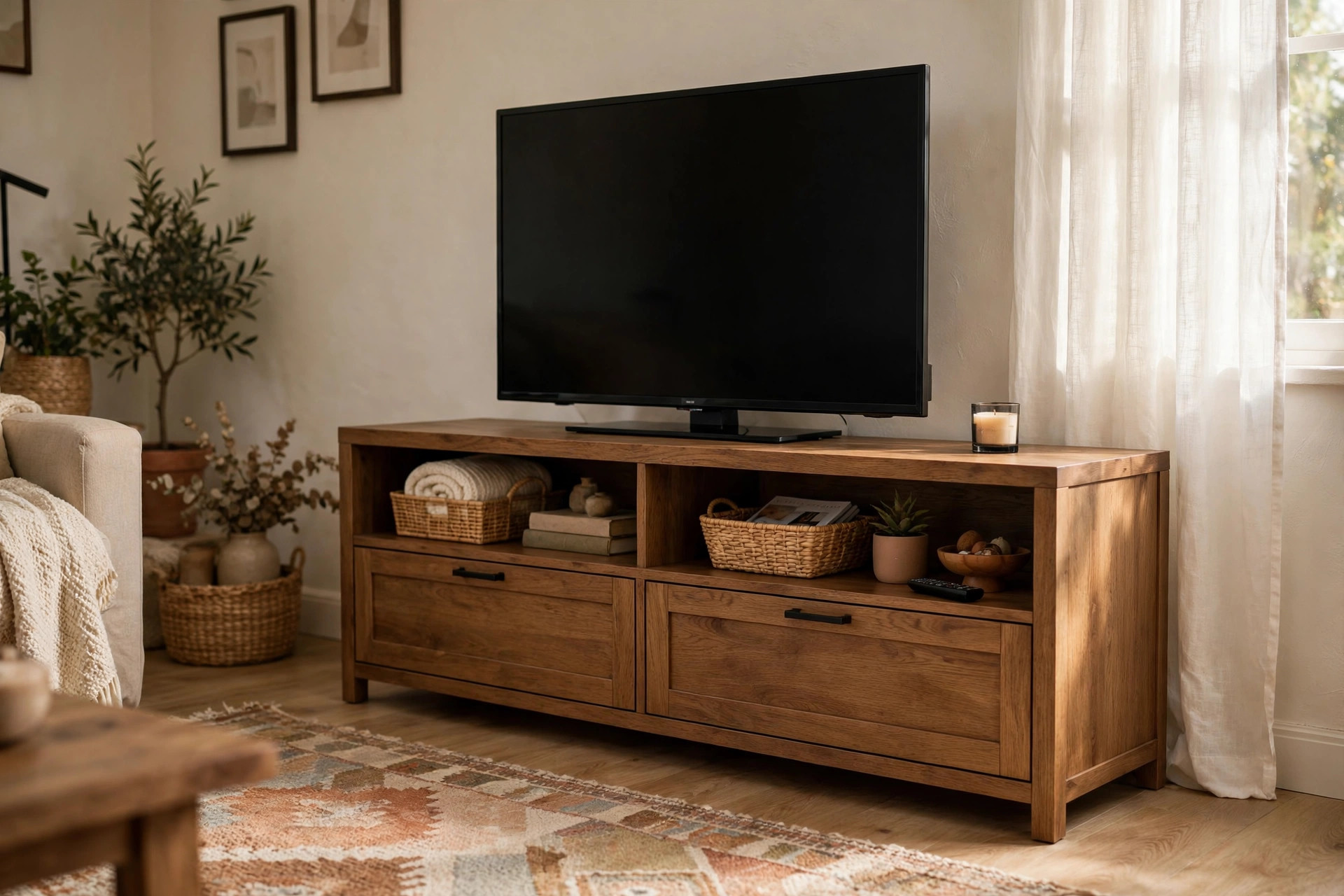

A television needs a proper home. When shoppers search for living room tv stands for sale usa, they want more than a shelf. They want a piece of furniture that fits the room, holds the screen at the right height, and stores the small machines that go with it. This guide walks through the choices in plain terms, from simple open consoles to full cabinets with doors and drawers.
Why a TV Stand Matters
The television is the center of most living rooms. A good stand sets the height of the screen, and that height decides how easy it is to watch. The center of the screen should sit close to eye level when you are seated on the couch. A stand that is too tall or too short causes neck strain over time.
A stand also handles the clutter. Cable boxes, game consoles, sound bars, and remotes all need a place. Without storage, wires run across the floor and dust gathers behind the set. A well chosen stand keeps these items hidden but easy to reach. Many guides on living room furniture point out that the stand is often the first piece guests notice, since it sits under the largest object in the room.
What to Look for Before You Buy: Living Room Tv Stands for Sale Usa
Size and Fit
Measure before you shop. First, measure the width of your television, not the screen size on the box. A 55 inch screen is about 48 inches wide. The stand should be at least as wide as the television, and a few inches wider on each side looks best.
Next, measure the wall or space where the stand will sit. Leave room for doors or drawers to open. If the stand will hold a sound bar, check the height of the open shelf. Take a tape measure to the living room and write the numbers down. Many living room TV stand buying guides start with this same step, because returns are costly when the stand is the wrong size.
Material and Build
Wood, engineered wood, and metal are the most common materials. Solid wood is strong and lasts for years, but it costs more. Engineered wood, such as MDF with a wood veneer, looks fine and keeps the price down. Metal frames with wood shelves give a modern look and hold heavy televisions well.
Check the back panel. A stand with cable holes in the back makes it easy to run wires out of sight. Check the weight limit too. Older tube televisions are heavy, but modern flat screens are light. Still, the stand must hold the screen plus every box you plan to place on it. Retailers like IKEA and Wayfair list weight limits on each product page.
Storage Needs
Count your devices. Most homes have a cable or streaming box, a game console, and a sound bar. An open shelf works well for devices that need a clear signal for remote controls. Glass or open fronts let the remote work without opening a door.
Closed cabinets hide mess and protect small hands from buttons. Drawers hold remotes, game controllers, and DVDs. If you own many discs or game cases, look for adjustable shelves so you can change the height as your collection grows.
Types and Options
Open Console Stands
Open console stands have no doors. They show off your devices and make it easy to reach every button. They cost less than cabinets and fit a modern or farmhouse room. The trade off is dust. Open shelves need wiping every week or two, and wires are harder to hide.
Closed Cabinet Stands
Closed cabinets have doors that hide everything. They give a clean look and protect devices from dust and small children. Many have a mix of doors and one open shelf for the sound bar. This is the most popular type in American homes, and stores from Crate & Barrel to West Elm carry wide ranges of them.
Corner and Floating Stands
Corner stands fit where two walls meet. They save space in small rooms but offer less storage. Floating stands mount to the wall and leave the floor clear. They look modern and make the room easy to clean, but they need a strong wall and careful mounting. A renter may prefer a free standing unit.
Some families pair a stand with a sofa console table behind the couch for extra storage. Others add a living room ottoman that doubles as a seat and a storage box.
Matching the Stand to Your Room Style
The stand should suit the room it sits in. A dark wood cabinet fits a classic or farmhouse living room. A light oak or white stand suits a bright, modern space. Black metal frames fit rooms with an industrial feel.
Look at the other furniture first. The coffee table, the bookcase, and the sofa set the tone. The stand does not have to match them piece for piece, but the woods and tones should sit well together. A dark walnut stand next to a pale birch bookcase can still work if both have clean lines.
Handles and legs change the look more than most people expect. Slim tapered legs give a mid century feel. Wide block legs look solid and modern. Small metal pulls on the doors add a bright touch. Some makers sell the same cabinet with two or three handle styles, so ask before you order.
Finish matters too. A matte finish hides fingerprints and small scratches. A gloss finish shines but shows every mark. In a busy family room, matte is the safer pick. Step back and view the stand from the doorway after you set it up. Small changes, like moving a vase or a lamp, can tie the whole wall together.
Cost and Price
Prices run wide. A small engineered wood stand costs about 60 to 120 dollars. A mid range wooden console with doors runs 150 to 400 dollars. Large solid wood or designer stands cost 500 dollars or more. Delivery and assembly add to the price, so read the shipping terms.
Sales happen often. Furniture stores run sales around holidays such as Memorial Day, Labor Day, and Black Friday. Buying during a sale can cut the price by a third. Used stands cost less, but check that all parts and screws are present before you pay. Sites like Article and CB2 show full prices and sale prices side by side.
Care and Upkeep
Dust the stand each week with a soft cloth. For wood, use a damp cloth and dry it right away. Do not let water sit on the surface, since it can mark the finish. Keep drinks in coasters to stop rings.
Check screws and bolts twice a year. Wood swells and shrinks with the seasons, and hardware can loosen. Tighten what is loose. If the stand sits in sunlight, turn it or shade the window, because strong sun fades wood and veneer over time.
Clean behind the stand every few months. Dust builds up on wires and can make devices run hot. Unplug the devices, wipe the dust away, and plug them back in neatly. Guides on The Spruce suggest a short cleaning routine each season.
Safety
Safety matters most in homes with children. Televisions can tip. Always anchor the television to the stand or the wall with a strap or bracket. Many stands now ship with an anti tip kit. Use it.
Place the stand against a wall, not in the middle of a room where people can bump it. Keep cords short and clipped to the back so no one trips. Do not place heavy items on the top edge of the stand where they can fall. Safety pages on HGTV and Apartment Therapy give the same advice for family rooms.
Frequently Asked Questions
How tall should a TV stand be?
The stand should put the center of the screen at your eye level when seated. For most couches, that means a stand height of 20 to 26 inches with a screen between 50 and 65 inches. Taller stands work better with larger screens placed farther away.
Should the TV stand be wider than the TV?
Yes. The stand should be at least as wide as the television, and 2 to 4 inches wider on each side is best. A stand that is narrower than the screen looks wrong and gives less support.
Can I use a dresser as a TV stand?
You can, if it is strong and the right height. A dresser must hold the weight of the screen and should not be much higher than a normal stand. Make sure it is stable and anchored to the wall.
Do glass door cabinets block remote signals?
Glass doors usually let infrared remotes work fine. Solid wood doors block the signal, so you must open the door or use a remote extender. If your devices sit behind wood doors, plan for this before you buy.
What is the best material for a TV stand?
Solid wood lasts longest and holds the most weight. Engineered wood with a good finish is a fine choice for most homes and costs less. Metal frames work well for a modern look. Pick the material that fits your budget and the style of your room.
How do I hide the cables?
Run cables through the holes in the back panel of the stand. Use zip ties or a cable sleeve to group them. Plug everything into one power strip and tuck the strip behind the stand. This keeps the front of the stand clean and safe.
Can I mount the TV on the wall and still use a stand?
Yes. Many people mount the screen on the wall and place a low stand under it for devices. This looks clean and keeps the screen at a safe height. The stand still holds the cable box and game console, and it hides the wires that run down from the mounted set.
A Final Word
A TV stand is a small part of the home, but it works hard every day. Take your time, measure twice, and pick a stand that fits your room, your devices, and your budget. The right stand makes the living room look finished and keeps your equipment safe for years.
References
Apartment Therapy. (n.d.). Home design ideas and inspiration. https://www.apartmenttherapy.com Article. (n.d.). Modern furniture. https://www.article.com CB2. (n.d.). Modern furniture and decor. https://www.cb2.com Crate and Barrel. (n.d.). Furniture and home decor. https://www.crateandbarrel.com HGTV. (n.d.). Home and garden ideas. https://www.hgtv.com IKEA. (n.d.). Home furnishings. https://www.ikea.com The Spruce. (n.d.). Home and garden advice. https://www.thespruce.com Wayfair. (n.d.). Furniture and home goods. https://www.wayfair.com West Elm. (n.d.). Modern furniture and home decor. https://www.westelm.com
Was this guide helpful?

About James Carter
The My Garden US editorial team writes practical, in-depth home and garden guides for American homeowners — tested advice, no fluff.
You May Also Like
Leather Recliner Chairs Texas Homes USA: A Plain Buyer’s Guide
May 18, 2026 0 views
Couch Throw Pillows for California Homes USA
September 1, 2026 0 views
Living Room Floor Lamps for Texas Homes in the USA
January 5, 2026 0 views