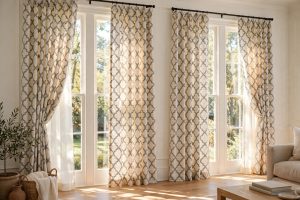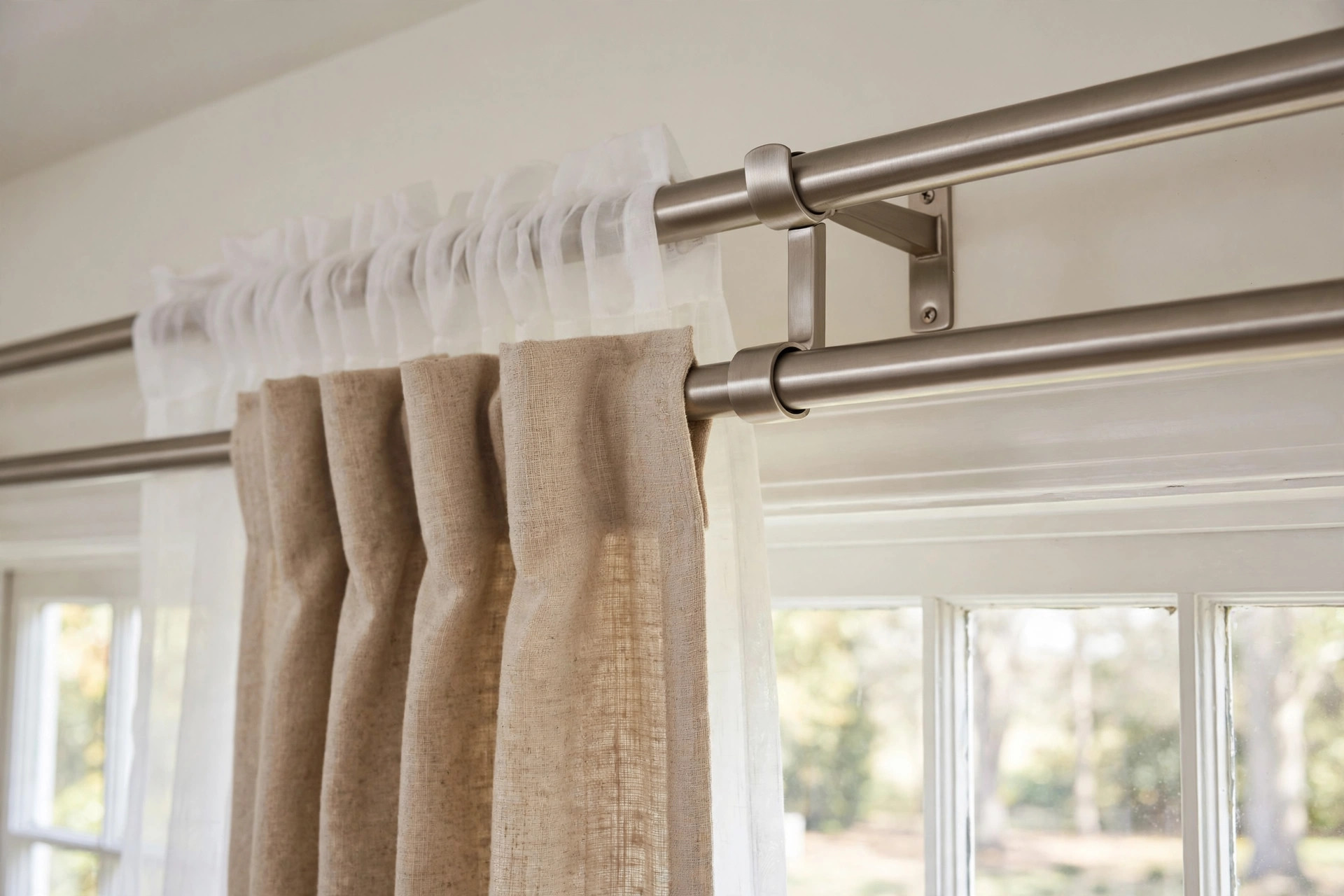

When you shop for the best double curtain rod brackets for sale, you are buying more than a small piece of hardware. A double bracket holds two rods at once. The front rod carries the heavy drapes. The back rod carries a sheer panel or a valance. One set of brackets gives your window two layers of fabric and twice the control over light and privacy.
Most single brackets cost less, but they limit you to one layer. Double brackets open up a wider range of looks. You can close the sheers during the day and let soft light in. You can draw the heavy drapes at night for full privacy. Many American homes now use this layered look. It works in living rooms, bedrooms, and dining rooms.
The market is full of choices. Brackets come in steel, brass, wood, and plastic. They come in many finishes, from oil-rubbed bronze to polished chrome. Prices range from a few dollars to more than fifty dollars per set. This guide will help you sort through the best double curtain rod brackets for sale and pick the right pair for your windows.
Why Double Curtain Rod Brackets Matter
A bracket is the part that holds the rod to the wall. It carries all the weight of the fabric. A double bracket carries two rods, so it carries twice the load. A weak bracket will sag, bend, or pull out of the wall. A strong bracket will hold steady for years.
Double brackets matter for three reasons. First, they let you layer fabrics. A sheer curtain on the back rod softens daylight. A heavier drape on the front rod blocks light at night. Second, they make rooms look finished. Two layers give a window depth and richness that one layer cannot match. Third, they save time. One set of brackets means one installation. You do not drill two rows of holes.
Poor brackets cause common problems. Screws strip out of drywall. Rods slip out of their cups. The inner rod bumps against the window frame. All of these problems trace back to a bracket that does not fit the job. Good planning avoids them.
What to Look for When You Buy: Best Double Curtain Rod Brackets for Sale
Start with your window. Measure its width, then add eight to twelve inches on each side. This tells you how long your rods must be. Then check how far the back rod must sit from the wall. Deep window frames need brackets with more clearance.
Next, weigh your curtains. Hold them in your hands or use a bathroom scale. Heavy velvet or lined drapes can weigh several pounds per panel. Light sheers weigh almost nothing. The bracket must support the heavier load on the front rod. Check the weight rating on the package. If the maker does not list one, choose a stronger bracket.
Think about how you open and close your curtains. If you pull them by hand every day, the brackets take more force. If you use rings or a traverse cord, the force is less. Daily use calls for metal brackets with firm screws.
Materials and Finishes
Steel brackets are the most common. They are strong, low cost, and easy to find. Most come with a powder-coat finish that resists rust. Brass and bronze brackets cost more. They look warm and classic in traditional rooms. Wood brackets match wooden rods and suit rustic or country styles. Plastic brackets are the cheapest, but they bend under heavy drapes. They suit only light sheers.
Match the finish to your room. Matte black fits modern and farmhouse styles. Brushed nickel fits kitchens and bathrooms. Antique brass fits classic living rooms. The finish should also match the rod itself. Mismatched metals look careless.
Many shoppers compare premium options at major retailers before they buy. You can study premium double curtain rod brackets for sale to see what higher-end hardware offers. Ready-made curtain hardware from large home stores gives a good sense of standard finishes and sizes.
Size, Projection, and Weight Limits
Projection is the distance from the wall to the front rod. Standard double brackets project three to six inches. Deep projections work with thick window trim or deep sills. Shallow projections suit small rooms where fabric should stay close to the wall.
The gap between the two rods matters too. It must be wide enough for the back curtain to move without catching on the front rod. One to two inches of space between rods is enough for most fabrics. Thick lined drapes need more room.
Weight limits tell you what the bracket can carry. A typical metal double bracket holds ten to twenty pounds per bracket. Use three brackets on wide windows for extra support. Always mount into a wall stud when you can. A stud holds far more weight than drywall alone.
Mounting Style
Most double brackets mount to the wall with two or three screws. The back plate spreads the load across a wide area. Ceiling-mount brackets attach to the ceiling above the window. They suit tall windows and rooms with no wall space beside the frame. Inside-mount brackets fit inside the window frame. They work when the frame is deep and strong.
Check the rod diameter the bracket accepts. Common sizes are one inch and one and one-eighth inches. The rod must sit snugly in the bracket cup. A loose rod will rattle and slide. Some brackets adjust to fit two sizes. These are useful if you change rods later.
Types of Double Curtain Rod Brackets
Standard wall-mount double brackets are the most common type. They screw to the wall beside the window. Each bracket has two cups, one behind the other. They fit most rods and most curtains. They are the best choice for beginners.
Adjustable double brackets slide in and out. You can change the projection after you mount them. This helps when the wall is uneven or the trim is thick. They cost a bit more than fixed brackets.
Wrap-around double brackets curve at the ends. The rod bends back toward the wall on each side. This blocks light gaps at the edges of the window. Wrap-around sets work well in bedrooms where darkness matters. Blackout window treatments pair well with this style of bracket.
Ceiling-mount double brackets hang from the ceiling. They make windows look taller. They also work on windows that sit close to a corner, where wall space is short. Installation takes more care because you work overhead.
Tension double rods need no screws at all. They press between two walls, such as inside a window recess. They cannot hold heavy drapes. They suit only light sheers and cafe curtains. Renters like them because they leave no holes.
Decorative double brackets have shaped back plates or ornate cups. They cost more, but they add style to formal rooms. Make sure the decoration does not weaken the bracket. Beauty means little if the bracket bends.
If your project calls for unusual sizes or non-standard rods, read a custom double curtain rod brackets buying guide before you order. Custom work costs more, but it solves odd window shapes.
Cost and Price Guide
Prices for the best double curtain rod brackets for sale fall into clear bands. Basic steel sets cost three to eight dollars per pair. They work fine for light and medium curtains. Mid-range sets cost nine to twenty dollars per pair. These have better finishes and stronger screws. They suit most homes.
High-end sets cost twenty to fifty dollars per pair. They use solid brass, bronze, or forged iron. The finishes resist scratches and fading. Designer sets can cost more than fifty dollars per pair. These are made for showpiece rooms.
A full window treatment costs more than the brackets alone. Add the price of two rods, finials, and four curtain panels. A complete double-rod setup for one window often runs forty to one hundred fifty dollars. Online home stores list full sets that show how the parts add up. Home improvement retailers carry budget lines that keep the total low.
Watch for hidden costs. Long rods may need a center support bracket. Heavy drapes may need wall anchors or toggle bolts. Specialty finishes may cost extra. Compare the full project cost, not just the bracket price.
Sales lower prices at predictable times. Holiday weekends bring deals on home goods. End-of-season clearances cut prices on discontinued finishes. Buying brackets in multi-packs also saves money if you treat several windows.
Care and Upkeep
Double rod brackets need little care, but a small effort keeps them looking new. Dust the brackets when you clean the room. A soft cloth removes most dust. For metal brackets, wipe with a damp cloth and dry at once. Water spots can stain some finishes.
Check the screws once a year. Rods pull on brackets every time you move the curtains. Screws loosen over time. Tighten them with a screwdriver. If a screw spins in drywall, replace it with a toggle bolt or move the bracket into a stud.
Polish brass and bronze brackets with a soft cloth. Avoid harsh cleaners. They can strip the finish. Painted brackets may chip if the rod knocks against them. Touch up small chips with matching paint.
When you wash curtains, take the rods down from the brackets. This is also a good time to check each bracket for bending. A bracket that bends under load should be replaced with a stronger one. Home decor advice sites offer simple seasonal checklists for window hardware.
Safety
Window hardware must be safe for everyone in the home. The main risk is a bracket that pulls out of the wall. A falling rod can injure a child or a pet. Mount every bracket into a stud or use rated wall anchors. Never trust plain screws in drywall for heavy drapes.
Keep cords away from cribs and beds. Corded blinds and traverse rods can strangle small children. The U.S. Consumer Product Safety Commission urges parents to use cordless window coverings near children. If your drapes use pull cords, tie them up high and out of reach.
Place brackets high enough that rods clear the heads of people who walk under them. This matters most for doorways with curtain panels. Check that finials have no sharp points at eye level. Round finials are safer than pointed ones.
Renters should check lease rules before drilling. Some leases ban wall holes. In that case, use tension rods or no-drill adhesive brackets rated for the weight. Test adhesive brackets with a light load first.
Frequently Asked Questions
How far apart should double curtain rod brackets be? Place the end brackets four to six inches beyond the window frame on each side. On windows wider than sixty inches, add a center bracket. The center bracket stops the rod from bowing in the middle.
Can one person install double curtain rod brackets? Yes. Mark the holes with a pencil and a level. Drill pilot holes. Drive the screws. Hold the rod in the cups to test the fit. A helper makes the work faster, but one careful person can do it.
Do double brackets work with blackout curtains? Yes. Blackout curtains are heavy, so choose steel brackets rated for the weight. Pair them with wrap-around rod sets to block side light gaps. Mount the rod high and wide for best coverage.
What rod size fits a double bracket? Most double brackets fit one-inch or one-and-one-eighth-inch rods. Check the package before you buy. The rod should rest snugly in both cups without forcing.
Are expensive brackets worth the money? For heavy drapes and daily use, yes. Stronger metal and better screws last longer. For light sheers in a spare room, basic brackets do the job. Match the bracket to the load.
Where can I find the best double curtain rod brackets for sale near me? Large online marketplaces carry hundreds of styles with buyer reviews. Budget home goods stores stock basic sets in store. Room design ideas can help you pick a style before you shop. If you also need fabric, learn where to buy rod pocket curtains in florida for a matched set.
Final Word
The best double curtain rod brackets for sale are the ones that fit your window, hold your curtains, and match your room. Measure first. Weigh your fabric. Choose steel or brass for heavy drapes. Mount into studs. Take care of the finish.
Double brackets give you two layers of fabric on one window. They add light control, privacy, and style in a single installation. Spend a little time on the choice now, and your windows will look good for years.
References
Amazon. (n.d.). Online shopping. https://www.amazon.com Blinds.com. (n.d.). Window blinds, shades, and shutters. https://www.blinds.com HGTV. (n.d.). Home and garden ideas. https://www.hgtv.com IKEA. (n.d.). Home furnishings. https://www.ikea.com Lowe’s. (n.d.). Home improvement products. https://www.lowes.com Target. (n.d.). Retail store. https://www.target.com The Home Depot. (n.d.). Home improvement products. https://www.homedepot.com The Spruce. (n.d.). Home and garden advice. https://www.thespruce.com U.S. Consumer Product Safety Commission. (n.d.). Product safety information. https://www.cpsc.gov Wayfair. (n.d.). Furniture and home goods. https://www.wayfair.com
Was this guide helpful?

About James Carter
The My Garden US editorial team writes practical, in-depth home and garden guides for American homeowners — tested advice, no fluff.
You May Also Like

Affordable Stained Glass Window Film for Southern States: A Practical Guide
June 16, 2026 0 views
Bay Window Curtain Rods Reviews and Buying Guide
September 20, 2026 0 views
Navy Blue Velvet Curtains Reviews and Buying Guide
January 12, 2026 0 views