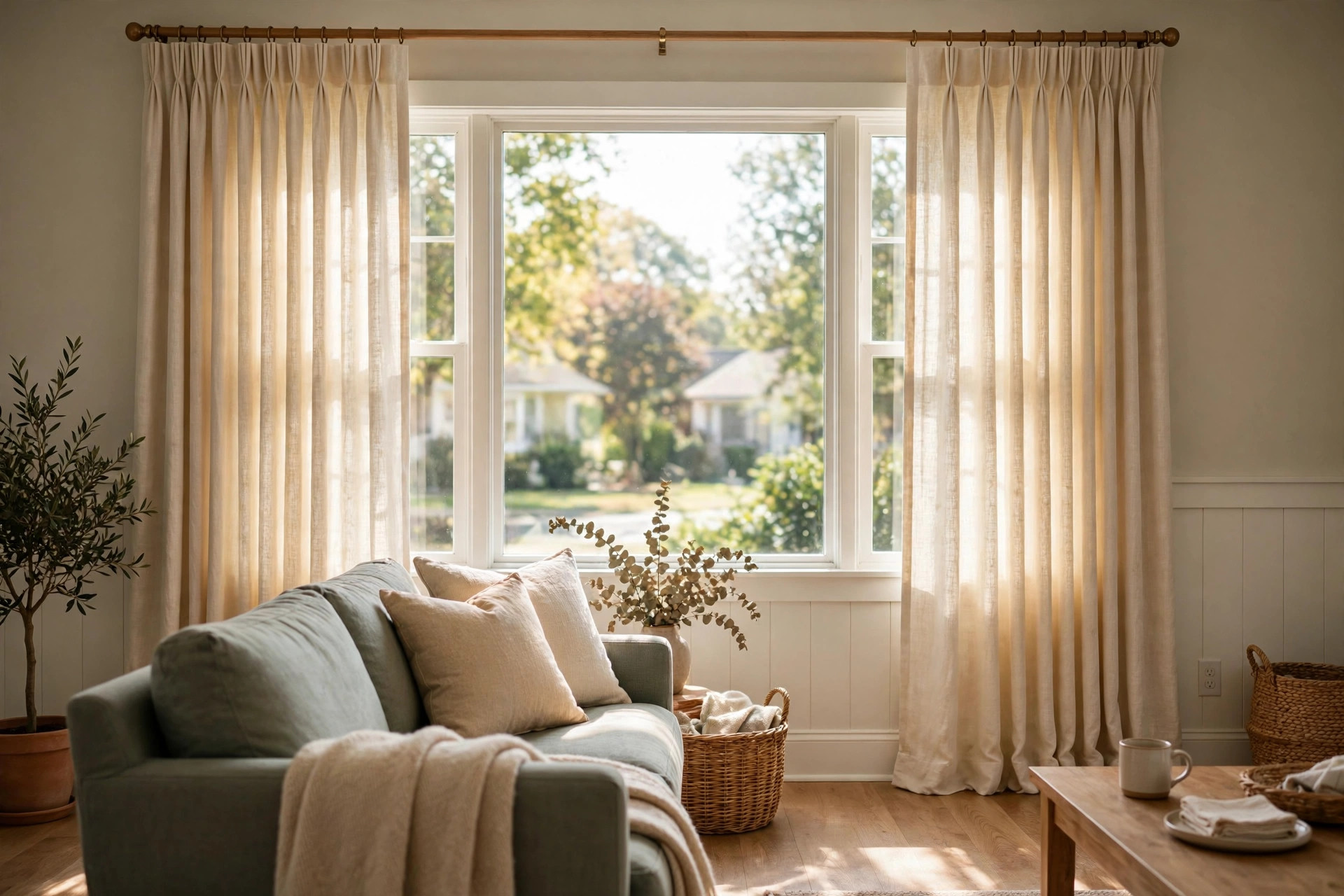

Many homes in America have windows that do not fit store curtains. Some windows are very tall. Some are very wide. Some sit in old houses where the frames are not square. When ready made panels fall short, the best custom made curtains online for American homes offer a simple fix. You measure your own windows. You pick the fabric on a screen. A workroom cuts and sews each panel to your exact size. The finished panels arrive at your door in a few weeks.
Ordering made to measure drapes online may sound risky at first. The process is now well tested. Many online curtain makers send free fabric swatches by mail. Clear measuring guides walk you through each step. This guide explains how the process works, what to look for, and how to spend your money well.
Why Custom Curtains Matter for American Homes
American houses come in many shapes. A farmhouse in Ohio may have tall narrow windows. A ranch home in Texas may have one wide sliding door. A brownstone in New York may have windows that differ by an inch or two from room to room. Ready made curtains come in fixed widths and lengths. When the fit is wrong, panels drag on the floor or leave a gap at the sill. The room looks unfinished.
Custom curtains solve the fit problem. Each panel is cut to the width and length you give. The hem lands exactly where you want it. The fullness stays even across the window. The result looks like the work of a decorator, even when you measured with a simple steel tape.
Fit also affects function. Curtains that close fully block morning light in a bedroom. Panels that reach the floor cut drafts near old windows. In hot states, the right lining can lower heat gain through glass. Some owners pair lined curtains with decorative window film for extra privacy without losing daylight. Online ordering makes all of this possible without a home visit from a sales team.
How to Choose the Best Custom Made Curtains Online: Best Custom Made Curtains Online for American Homes
Start with the seller, not the fabric. A good online maker shows clear photos of finished work. It lists fabric content in plain words. It tells you the lead time before you pay. It answers questions by phone or chat. Read customer reviews that mention fit and finish, not just color. Look at how the company handles mistakes. A maker that remakes panels when the measurements were entered wrong is worth more than a small discount.
Order swatches before you commit. Screen colors lie. A warm white on your phone can look gray in your living room. Most serious makers mail swatches for free or for a small fee. Hold each swatch against your wall in daylight and at night. Check how the fabric looks when light shines through it. This one step prevents most bad outcomes.
Start With the Window, Not the Fabric
Measure twice before you type any number. Use a steel tape, not a cloth tape. Write each number down in inches. Measure the width of the rod or track, not the glass. For full panels, add four to eight inches on each side so the curtains stack back on the wall. Measure the drop from the top of the rod to the floor or sill. Take the height in three places: left, center, and right. Old windows are rarely level. Use the longest of the three so the hem clears everywhere.
Many makers offer step by step measuring tools on their sites. Large home stores also publish plain measuring guides; the curtain department at Home Depot posts simple instructions with diagrams. If two guides disagree, trust the one from the maker you will buy from. Their numbers match their sewing rules.
Pick the Right Fabric
Fabric sets the mood of the room. Cotton and linen give a light, casual look. They work well in living rooms and kitchens. Velvet adds weight and drama. It suits bedrooms and formal dining rooms. Polyester blends cost less and resist wrinkles. They are a smart pick for busy family rooms.
Hold the swatch up to the window. Natural fibers glow when the sun hits them. Heavy weaves block more light on their own. Thin weaves need a lining to give privacy at night. Think about the sun in your region. A south facing window in Arizona fades weak dyes fast. A north facing window in Maine needs all the warmth it can get. Style guides at HGTV and Country Living show how different fabrics read in real rooms, which helps you picture the result before you order.
Choose the Lining
Lining is the hidden half of a good curtain. An unlined panel shows the back of the fabric from outside. A standard cotton lining gives body and protects the face fabric from sun. A blackout lining blocks nearly all light and adds insulation. A thermal lining has a coated back that slows heat loss in winter and heat gain in summer.
Lining adds cost, but it often doubles the life of the panel. Sun breaks down face fabric over time. The lining takes the damage instead. For bedrooms, blackout lining is the most common choice. For living rooms, a light filtering lining keeps the room bright while guarding privacy. Ask the maker which linings pair with your chosen fabric. Some light fabrics cannot hold a heavy blackout back.
Types and Options You Will See
Online curtain makers offer a menu of headings, pleats, and finishes. The heading is the top of the panel. It decides how the curtain hangs and slides. The most common pleat for custom work is the pinch pleat. Small groups of folds are sewn at the top. The panel hangs in neat, even waves. Pinch pleats work with rings, hooks, and traverse rods. They suit both formal and casual rooms.
Grommet tops have metal rings set into the fabric. The panel slides straight onto the rod. Grommets give a modern look and slide with ease. They are a good match for wide panels on a sliding door. If you like this style, read a thermal grommet top curtains buying guide to learn how the lining and ring size affect the drape. Rod pockets are simple sleeves sewn into the top. They gather softly but do not slide well on wide windows. Tab tops use fabric loops. They read casual and country.
Check the fullness the maker uses. Fullness means how much fabric covers each inch of rod. A fullness of two to one looks rich. A fullness of one and a half to one looks flat. Custom work should give you at least double fullness. Confirm the hem style too. A blind hem looks clean from the front. A weighted hem helps tall panels hang straight.
Cost and Price
Custom curtains cost more than store panels, but online pricing has narrowed the gap. A simple pair of unlined cotton panels for a standard window may start near one hundred fifty dollars. Mid range fabrics with standard lining often land between three and six hundred dollars per window. Large windows, silk or velvet face fabric, blackout lining, and hand sewn hems can push the price past one thousand dollars per window.
Four things drive the price. First is size. More fabric means more money. Second is the face fabric. Natural fibers and designer prints cost more than blends. Third is the lining. Blackout and thermal linings add a clear charge. Fourth is the labor. Hand finished hems and matched patterns take more time.
Watch the extras. Some makers charge for swatches, then credit the fee back. Rush service can add twenty percent or more. Shipping is often free, but check the return rules. A maker that offers a fit guarantee may cost a little more up front. That guarantee is cheap insurance. Value minded shoppers can compare finished prices at warehouse clubs like Costco and mass retailers like Target to set a baseline before ordering custom.
Care and Upkeep
Good curtains need little care, but the right care keeps them fresh for years. Vacuum panels with a soft brush head every few months. Dust settles into folds and dulls the color. For washable fabrics, follow the label. Many cotton and polyester panels wash well in cold water on a gentle cycle. Hang them damp to smooth out wrinkles. Linen may need a warm iron while still slightly damp.
Do not machine wash velvet, silk, or lined panels unless the label allows it. These do best with professional cleaning. Keep panels out of long contact with wet window frames. Condensation in winter can stain the lower hem. Rotate which panels face the strongest sun if you can. Sun fades one side faster than the other. Care guides from The Spruce give fabric by fabric washing steps that match what most makers print on their labels.
Steam is a gentle fix for wrinkles. Hold a steamer a few inches from the fabric and work from top to bottom. Never press a hot iron directly on velvet. The pile will crush. For lined panels, steam the face side only. A yearly check of hooks, rings, and rods keeps everything sliding smooth. Tighten loose brackets before a heavy panel pulls them from the wall.
Safety
Curtains are safe when they are hung and used with care. The main risk is the cord on older blinds and shades that sometimes hang near curtains. Loose cords can wrap around the neck of a small child. The Consumer Product Safety Commission urges parents to use cordless window coverings or to keep cords out of reach. When you order custom curtains, choose cordless headings and keep any nearby blind cords tied high with a cleat.
Heavy panels need strong hardware. A wide velvet panel can weigh many pounds. Mount brackets into studs or use proper wall anchors. Check the weight rating on the rod. A sagging rod lets the panel pull free and fall. Keep curtains clear of heaters, radiators, and candles. Fabric near heat is a fire risk. Leave at least a few inches of space between the panel and any heat source. In homes with small children, skip floor length panels in play areas where little hands can pull them down.
Frequently Asked Questions
How long do custom made curtains ordered online take to arrive? Most makers need three to six weeks from the day you approve the order. The time covers cutting, sewing, and quality checks. Simple fabrics ship faster. Complex orders with pattern matching take longer. Rush service can cut the wait to about two weeks for an added fee. Always ask for the ship date in writing before you pay.
Can I return custom curtains if the color is wrong? It depends on the seller. Many makers accept returns when the fault is theirs, such as a wrong size or a sewing error. Few accept returns simply because you changed your mind, since the panels were cut for your windows. This is why swatches matter so much. Read the return policy line by line. A fit guarantee is the strongest promise a maker can give.
Are online custom curtains as good as ones from a local workroom? They can be. Many online makers use the same sewing methods as local shops. The difference is the fitting visit. A local decorator measures for you. Online, you do the measuring. If your numbers are right, the result is the same. For tricky windows, such as arches or bay shapes, a local visit may still be the safer path.
What is the best fabric for blackout custom curtains? A medium weight cotton or polyester twill with a separate blackout lining works best. The lining does the light blocking. The face fabric gives the look you want. Avoid very thin sheers if your goal is darkness. They cannot block light even with a lining, and the seams may show through.
Do I need a professional to hang custom curtains? Most owners hang their own panels. You need a drill, a level, and a step ladder. Mount the brackets into studs when you can. For very wide or heavy panels, a second pair of hands helps. If the wall is plaster or tile, or the rod spans more than eight feet, hiring a handyman for one hour is money well spent.
How do custom curtains from big retailers compare? Large sellers such as IKEA, Wayfair, and Pottery Barn now offer made to measure programs beside their ready made lines. Their prices often beat small workrooms. Their fabric choices are narrower. A small maker may offer more linings, trims, and hand finishing. Compare the full price with lining and hardware before you decide.
A Short Final Word
The best custom made curtains online for American homes are the ones that fit your windows, suit your light, and stay inside your budget. Measure with care. Order swatches. Read the policies. A little patience at the start saves a costly remake later. In sunny southern rooms, some owners also add affordable stained glass window film for southern states to cut glare while the curtains handle privacy at night. Done right, custom panels change the whole feel of a room for years.
References
Costco. (n.d.). Wholesale retailer. https://www.costco.com Country Living. (n.d.). Country home and lifestyle. https://www.countryliving.com HGTV. (n.d.). Home and garden ideas. https://www.hgtv.com IKEA. (n.d.). Home furnishings. https://www.ikea.com Pottery Barn. (n.d.). Furniture and home decor. https://www.potterybarn.com Target. (n.d.). Retail store. https://www.target.com The Home Depot. (n.d.). Home improvement products. https://www.homedepot.com The Spruce. (n.d.). Home and garden advice. https://www.thespruce.com U.S. Consumer Product Safety Commission. (n.d.). Product safety information. https://www.cpsc.gov Wayfair. (n.d.). Furniture and home goods. https://www.wayfair.com
Was this guide helpful?

About Lisa Anderson
The My Garden US editorial team writes practical, in-depth home and garden guides for American homeowners — tested advice, no fluff.
You May Also Like

Sheer Linen Curtains Price Comparison USA: A Shopper’s Guide to Cost and Value
January 27, 2026 0 views
Blackout Roller Shades Price Comparison USA: What You Pay and Why
January 13, 2026 0 views
Bamboo Roman Shades Price Comparison USA: A Plain Guide to What They Cost
February 11, 2026 0 views