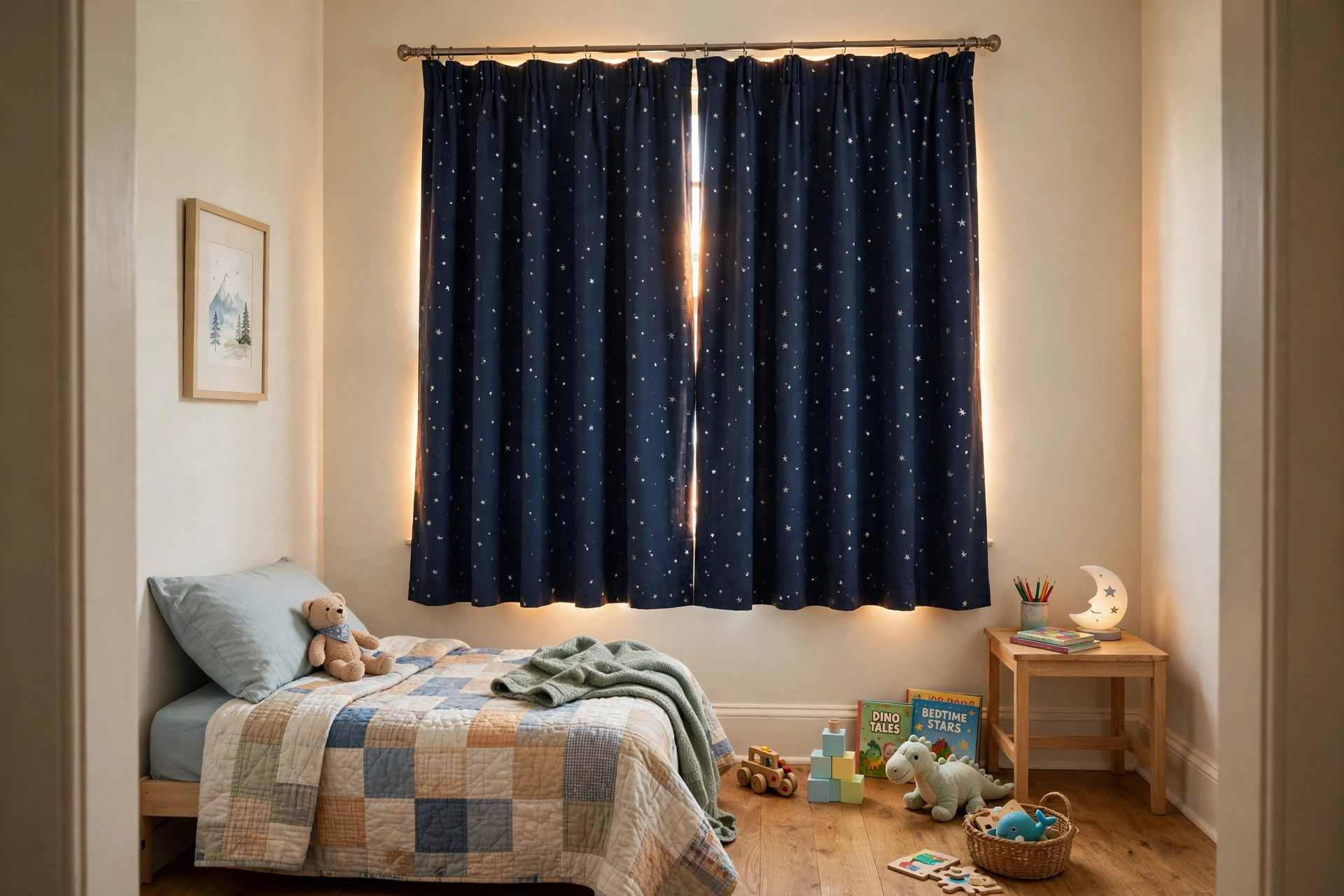

Many parents search for affordable kids room blackout curtains for sale because a dark room makes a real difference in a child’s sleep. Morning sun slips through thin curtains by six o’clock. A toddler wakes early. A nap ends too soon. The fix is simple. Heavy curtains that block the light let a child sleep longer. They cost less than most parents expect. This guide explains what to buy, how much to pay, and how to hang them right.
Why Blackout Curtains Matter in a Child’s Room
Sleep experts have said for years that dark rooms help children sleep. A child’s brain reads darkness as a signal to rest. Even a small strip of light can wake a light sleeper. Thin curtains let streetlights and sunrise pour in. The room glows at dawn. The child stirs. A nap breaks after forty minutes. Parents feel the loss at once.
Affordable kids room blackout curtains for sale solve this problem at low cost. They block ninety percent or more of outside light. The room stays dim in the morning. The child sleeps a little longer. Bedtime goes more smoothly because the room feels calm at eight in the evening, even when summer sun still shines outside. Many families say this one change improved their whole routine.
There is another benefit. A dark room feels quiet and safe. Children who fear the dark often fear shadows more than blackness. A steady dim room with a small nightlight works better than a room with shifting streetlight shadows. Parents can pair blackout curtains with a soft plug-in nightlight and get the best of both worlds.
Cool air matters too. Heavy blackout panels add a thin layer of insulation to a window. They slow heat from the sun in summer. They slow cold drafts in winter. The room keeps a more even temperature. Children sleep better when the room is neither hot nor cold. The curtains do not replace a good heater or air conditioner, but they help.
What to Look for When You Shop: Affordable Kids Room Blackout Curtains for Sale
Not all dark curtains are true blackout curtains. Some panels say “light blocking” or “room darkening.” These cut light by half or more, but they do not make the room dark. True blackout curtains use a tight weave or a coated back that stops almost all light. Read the label. Look for the words “blackout.” If the tag says “light filtering,” keep looking.
Check the fabric weight. Good blackout panels feel heavy in the hand. Hold one up to a store light. If you can see the bulb through it, it will not block the sun. The best cheap panels have a foam or rubber backing on the back side. This coating is what blocks the light. It costs the maker little, so many low-price curtains include it.
Size matters more than most buyers think. Curtains that just cover the glass will leak light at the edges. Morning sun finds every gap. Buy panels wider than the window by four to six inches on each side. Buy panels long enough to fall past the sill or to the floor. Overlap two panels in the middle if the window is wide. When you shop for affordable kids room blackout curtains for sale, measure the window first and add the extra inches to your list.
The rod matters too. A wrap-around rod or a rod mounted well above and beside the window helps. Light leaks from the top and sides of a short rod. A wider rod lets the curtain edges press against the wall. For the darkest result, some parents add a second cheap shade behind the curtain. A simple roller shade under the curtain closes the last gaps.
Types and Options for Children’s Rooms
Panel curtains are the most common type. They hang from a rod by grommets, tabs, or a pocket. Grommet tops slide smoothly and are easy for older children to open in the morning. Rod pockets look soft and simple. They cost less but bunch up when pulled. Tab tops fall between the two.
Some curtains come as a set of two panels. Others sell as one wide panel. Two panels work best for most windows. One panel suits a narrow window or a small door with a glass insert. When you compare affordable kids room blackout curtains for sale, note whether the price is for one panel or a pair. A low price may mean a single panel.
Fabric choice changes the look. Microfiber panels are the cheapest and the most common. They wash well and resist wrinkles. Polyester blends feel smooth and come in many colors. Some lines use a triple weave that needs no backing. These look like normal curtains on both sides and block light through the dense middle layer. They cost a bit more but drape better.
Color and print matter in a child’s room. Dark colors block more light at the same fabric weight. Navy, charcoal, and deep green perform well. Light colors need a stronger backing to reach the same darkness. Many makers now print stars, moons, animals, and cars on blackout panels for children. A print does not hurt the blackout effect as long as the backing is full. Let the child pick a pattern. A child who likes the curtain will accept bedtime more gladly.
Thermal blackout curtains add extra lining for heat control. They cost more than plain panels but less than new windows. They suit rooms that face west and bake in the afternoon sun. Sound-dampening curtains use thicker layers and cut some street noise. They are heavier and need a strong rod. For most families, a plain microfiber blackout panel at a fair price is enough.
If your child’s room has an odd window, you may need more than curtains. A skylight blackout blind guide can help with roof windows. For sunrooms and playrooms with big glass, a solar shade buying guide may suit better. Some parents also use decorative window film on small panes for extra privacy.
Cost and Price: What Is Fair
Affordable kids room blackout curtains for sale range widely in price. A pair of standard 52-by-63-inch microfiber blackout panels often sells for fifteen to thirty dollars. Larger panels, 52 by 84 inches, run twenty to forty dollars a pair. Printed or licensed character panels cost more, thirty to sixty dollars a pair. Triple-weave panels without backing run thirty-five to seventy dollars.
The price gaps come from fabric weight, print rights, and brand name. The blackout power does not always follow the price. A twenty-dollar pair from a big-box store can block as much light as a fifty-dollar pair from a specialty shop. Read reviews before you pay more. Shoppers on IKEA and Wayfair often rate budget panels well. Big home stores like Home Depot and Lowe’s carry store brands that perform on par with national names.
Watch for false savings. A very cheap pair may use a thin coating that cracks after one wash. The curtain then lets light through in streaks. Spend a little more for panels with sewn-in backing or triple weave if you plan to wash them often. Also check what the price covers. Some listings show a tempting price that is for one panel. Two are needed for most windows.
Sales cycles help. Curtains go on sale in January during white sales and in August during back-to-school events. Online sellers cut prices before holidays. Buying off-season saves ten to twenty percent. If you need several rooms, buy all panels at once. Matching dye lots look the same. Panels bought months apart can differ in shade.
Shipping adds cost to online orders. Heavy blackout panels weigh more than sheer curtains. Check the total with shipping before you compare prices. Local pickup from a store avoids this cost. Many parents find their best deal on Target shelves or at Blinds.com during a sale, where free shipping thresholds are easy to reach.
Care and Upkeep
Blackout curtains need simple care. Dust them monthly with a vacuum brush or a damp cloth. The coating on the back side collects dust fast. Keep the back clean and the light blocking stays strong.
Wash only when the label allows. Many foam-backed panels say machine wash cold and hang to dry. Heat is the enemy of the backing. A hot dryer can melt or crack the coating. If the label says dry clean only, follow it or skip the wash and spot clean. Triple-weave panels with no coating wash more easily. They survive a normal machine cycle.
Hang panels back on the rod while slightly damp. The weight pulls out wrinkles. A hand steamer smooths the front without touching the backing. Never iron the coated back side. The heat ruins it in seconds.
Check the grommets and seams once a year. Children pull curtains. Seams loosen. Grommets pop out of thin fabric. A loose seam lets a line of light through. Small repairs with a needle and thread take minutes. Replace a panel when the backing flakes or cracks across wide areas. At these prices, replacement beats repair.
Sun fades prints over time. Rotate panels left to right each season if one side faces strong sun. This spreads the wear. In very sunny rooms, a cheap sheer or shade behind the blackout panel takes the first hit of ultraviolet light and saves the curtain’s face.
Safety Comes First in a Child’s Room
Safety rules for children’s window coverings are strict, and parents should know them. The U.S. Consumer Product Safety Commission warns that cords on blinds and shades can strangle young children. Curtains on a simple rod avoid this danger because they have no pull cords. This is one more reason panels beat corded blinds in a child’s room.
Keep all cords out of reach. If you add a shade behind the curtain, choose a cordless model. Move the crib and the bed away from the window. Children climb. A toddler can reach a cord from a bed pushed against the wall. Keep furniture at least three feet from window coverings with any cord or loop.
Mount the rod firmly. Children yank curtains. A rod held by small nails will fall. Use the brackets and anchors that come with the rod. Screw into a stud when you can. A falling rod can hit a child and break the window behind it. A strong mount costs nothing extra and takes ten minutes.
Check for small parts. Some decorative tiebacks use magnets or beads. These can come loose and become choking hazards for babies and toddlers. Skip tiebacks in a nursery. Tuck panels behind the rod ends instead.
Fire safety counts too. Keep curtains away from radiators, baseboard heaters, and space heaters. Heavy fabric near heat is a risk. Leave at least twelve inches between the curtain hem and any heater. Many parents find helpful room-safety checklists on The Spruce and project guides on HGTV when setting up a child’s room.
Frequently Asked Questions
Do blackout curtains really make a child’s room fully dark? They make it very dark but rarely pitch black. A good pair blocks ninety to ninety-nine percent of light. Small leaks at the edges are normal. For the darkest room, mount the rod wide, let panels fall to the floor, and add a cheap roller shade behind. Most children sleep well with this level of darkness.
What size should I buy for a standard bedroom window? Measure the window glass, then add four to six inches of width on each side and three to four inches of height above the frame. A common bedroom window fits 52-by-63-inch panels hung on a 48-to-84-inch rod. Floor-length 84-inch panels suit taller windows. When in doubt, buy wider rather than narrower.
Are cheap blackout curtains safe for babies and toddlers? The curtains themselves are safe. The danger comes from cords, loose tiebacks, and weak rod mounts. Choose cordless setups, mount rods into studs or with strong anchors, and keep the crib away from the window. Wash new curtains once before hanging to remove factory dust and smell.
Will blackout curtains keep the room cooler in summer? Yes, to a point. They block the sun’s heat at the window. A room with west-facing windows can feel several degrees cooler. They work best with the window closed and the curtain fully drawn. They do not replace air conditioning in hot climates, but they cut the load.
Can I wash blackout curtains in a washing machine? Many can be washed cold on a gentle cycle. Read the tag first. Never use hot water or a hot dryer on foam-backed panels. Heat cracks the coating. Hang them damp to dry. Triple-weave panels without coating are the easiest to wash and last the longest through repeated laundry.
How long do affordable blackout curtains last? Expect two to five years of daily use. Sun breaks down the backing over time. Frequent washing shortens life. Panels in a shaded north-facing room last longest. At fifteen to forty dollars a pair, replacing them every few years is still cheaper than one set of custom drapes.
A Short Final Word
A dark room is one of the cheapest gifts a parent can give a child’s sleep. Affordable kids room blackout curtains for sale turn a bright morning bedroom into a calm rest space. Measure the window, buy panels wider than the glass, mount the rod strong, and keep cords out of the room. The child sleeps longer. The house wakes happier. That is a good return on a small price.
References
Blinds.com. (n.d.). Window blinds, shades, and shutters. https://www.blinds.com HGTV. (n.d.). Home and garden ideas. https://www.hgtv.com IKEA. (n.d.). Home furnishings. https://www.ikea.com Lowe’s. (n.d.). Home improvement products. https://www.lowes.com Target. (n.d.). Retail store. https://www.target.com The Home Depot. (n.d.). Home improvement products. https://www.homedepot.com The Spruce. (n.d.). Home and garden advice. https://www.thespruce.com U.S. Consumer Product Safety Commission. (n.d.). Product safety information. https://www.cpsc.gov Wayfair. (n.d.). Furniture and home goods. https://www.wayfair.com
Was this guide helpful?

About Lisa Anderson
The My Garden US editorial team writes practical, in-depth home and garden guides for American homeowners — tested advice, no fluff.
You May Also Like

Best Rod Pocket Curtains for First Time Homeowners
September 4, 2026 0 views
Energy Efficient Machine Washable Curtains with Free Shipping: A Practical Guide
June 30, 2026 0 views
Navy Blue Velvet Curtains Price Comparison USA
April 23, 2026 0 views