This window film privacy tint reviews and buying guide covers all you need to know before you buy. Window film is a thin sheet that sticks to glass. It blocks the view from outside. It still lets daylight come in. Many home owners use it in bathrooms, bedrooms, and street-facing windows. It costs far less than new curtains or blinds. A basic roll often costs less than a simple dinner out. Most types install in an afternoon with plain tools. You do not need to drill holes. You do not need to hire a worker. This guide reviews the main types. It compares prices. It explains how to choose the right film for your home.
Why Privacy Window Film Matters
Privacy is the main reason people buy window film. A ground-floor window faces the street. Neighbors and passersby can see straight in. A bathroom window sits close to another house. Thin curtains still show shapes at night when the lights are on. Window film solves these problems at low cost. A dark tint stops eyes during the day. A frosted film blocks views day and night. Both still let in soft light. Rooms stay bright without feeling exposed.
There are other gains too. Many films block part of the sun’s heat. A thermal energy efficient window treatment can cut glare on a television screen. It can protect wood floors from fading. Some films add a safety layer. If glass breaks, the film holds the pieces together. This helps in homes with kids and pets. Guides at The Spruce often list window film as one of the cheapest privacy fixes for renters.
Film also suits renters better than most window coverings. Static cling film peels off with no marks. There is no damage to the frame. There are no holes in the wall. A landlord is far less likely to object. When you move, you take the film down and clean the glass. Decor sites such as HGTV feature window film in small-space makeovers for this very reason.
How to Choose: What to Look For: Window Film Privacy Tint Reviews and Buying Guide
Start with the room. A bathroom needs full privacy at all hours. A living room may need only daytime privacy. A bedroom may need dark mornings too. Write down your goal before you shop. It will narrow the choices fast.
Privacy Levels and Light Flow
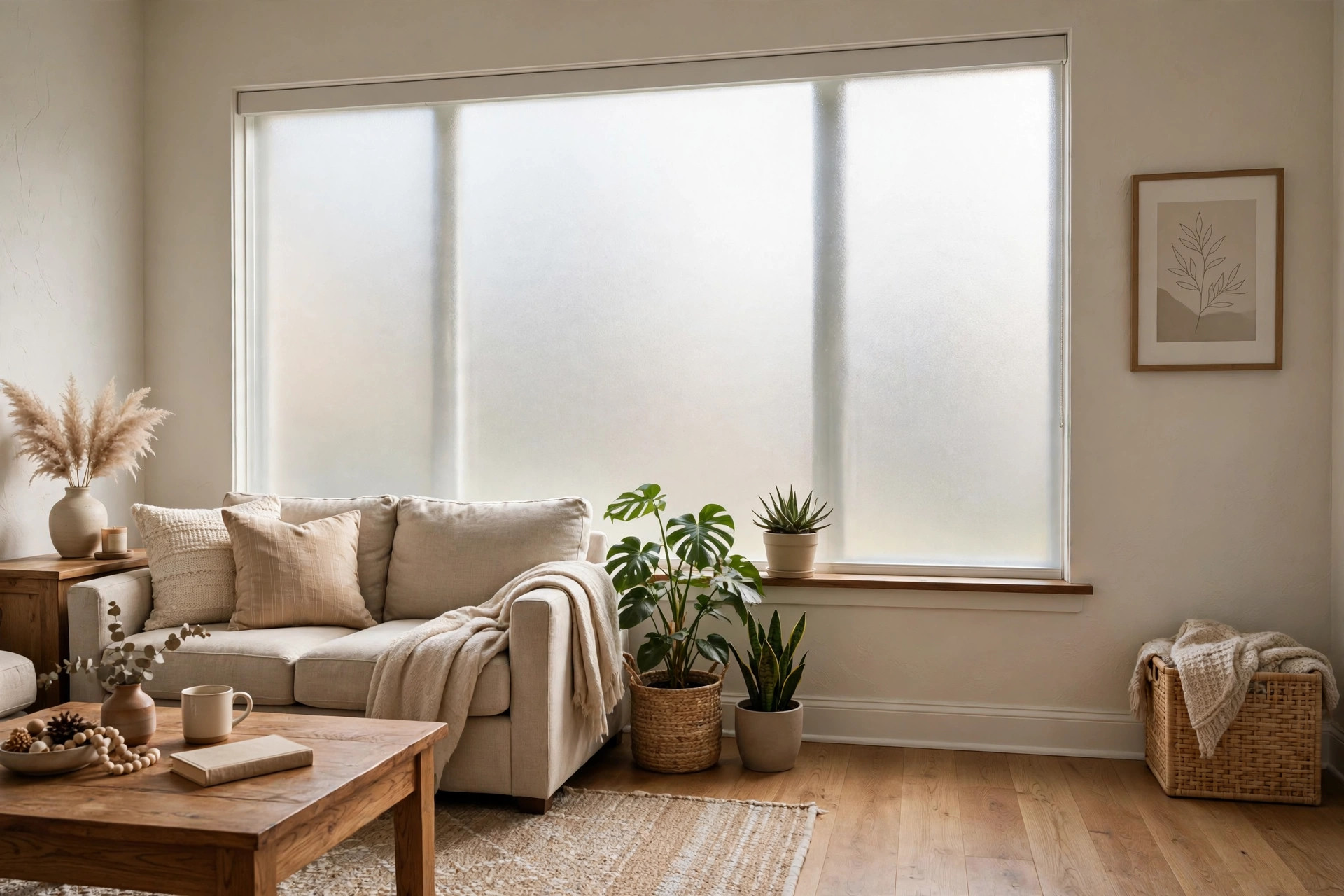
Films fall into rough privacy levels. A light tint gives mild cover. You can still see shapes through it. A dark tint gives strong daytime cover. From outside, the glass looks like a mirror or a dark shade. At night with lights on, dark tint alone is not enough. People outside may see in. Frosted and decorative films give full cover day and night. They blur or block all detail. Light still passes through. The room stays bright but no one sees in.
Think about how much light you want to lose. Dark solar tints can cut visible light by half or more. Frosted films keep most of the light but spread it softly. If the room is already dark, pick a lighter frost or a reflective day film. Reviewers at Consumer Reports advise checking light levels after install, since rooms feel dimmer than the label suggests.
Adhesive or Static Cling
Adhesive film sticks with glue. It holds for years. It resists peeling at the edges. It works well on windows you will not change often. The trade-off is harder removal. Old glue can take effort to clean off.
Static cling film sticks with water and static charge. It has no glue at all. You can reposition it during install. You can peel it off in minutes. It is the best pick for renters and for first-time installers. It may lift at corners in very hot or steamy rooms. For a first project, most buying guides point beginners to static cling. Retailers such as Blinds.com sell both kinds with clear labels.
Also check the width of the roll. Standard rolls are 24, 36, or 48 inches wide. Measure your glass, not the frame. Buy a roll wider than the pane so you can trim it square. A sharp utility knife and a squeegee make the job much easier. Most kits from Home Depot include both.
Types of Window Privacy Film
Solar control tint is the most common type. It has a dark or silver look. It cuts glare and heat. It gives strong daytime privacy because the outside of the glass turns reflective. It is a top pick for living rooms and offices that face the sun. It does little at night.
Frosted film gives the look of etched glass. It blocks all clear views both ways. It is the standard pick for bathrooms and front doors with glass panels. Many designs exist, from plain white frost to bands and borders. Frosted film keeps the room bright. It is the safest choice when you need privacy after dark.
Decorative film adds pattern to the glass. Stained glass prints, rice paper looks, and etched designs are common. These films hide the view while acting as art. They suit kitchens and entryways. Wayfair and IKEA carry wide ranges of decorative privacy films at low prices.
One-way mirror film is a strong daytime option. From the bright side it looks like a mirror. It needs more light outside than inside to work. It suits street-level offices and shops. Do not rely on it at night unless you add curtains.
Blackout window film is fully opaque. It blocks light and views at once. It helps night workers sleep during the day. It is also used on garage windows for security. If you only need dark mornings in a bedroom, a blackout roller shade price comparison may be worth reading alongside film options.
Smart film is a new type. It turns from clear to frosted with an electric switch. It costs much more than other films. It suits high-end bathrooms and conference rooms. For most homes, plain frosted film does the same job at a tenth of the price.
Cost and Price Guide
Window film is one of the cheapest window treatments sold. Prices run by roll size and type. A small static cling roll, about 24 inches by 6 feet, often costs under 15 dollars. Larger rolls, 36 or 48 inches wide and 10 to 15 feet long, run 20 to 50 dollars. Decorative and frosted films sit in the same range. Solar control tints cost a bit more per foot. Smart film is the outlier and can run hundreds of dollars per window.
One roll often covers two or three standard windows. A full house of ten windows may need three to five rolls. Total cost for a do-it-yourself job often lands between 60 and 200 dollars. That is far below custom shades. Shoppers comparing budgets can check prices at Lowe’s and Amazon before buying.
Professional install costs more. A pro may charge 5 to 15 dollars per square foot, plus a call fee. A single bathroom window might cost 75 to 150 dollars installed. Pros give a cleaner finish with no bubbles. For large windows or whole-house jobs, a pro can be worth it. For small windows, most home owners do it themselves.
Watch for the real price traps. Very cheap film may shrink or turn purple in the sun. Read the warranty. Good films carry a 3 to 5 year warranty against fading and peeling. Cheap film with no warranty often needs replacing in a year. That makes it more costly in the end.
Care and Upkeep
Window film needs little care. Wait at least a week after install before you clean it. The water under the film needs time to dry out. Cleaning too soon can lift the edges.
Use a soft cloth and mild soapy water. Do not use ammonia-based glass cleaners on tinted film. Ammonia can break down the tint layer and turn it purple or hazy. A mix of dish soap and water works well. Wipe gently. Do not scrub the edges hard.
Keep sharp objects away from the film. Keys, rings, and pet claws can scratch it. Small scratches are hard to fix. If a corner starts to lift, press it back with a damp cloth and a credit card as a squeegee. Static cling film can be peeled off, washed, and reapplied. This is a big plus over glued shades.
Check the film once a year. Look for bubbles, peeling corners, and color change. A small bubble can be pushed to the edge with a squeegee. If large areas have failed, replace that pane’s film. Replacing one window takes under an hour once you know the steps. Home care guides at The Spruce suggest spring as a good time for this yearly check.
Safety Notes
Window film is safe for most homes, but a few points matter. On double-pane windows, some dark films can trap heat between the panes. This can stress the glass seal over time. Check the film maker’s guide for double-pane approval before you buy a dark solar tint. Light frosted films rarely cause this issue.
Keep cords and film tools away from small children during install. Utility knives are sharp. Cut film on a flat table, not on the glass. The US Consumer Product Safety Commission offers general home safety guidance that is worth a look when you work around windows with kids in the house.
Do not put film on wired glass or cracked glass. Heat buildup can make weak glass worse. If a window is cracked, fix the glass first. Also note local rules. A few home owner associations limit reflective mirror film on street-facing windows. Check your HOA rules before you buy a mirror finish.
Frequently Asked Questions
Can people see through privacy window film at night? It depends on the type. Frosted and decorative films block views day and night. Dark tint and one-way mirror film only give privacy in daylight. When indoor lights are on at night, people outside can see in through tint. For night privacy, use frosted film or add a cordless cellular shade behind the tint.
Is static cling window film as good as adhesive film? Static cling is best for renters and beginners. It installs with water, repositions easily, and removes with no residue. Adhesive film lasts longer and resists edge lift in steamy rooms. For bathrooms with heavy steam, adhesive frosted film is the steadier pick. For most other rooms, static cling works well.
How long does window privacy film last? Good quality film lasts 5 to 10 years indoors. Cheap film may fade, bubble, or peel in 1 to 2 years. Sun-facing windows wear film faster. Check the warranty before you buy. A 3 to 5 year warranty is a good sign of fair quality.
Can I install window film myself? Yes. Most home owners finish a window in 30 to 60 minutes. You need a spray bottle with soapy water, a squeegee or credit card, and a sharp utility knife. Clean the glass first. Spray it wet. Lay the film on and push the water out to the edges. Trim the extra with the knife. Small bubbles often vanish as the film dries.
Will window film damage my windows? No, if you pick the right type. Static cling film removes cleanly. Adhesive film may leave glue that needs a solvent to clean. On double-pane glass, avoid very dark films that are not rated for insulated glass. Heat buildup can stress the seal. Light frosted films are safe on nearly all home windows.
Does privacy film also block UV rays? Many films block 95 percent or more of UV rays. This slows fading of furniture, rugs, and wood floors. Check the label for a UV rejection number. Even clear frosted films often give strong UV cover. It is one of the quiet benefits of the product.
A Final Word
Window privacy film is a small buy with a big payoff. It gives privacy, cuts glare, and shields your furniture from sun damage. It costs a fraction of new blinds or drapes. A beginner can install it in an afternoon. Pick frosted film for full day-and-night privacy. Pick solar tint for daytime glare control. Pick static cling if you rent. Measure twice, buy a roll wider than your glass, and take your time with the squeegee. Your windows will look clean and feel private for years.
References
Amazon. (n.d.). Online shopping. https://www.amazon.com Blinds.com. (n.d.). Window blinds, shades, and shutters. https://www.blinds.com Consumer Reports. (n.d.). Product reviews and ratings. https://www.consumerreports.org HGTV. (n.d.). Home and garden ideas. https://www.hgtv.com IKEA. (n.d.). Home furnishings. https://www.ikea.com Lowe’s. (n.d.). Home improvement products. https://www.lowes.com The Home Depot. (n.d.). Home improvement products. https://www.homedepot.com The Spruce. (n.d.). Home and garden advice. https://www.thespruce.com U.S. Consumer Product Safety Commission. (n.d.). Product safety information. https://www.cpsc.gov Wayfair. (n.d.). Furniture and home goods. https://www.wayfair.com
Was this guide helpful?

About Jennifer Lee
The My Garden US editorial team writes practical, in-depth home and garden guides for American homeowners — tested advice, no fluff.