A well-built backyard kitchen changes the way a family uses its yard. The cook no longer stands alone at a grill while guests gather inside. With the right outdoor kitchen design ideas for backyard spaces, cooking becomes part of the party. Food moves from grill to table in a few steps. Cleanup stays outside. The house stays cool and clean on hot days.
This guide walks through the best outdoor kitchen design ideas for backyard projects, large and small. It covers planning, layout, equipment, materials, cost, care, and safety. It suits the weekend cook and the serious host alike.
Why a Backyard Kitchen Is Worth the Effort
An outdoor kitchen adds useful living space to a home. It turns a patio or deck into a second dining room from spring through fall. Families report that they eat outside more often once cooking outside is easy. Guests linger longer when drinks and food are close at hand.
A backyard kitchen also raises a home’s value. Real estate agents rank outdoor living near the top of buyer wish lists. A simple grill station with a counter and storage returns much of its cost at sale. A full kitchen with a sink, refrigerator, and built-in grill returns less in cash but makes the home sell faster.
There is a plain benefit too. Grease, smoke, and heat stay outside. A house does not fill with cooking smoke on a summer night. The air conditioner works less. The kitchen floor stays clean.
How to Choose the Right Design: Outdoor Kitchen Design Ideas for Backyard
Start with the cook’s habits. A family that grills burgers twice a month needs far less than one that hosts a large cookout every Saturday. Be honest about how often the space will be used. A modest kitchen used weekly beats a grand one used twice a year.
Next, study the yard. Watch the sun. Morning sun is pleasant, but afternoon sun makes a cooking station too hot. A spot with light shade from a tree or a roof overhang works best. Watch the wind too. Smoke should blow away from seats, not into them.
Check local rules before buying anything. Many towns require a permit for a gas line or a permanent structure. Some limit how close a grill may sit to a house or fence. A quick call to the town office saves trouble later.
Planning the Layout
The layout should follow the flow of a meal. Think of three zones: cooking, prep, and serving. The cook moves from the grill to the counter to the table without crossing a walkway where children play.
The Work Triangle
Inside kitchens, the stove, sink, and refrigerator form a triangle. The same rule works outside. Place the grill, the sink, and a small refrigerator within a few steps of each other. This keeps the cook near the food and the guests near the cook.
Counters and Storage
Plan at least four feet of counter beside the grill. Hot pans need a place to land. A cutting board, a tray of raw meat, and a plate of cooked food should each have space. Closed cabinets keep tools and fuel out of sight and out of the weather. Many owners add a trash bin behind a cabinet door so it stays out of view.
Seating and Shade
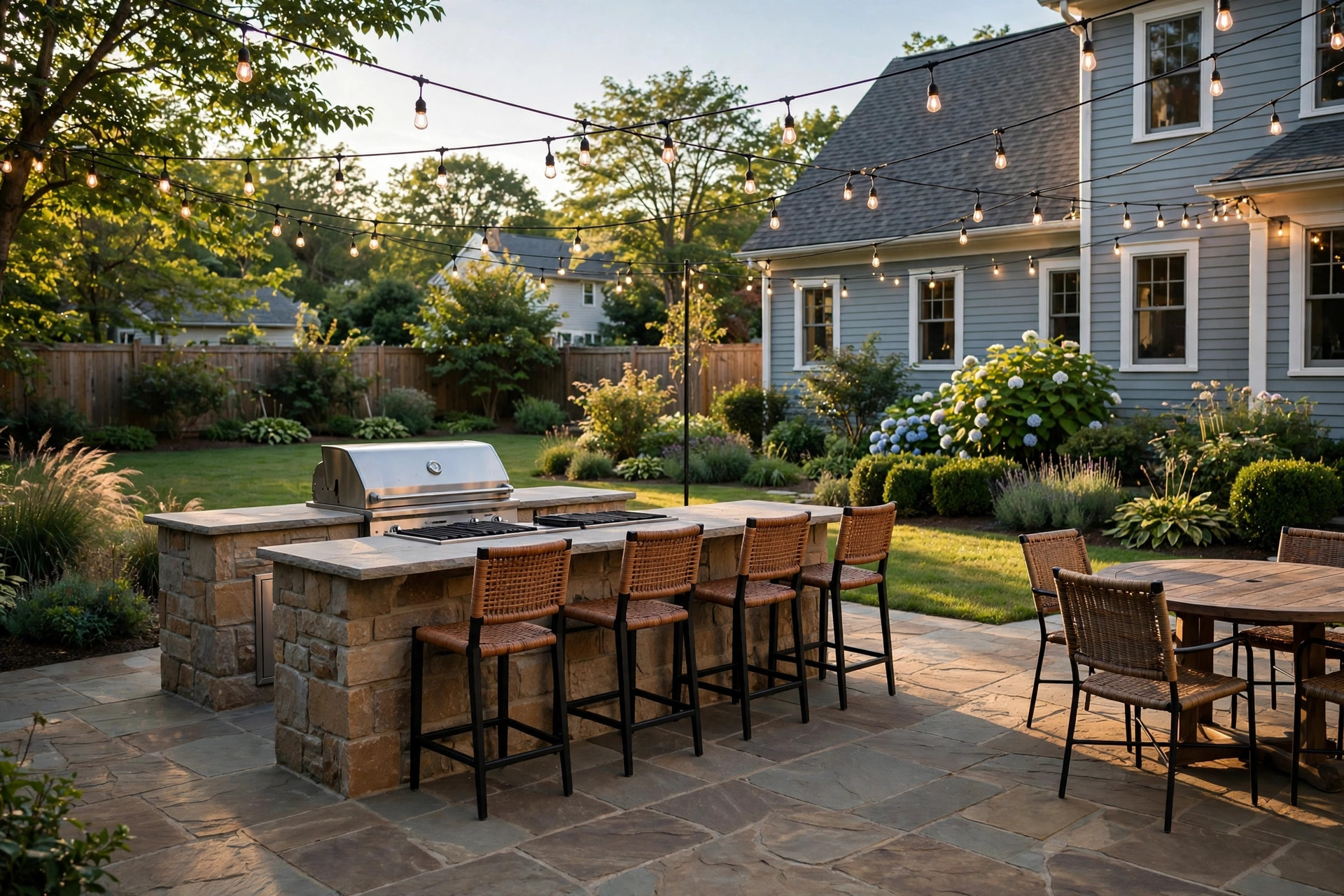
Place seating close enough for talk, but far enough that smoke does not reach plates. A bar counter with stools along the kitchen island seats guests right at the action. A separate dining table ten feet away gives a quieter meal. A pergola or an umbrella gives shade and makes the space feel like a room.
Types and Options
Backyard kitchens come in many sizes. The right one depends on space, budget, and ambition.
The Simple Grill Station
The simplest design is a freestanding grill with a side table or a rolling cart. It needs no permit and no builder. A best gas grill under 500 for beginners sets up in an afternoon. Add a small folding table and the cook has a work surface. This is the best first step. It tests how much the family likes cooking outside before money is spent.
The Island with Built-In Grill
The most popular mid-range design is a masonry or metal island with a drop-in grill, a counter on each side, and doors below for storage. The island can be four feet wide or ten. Many owners add a side burner for pots and a paper towel holder under the counter. This design looks finished and lasts for decades. It is the heart of most outdoor kitchen design ideas for backyard guides.
The Full Kitchen
A full outdoor kitchen has everything: a built-in grill, a sink with running water, a refrigerator, ice storage, and sometimes a pizza oven. Some add a smoker, a warming drawer, or a wine cooler. These kitchens need gas, water, and power lines. They need a permit and a licensed plumber. They also need the largest budget. For the serious host, nothing else compares.
The Covered Patio Kitchen
In hot or rainy states, a roof changes everything. A covered patio kitchen stays dry in storms and cool at noon. Ceiling fans keep air moving. Recessed lights let cooking run into the night. A covered design costs more, but it doubles the months the kitchen is used.
The Modular Cart System
Some companies sell steel cabinets that bolt together like office furniture. The cook can start with one cabinet and add more each year. The system moves if the family moves. It suits renters and those who change their minds often.
Equipment and Materials
The equipment decides how the kitchen works. The materials decide how long it lasts.
Choosing the Grill
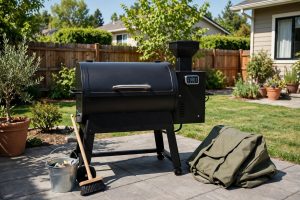
The grill is the center. Gas grills light fast and control heat well. Charcoal grills give a smoky flavor that many cooks prize. A charcoal grill suits the flavor lover; a gas grill suits the fast weeknight cook. Pellet grills add smoke with the ease of gas. Some owners buy two: a gas grill for daily use and a charcoal kettle for weekends.
Extra Cooking Gear
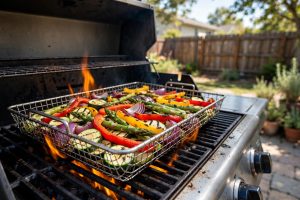
A side burner boils corn and fries fish without smell in the house. A flat top grill cooks breakfast, smash burgers, and fried rice for a crowd. A pizza oven turns Friday night into an event. A small smoker handles ribs and brisket on long afternoons. Do not buy it all at once. Start with the grill and add gear after a season of use shows what is missing.
Counters and Cabinets
Counters must take heat, sun, and rain. Granite and concrete hold up well and look fine with age. Stainless steel resists weather but gets hot in sun. Tile looks handsome but grout cracks with freeze and thaw. Cabinets should be marine-grade polymer or stainless steel. Wood swells and rots outside. Doors should latch so wind does not slam them.
Flooring and Roof
A patio of concrete, stone, or brick pavers drains well and cleans with a hose. Wood decks need a fireproof mat under the grill. A roof or pergola of cedar, metal, or aluminum keeps sun and rain off the cook. Leave the roof open at the sides so smoke can escape.
Cost and Price
Costs range wide. A simple grill station runs from 500 to 2,000 dollars, mostly the grill itself. A mid-range island with a built-in grill, counters, and storage runs from 5,000 to 15,000 dollars when a builder does the work. A full kitchen with gas, water, power, and a refrigerator runs from 20,000 to 50,000 dollars or more.
Labor is the big unknown. Running a gas line costs 300 to 800 dollars. Running water and a drain costs 1,000 to 3,000 dollars. Permits add a few hundred more. Homeowners who can pour concrete and lay block save thousands with their own labor.
Plan a budget with a 15 percent cushion. Old patios crack when dug. Soil shifts. A pipe runs where the plan said it would not. The cushion keeps the project calm.
To keep cost down, build in stages. Pour the patio this year. Add the island next year. Add the sink and fridge the year after. A kitchen built in stages works just as well as one built in a month.
Care and Upkeep
An outdoor kitchen needs regular care, but not much of it.
Clean the grill after each use. Brush the grates while they are hot. Once a month, remove the grates and heat shields and scrub the inside of the hood. Grease fires start in dirty grills.
Wipe counters with mild soap and water. Rinse stone and concrete well so soap does not leave a film. Oil stainless steel twice a year to keep it from spotting.
Cover the grill and the refrigerator when not in use. Covers are cheap and add years of life. In cold states, shut off the gas and water lines before the first freeze. Drain the sink line so it does not burst.
Check the structure each spring. Look for cracked mortar, loose tiles, and rusted hinges. Fix small faults early. A ten-minute repair now stops a thousand-dollar repair later.
Safety
Safety is the one subject no backyard kitchen plan can skip.
Keep the grill at least ten feet from the house, the fence, and anything that can burn. Never grill under a low roof or inside a garage. Fire needs air, and a fire under a roof spreads fast.
Gas lines and connections need a leak test each spring. Mix dish soap with water and brush it on the joints. Bubbles mean a leak. Tighten the joint or call a plumber. Never hunt for a gas leak with a match.
Keep a fire extinguisher within reach of the cooking zone. A small ABC extinguisher fits under a counter. Check its gauge each year.
Watch children and pets. A grill lid, a hot pan handle, and a sharp corner can hurt a small child in a second. A low fence or a planted border between the play area and the kitchen keeps the two zones apart.
Food safety matters outside too. Meat should not sit in the sun. Use a cooler for raw food and a clean plate for cooked food. Wash hands at the sink before touching ready-to-eat food.
FAQ
How much space does a backyard kitchen need?
A simple grill station fits in 6 by 8 feet. A comfortable island kitchen needs at least 10 by 12 feet, with room to open doors and walk behind the cook. A full kitchen with seating needs 15 by 20 feet or more. Measure the yard and mark the outline with chalk before buying anything.
Do I need a permit for an outdoor kitchen?
It depends on the town and the work. A freestanding grill needs no permit. A gas line, a water line, or a permanent roof usually does. Call the local building office with the plan in hand. A permit costs little and keeps the insurance valid.
What is the best counter material for outside?
Granite and sealed concrete are the most common picks. Both take heat and weather. Granite costs more but needs less care. Concrete costs less but should be resealed each year. Either one lasts decades with basic care.
Can I build a backyard kitchen myself?
Yes, with limits. A homeowner can pour a patio, set modular cabinets, and connect a grill to a propane tank. Gas lines, water lines, and electrical work should go to a licensed pro. The rules vary by state, and a mistake with gas or power can be grave.
How do I keep the kitchen safe in winter?
Cover everything. Shut off water and drain the lines. Disconnect the propane tank and store it upright outside. Bring small tools and the cover cushions indoors. A grill that sleeps dry wakes up ready in spring.
Gas or charcoal for the main grill?
Gas is fast and easy, good for weeknights. Charcoal gives deeper flavor, good for weekends. Many experienced cooks own both. If the budget allows only one, pick the fuel that matches how the cook actually cooks, not how the cook wishes to cook.
A Final Word
The best outdoor kitchen design ideas for backyard projects share one trait. They fit the people who use them. A small grill station that sees fire every week is a better kitchen than a stone palace that sits dark. Start simple. Cook often. Add what the cooking demands. The yard will grow into a kitchen the way a good recipe grows into a tradition: one season at a time.
For more background, see Char-Broil, Traeger, and Napoleon. For more background, see Big Green Egg, Broil King, and The Home Depot. Buying guides are also published by The Spruce Eats and AmazingRibs.com.
References
AmazingRibs.com. (n.d.). Barbecue and grilling science. https://www.amazingribs.com Big Green Egg. (n.d.). Kamado grills and outdoor cooking. https://www.biggreenegg.com Broil King. (n.d.). Gas and charcoal grills. https://www.broilkingbbq.com Char-Broil. (n.d.). Gas and charcoal grills. https://www.charbroil.com Napoleon. (n.d.). Fireplaces, grills, and heating products. https://www.napoleon.com The Home Depot. (n.d.). Home improvement products. https://www.homedepot.com The Spruce Eats. (n.d.). Recipes and cooking guides. https://www.thespruceeats.com Traeger. (n.d.). Wood pellet grills. https://www.traeger.com
Was this guide helpful?

About David Wilson
The My Garden US editorial team writes practical, in-depth home and garden guides for American homeowners — tested advice, no fluff.