
A Short Introduction
If you have asked where to buy hepa vacuum cleaners in california, you are not alone. Many households in the state deal with dust from long dry seasons, pet hair, and pollen that blows in through open windows. A vacuum with a true HEPA filter can trap the tiny particles that ordinary machines push back into the air. The result is a home that smells fresher and surfaces that stay clean for longer.
California also gives shoppers more choice than most states. Large warehouse clubs, national home stores, and specialty vacuum shops all carry these machines. Online sellers will ship to nearly every zip code in the state, often with free delivery. The hard part is not finding a seller. It is knowing which machine is worth the money and which store gives you the best terms.
This guide keeps things simple. It explains what a HEPA filter does, where California shoppers can buy one, how to choose between types, what prices to expect, and how to care for the machine after it arrives. Every word is written for the person who wants a clean house, not a lecture.
Why It Matters: Where to Buy Hepa Vacuum Cleaners in California
A HEPA filter is a fine mesh that traps at least 99.97 percent of particles as small as 0.3 microns. That includes dust mites, pollen, pet dander, and many kinds of household dust. A normal vacuum bag or foam filter lets much of this pass straight through. In practice, the air behind a cheap vacuum can be dirtier than the air in front of it.
For families with allergy sufferers, the difference shows up fast. Sheets of dust stop settling on shelves within a day or two. Morning sneezing often eases. People with asthma report fewer flare-ups when the whole home is cleaned with a sealed HEPA system. The sealed system part matters: the filter must sit in an airtight path, or dirty air escapes around the edges.
California homes present their own test. The Central Valley collects field dust. Coastal cities deal with mold spores in damp months. Wildfire smoke has become a regular summer event, and fine ash finds its way into carpets and upholstery. A strong vacuum with a sealed HEPA filter pulls this residue out of soft surfaces instead of spreading it around. Consumer Reports has long rated vacuum cleaners on how well they clean carpet and bare floors, and their test scores show a clear gap between sealed HEPA machines and budget models.
It is worth noting that a HEPA vacuum does not clean the air by itself. It cleans floors, rugs, mattresses, and furniture. For the air itself, you may also want a room air cleaner. The U.S. Environmental Protection Agency notes that source control, meaning removal of dust at the source, is one of the most useful steps a homeowner can take toward better indoor air.
What to Look For When You Shop
Start with the filter label. A true HEPA filter meets the standard described above. Some boxes say “HEPA-type” or “HEPA-like.” These phrases mean the filter does not meet the full standard. Look for the words “true HEPA” on the box or in the product details.
Next, check that the machine is sealed. A sealed system forces all exhaust air through the filter. Manufacturers usually state this on the packaging. If the description does not mention a sealed system, treat the claim with care.
Suction strength is the third point. A strong motor lifts deep dirt from carpet. For bare floors, gentler suction with a good brush head does the job and uses less power. Many families buy a canister model because it handles both jobs with a switch on the wand.
Weight matters more than most shoppers expect. A full-size upright can weigh over twenty pounds. Carrying it up stairs gets old fast. If your home has two floors, a lighter stick model or a canister with a long hose may suit you better. Before you pay, run a quick hepa vacuum cleaners price comparison usa search so you can see what the same model costs at several stores.
Cord length and bagged or bagless design round out the list. A long cord means fewer plug changes. Bagged machines hold more dirt and keep dust sealed when you change the bag. Bagless machines cost less over time but expose you to dust when you empty the bin. Guides at The Spruce walk through these trade-offs in plain terms, which helps first-time buyers decide.
Types of HEPA Vacuum Cleaners
Upright Vacuums
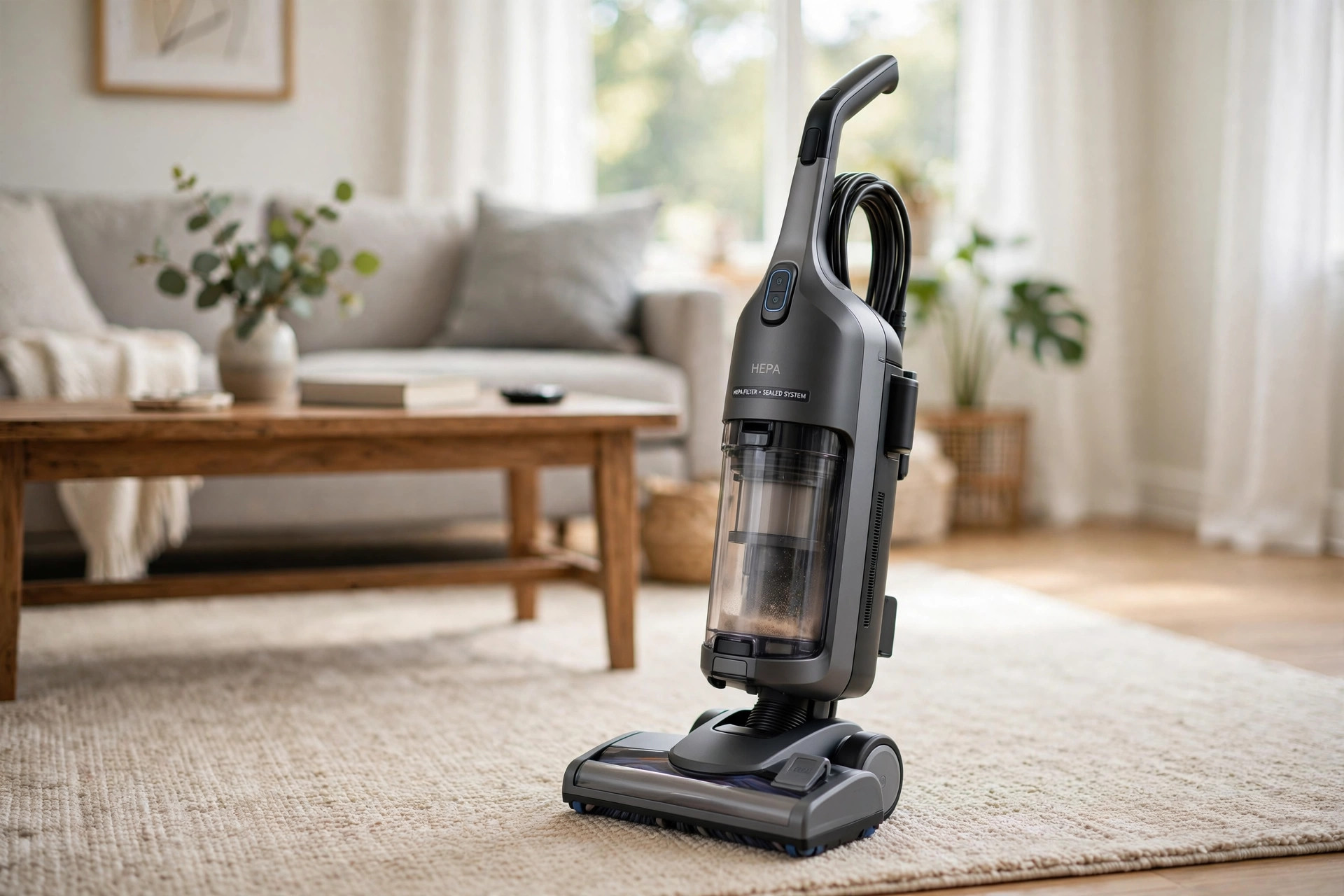
The upright is the classic American machine. It pushes across carpet in straight lines and covers wide areas fast. Most uprights now include a HEPA filter as standard on mid-range models and above. They suit homes with wall-to-wall carpet. Their weakness is stairs and tight corners, where the wide head cannot reach.
Canister Vacuums
A canister has a wheeled body that trails behind a hose and wand. It shines on bare floors, rugs, stairs, and upholstery. The separate head reaches under furniture with ease. Many canister models carry true HEPA filters and sealed bodies. They cost more than basic uprights but last longer in many homes.
Stick and Cordless Vacuums
Stick vacuums are light and quick. They hang on a wall charger and grab daily messes in minutes. High-end cordless sticks now include sealed HEPA systems. Their limits are battery life and small dust bins. They work best as a second machine or for apartments, not as the only vacuum in a large house.
Robot Vacuums
Robots run on their own schedule and keep floors touched up between deep cleans. Some carry small HEPA filters. They cannot match the suction of a full-size machine, but they keep dust from building up. If this category interests you, read a commercial grade robot vacuum cleaners buying guide before you choose, because prices and features vary widely.
Shop and Utility Vacuums
For garages, workshops, and job sites, a wet-dry machine with a HEPA filter collects fine dust from woodworking or drywall. These are loud and heavy. They are the right tool for rough spaces and the wrong tool for quiet living rooms.
Cost and Price in California
Prices in California track the national market, with small differences by store. A basic upright with a true HEPA filter starts near one hundred dollars. A solid mid-range upright or stick runs from one hundred fifty to three hundred dollars. Quality canisters from well-known brands land between three hundred and six hundred dollars. Top machines with sealed systems and strong warranties can reach seven hundred dollars or more.
Where you buy affects the final price. Big-box home stores in California often run weekend sales, and their websites match store prices. Warehouse clubs bundle extra bags or attachments with the machine. Specialty vacuum shops charge list price but include free assembly, a first filter change, and honest repair advice. Online sellers compete on price and ship fast to California addresses, though you cannot test the machine before it arrives.
Tax and shipping shape the total. California sales tax adds several percent to the shelf price. Many online stores offer eco friendly hepa vacuum cleaners with free shipping to California, which can offset the tax. Some brands also sell certified refurbished machines at a discount of twenty to thirty percent. A refurbished unit from the manufacturer, with a full warranty, is often the best value in the whole store.
Seasonal sales follow a pattern. Late November brings the deepest discounts of the year. January clears leftover stock. Spring cleaning season lifts prices back up. If you can wait, the holidays are the time to buy. Testing labs such as Good Housekeeping publish yearly roundups of the best vacuum cleaners, and their picks often go on sale during these events.
Replacement filters add to the true cost. A set of HEPA filters costs fifteen to forty dollars and lasts six to twelve months in a normal home. Bags add a few dollars a month. When you compare two machines, add one year of filters and bags to each price. The cheaper machine is not always cheaper.
Care and Upkeep
A HEPA filter works only if you maintain it. Check the filter every two or three months. Hold it up to a light. If you cannot see light through the pleats, wash it if the manual allows, or replace it. Most pleated HEPA filters are not washable. Washing a non-washable filter breaks the fibers and ruins the seal.
Empty the dust bin or change the bag before it is full. A full bag chokes airflow, and the motor works harder for less cleaning. Wipe the brush roll clean of hair every few weeks. Hair wrapped around the roll slows it down and can burn out the belt.
Check the hose for clogs twice a year. Drop a coin through it. If the coin does not fall out the other end, a clog sits inside. Clear it with a straightened coat hanger or a broom handle. Step-by-step photo guides at Family Handyman show how to open common models without breaking plastic tabs.
Store the vacuum in a dry place. Heat from a garage in a California summer can warp plastic housings over time. Keep the cord loosely coiled to avoid cracks in the insulation. Once a year, wipe the wheels and check that the head height adjusts smoothly. These small habits add years to a good machine.
Safety Notes
Unplug the vacuum before you clear a jam or change a filter. This sounds obvious, yet most home injuries from vacuums happen when the machine is still plugged in and the brush roll starts by accident.
Keep the machine away from standing water unless it is rated for wet pickup. A standard household vacuum and a flooded laundry room are a dangerous mix. For water, use a wet-dry machine built for the job.
Let the motor rest during long sessions. If the housing feels hot to the touch, switch it off for twenty minutes. Overheating shortens motor life and can trip the thermal fuse. A cool machine is a safe machine.
If your home has old wiring, avoid running the vacuum on the same circuit as a space heater. Both draw heavy current. A tripped breaker is a warning, not a nuisance. Repair columns at This Old House explain how to read the signs of an overloaded circuit.
Where California Shoppers Can Buy
Now the direct answer to where to buy hepa vacuum cleaners in california. National home-improvement retailers carry a wide range in every major metro area. Both Home Depot and Lowe’s stock HEPA models in store and online, with pickup options that skip shipping delays. Electronics retailers such as Best Buy carry the stick and robot lines and let you compare models side by side.
Warehouse clubs in the Los Angeles, Bay Area, and San Diego regions sell a rotating set of models at member prices. Department stores carry the premium brands with generous return windows. Independent vacuum shops, found in most California cities, sell the mid and high lines and service what they sell. These shops are the best source for bags, belts, and honest repair work years later.
Online, the manufacturer websites sell direct with full warranties and occasional web-only bundles. Large marketplaces carry nearly every model, but check that the seller is authorized, or the warranty may not apply. Buying advice columns at Bob Vila remind readers to confirm warranty terms before clicking buy, a tip worth following for any large purchase.
Frequently Asked Questions
Do I really need a true HEPA filter, or is HEPA-type enough?
Buy true HEPA. HEPA-type filters catch larger dust but miss the fine particles that trigger allergies. The price gap between the two is small. The cleaning gap is large.
Are bagged or bagless HEPA vacuums better for allergies?
Bagged machines are kinder to allergy sufferers. The bag seals shut when you remove it, so dust stays inside. Bagless bins puff a cloud of dust when you empty them, even on careful models.
How often should I replace the HEPA filter?
Most homes need a new filter every six to twelve months. Homes with pets or heavy foot traffic sit at the short end. A clogged filter cuts suction long before the machine looks dirty.
Can a HEPA vacuum help with wildfire ash?
Yes, for settled ash on floors and furniture. Vacuum slowly so the machine captures fine particles instead of stirring them. Do not use a standard vacuum on thick ash piles outdoors; the fine dust can overwhelm the filter.
Will a HEPA vacuum work on hardwood floors?
Yes. Use the bare-floor setting or a dedicated hard-floor head. Turn off the spinning brush roll if the model allows it. The brush can scatter dust and scratch soft finishes.
Is it worth buying an expensive model?
It depends on your home. A large house with carpet and pets earns back a premium machine in cleaning power and durability. A small apartment with bare floors does fine with a mid-range stick. Match the machine to the home, not to the advertisement.
A Final Word
A HEPA vacuum is one of the simplest upgrades a household can make. It asks little: a filter change now and then, a bag before it fills, a few minutes of care each month. In return it pulls the fine dust, pollen, and dander out of the home and keeps them out.
California shoppers have every option, from warehouse clubs to corner repair shops to fast online delivery. Use the guidance above to pick the right type, compare the true cost, and buy from a seller you trust. Your floors, your furniture, and your lungs will notice the difference.
References
Best Buy. (n.d.). Consumer electronics retailer. https://www.bestbuy.com Bob Vila. (n.d.). Home improvement advice. https://www.bobvila.com Consumer Reports. (n.d.). Product reviews and ratings. https://www.consumerreports.org Family Handyman. (n.d.). DIY home repair and maintenance. https://www.familyhandyman.com Good Housekeeping. (n.d.). Product reviews and home advice. https://www.goodhousekeeping.com Lowe’s. (n.d.). Home improvement products. https://www.lowes.com The Home Depot. (n.d.). Home improvement products. https://www.homedepot.com The Spruce. (n.d.). Home and garden advice. https://www.thespruce.com This Old House. (n.d.). Home renovation guidance. https://www.thisoldhouse.com U.S. Environmental Protection Agency. (n.d.). Protecting human health and the environment. https://www.epa.gov
Was this guide helpful?

About James Carter
The My Garden US editorial team writes practical, in-depth home and garden guides for American homeowners — tested advice, no fluff.
You May Also Like
How to Find the Best Post Construction Cleaning Services Near Me
June 11, 2026 0 views
The Best Baseboard Cleaning Tools for Humid Climates
August 21, 2026 0 views
Quiet Carpet Cleaning Service Companies for Homeowners
March 31, 2026 0 views