
Many cats eat far too fast. They gulp their food in seconds. Then they feel sick. Some throw up. Some beg for more food an hour later. A slow feeder bowl can help. When you look for the best slow feeder bowl for cats whisker friendly design matters too. A bowl that slows eating but hurts the whiskers is no good. This guide explains what to look for. It covers types, prices, care, and safety. By the end you will know how to pick the right bowl for your cat.
Why Some Cats Need a Slow Feeder
Fast eating is common in cats. It has roots in nature. Wild cats eat fast because other animals might steal their food. House cats keep this habit. The result is often poor health.
When a cat eats too fast, it swallows air. The air fills the stomach. The cat may vomit soon after the meal. Fast eaters also chew less. Large pieces of food reach the stomach whole. This can cause pain and upset.
Another problem is weight gain. A cat that eats fast does not feel full in time. It asks for more food. Owners give more. Over months the cat gains extra weight. Extra weight leads to joint pain. It can also lead to diabetes.
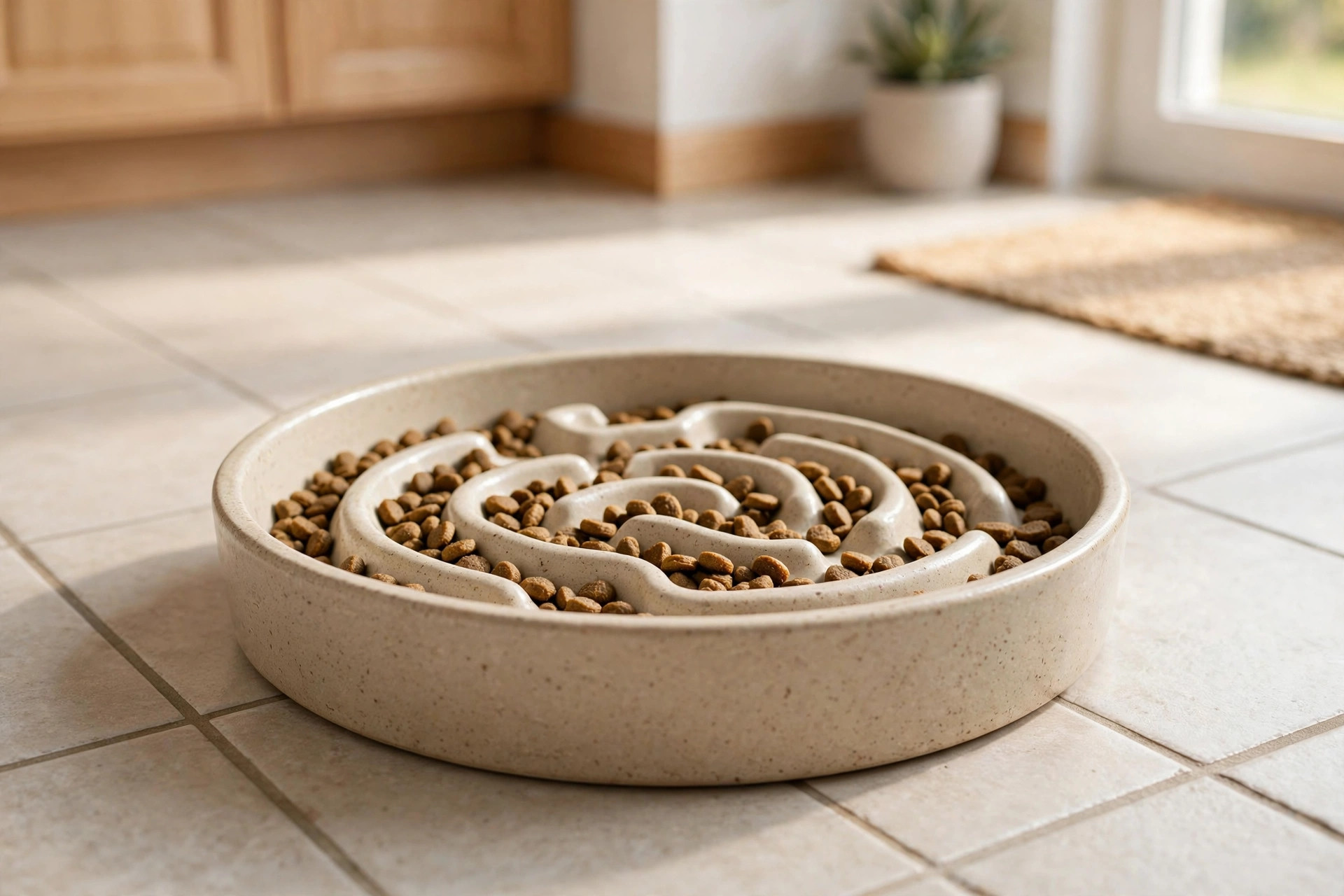
A slow feeder bowl changes the pace. The bowl has ridges, bumps, or maze walls. The cat must work to reach the food. It takes small bites. It eats at a calmer pace. Most cats learn the bowl in a few days. Their stomachs settle. Vomiting often stops.
Some cats are anxious eaters. They came from shelters or busy homes. A slow feeder can calm them. It turns mealtime into a gentle game. The cat feels less rushed. Feeding becomes a quieter part of the day.
What Whisker Friendly Means: Best Slow Feeder Bowl for Cats Whisker Friendly
Cat whiskers are very sensitive. They are not just hairs. Each whisker sends signals to the brain. Whiskers help the cat sense space and movement. When the whiskers press hard against a bowl, the cat feels stress. Vets call this whisker fatigue.
Whisker fatigue shows in small ways. The cat may paw food out of the bowl. It may drop food on the floor and eat it there. It may refuse the bowl and walk away. Some cats stop eating enough. Owners blame picky tastes. The real cause is often the bowl.
A whisker friendly bowl is wide and shallow. The whiskers do not touch the sides. The cat can reach the center without bending the whiskers. The bowl should also be low enough that the whiskers stay free above the rim.
Many slow feeder bowls fail this test. They are deep. They have high walls. The cat must push its face into the bowl. The whiskers bend back. A truly whisker friendly slow feeder slows the cat down with gentle ridges. It does not force the cat to fight the bowl.
If you shop for the best slow feeder bowl for cats whisker friendly shape should be your first check. Look at the width. Look at the depth. Picture your cat eating from it. The whiskers should stay clear.
What to Look for in a Slow Feeder Bowl
Not all slow feeders suit cats. Many are made for dogs. They are too large or too deep. A good cat bowl must fit a cat’s small face and sensitive whiskers. Here are the main points to check.
Size and Depth
The bowl should be wide and shallow. A wide base lets the whiskers rest free. A shallow shape lets the cat reach food without pushing deep. For most cats, a bowl three to four inches across works well. Depth should stay under two inches.
Large cats may need a slightly larger bowl. Small kittens need smaller ones. Watch your cat eat. If the whiskers bend against the side, the bowl is too narrow. If the cat cannot reach the last bits, the bowl is too deep.
Material
Most slow feeder bowls are made from three materials. Each has pros and cons.
Plastic is cheap and light. It comes in many shapes. But plastic can scratch. Scratches hold bacteria. Some cats are allergic to plastic. They get chin acne. For these reasons, plastic is often not the best choice.
Ceramic is heavy and stable. It does not slide on the floor. It washes well in the dishwasher. Good glaze keeps it smooth. Make sure the glaze is lead-free and food-safe. Ceramic bowls last for years.
Stainless steel is clean and strong. It resists bacteria. It also lasts a long time. But steel slow feeders for cats are harder to find. The maze shapes are difficult to make in steel. If you find one, it can be a great choice.
For a whisker friendly pick, ceramic often wins. It is heavy enough to stay put. It comes in wide shallow shapes. It is easy to keep clean.
Shape of the Maze
The maze is what slows the cat. It may be a set of low ridges. It may be a spiral path. It may be a few rounded bumps. The best shapes are gentle. Deep channels and sharp edges can hurt gums or tongues.
For cats, low and wide maze walls work best. The cat can still see the food. It can lick around the ridges. If the maze is too hard, the cat will give up. It will paw the food out or refuse to eat.
Try to find a maze with open space. The food should sit in wide lanes, not narrow cracks. This keeps the whiskers clear. It also makes the bowl easy to wash.
Stability and Base
A slow feeder only works if it stays still. Cats push and paw at maze bowls. A light bowl will slide across the floor. A bowl that moves adds stress to the meal.
Look for a wide flat base. A rubber ring under the bowl helps. Some bowls sit inside a tray. The tray catches spills. If you feed on a slick tile floor, a non-slip mat under the bowl is a smart buy.
Types of Slow Feeder Bowls for Cats
Three main types suit cats. Each works in a different way. Some cats prefer one over the others.
Maze bowls are the most common. They have raised ridges inside. The food sits between the ridges. The cat eats around them. These bowls look like small labyrinths. Choose one with low ridges and wide lanes for whisker comfort.
Lick mats are flat rubber pads with small bumps. You spread wet food on the mat. The cat licks the food off slowly. Lick mats are very whisker friendly. Nothing presses against the whiskers. They work best with wet food or paste treats. They hold less food than a bowl.
Puzzle feeders are more complex. They may have sliding lids or hidden cups. The cat moves parts to find food. These feeders are good for smart cats. They offer mental play along with the meal. But they can be hard to clean. Small parts may trap old food.
You can also pair a slow feeder with other cat items. Many owners use elevated cat bowl stands for neck comfort with wide slow feeder bowls. Keep in mind that elevated stands suit some cats better than others. Watch how your cat stands and eats before you raise the bowl.
Fresh water matters too. A slow feeder does not replace water. Many homes use pet water fountains for multiple cats to keep water fresh and flowing. Cats drink more from moving water. Good water habits support healthy kidneys.
Dog owners have their own options. Slow feeder dog bowls for fast eaters are larger and deeper. Do not buy a dog bowl for a cat. The size is wrong. The depth strains the whiskers.
Cost and Price
Slow feeder bowls for cats are not costly. Most range from eight to twenty-five dollars. Simple plastic maze bowls cost the least. Ceramic models cost more. They also last longer.
Lick mats are often the cheapest option. Many sell for five to ten dollars. Puzzle feeders cost the most. Complex designs can run twenty to forty dollars.
Price does not always mean quality. A twelve-dollar ceramic bowl may beat a thirty-dollar puzzle feeder. Focus on shape and material first. Read the size details. A bowl that fits your cat is worth more than a fancy brand name.
Pet supply stores carry many models. Large retailers such as Chewy and Petco list cat slow feeders with reviews from other owners. General stores like Walmart and Target often stock them at lower prices. Home Depot also carries pet feeding supplies in many locations.
Buy one bowl first. Test it with your cat. If it works well, you can buy a second for travel or a second home.
Care and Upkeep
A slow feeder bowl needs regular washing. Food hides in the ridges and corners. Old food grows bacteria. Wash the bowl after every meal if you can. At minimum, wash it once a day.
Most ceramic and plastic bowls are dishwasher safe. Place them on the top rack. Use hot water. Let them dry fully before refilling. Stainless steel bowls also handle the dishwasher well.
Lick mats need extra care. The small bumps trap food. Soak the mat in warm soapy water first. Then scrub it with a soft brush. Rinse it well. Check the mat often for tears. A torn mat can be chewed. Replace it when it wears out.
Puzzle feeders take more time. Take apart any moving pieces. Wash each piece. Dry them before you put them back. Check the maker guide for parts that should not go in the dishwasher.
Replace the bowl when it shows wear. Deep scratches hold germs. Chipped ceramic can cut the tongue. A worn bowl may also lose its grip. A fresh bowl every year or two is a small price for health.
Safety
Slow feeder bowls are safe for most cats. Still, a few points deserve care.
Watch your cat the first few times. Some cats get upset by the maze. They may paw hard at the bowl. They may flip it over. If your cat shows real stress, try a simpler design. A lick mat is often the gentlest start.
Check the material for safety marks. Look for food-grade plastic. Look for lead-free ceramic glaze. Avoid bowls with strong chemical smells. A new bowl should air out for a day before first use.
Do not use a damaged bowl. Cracked plastic can have sharp edges. Chipped ceramic can cut. If the bowl has loose parts, a cat could swallow them. Throw away worn feeders.
Kittens and senior cats need softer options. Very young kittens may lack the skill for a hard maze. Older cats with sore teeth may find deep ridges painful. For these cats, a shallow lick mat is often best.
Health guides from groups like PetMD and the ASPCA stress slow, calm feeding. The Spruce Pets offers care guides on feeding habits. The AKC also publishes pet care resources, though it focuses on dogs.
FAQ
How long does it take a cat to learn a slow feeder bowl?
Most cats learn in two to five days. Start with a simple maze. Put a small amount of food in the bowl. Let the cat explore at its own pace. Do not force the cat. If it walks away, try again at the next meal. Hungry cats learn faster.
Can I use a slow feeder bowl for wet food?
Yes. Most maze bowls work with wet food. Spread the food in the lanes. Do not fill the maze to the top. Lick mats are also great for wet food. They keep the cat licking for many minutes. Wash the bowl well after wet meals.
Will a slow feeder bowl help with vomiting?
Often, yes. Many cats vomit because they eat too fast. A slow feeder fixes the pace. If vomiting stops after the switch, the speed was likely the cause. If vomiting keeps happening, see a vet. The cause may be medical.
Are slow feeder bowls good for all cats?
Most cats can use them. Cats that eat at a normal pace may not need one. Very shy cats may find a hard maze stressful. Kittens under eight weeks may do better with a plain shallow dish. Match the bowl to the cat.
How do I know if a bowl is truly whisker friendly?
Check the width and depth. The bowl should be wide enough that the whiskers do not touch the sides. It should be shallow enough that the cat does not push its face deep. Watch your cat eat. If it pulls food out or eats from the floor, the bowl may press the whiskers.
Should I feed dry food or wet food in a slow feeder?
Both work. Wet food suits lick mats and shallow maze bowls. Dry kibble suits maze bowls with open lanes. Some owners mix both. Follow your vet’s advice on diet. The bowl only changes the speed, not the food type.
A Short Final Word
The best slow feeder bowl for cats whisker friendly is not one brand. It is any bowl that slows the meal and respects the whiskers. Look for wide, shallow shapes. Choose safe materials. Pick a gentle maze. Keep the bowl clean. Watch your cat and adjust. A calm, slow meal is one of the simplest gifts you can give your cat.
References
American Kennel Club. (n.d.). Dog care and training resources. https://www.akc.org ASPCA. (n.d.). Pet care and animal welfare resources. https://www.aspca.org Chewy. (n.d.). Pet supplies. https://www.chewy.com Petco. (n.d.). Pet supplies and services. https://www.petco.com PetMD. (n.d.). Pet health information. https://www.petmd.com Target. (n.d.). Retail store. https://www.target.com The Home Depot. (n.d.). Home improvement products. https://www.homedepot.com The Spruce Pets. (n.d.). Pet care guides and product reviews. https://www.thesprucepets.com Walmart. (n.d.). Everyday low prices. https://www.walmart.com
Was this guide helpful?

About Robert Taylor
The My Garden US editorial team writes practical, in-depth home and garden guides for American homeowners — tested advice, no fluff.
You May Also Like
Dog Pen for Garage and Basement Containment: A Practical Guide
July 4, 2026 0 views
Best Pet Stairs for SUV Trunk Access Dogs
April 17, 2026 1 views
The Best Dog Life Vest for Kayaking and Boating: A Complete Guide
March 27, 2026 0 views