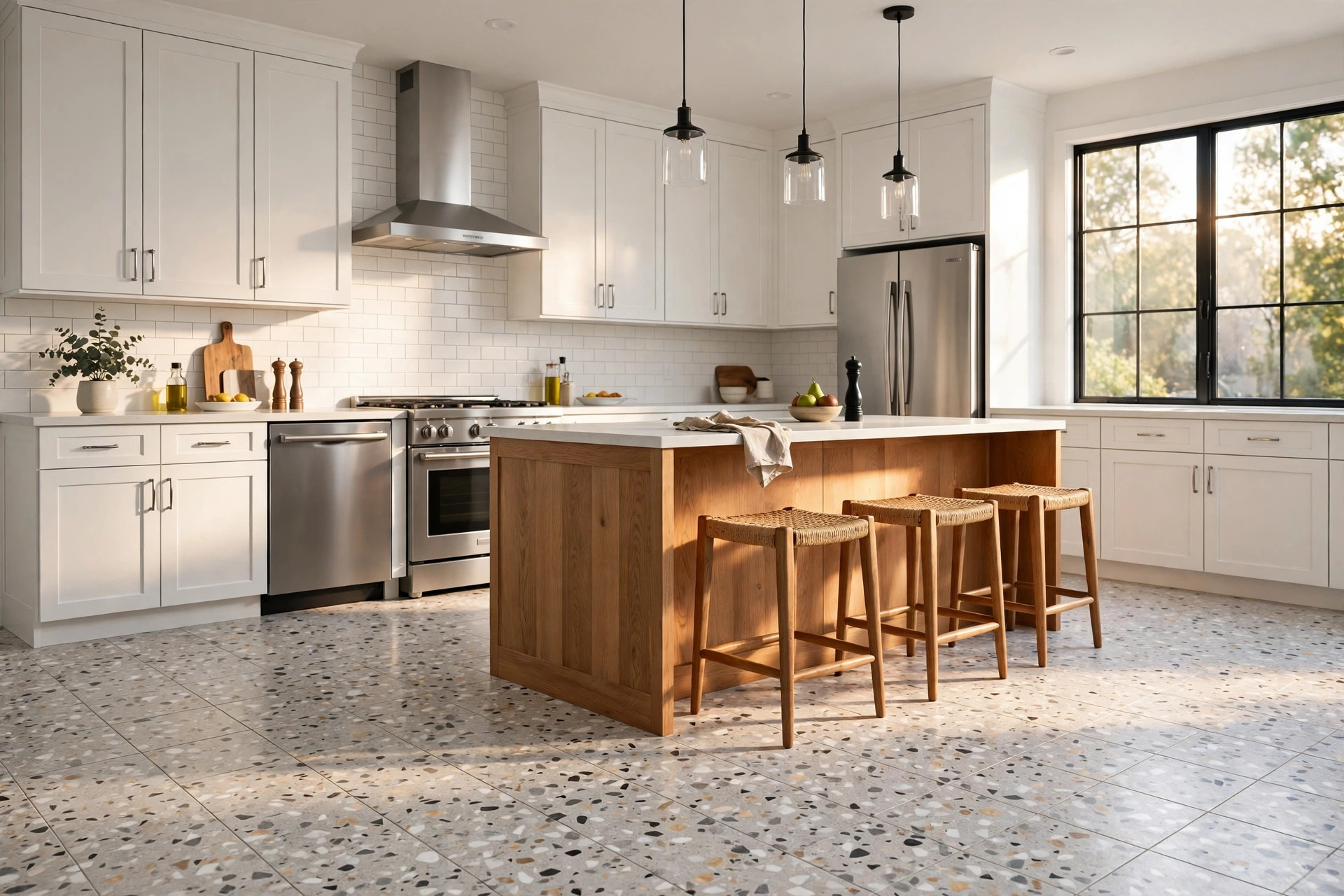

Terrazzo look tile for kitchen reviews USA is a common search for a simple reason. American cooks want a kitchen floor that looks rich and lasts for years, yet costs far less than real stone. Real terrazzo is a blend of marble and stone chips set in cement. It is lovely, but it is heavy and costly to pour. Terrazzo look tile copies that pattern with ink and glaze. The printed chips fool most eyes. The price is much lower. The upkeep is much easier. This guide walks through what matters, what to look for, what types you can buy, what they cost, how to keep them clean, and how to stay safe. By the end you will know if this floor suits your kitchen.
Why Terrazzo Look Tile Matters in a Kitchen
The kitchen is the hardest working room in most homes. Shoes track in grit from the yard. Pots boil over. Children drop cups. Pets run through with wet feet. A floor here must stand up to daily abuse and still look good for guests. Carpet has no place in a kitchen. Wood swells when water sits on it. Laminate can lift at the seams. Tile stands firm.
Terrazzo look tile earns a place in this room for three reasons. First, it hides wear. The busy chip pattern breaks up dirt, crumbs, and small scuffs. A busy floor forgives a busy cook. Second, it fits many styles. The same tile can look modern next to white cabinets and warm next to wood cabinets. Third, it costs less than the real thing. Poured terrazzo can cost many times more per square foot. A printed tile gives a close look for a fraction of the price.
Reviews from American buyers point to the same strengths. Homeowners praise the stain resistance of glazed tile. They like that a dropped pan rarely cracks a dense porcelain body. They like the wide range of colors. Light gray chips suit small galleys. Warm beige chips suit farmhouse rooms. Bold black chips suit modern lofts. A floor that suits many rooms sells well, and store stock shows it. Big chains keep several terrazzo patterns on the shelf year round.
There is one caution worth stating early. Tile is hard underfoot. Long hours at the stove can tire the legs. A thick rug at the sink helps. So do soft shoes. The trade is real, but most cooks accept it for a floor that never needs a coat of wax.
What to Look for When You Choose: Terrazzo Look Tile for Kitchen Reviews Usa
A good buy starts with a short list of facts. Tile boxes carry ratings that tell you how the tile will behave. Learn to read them before you fall in love with a sample.
The Tile Body
Porcelain and ceramic are the two main bodies. Porcelain is fired hotter and denser. It absorbs less than half a percent of water. Ceramic is softer and absorbs more. For a kitchen floor, dense is better. Water from a spill sits on porcelain instead of soaking in. A dropped knife is less likely to chip a porcelain edge. Check the box for the word porcelain when the floor will see heavy use.
Finish and Slip Rating
Tile finishes range from high gloss to matte. Gloss looks wet and rich, but it can be slick when wet. Matte looks dry and modern, and it grips shoes better. Kitchen floors get wet from the sink, the fridge ice maker, and the dog bowl. Ask for the dynamic coefficient of friction rating, printed as DCOF. A value of 0.42 or higher suits a level kitchen floor. Many terrazzo look tiles meet this mark in a matte or honed finish. If you have small children or older family members, choose the higher grip finish and skip the polish.
Size, Color, and Rectified Edges
Large tiles make a small kitchen look bigger. A 24 by 24 inch tile cuts the number of grout lines in half next to a 12 by 12 tile. Fewer grout lines mean less scrubbing. Rectified edges are cut straight after firing, so grout joints can be thin and neat. They cost a little more, but the look is clean.
Color deserves a sample test at home. Store lights are bright and cool. Your kitchen may be warm and dim. Take a loose tile home and lay it on the floor. Look at it in the morning and at night. Make sure the chip colors work with your cabinets and counters. Small samples can mislead, so buy a full-size tile for the test.
Types and Options
Not all terrazzo look tile is made the same way. The three main paths are porcelain, ceramic, and real poured terrazzo. Each has a place.
Porcelain Terrazzo Look Tile
Porcelain is the top pick for most kitchen floors. It is dense, hard, and near waterproof. The chip pattern runs through the ink layer, and many lines now print on all four edges of the tile for a natural look. You will find it at large home improvement stores and major home centers in stock, plus deep catalogs at specialty flooring retailers. Big floor makers such as Shaw and Mohawk also sell terrazzo patterns in their tile lines. Porcelain handles the heat near a range and the cold near a door. It resists most stains if you wipe spills in a fair time. Expect to pay a mid-range price for quality porcelain, and expect it to last decades.
Ceramic Terrazzo Look Tile
Ceramic is the budget pick. It costs less per tile and cuts easier, which lowers labor cost too. It suits a kitchen that sees light use, or a wall behind the range where no feet will touch it. On a floor, choose a ceramic rated for floor use, never a wall-only tile. Ceramic chips more easily than porcelain at the edges. If your home has heavy traffic, dogs, or rolling chairs, step up to porcelain. For a rental refresh or a small galley on a tight budget, ceramic is a fair choice.
Real Poured Terrazzo
Real terrazzo is a different project. A crew pours a mix of cement and stone chips, then grinds it flat. The result is seamless and lasts a lifetime. It also costs a great deal and needs a strong floor structure. It suits new builds where the slab can carry the weight. For most kitchen remodels, the look tile is the wiser buy. It gives most of the beauty at a small share of the cost.
Cost and Price
Price is the first question most shoppers ask. Terrazzo look tile itself runs in a wide band. Basic ceramic starts near a few dollars per square foot. Mid-range porcelain runs higher. Large format and rectified porcelain can climb further. Real poured terrazzo runs far above tile.
Labor is the second half of the bill. A straight lay on a flat floor costs less. A diagonal lay or a herringbone pattern costs more. Removing old tile adds cost. If your subfloor needs repair, that adds more. Most American installers quote by the square foot, with a minimum charge for small jobs.
A smart way to budget is to price the whole room, not just the tile. Add grout, mortar, sealer if the grout needs it, and a waste factor of ten percent for cuts. Then add labor. The tile price tag is often less than half the total job. Our guide to terrazzo tile flooring cost per square foot breaks down tile and labor in more detail for United States homes.
Shop around before you buy. Compare prices at local tile shops and at big chains. Look for tile makers that sell direct or through dealers. Watch for seasonal sales in spring, when remodel work picks up. Read buyer reviews, but read them with care. A review that praises a tile after one month tells you little. A review that reports back after two years tells you much more. Testing guides from This Old House and how-to pieces from The Spruce can help you judge claims about wear and stain resistance.
Care and Upkeep
One of the best traits of terrazzo look tile is simple care. It asks for little and gives a lot. A daily sweep or a pass with a dry mop lifts grit before it can scratch the glaze. A weekly mop with warm water and a mild cleaner keeps the surface bright. Avoid harsh acids and bleach. They can dull the glaze over time and eat at cement grout.
Grout lines need the most care. Sanded grout can stain if spills sit too long. Seal the grout after install, and reseal every few years in a busy kitchen. Epoxy grout resists stains better and rarely needs sealing, but it costs more and is harder to install. For most homes, a good cement grout with a quality sealer is enough.
Spills deserve quick action. Tomato sauce, red wine, and coffee can stain light grout. Wipe them up, then mop the spot. Place a washable runner in front of the sink and the stove. It catches most of the daily mess and saves your back. Furniture pads under chair legs stop chips at the tile edge. With this simple routine, a porcelain terrazzo look floor can look new for twenty years or more. Pet owners should also read our notes on the best flooring for kitchens with dogs usa for extra tips on claws and water bowls.
Safety
A kitchen floor must be safe before it is pretty. Water and smooth tile are a poor pair. Choose a matte or textured finish with a DCOF of 0.42 or higher. Test a sample with a wet hand before you buy a whole pallet. If it feels slick in the store, it will feel slick in your kitchen.
Grout lines add grip, so very large tiles with wide open space can be slicker than smaller tiles. Area rugs with non-slip pads help at the sink and the stove. Keep the floor free of grease. A thin film of cooking oil turns any hard floor into a slide. Mop the cooking zone often.
For homes with older adults, safety outranks style. Pick the tile with the highest slip rating that you still like. Add a handhold near steps. Keep night lights on so the floor is easy to see. A pretty floor that causes a fall is a bad buy at any price. Guides from Bob Vila cover slip-resistant flooring in plain terms, and independent test reports from Consumer Reports rate many tile and flooring lines for safety and wear.
Frequently Asked Questions
Is terrazzo look tile good for kitchen floors? Yes, for most homes. Porcelain terrazzo look tile is dense, hard, and water resistant. It hides dirt well and suits many styles. It is hard underfoot, so use a rug at the sink. It is one of the most practical pretty floors you can buy.
What is the difference between porcelain and ceramic terrazzo look tile? Porcelain is denser and harder. It absorbs less water and resists chips better. Ceramic costs less and cuts easier. For a busy kitchen floor, porcelain is the safer pick. Our comparison of porcelain vs ceramic tile for floors usa goes deeper into ratings and prices.
Does terrazzo look tile stain? The tile face resists most stains if you wipe spills in a fair time. Grout is the weak spot. Light grout can take color from tomato sauce or red wine. Seal the grout and clean spills fast. Epoxy grout stains less but costs more.
How long does terrazzo look tile last in a kitchen? A well installed porcelain floor can last twenty to thirty years. The glaze wears slowly under normal foot traffic. Grout may need resealing or regrouting before the tile wears out. Real poured terrazzo lasts even longer, but it costs far more.
Is terrazzo look tile slippery when wet? It can be, like any hard floor. Choose a matte finish with a DCOF rating of 0.42 or higher. Avoid high gloss in the cooking zone. Use rugs with non-slip pads at the sink. Mop up water and grease right away.
Can I install terrazzo look tile over my old floor? Sometimes. Tile can go over a sound vinyl floor or a level concrete slab. It should not go over a springy wood floor or over old tile that is loose. The subfloor must be flat, clean, and strong. When in doubt, have a pro check the floor before you buy.
A Final Word
Terrazzo look tile earns its good reviews. It brings the charm of classic stone chips to a normal kitchen budget. It stands up to water, heat, and daily traffic. It asks for little care. Choose porcelain for a busy floor, mind the slip rating, and budget for good labor as well as good tile. Do that, and your kitchen floor will serve you well for decades.
References
Bob Vila. (n.d.). Home improvement advice. https://www.bobvila.com Consumer Reports. (n.d.). Product reviews and ratings. https://www.consumerreports.org Daltile. (n.d.). Ceramic and porcelain tile. https://www.daltile.com LL Flooring. (n.d.). Hardwood, vinyl, and tile flooring. https://www.llflooring.com Lowe’s. (n.d.). Home improvement products. https://www.lowes.com Mohawk Flooring. (n.d.). Flooring products. https://www.mohawkflooring.com Shaw Floors. (n.d.). Flooring products. https://www.shawfloors.com The Home Depot. (n.d.). Home improvement products. https://www.homedepot.com The Spruce. (n.d.). Home and garden advice. https://www.thespruce.com This Old House. (n.d.). Home renovation guidance. https://www.thisoldhouse.com
Was this guide helpful?

About Lisa Anderson
The My Garden US editorial team writes practical, in-depth home and garden guides for American homeowners — tested advice, no fluff.
You May Also Like

Flooring Waste Factor Calculator for DIYers: How Much Extra Flooring to Buy
February 23, 2026 0 views
Best Carpet Cleaner for Pet Stains USA: A Complete 2026 Guide
June 22, 2026 0 views
Best Carpet Pad for Concrete Slab USA: A Complete Buying Guide
March 19, 2026 0 views