
A pool pump that keeps losing prime is a common problem. The pump starts to run, but it cannot pull water. The pump basket stays empty or half full. The water does not move. The filter does not clean. If you want to know how to fix pool pump losing prime, you are in the right place. This guide explains the cause of the problem and shows you how to fix it with simple steps. The work is basic. Most home owners can do it with a few tools.
Why a Pool Pump Losing Prime Matters
“Prime” means the pump is full of water and pulling water from the pool. When a pump loses prime, air gets into the system. Air blocks the flow of water. The pump runs dry or nearly dry. This is bad for the pump motor. The seal can burn out. The pump can overheat. Parts wear out faster.
A pump that loses prime also fails to clean the pool. The filter does not get flow. Dirt stays in the water. The pool can turn cloudy or green. You waste power running a pump that moves no water. That raises your power bill. If your pump will not stay primed, it is a sign of a leak or a block. You should fix it soon. A quick repair now can save you a costly pump replacement later.
How a Pool Pump Pulls Water: How to Fix Pool Pump Losing Prime
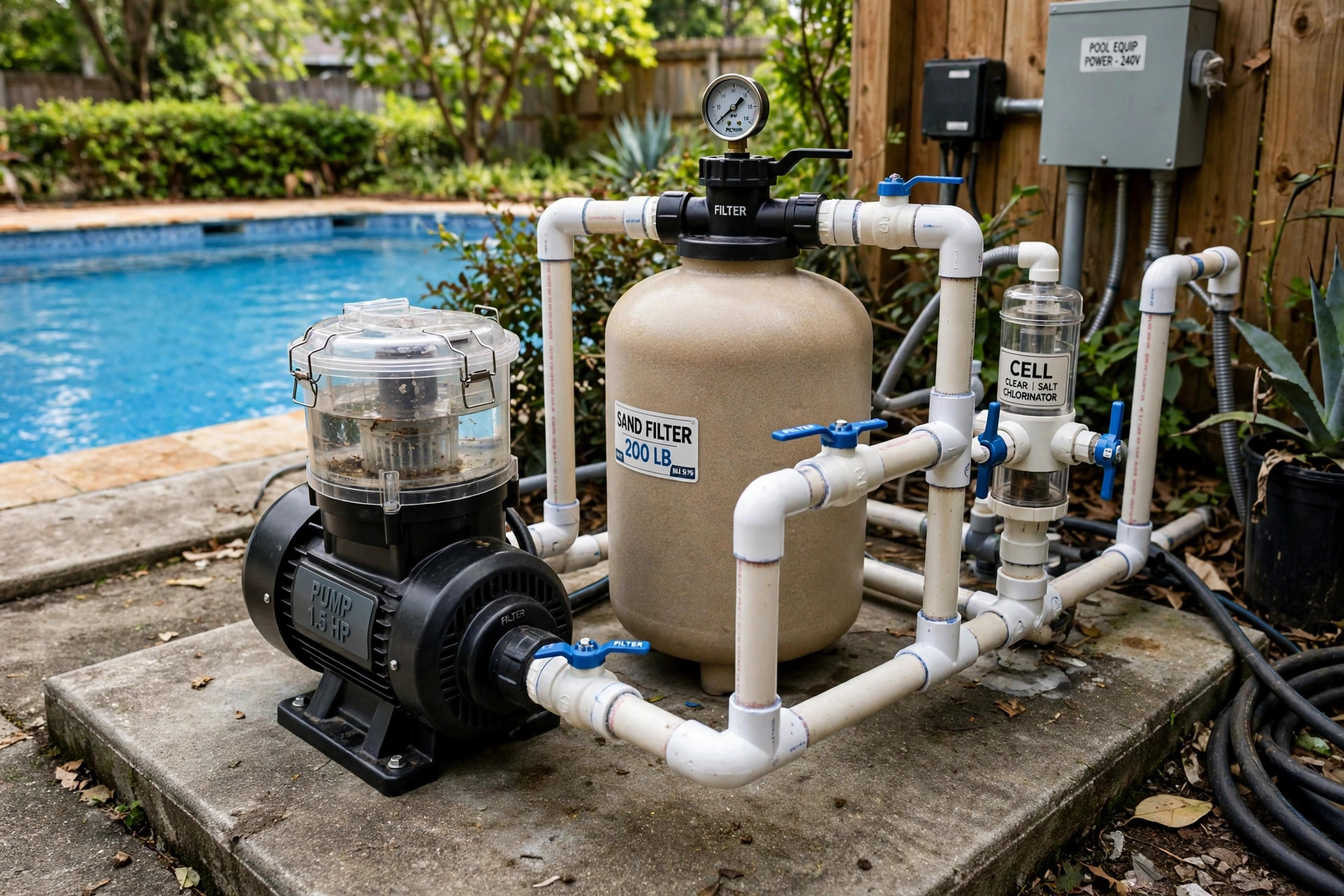
A pool pump is a suction pump. It pulls water from the pool through the skimmer and the main drain. The water passes through the pump basket. Then it goes to the filter. Then it returns to the pool. The pump must be airtight on the suction side to pull water up and in.
The pump basket lid must seal tight. The drain plugs must be closed. The valves must be open. The pipes must not leak. If any spot lets air in, the pump loses prime. Think of it like a straw with a small hole. It cannot pull liquid up. You must find the hole and close it.
Common Causes of a Pump Losing Prime
Most prime loss comes from air getting in on the suction side. Here are the common causes.
Low water level. If the water level is too low, the skimmer pulls air. This is the most common cause. Check the water level first. It should be about halfway up the skimmer opening.
Clogged skimmer basket. A basket full of leaves blocks flow. The pump starves for water. Air can enter at the skimmer.
Dirty pump basket. The pump basket also catches leaves and twigs. When it fills up, flow drops.
Worn pump lid o-ring. The o-ring under the pump lid dries out and cracks with age. Air leaks in through the bad seal.
Loose pump lid. The lid may not be seated flat. Even a small tilt can let air in.
Air leak in a fitting. Suction-side fittings can work loose. A crack in a pipe or a bad valve seal can pull air.
Clogged impeller. Twigs and debris can clog the impeller inside the pump. Flow drops and the pump cannot hold prime.
Closed or broken valve. A suction valve that is half closed blocks flow. A broken valve can leak air.
Cracked pump housing. A rare but serious cause. A crack in the pump body lets air in.
Work through these causes one at a time. Start with the easy checks.
How to Fix Pool Pump Losing Prime: Step by Step
Turn off the pump before you open anything. Never open the pump lid while the pump is running. The system can be under pressure.
Step 1: Check the water level. Look at the skimmer. The water should sit halfway up the skimmer mouth. If it is low, add water with a garden hose. A low water level is the number one cause of prime loss. If you need more help with pool care, read our guide on how to open pool for summer season.
Step 2: Empty the skimmer basket. Lift out the skimmer basket. Dump the leaves and debris. Rinse it with the hose. Put it back. Do this once a week in swim season.
Step 3: Open and clean the pump basket. Turn off the pump. Close the suction and return valves if you have them. Unscrew the pump lid. Pull out the pump basket. Dump it out. Rinse it. Look inside the pump for large debris. Put the basket back in place.
Step 4: Check the pump lid o-ring. Pull the o-ring out of the lid groove. Look at it closely. If it is cracked, flat, or hard, replace it. A new o-ring costs only a few dollars. Smear a thin coat of pool-safe silicone lubricant on the o-ring before you put it back. This helps it seal. This one step fixes many prime problems. You can find replacement parts and guidance at Leslie’s Pool Supplies.
Step 5: Reseat the pump lid. Put the lid back on. Press down evenly. Turn it until it locks tight. The lid should sit flat all the way around. Wipe the lid and the pump rim clean before closing. Grit can break the seal.
Step 6: Check the drain plugs. Look at the bottom of the pump. There are one or two drain plugs. Make sure they are tight. Tighten by hand, then a small turn with a wrench. Do not overtighten.
Step 7: Check the suction valves. Make sure the skimmer valve and the main drain valve are open. Some valves have a small air hole or a worn seal. Move the handle and listen. If you hear air hissing in, the valve may need a new seal.
Step 8: Prime the pump by hand. Fill the pump basket area with water from a bucket or hose. Put the lid back on tight. Turn on the pump. The pump should start to pull water in a minute or two. If it does not, turn it off and check for leaks again.
Step 9: Look for suction-side leaks. With the pump running, look at the pipes and fittings on the suction side. Look for drips or small cracks. You can also listen for a hissing sound. A common trick is to run a slow stream of water over each fitting while the pump runs. If the pump suddenly primes, you have found the leak. Seal it or replace the fitting. For more troubleshooting detail, Swim University offers clear repair walk-throughs.
Step 10: Check the impeller. If flow is still weak, the impeller may be clogged. Turn off power at the breaker. Open the pump. Reach into the impeller with needle-nose pliers and pull out any twigs or debris. This is a common cause of weak flow.
When you replace the pump, our review of the best pool pump for inground pools can help you pick the right size and model.
Cost and Price
Most prime fixes cost little. A new pump lid o-ring costs three to ten dollars. Pool-safe lubricant costs about eight dollars. A new pump basket costs ten to twenty dollars. A new pump lid runs twenty to sixty dollars, based on the brand.
A replacement suction valve or fitting costs ten to forty dollars. Pipe glue and fittings for a small repair cost under twenty dollars. Many home owners fix prime loss for under thirty dollars in parts.
If the pump itself is bad, costs rise. A new pool pump costs three hundred to nine hundred dollars. A motor replacement runs two hundred to four hundred dollars. A service call from a pool repair firm costs seventy-five to one hundred and fifty dollars in most areas. These prices vary by state and by brand. The Home Depot lists current prices for pumps and parts in its pool section.
If your pump is over ten years old and keeps losing prime, replacement may be cheaper than repair. An old pump also uses more power. A new pump can pay for itself in lower power bills.
Care and Upkeep to Prevent Prime Loss
Prevention is simple. Do these tasks on a set plan.
Weekly: Check the water level. Empty the skimmer basket. Empty the pump basket. Look at the pressure gauge on the filter. A sudden drop in pressure can signal a suction problem.
Monthly: Check the pump lid o-ring. Wipe the lid rim. Look for small leaks at fittings. Check that valves move with ease.
Twice a year: Take the o-ring out. Clean the groove. Apply fresh lubricant. Check the drain plugs for tightness. Look at all suction-side pipes for cracks.
Winter: In cold areas, winterize the pump the right way. Drain the water from the pump. Remove the drain plugs. Store them in the pump basket so you do not lose them. A frozen pump can crack and cause air leaks. Pool Warehouse carries winterizing parts and covers.
Keep the pool water balanced. Clean water helps the whole system. Cloudy water is often a sign of poor flow. Clean the filter when the gauge reads eight to ten pounds above the normal level. A clean filter helps the pump hold prime. For leaves and debris control, see our review of the best pool vacuum for leaves reviews.
Trim plants near the equipment pad. Roots can shift pipes and break joints. Keep the equipment pad clean and dry. A neat pad makes it easy to spot leaks.
Safety
Water and power do not mix. Take care.
– Always turn off the pump before opening the lid. Release pressure from the filter first. – Switch off power at the breaker before you work inside the pump. – Keep chemicals away from the pump motor. Chlorine and acid fumes can harm the motor. – Do not run the pump dry for more than a few minutes. A dry run can burn the seal. – Keep the equipment pad free of clutter. Do not store fuel or solvents near the pump. – Follow local rules for pool drains. The U.S. Consumer Product Safety Commission sets safety rules for pool drains and covers.
If you are not sure about any step, call a licensed pool service firm. A small service bill is better than a damaged pump or an injury.
FAQ
How long should it take a pool pump to prime? A healthy pump should prime in one to three minutes. If it takes longer, air is getting in or flow is blocked. Check the water level, the baskets, and the o-ring first.
Why does my pool pump lose prime overnight? A pump that loses prime when off often has a suction-side air leak. A bad o-ring or a cracked fitting lets air in slowly. Check the o-ring and all suction fittings. A leaky check valve can also let water drain back.
Can a dirty filter cause a pump to lose prime? A very dirty filter raises pressure but does not often cause prime loss by itself. A dirty filter can, however, slow flow and make a weak pump lose prime faster. Clean the filter on a set plan.
Should I run the pump with the air relief valve open? Open the air relief valve on the filter when you start the pump. This lets trapped air out. Close it once a steady stream of water comes out. Never open the pump lid while the pump runs.
How do I know if the impeller is clogged? Signs include low pressure on the gauge, weak return jets, and a pump that will not prime. Turn off the power and check the impeller for twigs, leaves, or plastic bits.
When should I call a repair firm? Call a firm if you cannot find the air leak, if the pump housing is cracked, or if the motor is loud and hot. A firm can test the pump with a pressure test. For spa owners with pump trouble, Hot Spring and Bullfrog Spas offer service help for hot tub systems. Home repair tips from The Spruce can also guide simple fixes.
A Short Final Word
A pool pump that loses prime is almost always a simple problem. Low water, a full basket, or a worn o-ring causes most cases. Work through the steps in order. Most fixes take less than an hour and cost only a few dollars. Keep up with the simple care plan, and your pump will hold prime all season. Clear water starts with steady flow.
References
Bullfrog Spas. (n.d.). Hot tubs and spas. https://www.bullfrogspas.com Hot Spring Spas. (n.d.). Hot tubs and spas. https://www.hotspring.com Leslie’s Pool Supplies. (n.d.). Pool supplies and equipment. https://www.lesliespool.com Pool Warehouse. (n.d.). Pool equipment and supplies. https://www.poolwarehouse.com Swim University. (n.d.). Pool and hot tub care guides. https://www.swimuniversity.com The Home Depot. (n.d.). Home improvement products. https://www.homedepot.com The Spruce. (n.d.). Home and garden advice. https://www.thespruce.com U.S. Consumer Product Safety Commission. (n.d.). Product safety information. https://www.cpsc.gov
Was this guide helpful?

About Sarah Mitchell
The My Garden US editorial team writes practical, in-depth home and garden guides for American homeowners — tested advice, no fluff.
You May Also Like
How to Repair Pool Coping Stones: A Plain Guide for Homeowners
September 24, 2026 0 views
The Best Hot Tub for Backyard Oasis Living
January 1, 2026 0 views
How to Remove Phosphates from Pool Water: A Clear Guide for Home Owners
April 23, 2026 0 views