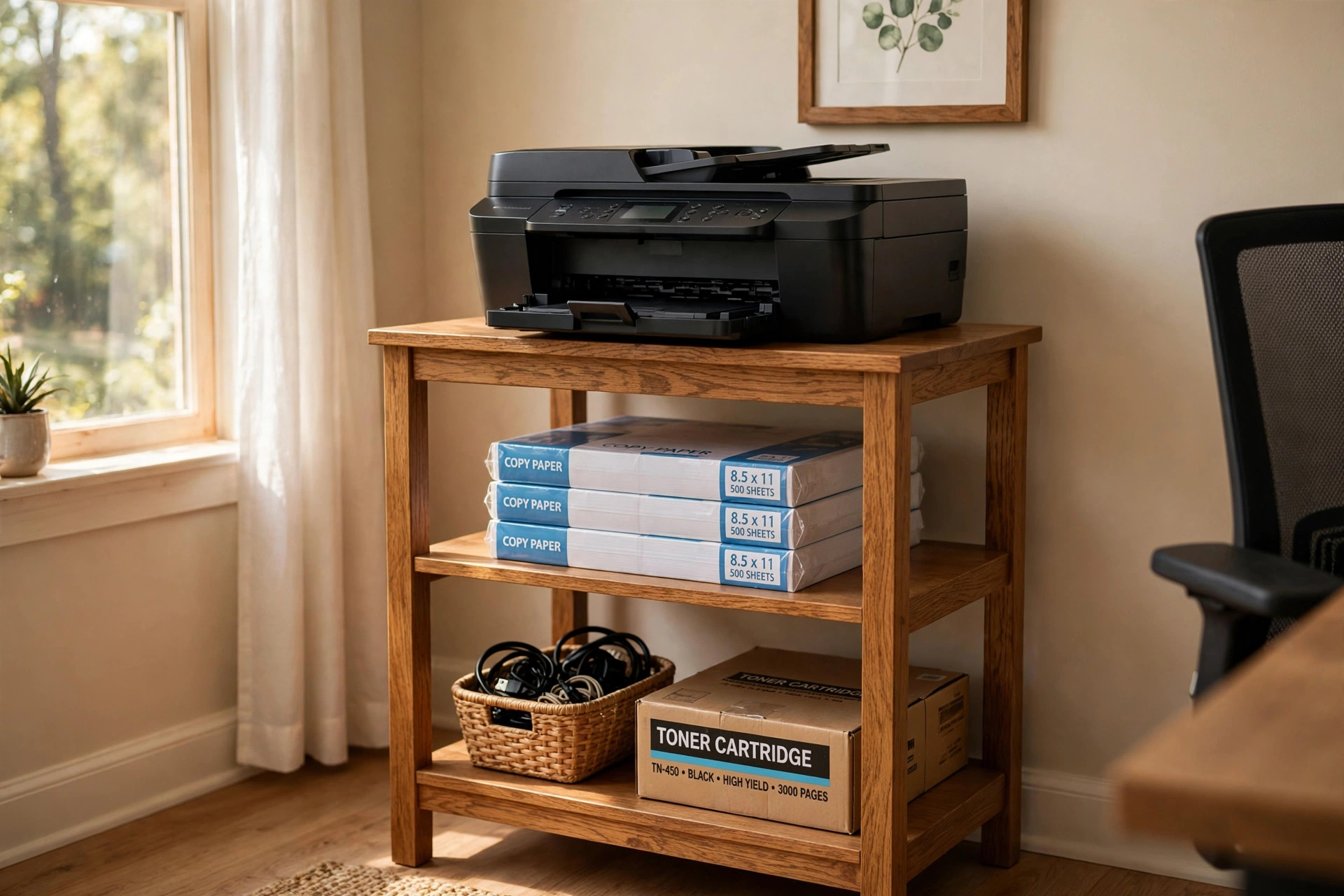

A printer takes up more space than most people expect. It needs a flat, steady surface. It also needs room for paper, ink, and the small tools you use every day. The best printer stand with storage for home office use solves both problems at once. It gives the printer a home of its own and keeps supplies within reach. This guide explains what to look for, the main types, typical prices, and how to keep your stand in good shape.
Why a Printer Stand With Storage Matters
Many home offices start at the kitchen table or on a spare desk. The printer often ends up on the floor or balanced on a bookshelf. Neither place works well for long. A printer on the floor picks up dust. A printer on a weak shelf can tip or fall. Both spots make printing a chore instead of a simple task.
A proper stand changes this. The printer sits at a good height, so you can load paper and clear jams without bending. Shelves below hold paper reams, toner, and cables. The result is a cleaner room and a calmer mind. People who work from home notice the difference fast. When everything has a place, the workday runs smoother.
There is also a money reason. Printers last longer when they sit on a level surface with good air flow. Dust and heat are hard on moving parts. A stand keeps the machine off the carpet and away from vents. That small change can add years to a printer that sees daily use.
What to Look for When You Choose One: Best Printer Stand with Storage for Home Office
The best printer stand with storage for home office needs fits your printer first and your room second. Measure before you buy. These points matter most.
Printer Size and Weight Capacity
Check your printer’s width, depth, and weight. Laser printers are heavy. Some weigh more than 40 pounds. Inkjet models are lighter but wider when the trays open. The top shelf should be at least two inches wider than the printer on each side. Look for a stated weight limit. Pick a stand rated for at least 20 percent more than your printer weighs. This leaves room for the extra weight of a full paper stack.
Shelf Layout
Think about what you store. Most users need space for paper, one spare toner or ink set, and a few cables. A stand with two or three open shelves suits light use. A stand with doors suits homes where you want to hide clutter. If you store large boxes of paper, make sure at least one shelf has tall clearance. Adjustable shelves are a plus because they let you change the layout as your needs shift. The Spruce’s home office guides offer good general advice on matching storage furniture to small workspaces.
Materials and Build
Solid wood stands look fine and last long, but they cost more. Engineered wood, such as MDF with a veneer finish, is common and holds up well for normal use. Metal frames with wood shelves give a modern look and strong support. Plastic stands are light and cheap but may wobble under a heavy laser printer. Read how the joints connect. Screws and metal brackets hold better than simple pegs and glue. A small stand that doubles as a rolling cart pairs well with other office furniture from stores like IKEA, which sells compact storage pieces in the same style family.
Mobility and Cord Management
A stand on casters can roll to a corner when not in use. Make sure at least two wheels lock. Without locks, the stand may drift while you print. A hole or slot at the back for cables keeps cords tidy and out of the way. This small detail matters. Loose cables catch on feet and pull printers off stands.
Common Types of Printer Stands
Shops sell several styles. Each suits a different home office setup. Here are the four most common.
Rolling Printer Carts
These are small carts with two or three tiers. They are narrow and fit beside a desk. They suit people who print often but lack floor space. Many have a top made to fit one printer and lower shelves for paper. Prices start low, which makes them popular for first home offices. Look for a sturdy metal frame. Cheap models can sway when pushed across carpet.
Cabinet Stands
A cabinet stand looks like a small dresser. It has doors that close over the storage area. The printer sits on top. This style hides clutter, which matters in a living room that doubles as an office. Cabinets often cost more than open carts, but they give a cleaner look. For bigger paper supplies, some buyers pair a cabinet stand with a separate home office storage cabinet with locking doors to keep bulk stock out of sight.
Shelf Tower Stands
Tower stands are tall and narrow. They hold the printer on a middle or lower shelf and give several levels of open storage. They use vertical space well, which suits small rooms. Make sure the printer shelf is strong enough for daily vibration. Printers shake when they run. A thin shelf may rattle or sag over time. Reviews from outlets such as Wirecutter often note build quality and stability for office furniture, which is worth checking before you buy.
Printer Hutches
A hutch is a stand with a raised back section that holds shelves above the printer. It gives storage above and beside the machine. Hutches suit rooms with low, wide furniture. They can feel bulky in a tiny room, so measure the wall space first. Some hutches include a pull-out tray under the printer. That tray slides out for use and back for storage, which saves desk space.
Cost and Price Guide
Prices for the best printer stand with storage for home office shoppers can find run from about 30 dollars to over 300 dollars. What you pay depends on size, material, and brand.
Simple rolling carts made of metal and plastic cost 30 to 60 dollars. They work for light inkjet printers. Basic wood or MDF stands with two or three shelves cost 60 to 130 dollars. These suit most home users. They hold laser printers and give real storage. Cabinet-style stands with doors run 130 to 250 dollars. Solid wood or brand-name pieces can top 300 dollars.
Check what the price includes. Some stands ship flat and need assembly. That is normal. A few premium brands, such as Herman Miller and Steelcase, sell office storage built for heavy daily use, and their prices reflect commercial-grade construction. For most home offices, a mid-range stand in the 80 to 150 dollar range gives the best balance of strength and value. Furniture marketplaces like Wayfair list hundreds of options in this range, which makes price comparison easy.
Watch for sales around back-to-school season and office clearance events. Prices often drop in late summer when students set up dorms and apartments.
Care and Upkeep
A printer stand needs little care, but a few habits keep it solid for years.
Dust the shelves once a month. Paper dust builds up near printers and can drift into the machine. Wipe the top surface with a dry cloth before placing the printer. Check the screws and bolts every six months. Printers vibrate, and vibration loosens joints over time. A quick turn with a screwdriver keeps the frame tight.
Keep liquids away. A coffee spill can swell MDF and ruin the finish. If the stand has casters, clean hair and thread from the wheels twice a year. Wheels that jam make the stand hard to move and can scratch floors. If your stand sits on wood floors, add felt pads under the feet or use a floor mat. Desk accessory makers such as Uplift Desk also publish workspace care tips that apply to printer stands as well as desks.
Store paper in its wrapper until use. Paper picks up moisture from the air, which causes jams. A closed shelf or a small bin on the stand protects reams from humidity and dust.
Safety Tips
Printer stands are simple furniture, but a few safety steps matter.
First, place the stand on a level floor away from walkways. A stand that sticks out into a path can trip people. Second, keep the printer away from heat sources such as radiators and sunny windows. Heat warps paper and shortens toner life. Third, do not overload the top shelf. The printer plus a heavy stack of books is too much for most stands. Fourth, anchor tall tower stands to the wall if you have small children or pets. A falling stand can injure a child.
Unplug the printer before you move the stand. Rolling a stand with a plugged-in printer can yank the cord or damage the outlet. Let the printer cool before you move it, since laser printers hold heat after a long job. Keep ink and toner out of reach of children. Store them in a closed shelf or cabinet.
Frequently Asked Questions
How much weight should a printer stand hold?
Most home printers weigh 15 to 45 pounds. Choose a stand rated for at least 50 pounds on the top shelf. Heavy laser models may need a stand rated for 80 to 100 pounds. Always check the maker’s stated limit and stay under it.
Can I use a small bookshelf as a printer stand?
You can, but only if the shelf is strong and level. Many bookshelves are made for books, not for the vibration of a printer. If the shelf wobbles or sags, buy a stand made for printers. A stand with a weight rating gives you peace of mind. Also note that paper storage needs differ from printer support; a rolling file cabinet for home office organization can take over paper duty so the printer shelf carries only the machine.
Do I need a stand with wheels?
Wheels help in small rooms where the printer moves between a desk and a corner. They also help when you need to reach the back of the printer for cable changes. If the printer stays in one spot, fixed feet are fine and more stable.
What is the best height for a printer stand?
A top surface between 24 and 30 inches from the floor suits most people. You should be able to see the paper tray and reach the controls without stretching. If you print while seated, match the stand height to your desk. Technology review sites like PCMag test printers in real office setups, and their photos show how height affects daily use.
How do I stop paper jams caused by bad storage?
Store paper flat in a cool, dry place. Keep reams in their wrapper until you load them. Do not stack heavy items on paper. Load only the amount you need for the week. Paper that absorbs moisture curls, and curled paper jams.
Is a printer stand worth it for a small inkjet?
Yes, if you print more than a few pages a month. A stand lifts the printer off the desk and frees workspace. It also gives paper a home. For very light use, a simple shelf may be enough. Pair it with a best desk organizer set for small office desk to keep pens, cables, and small tools off the work surface.
A Final Word
The best printer stand with storage for home office use is not the most costly one. It is the one that fits your printer, holds your supplies, and suits your room. Measure your space, check weight ratings, and pick the style that matches how you work. A good stand costs less than a new printer and protects the machine you already own. Set it up once, keep it tight and clean, and it will serve you well for years.
References
Herman Miller. (n.d.). Office furniture and ergonomic seating. https://www.hermanmiller.com IKEA. (n.d.). Home furnishings. https://www.ikea.com PCMag. (n.d.). Technology product reviews. https://www.pcmag.com Steelcase. (n.d.). Office furniture and workplace research. https://www.steelcase.com The Spruce. (n.d.). Home and garden advice. https://www.thespruce.com UPLIFT Desk. (n.d.). Standing desks and ergonomic office furniture. https://www.uplift-desk.com Wayfair. (n.d.). Furniture and home goods. https://www.wayfair.com Wirecutter. (n.d.). Product reviews from The New York Times. https://www.nytimes.com/wirecutter
Was this guide helpful?

About Michael Thompson
The My Garden US editorial team writes practical, in-depth home and garden guides for American homeowners — tested advice, no fluff.
You May Also Like
Home Office Wall Shelf for Printer Storage: A Practical Guide
July 19, 2026 0 views
The Best Office Chair for Sciatica Pain Relief
June 15, 2026 0 views
Home Office Window Privacy Film for Meetings: A Plain Guide
January 23, 2026 0 views