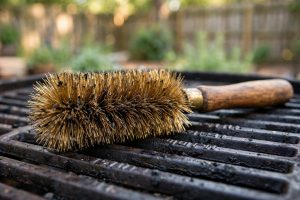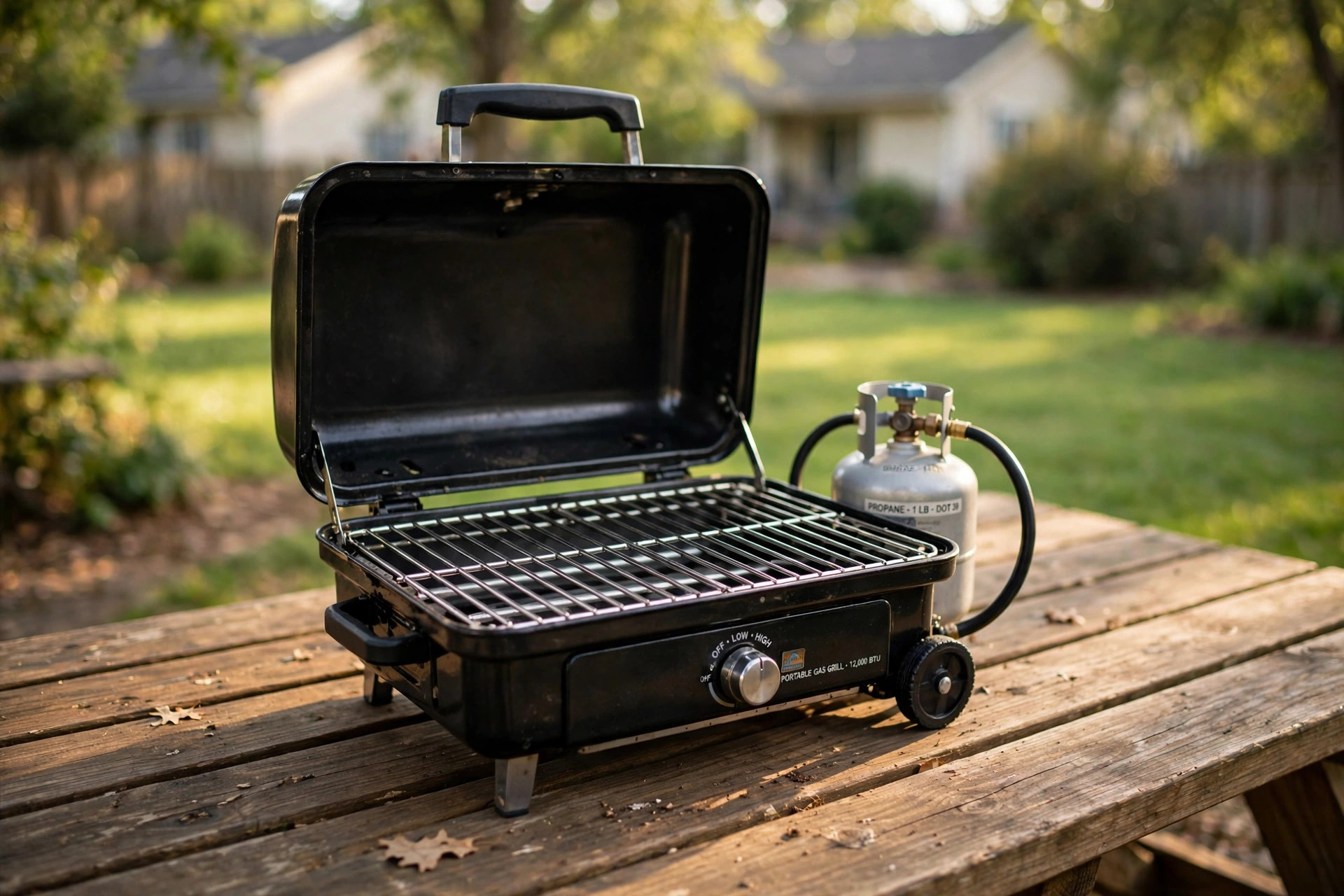

A portable grill is a faithful friend. It rides in the trunk of the car, sits on the picnic table at the park, and feeds the whole family at the campsite. But after a few good meals, its grates grow dark with grease and stuck food. This guide explains how to clean portable grill grates in a way that is safe, simple, and kind to the metal. You do not need special skill. You need warm water, a little time, and the right tools.
Why Clean Grates Matter
A dirty grate does more than look bad. Old grease can smoke and flare. It can give your food a bitter taste. Stuck bits of old meals keep fresh food from touching the hot metal, so you lose those fine grill marks and the meat may stick and tear.
Clean grates also heat more evenly. When heat can pass through open bars, your burgers and chicken cook through at the same rate. A greasy grate holds heat in some spots and blocks it in others.
There is one more reason. A portable grill is small. Its parts sit close together. Grease that builds up can drip where it should not go and may hurt the burners or the finish. A few minutes of cleaning after each use will add years to the life of your grill. Makers of fine outdoor cookers, from the makers of ceramic kamado grills to the makers of pellet grills, all say the same thing: clean grates are the heart of good grilling.
Know Your Grate Material First: How to Clean Portable Grill Grates
Before you scrub, learn what your grates are made of. Portable grills come with three common kinds of grates. Each one needs a slightly different touch.
Cast Iron Grates
Cast iron grates are heavy and dark. They hold heat well and give deep sear marks. They can rust if left wet, and they need a thin coat of oil after cleaning. If your grill came with cast iron grates, read our companion guide on how to season cast iron grill grates after you finish cleaning them.
Porcelain-Coated Grates
Many portable grills have steel grates with a shiny black porcelain coating. They are smooth and easy to clean, and food sticks less to them. The coating can chip if you use a stiff metal brush or bang the grates hard. Use soft tools on these.
Stainless Steel Grates
Stainless steel grates are silver in color and resist rust well. They are strong and can take a firm brush. For more detail on this material, see how to clean stainless steel grill grates.
If you are not sure what you have, check the manual that came with your grill. The major grill makers list grate materials for every model on their sites.
What You Will Need
Gather your tools before you start. You will need:
– A grill brush with stiff bristles, or a ball of aluminum foil held with tongs – A plastic scraper or an old wooden spatula – A bucket of hot water with a few drops of dish soap – A sponge or a soft cloth – Baking soda and white vinegar – Cooking oil and a paper towel – Heat-resistant gloves – A large plastic bag, if you plan to soak the grates
Do not use oven cleaner on your grates. It is too harsh and can leave a taste on food. Do not use a wire brush with loose bristles on porcelain grates. Loose wire bristles can break off and stick to the grate, and that is a danger if one ends up in food. The Consumer Reports buying guides note that safer brush designs are now widely sold.
Method One: The Quick Clean After Cooking
The best time to learn how to clean portable grill grates is right after you eat. The grate is still warm, and the food bits come off with little work.
1. While the grill is still warm, close the lid for five minutes. The heat will burn loose bits to ash. 2. Put on your heat-resistant gloves. 3. Scrub the warm grates with your grill brush. Move along the bars, not across them. 4. Push the ash and loose bits into the grease tray below. 5. Wipe the grates with a paper towel dipped in a little cooking oil. The oil lifts the last film and guards the metal.
This quick routine takes less than ten minutes. Do it after every cook, and deep cleans will be rare. Outdoor cooking writers at The Spruce Eats remind readers that warm metal cleans far more easily than cold metal.
Method Two: The Deep Clean for Stuck Grates
Sometimes grates get past the point where a brush will do. Perhaps the grill sat in the garage all winter. Perhaps grease built up over many trips. Then you need a deep clean.
1. Let the grill cool all the way. Never work on a hot grill with water. 2. Lift the grates out and lay them in a large plastic bag or a tub. 3. Mix warm water with a few drops of dish soap. Add half a cup of baking soda per gallon of water. 4. Pour the mix over the grates so they are covered. Seal the bag or cover the tub. 5. Let the grates soak for one to four hours. Very dirty grates may soak overnight. 6. Pull the grates out and scrub them with your brush and sponge. The grime should lift in soft sheets. 7. For stubborn spots, make a paste of baking soda and a little water. Rub it on the spot, wait ten minutes, and scrub again. 8. Rinse the grates well with clean water. Soap left behind will smoke at the next cook. 9. Dry the grates fully with a towel. Let them air dry for thirty minutes more. 10. Rub a thin coat of cooking oil over cast iron or bare steel grates with a paper towel. Porcelain grates do not need oil.
Hardware stores such as The Home Depot sell wide soaking tubs and grate cleaning tools made for this exact job.
Method Three: The Vinegar Soak for Rust Spots
Rust spots are common on portable grills that travel in damp trunks or sit out in the rain. A vinegar soak can fix light rust.
Mix one part white vinegar with one part water in your tub. Lay the grates in and soak for one hour. Pull them out and scrub the rust spots with the sponge side of a kitchen sponge or a soft brush. Rinse well and dry at once. Rust forms when iron meets water and air, so fast drying is the key step.
If rust has eaten deep pits into the metal, the grate may be past saving. Replacement grates for most portable models are easy to find. Before you buy new grates, though, take a fresh look at the whole unit. Our review roundup of the best portable grill for camping reviews can help you decide if a new grill would serve you better than new parts.
Cost and Price of Cleaning Supplies
Cleaning your grates costs very little. Most homes already have what they need.
– A good grill brush: five to fifteen dollars – Dish soap, baking soda, and vinegar: items you likely own – A soaking tub or large plastic bags: three to ten dollars – Heat-resistant gloves: ten to twenty dollars, and they last for years
Compare that with the cost of new grates, which can run twenty to sixty dollars for a portable model, or a new portable grill at one hundred dollars and up. A few dollars in supplies and a little time keep the grill you have in fine shape. The buying guides at Napoleon note that care is what separates a grill that lasts three years from one that lasts ten.
Care and Upkeep Through the Season
Small habits keep grates clean with little effort.
Oil the grates before you cook. A paper towel with a little cooking oil, held in tongs and wiped over warm grates, keeps food from sticking in the first place.
Burn off after cooking. Close the lid and let the grill run hot for five to ten minutes. This turns drippings to ash.
Brush while warm. A quick brush after each meal takes minutes.
Cover the grill. A cover keeps rain and dust off the grates between trips. It is the cheapest way to stop rust.
Store it dry. If the grill rides in a truck bed or sits on a patio, tip it so water cannot pool in the firebox.
Check the grease tray. Portable grills have small grease cups or trays. Empty them often. Old grease in the tray is a fire risk.
At the start of each grilling season, give the whole grill a deep clean. Lift out the grates, clean them as described above, and wipe the inside of the lid and firebox with a damp cloth. The Char-Broil care guides suggest a yearly full clean for every grill, big or small.
Safety Notes
Safety comes first with any grill work.
Let the grill cool before any soak or rinse. Pouring cold water on hot metal can warp grates and crack porcelain coatings.
Wear gloves when you handle warm grates or sharp edges.
Work in the open air. If you run the grill to burn off grease, do it outside, away from walls and overhangs.
Keep children and pets away from the work area until the grill is cool and put away.
Throw away worn brushes. If bristles bend, break, or fall out, replace the brush. Consider a brushless scraper or a coiled-wire design instead.
Read your manual. Every model has its own notes on cleaning and care. The Broil King support pages are a good example of how makers spell out care steps for each grill.
Frequently Asked Questions
How often should I clean portable grill grates?
Brush the grates after every cook while they are still warm. Give them a deep soak two to four times per grilling season, or any time food starts to stick badly.
Can I put grill grates in the dishwasher?
It is not a good idea. Most grates are too large, and dishwasher soap is harsh on cast iron and porcelain coatings. Hand washing gives you more control and keeps the finish safe.
What is the best brush for portable grill grates?
A brush with stiff brass or steel bristles works well on stainless steel grates. For porcelain-coated grates, use a soft brass brush or a nylon brush. Replace any brush once its bristles loosen.
Can I use oven cleaner on grill grates?
No. Oven cleaner is made for oven walls, not for metal that touches food. It can pit the finish and leave a chemical taste. Hot water, dish soap, and baking soda do the job safely.
How do I stop food from sticking to the grates?
Clean the grates well, heat them fully before the food goes on, and wipe them with a thin coat of high-heat cooking oil. Cold food on cold grates is what sticks most.
My grates have rust. Must I replace them?
Light surface rust can be scrubbed off with a vinegar soak. If the metal is pitted deeply or the bars feel thin and weak, replace the grates. Rust that flakes into food is not worth the risk.
A Short Final Word
Learning how to clean portable grill grates is one of the simplest skills a cook can pick up. A brush after each meal, a soak a few times a year, and a dry place to rest will keep your grill ready for the next trip. The food will taste better. The grill will last longer. And the next time you open that trunk at the lake or the park, your portable grill will be ready to do what it does best: feed the people you love.
References
Big Green Egg. (n.d.). Kamado grills and outdoor cooking. https://www.biggreenegg.com Broil King. (n.d.). Gas and charcoal grills. https://www.broilkingbbq.com Char-Broil. (n.d.). Gas and charcoal grills. https://www.charbroil.com Consumer Reports. (n.d.). Product reviews and ratings. https://www.consumerreports.org Napoleon. (n.d.). Fireplaces, grills, and heating products. https://www.napoleon.com The Home Depot. (n.d.). Home improvement products. https://www.homedepot.com The Spruce Eats. (n.d.). Recipes and cooking guides. https://www.thespruceeats.com Traeger. (n.d.). Wood pellet grills. https://www.traeger.com Weber. (n.d.). Grills and outdoor cooking. https://www.weber.com
Was this guide helpful?

About Lisa Anderson
The My Garden US editorial team writes practical, in-depth home and garden guides for American homeowners — tested advice, no fluff.
You May Also Like

How to Grill Steak on Gas Grill: A Plain Guide to Juicy Steaks
January 9, 2026 0 views
Best BBQ for Camping Trips Reviews: What to Buy and Why
April 24, 2026 0 views
How to Find a Gas Grill for Sale Near Me Deals Worth Your Money
May 13, 2026 0 views