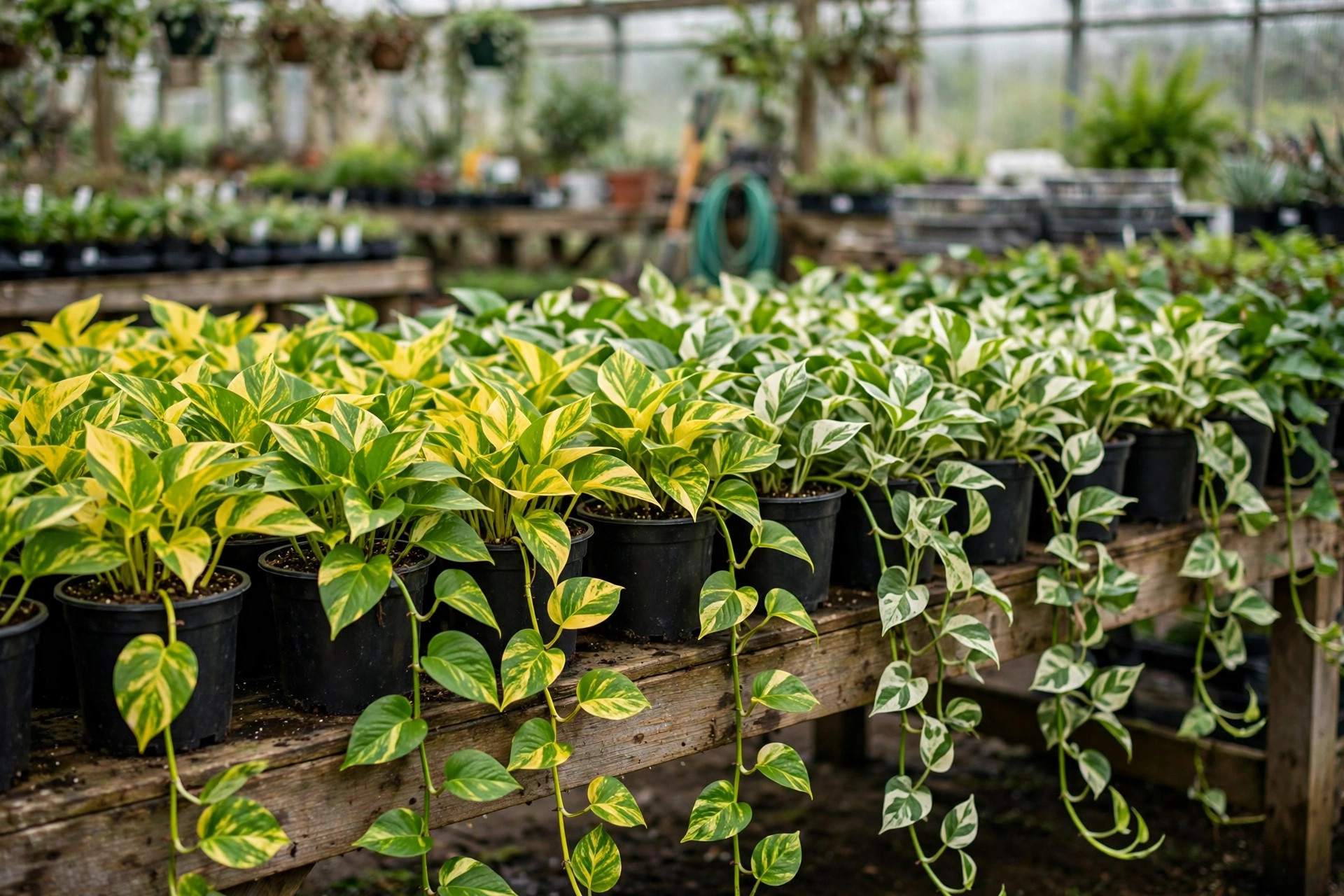

A good pothos plants bulk reviews buying guide USA saves time and money. Pothos is the most bought indoor vine in America. It grows fast. It forgives missed watering. And when you buy it in bulk, the price per pot drops sharply. That is why offices, landlords, event planners, and small plant shops buy pothos by the tray instead of one pot at a time. But bulk buying has traps. Some sellers ship weak plants with thin stems. Some count plugs as full pots. Some pack so tightly that leaves arrive crushed and black. This guide shows how to read reviews the right way, what to ask before you order, and how to get strong plants that stay alive after delivery.
Why Bulk Pothos Buying Matters
Pothos (Epipremnum aureum) is a plant that fits almost anywhere. It trails from a hanging basket. It climbs a small pole. It sits on a desk and softens the corner of a room. One four-inch pot costs eight to twelve dollars at a garden center. A tray of twenty-five four-inch pots from a wholesale grower can cost as little as three dollars per pot. For a small shop that resells them, that gap is the whole profit. For an office manager who needs fifty plants, bulk buying is the only way the budget works.
Buying in bulk also gives more choice. Retail shelves carry golden pothos and maybe marble queen. Bulk growers offer neon, jade, pearls and jade, njoy, manjula, and cebu blue. If you want one variety in large number, or a mix for variety, bulk is the way to go.
But reviews matter more with bulk orders. A bad four-inch pot wastes ten dollars. A bad bulk order wastes hundreds. Reading pothos plants bulk reviews with a clear head is the first skill you need.
What to Look For in Bulk Pothos Reviews: Pothos Plants Bulk Reviews Buying Guide Usa
Not all reviews help. A five-star review that says “great plants” tells you nothing. A one-star review that says “arrived dead” tells you little more. Good reviews give facts. Look for reviews that name the variety ordered, the pot size, the number of plants, the month of arrival, and the state. These details let you judge if the review fits your own order.
Watch for patterns across many reviews. One complaint about slow shipping is noise. Ten complaints about crushed leaves point to poor packing. One photo of a lush plant is nice. Ten photos showing thin, leggy vines with few leaves are a warning.
Check the dates of reviews. Nurseries change growers, staff, and shipping partners. A nursery that shipped fine plants in spring may ship poor ones in a hot summer. Recent reviews from your own season matter most. A review of seasonal planting advice can help you understand how weather affects shipped plants.
Be wary of fake reviews. Sellers who never fail on any of two hundred orders do not exist. A healthy mix of good reviews with a few fair complaints is normal and honest. Read the seller replies too. A grower who answers complaints with care is safer than one who stays silent.
How to Choose a Bulk Pothos Supplier
Start with what you need. How many plants. What pot size. Which variety. When you need them. A shop that needs forty six-inch pots for resale is different from an office that needs one hundred four-inch pots for desks. Clear needs let you compare quotes fairly.
Ask for a current price list. Prices move with the season. Spring is peak demand. Prices rise and stock sells out fast. Late fall is quieter. Prices drop and growers may offer deals on large lots.
Ask about the plants themselves. How old are they. How many vines per pot. What is the vine length. A “full” four-inch pot should have three or four vines of fair length, not one long vine wound around to look full. Honest growers give these facts. Vague answers are a bad sign.
Ask about shipping. Pothos is tough but not frost-proof. Winter orders to cold states need heat packs and fast shipping. Summer orders to hot states need fast shipping too, or plants cook in a truck. Ask what carrier they use and how many days it takes. Check grower shipping policies on trusted seed and plant companies like Burpee for comparison.
Check the minimum order. True wholesale growers want large minimums, often two hundred dollars or more. Smaller sellers take orders of ten or twenty pots. Both can be fine. Just know which kind you are dealing with.
Payment terms matter. Reputable growers take credit cards. That gives you a way to dispute a truly bad order. Sellers who want only bank transfer or cash apps carry more risk.
Types and Options in Bulk Pothos
Golden pothos is the classic. Green leaves with yellow marbling. It grows fast and tolerates low light. It is the cheapest in bulk and the easiest to find. For most office and resale needs, golden is the safe pick.
Marble queen has white and green leaves. It grows a bit slower. It needs more light to keep its white color. It costs more in bulk but sells for more at retail. Buyers who want a bright look pay extra for it.
Neon pothos has bright lime-green leaves. It stands out on a shelf. It is a strong seller in small shops. Bulk trays of neon are common from large growers.
Jade pothos is solid dark green with no variegation. It is the toughest of all. It takes low light better than any other kind. Offices and rental units do well with jade.
Specialty types cost more. Pearls and jade, njoy, manjula, and cebu blue are slow growers. That means fewer plants per year from the grower and higher prices. They sell well to collectors but move slower in a general shop. Do not fill half your bulk order with specialty types unless you know your buyers.
Pot size changes everything. Two-inch plugs are cheapest but need months of care before they look like real plants. Four-inch pots are the standard for resale and gifts. Six-inch pots and hanging baskets cost more but look full at once. Match the size to your plan and your patience.
Cost and Price of Bulk Pothos
Bulk prices depend on pot size, variety, and order size. As a rough guide in the USA, four-inch golden pothos in a tray of twenty-five costs three to five dollars per pot from a wholesale grower. Four-inch marble queen costs four to seven dollars. Six-inch pots cost eight to fourteen dollars. Hanging baskets cost twelve to twenty dollars.
Shipping adds real money. A large box of plants may cost thirty to sixty dollars to ship across the country. Heat packs in winter add a few dollars each. Some growers build shipping into the price. Some charge it extra. Always ask for the total delivered price before you compare sellers.
Minimums shape the price. A grower who sells trays of fifty can price lower per pot than one who sells packs of ten. But a pack of ten with fair shipping may beat a tray of fifty with costly freight if you only need twelve plants.
Watch for hidden costs. Some sellers charge extra for packing materials. Some charge a handling fee per box. A cheap per-pot price with high fees is not cheap. Ask for the full bill in writing before you pay.
Compare apples to apples. A seller who lists “pothos, 4 inch, pack of 10” for forty dollars and another who lists the same for sixty dollars may differ in plant quality, not in greed. Read the reviews of both. Check plant nursery reviews on sites like Gurney’s and plant forums to see what buyers report.
Care and Upkeep After Bulk Delivery
Open the box at once. Do not leave plants in a sealed box overnight. Heat and damp air rot leaves fast. Take photos of the plants as you unpack. If anything is damaged, you need proof for a claim.
Give every plant water if the soil is dry. Most ship a little dry on purpose, since wet soil in a box breeds mold. Water until it runs from the drain holes. Let them drain fully.
Place them in bright, indirect light. A room with a window a few feet away is ideal. Direct hot sun burns leaves that grew in a greenhouse. Low dark corners are fine for a few weeks but slow growth.
Hold the fertilizer for two weeks. Shipping is stress. Feeding stressed plants can burn roots. After two weeks, feed with a half-strength houseplant fertilizer once a month in spring and summer.
Check for pests. Look under leaves for tiny webs or sticky spots. Bulk shipments can carry mealybugs or spider mites from the greenhouse. A quick check saves your other plants. Plant care guides from Proven Winners and Gardening Know How give clear pest-control steps.
Repot only if roots circle the bottom thickly. Most four-inch pots are fine as is for months. When you do repot, move up one size only and use a light potting mix.
Safety Notes for Homes and Workplaces
Pothos is toxic if eaten. It holds calcium oxalate crystals. A chewed leaf burns the mouth and throat. Keep bulk orders away from small children and pets until plants are placed. If you buy for an office, place plants out of reach of curious toddlers in waiting areas.
Wear gloves if you handle many plants at once. The sap can irritate skin during long potting sessions. Wash your hands after work.
Water and electricity do not mix. Do not hang baskets above desks with power strips. A drip from a fresh watering can reach outlets. Place a saucer under every pot and empty it after watering.
In winter, watch cold windows. Pothos leaves blacken if they touch freezing glass. Keep plants a few inches back from the pane. The U.S. agriculture extension service offers plant hardiness guidance worth reading.
Frequently Asked Questions
How many plants count as a bulk order?
There is no fixed rule. Most growers treat ten or more pots of one variety as a small bulk order. True wholesale starts around twenty-five pots or a two-hundred-dollar minimum. Ask the seller what their bulk line is.
Which pothos variety is best for resale?
Golden pothos sells fastest and costs least. Marble queen and neon sell well as step-up items. Specialty types like manjula sell to collectors but move slower. A mix of eighty percent classics and twenty percent specialty is a safe first order.
How do I know reviews are real?
Real reviews give facts like variety, pot size, and arrival month. They include photos. They mention both good and bad points. Be cautious of sellers with hundreds of perfect short reviews and no detail. Cross-check on garden forums and trusted plant retailers such as White Flower Farm and Park Seed for how honest sellers describe stock.
What should I do if plants arrive damaged?
Photograph everything before you touch the plants. Note crushed boxes, broken stems, and black leaves. Contact the seller the same day. Most honest growers replace or refund damaged plants if you report fast with photos. Keep the box until the claim is settled.
Can I order bulk pothos in winter?
Yes, but with care. Order from a grower in a warm state. Ask for heat packs and two-day shipping. Track the package and be home when it arrives. Do not let the box sit on a cold porch. Reviews from winter buyers tell you which sellers handle cold well.
Are tissue-culture plugs worth buying in bulk?
Plugs are cheap and fine if you have a greenhouse and time. A plug needs three to six months to fill a four-inch pot. If you need salable plants soon, buy finished four-inch pots instead. The higher price buys you months of grower labor.
A Short Final Word
Bulk pothos buying rewards the careful buyer. Read reviews for facts, not stars. Ask growers plain questions about plant size, vine count, and shipping. Compare total delivered prices, not just per-pot prices. Start with golden and jade for safe bets, add marble queen and neon for color, and save specialty types for later orders. Unpack fast, water well, and check for pests. Do that, and your trays of green will turn into healthy plants that last for years. For more growing background, the plant guides at Monrovia and The Spruce are solid reading.
If you are building a larger indoor garden, related guides may help: daffodil bulb packs texas homes usa, daffodil bulb packs american homes guide, and onion sets planting california homes usa.
References
Burpee. (n.d.). Seeds, plants, and gardening supplies. https://www.burpee.com Gardening Know How. (n.d.). Gardening guides and plant care. https://www.gardeningknowhow.com Gurney’s Seed & Nursery Co. (n.d.). Seeds, plants, and garden supplies. https://www.gurneys.com Monrovia. (n.d.). Plants for home gardens. https://www.monrovia.com National Institute of Food and Agriculture. (n.d.). Agricultural research and extension. https://www.nifa.usda.gov Park Seed. (n.d.). Seeds, plants, and gardening supplies. https://www.parkseed.com Proven Winners. (n.d.). Plants and gardening inspiration. https://www.provenwinners.com The Old Farmer’s Almanac. (n.d.). Gardening calendars and advice. https://www.almanac.com The Spruce. (n.d.). Home and garden advice. https://www.thespruce.com White Flower Farm. (n.d.). Plants, bulbs, and garden supplies. https://www.whiteflowerfarm.com
Was this guide helpful?

About Lisa Anderson
The My Garden US editorial team writes practical, in-depth home and garden guides for American homeowners — tested advice, no fluff.
You May Also Like
Garlic Bulbs Planting American Homes Guide
March 11, 2026 0 views
Seed Starting Trays California Homes USA: A Practical Growing Guide
March 2, 2026 0 views
Native Grass Seed USA Online Deals: A Buyer’s Guide
May 10, 2026 0 views