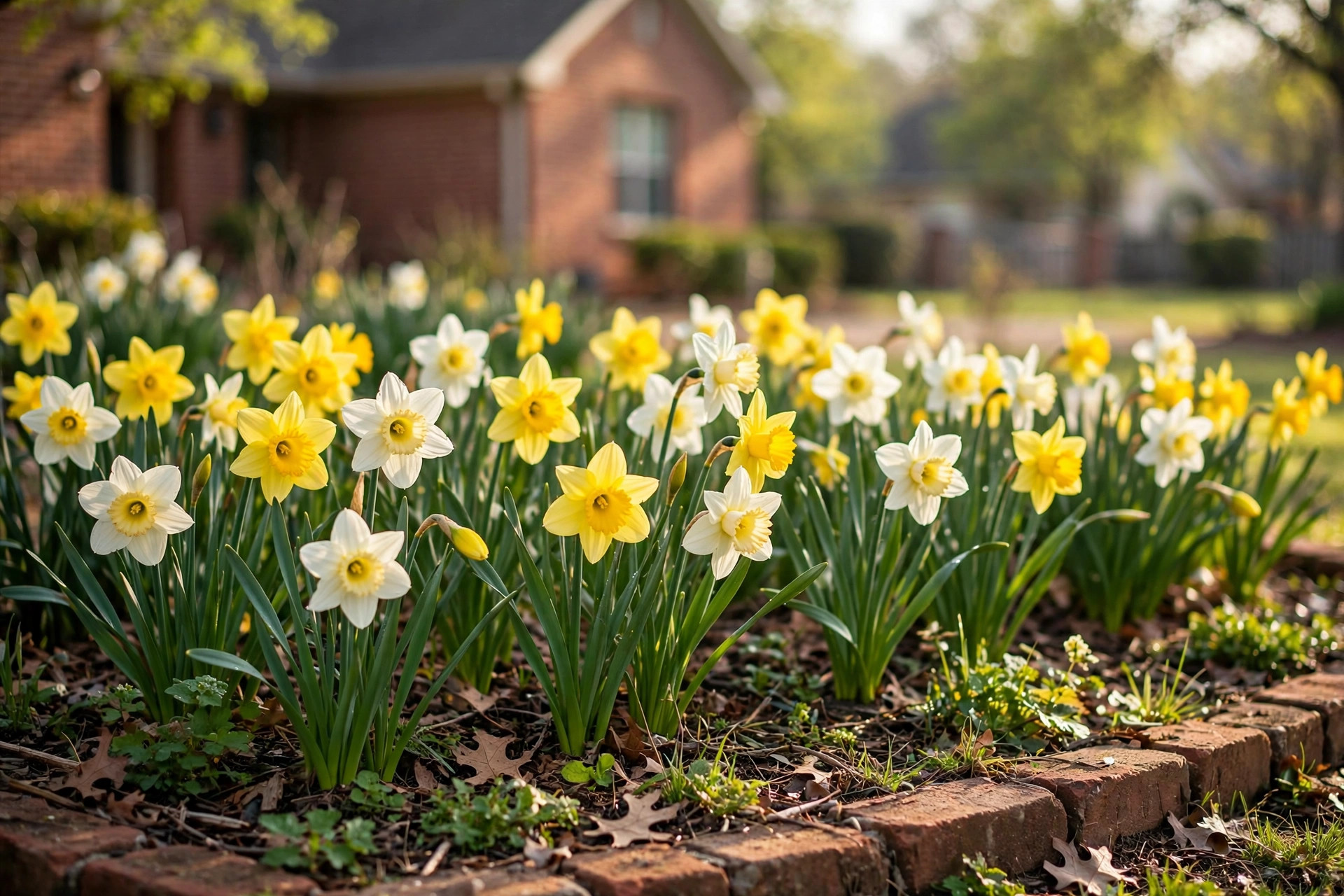

Every spring, daffodils open their cups to the sun. In Texas, these bright flowers ask for little and give much. Many home owners buy daffodil bulb packs texas homes usa gardeners trust, and they plant them in the fall. When March arrives, the yard fills with yellow, white, and gold. This guide explains how to choose bulb packs, how to plant them, and how to care for them through the Texas seasons.
Why Daffodils Suit Texas Homes
Daffodils are tough flowers. They come back year after year with almost no help. Once a bulb is set in the ground, it stores food in its fleshy scales. It waits through winter. Then it sends up green shoots when the days grow warm.
Texas winters are mild in most parts. Daffodils do not mind. They need a period of cool rest, and most of the state gives them enough chill. South Texas is very warm, but early-blooming types still do well there. They ask for sun and soil that drains water. They do not ask for rich soil or heavy feeding.
They also resist pests. Deer leave daffodils alone. Squirrels dig up tulips, but they rarely touch daffodils. This matters in suburbs where wildlife visits at night. A homeowner who plants fifty bulbs will still have fifty blooms in spring.
How to Choose Daffodil Bulb Packs: Daffodil Bulb Packs Texas Homes Usa
Bulb packs come in many sizes. A small pack may hold ten bulbs. A large pack may hold fifty or one hundred. The right size depends on the space you wish to fill. A flower bed along a walkway may need twenty-five bulbs. A wide border under a fence may need one hundred.
Buy bulbs in early fall. Shops sell them from September through November. Bulbs that sit in warm stores too long dry out. Choose packs where the bulbs feel firm and heavy. Soft or light bulbs may be dead inside.
Check the label. A good pack names the variety and the bloom time. It tells you if the flowers are early, mid, or late season. Plant a mix of times so blooms last for weeks instead of days.
Check the Bulb Count and Size
Big bulbs give big flowers. Bulbs are graded by size in centimeters. A 12- to 14-centimeter bulb is standard. A 14- to 16-centimeter bulb is large. Packs of large bulbs cost more, but each stem stands taller and holds more buds.
Count the bulbs before you pay. Some packs list a count on the front but fill the bag with small bulbs. Compare the price per bulb across packs. A pack of one hundred bulbs at a fair price beats a pretty box of twelve.
Pick Types That Handle Warm Winters
Texas growers should pick low-chill types. Tazetta daffodils, such as Paperwhite and Soleil d’Or, need little cold. They bloom early and smell sweet. Jonquilla types also do well in warm soil. They carry two or three small flowers on each stem.
Large trumpet daffodils need more winter chill. They grow fine in North Texas and the Panhandle. In deep South Texas, they may bloom poorly or skip a year. Read the pack. If it says “needs winter chill,” it suits Dallas better than Brownsville. Gardeners who want more ideas for warm-climate planting can look at this morning glory seeds guide for American homes for another easy warm-weather flower.
Types of Daffodils for Texas Gardens
There are twelve main groups of daffodils. Texas gardens do best with a few of them.
Trumpet daffodils carry one large flower per stem. The cup is as long as the petals. They are the classic yellow daffodil of spring cards.
Large-cupped daffodils look much the same, but the cup is shorter. They come in white, yellow, pink, and two-color mixes. They are strong growers.
Small-cupped daffodils have a short neat cup. They bloom in mid spring and stand up well to wind.
Double daffodils look like small roses. Their centers are full of extra petals. They make fine cut flowers for a table.
Tazetta daffodils carry clusters of small sweet flowers. They need the least winter cold of all. They are the best pick for the warmest parts of Texas.
Jonquilla daffodils have narrow leaves and a strong scent. They love heat and come back reliably in the South.
A mix pack often holds several groups. Mix packs cost less per bulb. They also spread the bloom season from February to April. Planting tips from Park Seed and growing notes at Gardening Know How both praise mixed plantings for longer color.
Cost and Price of Daffodil Bulb Packs
Prices change with size and source. In 2026, a pack of ten standard bulbs at a garden center often costs four to eight dollars. A pack of twenty-five costs eight to fifteen dollars. Bulk packs of one hundred bulbs cost twenty-five to fifty dollars when bought from Burpee or Gurney’s.
Large premium bulbs cost more. A pack of ten top-size trumpet bulbs may cost ten to fourteen dollars. Rare or new varieties cost the most. A single bulb of a new pink-cupped type may cost three dollars.
Mail-order packs add shipping. Shipping is often six to ten dollars per order. It pays to order several packs at once. Local stores sell packs with no shipping, but their choice is smaller.
Cost per year is low. A bulb that lives ten years costs less than one dollar per year of blooms. Few garden flowers give so much for so little. Homeowners on a budget can stretch their money by starting seeds and seedlings indoors in peat pots for seedlings while they wait for the daffodil season.
When and How to Plant in Texas
Plant daffodils in the fall. In North Texas, plant from late October through November. In Central Texas, plant in November. In South Texas, plant in late November or December. The soil should be cool to the touch.
Pick a sunny spot. Daffodils need at least six hours of sun each day. They grow under trees that lose leaves in winter, because the leaves fall before bloom time. Avoid low spots where water stands after rain. Bulbs rot in wet soil.
Dig a hole six inches deep. Set the bulb with the pointed end up. Cover it with soil and press gently. Space bulbs four to six inches apart. For a natural look, toss a handful of bulbs on the ground and plant them where they land.
Water after planting. One deep watering is enough to start root growth. Fall rains in Texas usually do the rest. In a dry fall, water once a week until winter rain arrives. Planting calendars at The Old Farmer’s Almanac help Texas gardeners pick the right week for their zone.
Care and Upkeep Through the Seasons
Daffodils ask for little care. In spring, watch the shoots rise. When buds open, enjoy the show. If a late frost threatens, cover open blooms with a light sheet at night. Remove the sheet in the morning.
After blooms fade, leave the leaves alone. This is the most important rule. The green leaves feed the bulb for next year. Do not cut them. Do not tie them in knots. Let them turn yellow and brown on their own. This takes about six weeks.
Feed bulbs once a year. In fall, spread a balanced bulb fertilizer over the bed. A 10-10-10 fertilizer works well. Use one handful per square yard. Water it in. Rich feeding is not needed. Too much nitrogen grows leaves at the cost of flowers.
Divide crowded clumps every three to five years. Dig the clump in summer after the leaves die back. Pull the bulbs apart. Replant the large ones six inches deep. Give the small ones to neighbors. Advice on dividing bulbs from White Flower Farm and Monrovia follows this same simple pattern.
In summer, the bed rests. You may plant shallow summer flowers over the bulbs. Petunias and marigolds work well. Their roots stay above the sleeping bulbs. Research from NIFA notes that bulb beds with summer cover crops hold soil better in heavy rain.
Safety Around Pets and Children
Daffodil bulbs hold poison. All parts of the plant carry lycorine, but the bulb holds the most. Eating a bulb can cause nausea, vomiting, and stomach pain. Teach children not to dig up or taste bulbs. Wear gloves when you handle many bulbs, as the sap can irritate skin.
Dogs may dig in fresh beds. A dog that eats several bulbs needs a veterinarian. Plant bulbs deep, and cover new beds with mulch. Chicken wire laid over the bed also stops digging. Information from the ASPCA lists daffodils as toxic to dogs and cats, and The Spruce offers more notes on pet-safe garden planning.
Wash hands after planting. Keep unused bulbs in a labeled bag away from onions, which they resemble. A bulb stored in the kitchen by mistake could end up in a soup pot. Label every bag clearly.
Frequently Asked Questions
Do daffodil bulbs need to be chilled before planting in Texas?
Most types do not need extra chilling in North and Central Texas. The soil gives enough cold. In deep South Texas, chill tazetta types in the refrigerator for six to eight weeks before planting. Place them in a paper bag away from fruit. Fruit gives off gas that harms bulbs.
How many years will one planting last?
A good planting lasts ten years or more. Tazetta and jonquilla types live longest in Texas heat. Trumpet types may fade after five to seven years in the warmest zones. Divide and replant to keep the bed strong.
Can I grow daffodils in pots on a Texas patio?
Yes. Use a pot at least twelve inches deep. Fill it with potting soil that drains well. Plant bulbs four inches deep and two inches apart. Water well in fall. Move the pot to a shady spot in summer. Pots dry out fast in Texas heat, so check water often. Indoor plant lovers may also enjoy browsing fiddle leaf figs for sale in the USA for a green touch inside the home.
Why did my daffodils grow leaves but no flowers?
The most common cause is cutting the leaves too soon last year. The bulb did not store enough food. Other causes are planting too shallow, too much shade, or bulbs that are too old. Feed in fall, give full sun, and leave leaves alone until brown.
When should I order bulb packs for the best choice?
Order in August or early September. Mail-order sellers like Proven Winners ship at the right planting time for your zone. Early orders get the widest choice of varieties. Late orders may find only common types left.
Are expensive bulb packs worth the money?
Large bulbs from trusted sellers bloom better in the first year. Cheap bags of tiny bulbs may take two years to flower well. For a show bed by the front door, buy the best bulbs you can afford. For a wide field planting, bulk packs of standard size give the best value.
A Final Word
Daffodils repay a small effort with weeks of spring color. Choose firm bulbs, plant them in fall, and leave the leaves to do their work. Texas sun and soil suit them well. A modest pack this November becomes a golden drift by March. Start with one bed, and you will likely plant more next year.
References
ASPCA. (n.d.). Pet care and animal welfare resources. https://www.aspca.org Burpee. (n.d.). Seeds, plants, and gardening supplies. https://www.burpee.com Gardening Know How. (n.d.). Gardening guides and plant care. https://www.gardeningknowhow.com Gurney’s Seed & Nursery Co. (n.d.). Seeds, plants, and garden supplies. https://www.gurneys.com Monrovia. (n.d.). Plants for home gardens. https://www.monrovia.com National Institute of Food and Agriculture. (n.d.). Agricultural research and extension. https://www.nifa.usda.gov Park Seed. (n.d.). Seeds, plants, and gardening supplies. https://www.parkseed.com Proven Winners. (n.d.). Plants and gardening inspiration. https://www.provenwinners.com The Old Farmer’s Almanac. (n.d.). Gardening calendars and advice. https://www.almanac.com The Spruce. (n.d.). Home and garden advice. https://www.thespruce.com White Flower Farm. (n.d.). Plants, bulbs, and garden supplies. https://www.whiteflowerfarm.com
Was this guide helpful?

About Lisa Anderson
The My Garden US editorial team writes practical, in-depth home and garden guides for American homeowners — tested advice, no fluff.
You May Also Like
Pothos Plants Bulk American Homes Guide: How to Buy, Grow, and Keep Them Green
March 22, 2026 0 views
Pothos Plants Bulk for California Homes: A Complete Buying Guide
January 25, 2026 0 views
Succulent Variety Packs: An American Homes Guide
April 14, 2026 0 views