
A light filtering roller shades price comparison usa search brings up hundreds of choices. Prices run from under thirty dollars to well over two hundred dollars per window. Styles, fabrics, and features vary widely. This guide walks through the full picture in plain terms. You will learn why these shades are so popular, what drives their cost, and how to pick the right set for your home and your budget.
Why Light Filtering Roller Shades Matter
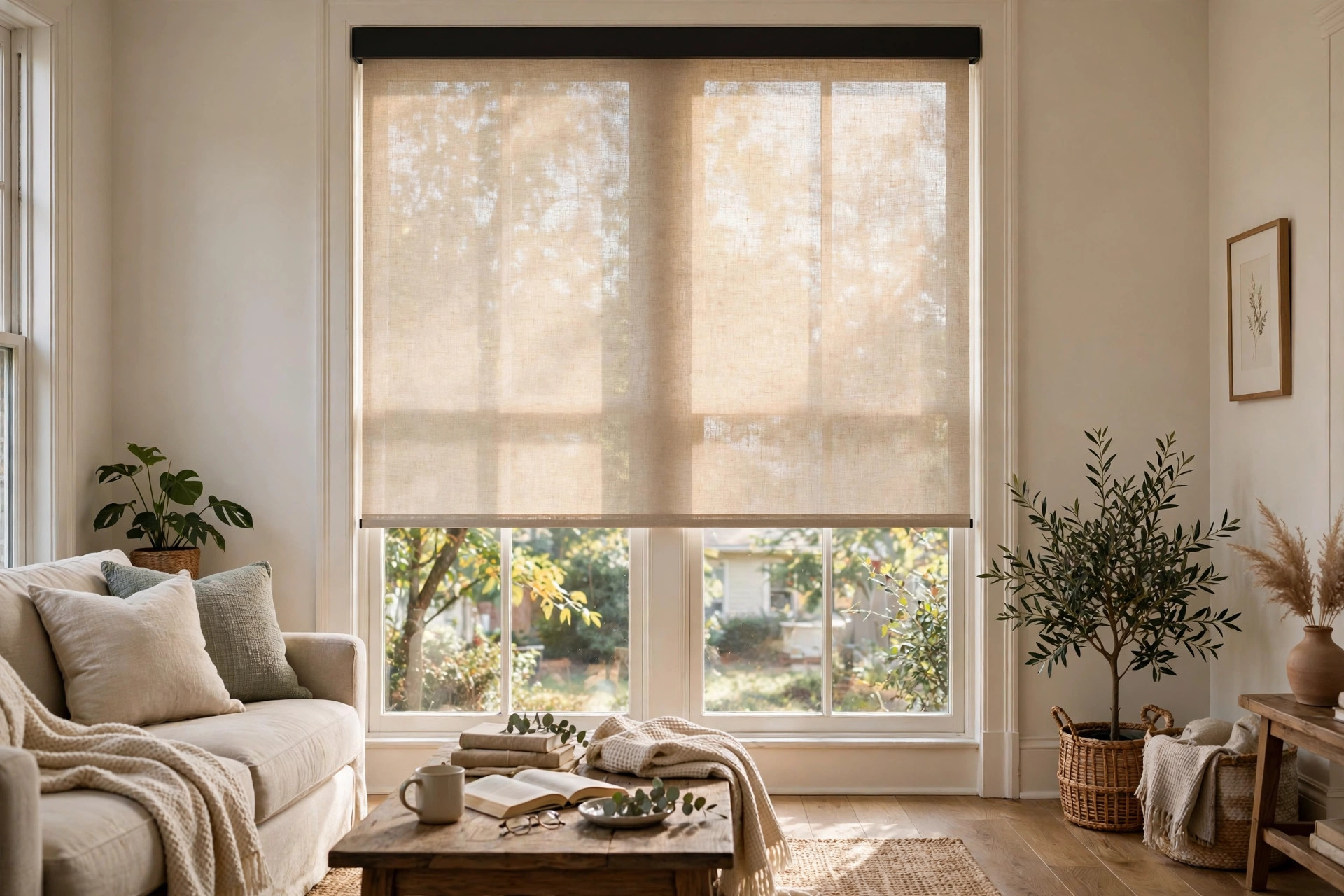
Light filtering roller shades do a simple job very well. They soften harsh daylight while still letting light into the room. A living room stays bright but loses the hard glare. A bedroom gains daytime privacy without full darkness. For many American homes, that middle ground is exactly right.
Soft Light and Daytime Privacy
A sheer curtain blocks almost nothing. A blackout shade blocks nearly everything. Light filtering fabric sits between those two ends. It diffuses sunlight into a soft glow. From the street, shapes inside the room are hard to make out during the day. You keep your view of the outdoors. You also keep your privacy.
If you want a full dark room for sleep, a darker option may suit you better. You can read a related guide on blackout roller shades price comparison to see how those costs differ. Many homes mix the two types. Light filtering shades go in living areas and kitchens. Blackout shades go in bedrooms.
Energy and Glare Control
Sunlight through bare glass heats a room fast in summer. A light filtering shade cuts much of that direct heat while keeping the room usable. In winter, the extra fabric layer at the window trims drafts and heat loss. The U.S. Department of Energy notes that window coverings can reduce heat loss and solar gain, which lowers heating and cooling bills. A roller shade also tames glare on television and computer screens. That small daily comfort adds up over the years.
How to Choose the Right Shade: Light Filtering Roller Shades Price Comparison Usa
A good shade starts with a good fit. Most problems with roller shades come from wrong measurements, not from poor quality. Take your time with this step.
Fabric Openness and Opacity
Light filtering fabrics are rated by how much light they pass. A fabric with a one percent openness factor looks nearly solid and lets in only a small amount of light. A five percent openness fabric shows a soft view to the outside. A ten percent openness fabric keeps the room very bright and offers only mild privacy. For street facing rooms, stay near one to three percent. For rooms with a pleasant view, five percent or more works well. Fabric color also matters. White and cream fabrics pass more light than charcoal or brown fabrics in the same weave.
Measure Twice, Order Once
Measure each window in three places: top, middle, and bottom of the width. Write down the smallest number. That is your order width for an inside mount. For an outside mount, add two to four inches of width and height so the shade covers the frame and blocks side gaps. Sellers such as Blinds.com publish simple measuring guides that walk you through each step with pictures. A steel tape gives the truest reading. A cloth tape can stretch and mislead you.
Mount Style: Inside or Outside
An inside mount sits within the window frame. It looks clean and tailored. It needs at least two inches of frame depth for most roller shades. An outside mount hangs above and beyond the frame on the wall or trim. It makes a small window look larger and covers the full glass with no gaps. Outside mounts are also the answer for shallow frames and for windows that are not perfectly square.
Types and Options on the Market
Roller shades look simple, but the market offers several distinct types. Knowing the differences helps you compare prices fairly.
Standard Pull Chain Models
The classic roller shade uses a beaded chain or cord loop on one side. Pull one side of the chain to raise the shade. Pull the other side to lower it. These models are the most common and usually the least costly. They come in the widest range of fabrics and sizes. They are a solid choice for living rooms, offices, and rental homes.
Cordless and Spring Roller Models
Cordless shades use a spring mechanism inside the roller. You pull the bottom rail down by hand and push it up to raise it. No hanging cords means a cleaner look and a safer home for small children and pets. Cordless models cost more than chain models, often by twenty to forty dollars per window. A similar cordless style with a pleated fabric is covered in our guide to top rated cordless cellular shades for American homes. Many parents choose cordless shades for nurseries and playrooms.
Motorized and Solar Shades
Motorized roller shades run on a small battery or a wired motor. A remote control or a phone app raises and lowers them. Some connect to smart home systems and run on a daily schedule. Motorized shades cost the most of any type. A single motorized shade often runs from two hundred to five hundred dollars. Solar screen fabrics are a related option. They block ultraviolet rays while preserving the view. They are popular for rooms with strong afternoon sun.
Light Filtering Roller Shades Price Comparison
Price is the heart of this guide. Real prices in the United States fall into three broad bands. The band you land in depends on size, fabric, lift type, and whether you buy stock sizes or custom cut shades.
Budget Range: Under Fifty Dollars Per Window
Stock size shades from large home improvement stores sit in this range. Big retailers like Home Depot and Lowes stock standard widths from twenty three to seventy two inches. A basic chain operated light filtering shade in a stock size often costs between twenty five and forty five dollars. Quality at this price is fair. The fabric is usually polyester. The roller tube is thin. The shade will do its job for several years in a low use room. For a deeper look at how cellular shade prices compare at this level, see our cordless cellular shades price comparison.
Mid Range: Fifty to One Hundred Fifty Dollars Per Window
This range covers most custom cut shades and better stock shades. You choose the exact width to a quarter inch. Fabric choices widen to include textured weaves, linen looks, and better ultraviolet protection. Cordless lift becomes common here. Many online sellers and department stores, including Wayfair and IKEA, offer strong value in this band. A cordless light filtering shade in a custom width often costs between seventy and one hundred twenty dollars. Fit and finish improve clearly over the budget band.
Premium Range: Above One Hundred Fifty Dollars Per Window
Premium shades add custom fabric, designer patterns, and motorized lift. Brands sold through design centers and specialty shops live here. A motorized light filtering shade with a smart home link can cost three hundred dollars or more per window. Custom workroom shades with decorative hems and premium fabrics sit in the same band. Buyers in this range are paying for exact color matching, fine fabrics, and white glove service. Independent test groups such as Consumer Reports evaluate window coverings from time to time, and their reports can help you judge whether a premium brand earns its price.
What Drives the Price Up or Down
Four factors move the price most. Size is first. A wide sliding door shade costs far more than a small bathroom shade. Lift type is second. Cordless adds cost. Motorized adds much more. Fabric is third. Simple polyester is cheap. Natural fiber looks and designer prints cost more. Custom sizing is fourth. Exact fit costs more than stock sizes. When you compare two quotes, check that all four match. A fair comparison keeps size, lift, fabric, and fit equal.
Care and Upkeep
Light filtering roller shades need little care. Dust the fabric once a month with a soft cloth or a vacuum brush tool. For spots, dab with a damp cloth and mild soap. Do not scrub hard. Strong scrubbing can thin the weave and create a bright spot. Keep the shade away from direct contact with water. Bathroom shades should be fully raised after a hot shower so the fabric can dry.
Check the lift mechanism once a year. Chain models can develop a twist in the bead chain. Straighten it before it jams. Cordless models may need a gentle reset of the spring if the shade no longer stays in place. Most makers publish simple reset steps. Home guides from The Spruce and HGTV include clear care walkthroughs for common shade types.
Safety First
Window cords are a known hazard to young children. A looped cord can form a dangerous loop around a small neck. For that reason, choose cordless shades in any room a child uses. If you keep an older corded shade, use a cord cleat mounted high on the wall and wrap the cord tightly around it. The U.S. Consumer Product Safety Commission urges parents to replace corded window coverings in homes with small children. Many stores now stock cordless models at every price level, so safety no longer requires a large budget.
Frequently Asked Questions
Do light filtering roller shades provide privacy at night? They provide daytime privacy, but not full privacy at night. With indoor lights on after dark, shapes can show through the fabric from outside. For full night privacy, layer the shade with curtains or choose a room darkening shade.
Can I cut a roller shade to fit my window? Some stock shades can be trimmed with a saw and a sharp blade, but the cut must be straight and square. Many buyers find it simpler to order a custom width. Custom cut services at large retailers handle the work for a small fee.
How long do light filtering roller shades last? A quality shade lasts five to ten years with normal use. Direct sun fades cheap fabric faster. Motorized models may need a battery change every one to two years. The spring in a cordless shade can wear out with very heavy daily use.
Are light filtering shades good for a home office? Yes. They cut screen glare while keeping the room bright enough to work without lamps during the day. Choose a one to three percent openness fabric for the best glare control.
What is the cheapest way to cover many windows? Buy stock sizes from a large home improvement store and choose a simple chain operated model. Covering ten windows this way often costs less than three hundred dollars total. Online marketplaces such as Amazon also carry low cost multi packs.
Do roller shades block heat? They reduce direct solar heat gain but do not insulate like a thick curtain. A light colored fabric reflects more heat than a dark one. For the best heat control, pair the shade with a tight window seal.
A Final Word
A light filtering roller shade is one of the simplest upgrades a homeowner can make. It softens light, adds privacy, and trims glare for a modest price. Compare sizes, lift types, and fabrics on equal terms. Measure with care. Choose cordless where children play. With those steps, your price comparison will lead you to the right shade at a fair price.
References
Amazon. (n.d.). Online shopping. https://www.amazon.com Blinds.com. (n.d.). Window blinds, shades, and shutters. https://www.blinds.com Consumer Reports. (n.d.). Product reviews and ratings. https://www.consumerreports.org HGTV. (n.d.). Home and garden ideas. https://www.hgtv.com IKEA. (n.d.). Home furnishings. https://www.ikea.com Lowe’s. (n.d.). Home improvement products. https://www.lowes.com The Home Depot. (n.d.). Home improvement products. https://www.homedepot.com The Spruce. (n.d.). Home and garden advice. https://www.thespruce.com U.S. Consumer Product Safety Commission. (n.d.). Product safety information. https://www.cpsc.gov U.S. Department of Energy. (n.d.). Energy efficiency and renewable energy. https://www.energy.gov Wayfair. (n.d.). Furniture and home goods. https://www.wayfair.com
Was this guide helpful?

About Lisa Anderson
The My Garden US editorial team writes practical, in-depth home and garden guides for American homeowners — tested advice, no fluff.
You May Also Like
Best Plantation Shutters for Sale: A Simple Buying Guide
August 22, 2026 0 views
Affordable Machine Washable Curtains for Sale: A Plain Guide
March 27, 2026 0 views
Luxury Sheer Voile Panels for Florida Homes: A Complete Guide
July 27, 2026 0 views