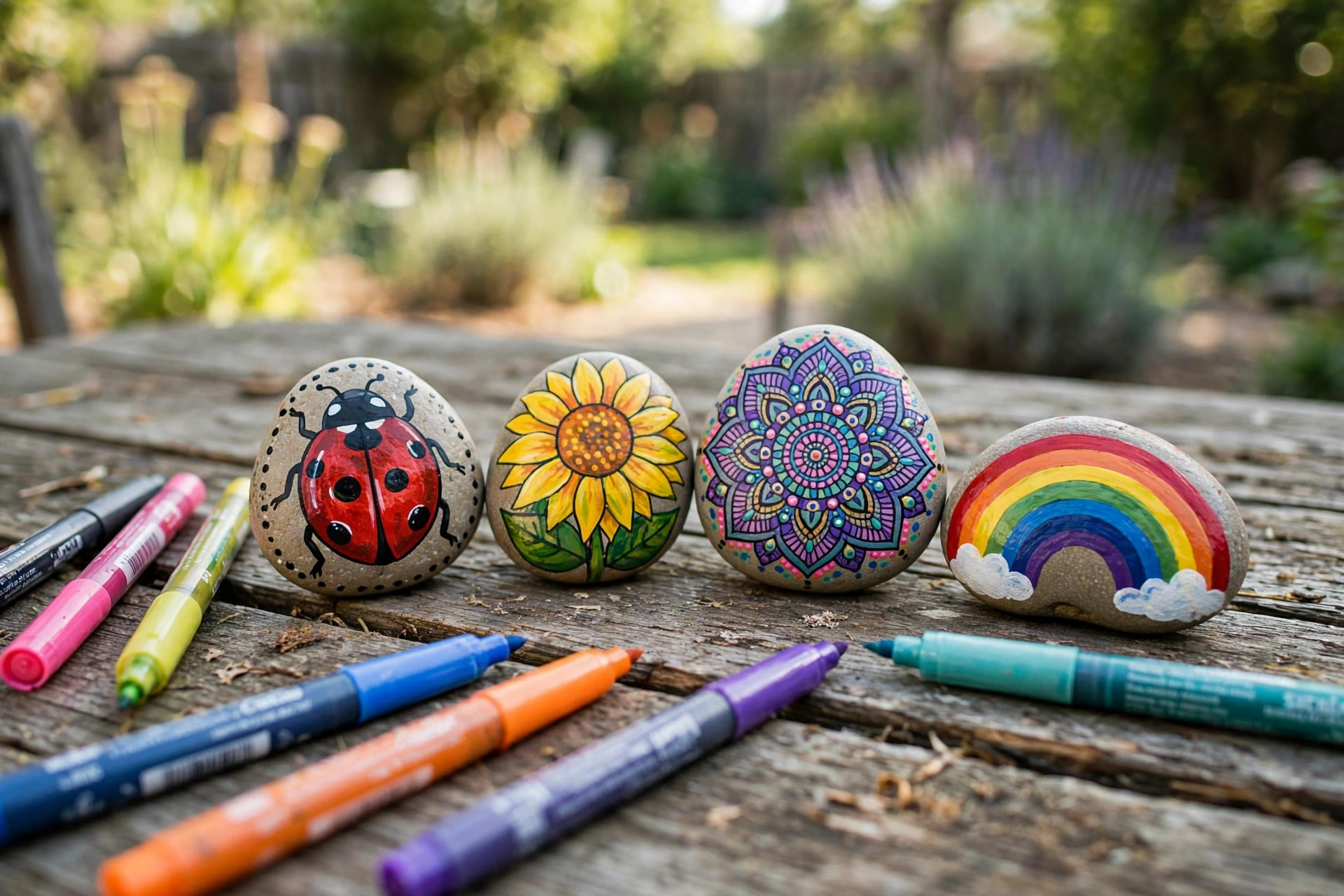
Rock painting has grown from a small hobby into a national pastime. Families paint stones and hide them in parks. Neighbors leave painted rocks on doorsteps. Children paint ladybugs and rainbows for school projects. The search for the best acrylic paint pens for rock painting has grown along with it, because the right pens make the work easy and the results last.
Paint pens are simple tools. Each pen holds liquid acrylic paint. You press the tip to the stone and draw. There is no cup of water to spill. There is no brush to rinse. Beginners finish a first rock in minutes. That ease is the reason paint pens beat jars of paint for this craft.
Why It Matters
A poor pen ruins a good idea. Cheap markers dry out in the middle of a line. Thin ink sinks into the stone and fades in a week. Tips break on rough rock. The artist blames skill when the tool is at fault. Good acrylic paint markers for rocks change the whole experience. Colors lay down smooth and opaque. Lines stay sharp. The finished stone can sit outdoors for months and still look bright.
The right set also saves money. One set of twelve to twenty-four pens covers almost every design. A single set paints dozens of rocks. Compare that with buying separate jars of paint, brushes, and sealer for each color. Pens are cheaper for most beginners, and they store without mess. A box of pens sits in a drawer for a year and still works.
Rock painting also brings people together. Nursing homes run rock painting days. Scout troops paint stones for community gardens. Church groups leave painted rocks with kind words. A pen that works on the first try matters for children and for older hands that tire fast. Ease is not a luxury here. It is the point of the craft.
What to Look For When You Choose: Best Acrylic Paint Pens for Rock Painting
The Nib
The nib is the tip of the pen. It decides how fine or bold your lines can be. Most rock painters want a medium nib, about two to four millimeters wide. A medium nib fills small areas fast and still draws outlines. Fine nibs, near one millimeter, suit tiny details such as eyes, letters, and dots. Some sets include both, and those sets are worth the extra dollar or two.
Round nibs are the common shape. They draw even lines in all directions. Chisel nibs give a wide and a narrow stroke from one tip. Chisel tips suit lettering on larger rocks. Avoid hard plastic nibs for rough stone. A fiber or felt nib gives a little and survives rough spots better.
Opacity and Coverage
Opacity means the paint hides what lies beneath. Good pens cover stone in one or two coats. White and yellow need extra care. These light colors cover poorly in most brands. Read reviews that mention white and yellow. If a set earns praise for its white, the whole set is probably solid.
Test coverage before you trust it. Paint a stripe on dark gray stone. Let it dry for five minutes. If the stone still shows through, add a second coat. Two coats should finish the job. If three coats are needed, the pen is too thin for stone work. Keep the receipt and shop again.
Drying Time
Fast drying sounds good, but too fast causes trouble. Paint that dries in seconds cannot be blended. A drying time of one to three minutes is ideal. You can fix small slips with a damp cloth before the paint sets. After an hour the paint cures hard and resists scratching.
Work in thin coats. Thick pools of paint take long to dry and may crack. Two thin coats beat one heavy coat every time. Shake the pen well before use. Most pens ask you to press the nib down to start the flow. Press once, wait, then draw. Flooding the nib makes blobs.
Color Range
A set of twelve covers the basics: red, blue, yellow, green, black, white, orange, purple, pink, brown, gray, and a metallic gold or silver. Sets of twenty-four add skin tones, pastels, and extra greens and blues. Larger sets are nice but not needed for most designs. Two or three pens in favorite colors do more work than thirty colors you never touch.
Metallic pens deserve a mention. Gold and silver add shine to borders, dots, and lettering. One metallic pen lifts a plain design into something striking. Most sets include one or two. If yours does not, buy a single metallic pen from a craft store such as Michaels or a fabric and craft chain.
Types and Options
Water-Based Acrylic Pens
Water-based pens are the standard for rock painting. The paint cleans up with water. The smell is mild. Children can use them with normal care. They dry to a waterproof finish once cured, though a sealer still helps outdoors. For most rock painters, water-based is the only type they will ever need.
Oil-Based Paint Pens
Oil-based pens lay down thicker, glossier color. They bond well to smooth stone. The smell is strong, and cleanup needs mineral spirits. They suit outdoor rocks that must survive harsh weather. But most families do not need them. Water-based pens with a good sealer last almost as long and are safer around children.
Extra-Fine Detail Pens
Some brands sell single pens with tips near one millimeter. These are for lettering and fine dot work. Mandala painters love them. If your set lacks a fine tip, one detail pen completes your kit. Art supply stores like Blick carry singles in many colors.
Chalk and Temporary Markers
Chalk markers wash off in rain. They suit practice rocks and indoor displays. They are not the best acrylic paint pens for rock painting in any lasting sense. Mention them only to warn beginners away from them for outdoor stones. Your garden rock needs real acrylic paint, not chalk.
Related crafts pair well with rock painting. A set of acrylic brushes helps you add washes and backgrounds that pens cannot do alone. Some painters also decorate wood craft blanks with the same pens, and the tips transfer between projects without trouble.
Cost and Price
Most good sets cost between eight and twenty-five dollars. A twelve-pen set from a known brand sits near ten to twelve dollars. Twenty-four-pen sets run fifteen to twenty-five dollars. Singles cost two to four dollars each. Prices rise at specialty art stores and fall at big-box stores like The Home Depot, which carries basic craft supplies in many locations.
Do not judge by price alone. A seven-dollar set with opaque paint beats a twenty-dollar set with thin ink. Read reviews from people who painted rocks, not just paper. Paper reviews tell you little. Stone is rougher and darker than paper. It punishes weak paint.
Buy one set first. Paint ten rocks. Then decide if you need more colors. Most beginners discover they use six pens for most of their work. Extra colors sit unused. Money saved on a smaller set buys a bottle of sealer, which matters more for outdoor rocks than a twelfth shade of blue.
Care and Upkeep
Store pens flat or upright with caps on. Caps keep air out. Air dries the nib and ruins the pen. After each use, wipe the nib on a scrap of paper. This removes stone dust that clogs the tip. Replace caps with a click. If a cap fits loose, the pen may dry out in weeks.
Shake before use. The paint inside settles in storage. Thirty seconds of shaking mixes it back. Press the nib on scrap paper to start the flow. Draw only when the color looks right on the scrap. This small habit prevents pale first strokes on your rock.
Revive a dry nib with warm water. Dip the tip for ten seconds and blot it dry. For stubborn clogs, remove the nib if the design allows. Some brands sell replacement nibs in packs. A five-dollar pack of nibs extends a set by a year. Keep pens away from heat and sun. A hot car trunk kills paint pens in one afternoon.
Sealing is the most important upkeep step for the rocks themselves. Painted rocks meant for the garden need a clear sealer. Spray acrylic sealer in light coats, two or three passes. Let each coat dry before the next. Sealer blocks rain and sun. Unsealed paint pens for stone art fade within a season outdoors. Sealed rocks last years.
Safety
Acrylic paint pens are safe for normal craft use, but a few rules keep everyone well. Read the label for the word non-toxic. Most water-based sets carry it. Oil-based pens may not. Keep all pens away from small children who mouth objects. Wash hands after painting, even with non-toxic paint.
Work in fresh air when you spray sealer. Sealer fumes are strong. Spray outside or in a garage with the door open. Wear a dust mask if you spray often. Keep sealer cans away from heat and open flame. Follow the directions on the can exactly.
Do not paint rocks and leave them where food grows without care. Sealed paint is inert, but common sense applies. Keep painted rocks out of vegetable beds and away from ponds where pets drink. Home improvement guides at Bob Vila and the Family Handyman stress the same point for all outdoor crafts: know your materials and know where they end up.
FAQ
Can I use regular markers instead of acrylic paint pens?
Regular markers sink into stone and fade fast. They are made for paper. Acrylic paint pens sit on the surface and stay. For any rock that leaves the house, use real acrylic paint markers for rocks. Regular markers work only for indoor practice.
Do I need to prime rocks before painting?
Priming helps on dark or rough stone. A coat of white or black acrylic paint, or a coat of gesso, gives the pens a smooth base. Smooth river rocks often need no primer. Test one rock first. If colors look dull, prime the rest. Many painters use a brush set for acrylics to roll on primer quickly across a batch of stones.
How long do painted rocks last outdoors?
Unsealed rocks fade in one season of sun and rain. Sealed rocks last two to four years, sometimes longer in mild climates. Recoat the sealer every year or two for best results. Rocks under eaves last longer than rocks in open lawn.
Can children use these pens?
Yes, with adult care. Choose water-based, non-toxic sets. Children under six should not use fine tips that break under hard pressure. Medium nibs suit young hands. Keep caps out of reach of toddlers. Supervise sealer spraying; children should not handle spray cans.
Why does my white pen look gray on stone?
White paint is the weakest color in most sets. Dark stone shows through thin white. Lay down two or three thin coats, drying between each. Or prime the spot white first with a brush, then draw over it with the pen. Some crafters keep a separate high-quality white pen just for this job, bought singly from an art supply store.
Can I mix pen brands in one design?
Yes. Different brands layer well once dry. Let one brand’s paint cure for an hour before adding another on top. Test the mix on a scrap stone first. Rare clashes happen between water-based and oil-based paints. Stick to water-based across brands and you will have no trouble.
A Final Word
The best acrylic paint pens for rock painting are not the most expensive ones. They are the pens with opaque paint, tough nibs, and colors you will actually use. Start with a mid-size water-based set. Learn on smooth river rocks. Seal your keepers. Share them or hide them in the park. The craft is simple, and the right pen keeps it that way.
For more craft ideas, browse project guides at This Old House, The Spruce, and HGTV. And if painting leads you to other weekend projects, a tie dye kit makes a fine next craft for the whole family.
References
Blick Art Materials. (n.d.). Art and craft supplies. https://www.dickblick.com Bob Vila. (n.d.). Home improvement advice. https://www.bobvila.com Family Handyman. (n.d.). DIY home repair and maintenance. https://www.familyhandyman.com HGTV. (n.d.). Home and garden ideas. https://www.hgtv.com JOANN. (n.d.). Fabric and craft supplies. https://www.joann.com Michaels. (n.d.). Arts and crafts supplies. https://www.michaels.com The Home Depot. (n.d.). Home improvement products. https://www.homedepot.com The Spruce. (n.d.). Home and garden advice. https://www.thespruce.com This Old House. (n.d.). Home renovation guidance. https://www.thisoldhouse.com
Was this guide helpful?

About Sarah Mitchell
The My Garden US editorial team writes practical, in-depth home and garden guides for American homeowners — tested advice, no fluff.