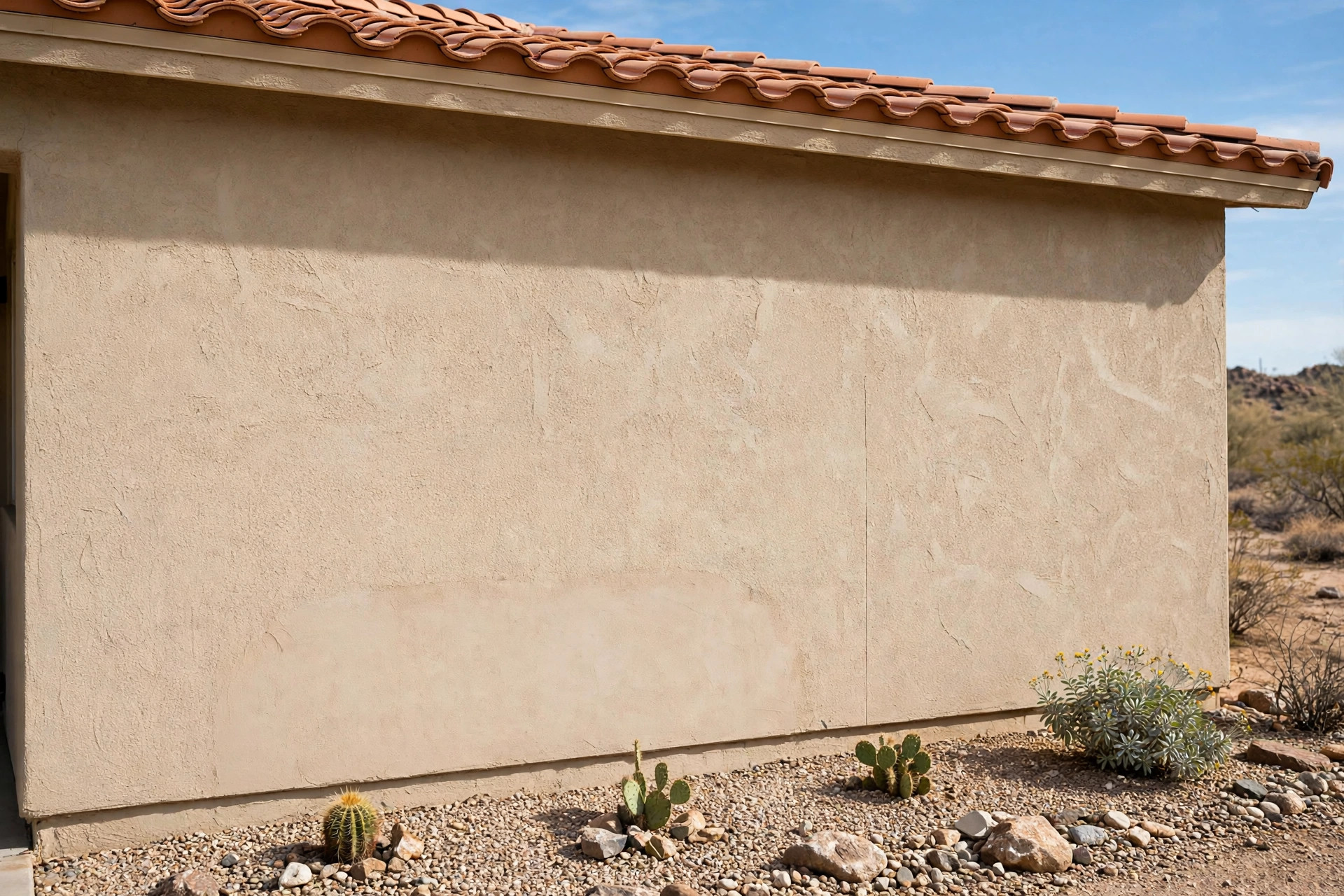

Arizona homes take a beating from the desert. The sun is fierce. The air is dry. The ground shifts. Over time, even good stucco cracks and chips. When that happens, a homeowner needs reliable stucco exterior repair in Arizona. This guide explains what to expect, what it costs, and how to choose the right contractor.
Why Stucco Repair Matters in Arizona
Stucco is the most common exterior finish on Arizona homes. It suits the climate and the Spanish and ranch styles of the region. But desert weather is hard on it. Daily heat can reach well above one hundred degrees in summer. At night the temperature drops fast. This constant expansion and contraction pulls at the stucco surface. Hairline cracks form. Small chips appear around doors and windows. If they are ignored, water finds a way in during monsoon rains. Wood rot and mold can follow.
Reliable stucco exterior repair in Arizona protects the home from the inside out. A solid stucco shell keeps moisture away from the wall cavity. It keeps pests out. It holds the color coat in place. It also holds the value of the home. Buyers in Arizona look closely at stucco. Cracked and peeling walls make them walk away or ask for a lower price. Good repair work pays for itself when it is time to sell.
Arizona also has rules about how stucco should be applied. Local building codes set standards for thickness and lath. A contractor who works in the state should know these rules. Repair work that ignores code can fail inspection. That costs more in the long run.
Signs Your Stucco Needs Repair: Reliable Stucco Exterior Repair in Arizona
Walk around your house once a year. Look at the walls in daylight. The most common signs of damage are easy to spot. Hairline cracks are thin lines that run across the surface. They are often no wider than a pencil mark. Wide cracks, anything wider than a sixteenth of an inch, need prompt attention. Bulging or bubbling areas mean the stucco has pulled away from the wall. Stains below a window or a hose bib suggest water is getting behind the finish.
Tap the wall gently with your knuckles. A solid sound means the stucco is bonded well. A hollow sound can mean the stucco has separated from the lath. Soft or crumbling spots mean the material has broken down. Each of these signs calls for reliable stucco exterior repair in Arizona before the damage spreads.
How to Choose a Reliable Stucco Contractor
Not every contractor who offers stucco work does it well. Arizona has many handymen who will patch a crack and move on. A patch is not a repair. A reliable contractor follows a process. Start with a written estimate. It should list the repair area, the materials, the number of coats, and the color match plan. Vague promises are a warning sign.
Ask how long the company has worked with stucco in Arizona. Five years or more is a good sign. Desert stucco is its own trade. The mix, the cure time, and the weather all matter. Ask for photos of past jobs in your city. Ask for three references and call them. Ask each homeowner if the crew showed up on time and if the color match was good.
Check the license. Arizona contractors must hold a license from the Arizona Registrar of Contractors for work over a set dollar amount. Verify the license number on the state website. Make sure the license covers the type of work. Ask for proof of insurance. A worker hurt on your property without insurance becomes your problem.
Get at least three bids. The lowest bid is not always the best. A bid that is far below the others often means thin coats or cheap materials. A bid that is far above may include work you do not need. Compare the scope of work line by line. Good contractors will explain why they chose a certain method. You can read more about typical price ranges in our stucco exterior repair cost guide.
Types of Stucco Repair
Crack Repair
Small hairline cracks are the most common job. The contractor opens the crack slightly with a grinder. Then the crack is filled with a flexible sealant or a stucco patch compound. A texture is matched to the surrounding wall. The area is painted to blend in. This work is fast. Most homes can be done in a day.
Patch Repair
Larger damaged areas need a patch. The loose stucco is cut out in a square or rectangle. New wire lath is tied to the old lath. Then the contractor applies a scratch coat, a brown coat, and a finish coat. Each coat must cure before the next goes on. In Arizona heat, cure time is short, but rushing the coats still causes failure. A good patch is level with the old wall. You should not see the edges from the street.
Re-Coating
When the stucco is sound but the color coat is faded, a re-coat may be enough. A new finish coat is applied over the whole wall. This refreshes the color and seals small surface flaws. It is not a fix for cracks or loose areas. Those must be repaired first.
Full Re-Stucco
Sometimes the damage is too wide for patches. A full re-stucco removes the old finish down to the lath or the sheathing. Then a brand new three-coat system goes on. This is the most expensive option. It is also the longest lasting. Homes with widespread cracking or water damage may need it.
Cost and Price Factors
Price depends on the size of the job and the type of repair. Small crack repair may cost a few hundred dollars. Patch work runs into the low thousands. A full re-stucco on a two thousand square foot home can cost ten thousand dollars or more. Arizona prices run higher than the national average because summer heat shortens the work window and skilled crews charge more.
Several factors move the price up or down. Two-story walls cost more than one-story walls because of scaffolding. Heavy texture is harder to match than smooth texture. Dark colors cost more to match than light ones. Water damage behind the stucco adds carpentry costs. Ask the contractor to separate labor and materials on the bid. That makes it easier to compare.
Many homeowners compare exterior projects side by side. Our insulated vinyl siding price comparisons can help if you are weighing stucco against a full re-siding job. For most Arizona homes, keeping and repairing the stucco is the better value.
What a Good Repair Job Looks Like
A reliable job follows the three-coat system. The scratch coat goes on first and is scored while wet. The brown coat levels the wall. The finish coat carries the color and texture. Each coat needs the right mix. Too much water makes weak stucco. Too little makes a mix that will not bond. In summer, crews often start before dawn and stop by early afternoon to avoid flash drying.
Color match is the true test of skill. Arizona homes use many shades of beige, tan, and terracotta. The new patch must blend with sun-faded old stucco. A skilled contractor tints the finish coat to match. Then the whole wall may get a fog coat or paint so the repair disappears. Ask to see a sample of the color match before the full job starts.
Clean lines matter too. Windows, doors, and trim should be masked. Drips on concrete and plants should be cleaned the same day. A reliable crew leaves the site as clean as they found it.
Care and Upkeep After Repair
Stucco lasts longer with simple care. Wash the walls once a year with a garden hose and a soft brush. Do not use a high-pressure washer close to the wall. The force can drive water behind the finish and break the surface. Keep sprinklers aimed at the yard, not at the house. Constant spray soaks the stucco and stains it.
Trim plants back from the walls. Bushes that rub against stucco wear the finish down. They also trap moisture. Keep soil and mulch a few inches below the bottom edge of the stucco. This gap stops water from wicking up into the wall.
Paint or seal the stucco every five to ten years. A good exterior paint or an elastomeric coating adds a layer of protection. It also hides small color shifts from past repairs. Check the caulk around windows and doors each spring. Old caulk lets water in. Fresh caulk is cheap insurance.
Watch for new cracks each year. Small cracks caught early cost little to fix. A yearly walk-around takes twenty minutes. It is the best habit an Arizona homeowner can keep.
Safety on the Job
Stucco work looks simple, but it has real hazards. Old stucco dust can irritate the lungs. Workers should wear masks when grinding or cutting. Silica dust from cement mixes is a known health risk. A professional crew follows dust control rules.
Ladders and scaffolds are another risk. Two-story repair work needs proper scaffold setup. A homeowner should not set up scaffolding themselves to save money. The fall risk is not worth it. Keep children and pets away from the work area. Wet stucco and sharp lath edges are not safe for curious hands.
If your home was built before 1978, test for lead paint before any exterior work. Old paint on trim can contain lead. A certified test is inexpensive. The federal rules for lead-safe work are strict, and for good reason. If you plan to handle related exterior trim work yourself, read up on safe methods at This Old House and Family Handyman.
Frequently Asked Questions
How long does a stucco repair take?
Small crack repairs take one day. A patch repair takes two to three days because each coat must cure. A full re-stucco takes one to two weeks depending on the size of the home. Weather can add time. Monsoon storms will pause the work.
Can I repair stucco myself?
Homeowners can fill small hairline cracks with a store-bought sealant. This is fine as a stopgap. Larger patches need the right mix, the right lath tie-in, and texture skill. Most do-it-yourself patches look rough and fail within a year. For lasting work, hire a pro. Product guides at Home Depot and Lowe’s can help you pick the right patch material for a small fix.
What is the best time of year for stucco work in Arizona?
Spring and fall are ideal. Temperatures are moderate and the mix cures well. Summer work is possible but crews must start early and keep the wall damp. Winter work is fine in the low desert around Phoenix and Tucson. It can be too cold in higher areas like Flagstaff.
How do I match the texture of my old stucco?
Take a clear photo of the texture and show it to the contractor. Common Arizona textures include sand float, skip trowel, and lace. A skilled finisher can match them by hand. Ask for a test patch in a hidden spot before the main work begins. Texture guides at Bob Vila and The Spruce show the most common finishes.
Will repaired stucco last as long as new stucco?
A proper three-coat patch lasts as long as the original wall. The weak point is the joint between old and new material. That is why the lath must be tied together and the edges feathered. A rushed patch fails at the joint. A careful patch does not.
Does homeowners insurance cover stucco repair?
It depends on the cause. Sudden damage, like a storm or a fallen branch, is often covered. Slow wear from sun and age is not. Water damage from a long-term leak is usually excluded. Read your policy and call your agent before you file a claim.
A Short Final Word
Reliable stucco exterior repair in Arizona comes down to three things. Hire a licensed contractor with desert experience. Insist on a full three-coat repair with a good color match. Keep up with simple yearly care. Do these three things and your stucco will protect your home for decades. The desert sun will not wait, so do not put the work off. One walk around the house today can save you thousands tomorrow.
For more exterior projects, see our guide on soffit and fascia repair. Siding makers like James Hardie and CertainTeed also publish useful care guides for exterior wall finishes.
References
Bob Vila. (n.d.). Home improvement advice. https://www.bobvila.com CertainTeed. (n.d.). Building materials and exterior products. https://www.certainteed.com Family Handyman. (n.d.). DIY home repair and maintenance. https://www.familyhandyman.com James Hardie. (n.d.). Fiber cement siding and exterior products. https://www.jameshardie.com Lowe’s. (n.d.). Home improvement products. https://www.lowes.com The Home Depot. (n.d.). Home improvement products. https://www.homedepot.com The Spruce. (n.d.). Home and garden advice. https://www.thespruce.com This Old House. (n.d.). Home renovation guidance. https://www.thisoldhouse.com
Was this guide helpful?

About David Wilson
The My Garden US editorial team writes practical, in-depth home and garden guides for American homeowners — tested advice, no fluff.
You May Also Like

Top Rated Cedar Shake Siding for Southern States
February 5, 2026 0 views
Reliable Roof Replacement Contractors in Texas: A Homeowner’s Guide
April 27, 2026 0 views
Buy Exterior Lighting Fixtures Online in the USA: A Complete Homeowner Guide
June 16, 2026 0 views