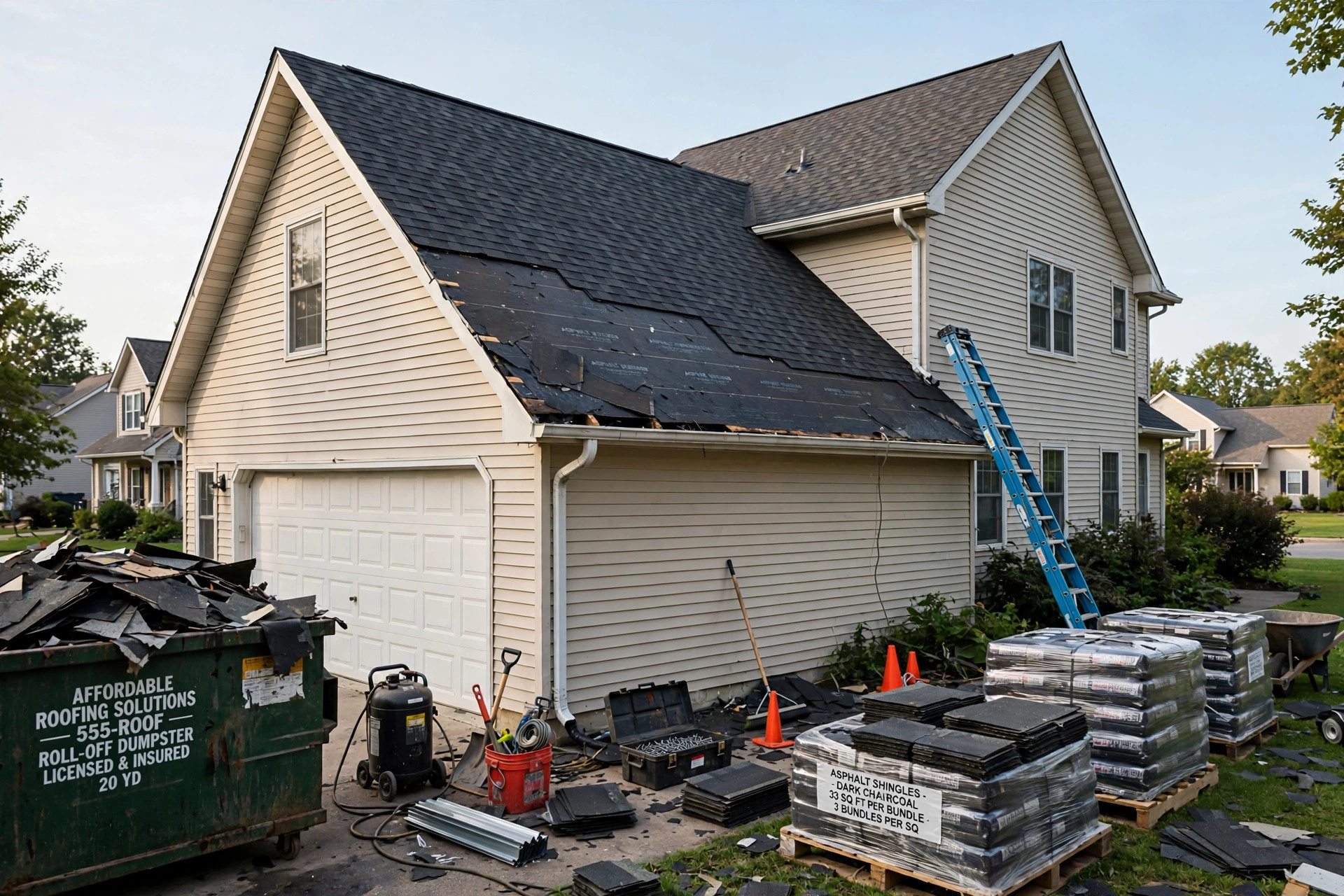

Every home reaches the day when the roof can no longer be patched. Shingles curl, granules wash into the gutters, and a small stain spreads across the bedroom ceiling after each storm. When that day comes, affordable roof replacement contractors for homeowners are worth their weight in gold. A new roof is one of the largest purchases a family will ever make for its home. The difference between a fair bid and an inflated one can reach many thousands of dollars. This guide explains how to find honest, reasonably priced roofers, what a new roof should cost, which materials last, and how to protect yourself from scams. The aim is simple: a dry house, a fair price, and a contractor you can trust.
Why a New Roof Matters
A roof is the first line of defense for everything under it. It keeps out rain, snow, wind, and heat. When a roof fails, water finds its way into the attic, the walls, and the frame of the house. Wood rots. Insulation loses its value. Mold grows in dark corners. Each year of delay makes the repair bill larger. A full replacement, done on time, is almost always cheaper than years of patching followed by structural repair.
A new roof also changes the value of the home. Buyers notice a worn roof before they notice the paint. Insurance companies notice it too. Many insurers ask about roof age when they set premiums, and some raise rates or refuse coverage on roofs past twenty years. A fresh roof can lower insurance cost and speed a sale. For these reasons, putting off the work rarely saves money in the end.
How to Find Affordable Roof Replacement Contractors: Affordable Roof Replacement Contractors for Homeowners
Start with people you trust. Ask neighbors, co-workers, and family who they used and what they paid. A name that comes up twice is worth more than any advertisement. Local hardware store staff often know which crews do steady work in town.
Check reviews with care. Look at patterns, not single complaints. A contractor with four stars across two hundred reviews is more reliable than one with five stars across six. Read how the company answers criticism. A calm, specific reply shows a business that stands behind its work.
Get at least three written bids. This is the single most important step. Prices for the same job can differ by thirty percent or more. Each bid should list the same details: tear-off of old layers, the type and brand of new shingles, underlayment, flashing, vent work, and cleanup. If one bid is far lower than the rest, ask why. It may leave out the dumpster fee, the plywood replacement allowance, or the permit. If one bid is far higher, ask what extra value it includes. The middle bid is often the honest one.
Ask for proof of license and insurance. A real roofing contractor carries general liability insurance and workers compensation for the crew. Ask to see the papers, and call the insurer to confirm they are current. Without this protection, an injured worker on your property can become your legal problem. Home improvement retailers like Home Depot and Lowe’s can also point you to screened installation services in many areas.
Finally, ask for local references from the past two years. Call them. Ask whether the crew arrived on time, whether the yard was clean each evening, and whether the final bill matched the bid. A good contractor answers yes to all three.
What to Look For in a Written Contract
Never start work on a handshake. The contract should state the total price, the payment schedule, the start and finish dates, the exact materials by brand and model, the warranty on both materials and labor, and who pulls the building permit. It should also state how extra work is handled. If the crew finds rotten plywood under the old shingles, the contract should set a price per sheet for replacement so there is no argument at the end.
Be wary of large deposits. A down payment of ten to thirty percent is normal. A demand for half or more before work begins is a warning sign. The final payment should be due only when the job is complete and you have walked the property with the foreman.
Read the warranty twice. Shingle makers offer material warranties of twenty to fifty years, but those cover defects only, not poor installation. The contractor’s own labor warranty is what protects you from leaks caused by bad work. Five years is a common minimum. Ten years is better. Get it in writing. Articles on This Old House explain in plain terms what roofing warranties actually cover.
Types of Roofing Materials and Options
Asphalt shingles are the most common choice for American homes, and they are usually the most affordable. Three-tab shingles are the cheapest option and last about twenty years. Architectural shingles cost more but look better and last twenty-five to thirty years. Most affordable roof replacement contractors for homeowners work with asphalt every day and can install it quickly.
Metal roofing costs more up front but lasts forty to seventy years. It sheds snow, resists fire, and reflects heat, which can cut summer cooling bills. In regions with heavy storms, metal can be the cheaper choice over the life of the house, because it may never need replacing.
Wood shingles and shakes give a classic look but need regular care and cost more to install. Clay and concrete tile last a very long time but are heavy. The house frame must be built to carry them, and few standard homes qualify without extra work. Slate is the most durable of all, with a life beyond seventy-five years, but its price puts it out of reach for most budgets.
For a flat or low-slope section, rubber membrane or modified bitumen are the standard options. Your contractor should explain which material suits each part of your roof. Guides on The Spruce give clear side-by-side comparisons of roofing materials for homeowners.
Cost and Price: What a New Roof Should Cost
Prices move with region, roof size, pitch, and material, but a few rules hold. In 2026, a basic asphalt shingle roof on an average American home often runs between eight thousand and fifteen thousand dollars. Metal can run twice that or more. Tile and slate go higher still.
Contractors price by the square, which is one hundred square feet of roof. A steep roof costs more than a shallow one because the crew works slower and needs safety gear. A roof with many valleys, dormers, and chimneys costs more because of the extra flashing work. A second layer of old shingles that must be torn off adds labor and dump fees.
Ask each bidder for a line-item breakdown. You should see separate numbers for tear-off, materials, labor, flashing, vents, permits, and disposal. This breakdown lets you compare fairly and shows where one bid cuts corners. Low cost roof replacement services that quote a single round number with no detail deserve a second look.
Money can be saved without cutting quality. Schedule the work in the slower season, often late fall or early spring, when crews have open dates and may sharpen their pencils. Ask whether the contractor offers a discount for cash or for flexible timing. Check whether your utility or local government offers rebates for energy-efficient roofing. And remember that the cheapest bid is not always the most affordable in the long run. A roof that leaks in three years costs far more than a slightly pricier roof that lasts thirty. Advice columns on Bob Vila often remind readers to weigh lifetime cost, not just the bid price.
Insurance may cover part of the cost if the roof was damaged by a storm, hail, or fallen trees. Normal wear and tear is never covered. If you suspect storm damage, call your insurer before you call a roofer. An adjuster will inspect and tell you what the policy covers.
Care and Upkeep After the New Roof
A new roof still needs attention. Clean the gutters twice a year so water flows away from the house. Trim tree branches that hang over the roof. Leaves and limbs hold moisture against the shingles and wear them down.
Look at the roof from the ground each spring and fall. Missing shingles, lifted edges, and rust spots on flashing are early warnings. Catching them early means a small repair instead of a large one. If you are comfortable and safe, a pair of binoculars is enough for this check. Never walk on the roof unless you know how. You can crack shingles and void the warranty.
While you are at it, look at the rest of the exterior. Many homeowners pair a roof job with budget friendly vinyl siding installation or house power washing services to refresh the whole face of the home at once. For cold regions, upgrading to sturdy front porch railings for cold climates during the same season keeps the crew schedule tight and the yard disruption to one visit.
In the attic, check for daylight showing through the boards and for damp spots on the underside of the decking. Good ventilation matters as much as good shingles. Heat and moisture trapped in the attic cook shingles from below and shorten their life. Your contractor should have checked the vents during installation, but vents can clog over time. The Family Handyman site has practical attic ventilation checklists written for non-experts.
Safety on the Job
Roofing is one of the most dangerous trades in construction. Falls are the main risk. A responsible contractor sets up fall protection, keeps the site tidy, and keeps children and pets away from the work zone. During tear-off, nails and sharp scraps rain down around the house. Ask the crew chief where it is safe to walk and where to park your car.
You should not climb onto the roof while the crew works. If you want to see progress, ask the foreman to take photos. Most are happy to show their work. After the job, ask for a magnetic sweep of the yard and driveway. A good crew runs a rolling magnet over the lawn to pick up stray nails. Walk the yard yourself as well before letting children or pets back out.
If your home was built before 1978, ask about lead paint on the fascia and trim, and if it was built before the 1980s, ask whether old roofing materials might contain asbestos. A careful contractor knows the local rules for handling these materials. Never let a crew burn or bury old roofing waste.
Frequently Asked Questions
How long does a roof replacement take? Most homes take one to three days. A small, simple roof can be done in a day. A large or complex roof can take a week. Rain delays the work, since no honest contractor lays shingles on a wet deck.
Should I stay home during the work? You can, but expect noise. Tear-off is loud, starting early in the morning. Many families plan to be out during the day. Keep pets indoors or with a friend, since the noise and the open gates stress animals.
Can new shingles go over the old ones? Building codes in most places allow two layers of shingles. Going over the old layer saves the tear-off cost, but it hides problems underneath and adds weight. Most experts advise a full tear-off so the decking can be inspected. Shingle makers like CertainTeed also note that some warranties require a clean deck.
How do I know if I need a full replacement or just a repair? If the roof is under fifteen years old and the damage is limited to one area, a repair usually makes sense. If shingles are curling or losing granules across the whole roof, if the roof is past twenty years, or if leaks appear in several rooms, replacement is the wiser choice. A trustworthy contractor will tell you when a repair is enough. A contractor who pushes replacement for a small, young leak is telling you something about himself.
What payment methods are normal? Check, bank transfer, and credit card are all common. Credit cards add a small fee but give you extra protection if a dispute arises. Be cautious of anyone who asks for cash only. That request often means the business is not properly licensed or insured.
Does a new roof need a building permit? In most towns, yes. The permit is usually inexpensive and protects you, because the town inspects the finished work. Your contractor should pull the permit, not you. If a bidder suggests skipping the permit to save money, find another bidder. Exterior product makers such as James Hardie stress in their installation guides that following local code is part of any proper exterior project.
A Final Word
A roof replacement is a major purchase, but it does not have to be a painful one. Affordable roof replacement contractors for homeowners exist in every market. They are the ones with local references, clear written bids, proper insurance, and the patience to answer your questions. Take your time, compare three bids, read the contract, and check the warranty. Do that, and the next twenty years of rain will fall on a roof you chose well, at a price you can defend.
References
Bob Vila. (n.d.). Home improvement advice. https://www.bobvila.com CertainTeed. (n.d.). Building materials and exterior products. https://www.certainteed.com Family Handyman. (n.d.). DIY home repair and maintenance. https://www.familyhandyman.com James Hardie. (n.d.). Fiber cement siding and exterior products. https://www.jameshardie.com Lowe’s. (n.d.). Home improvement products. https://www.lowes.com The Home Depot. (n.d.). Home improvement products. https://www.homedepot.com The Spruce. (n.d.). Home and garden advice. https://www.thespruce.com This Old House. (n.d.). Home renovation guidance. https://www.thisoldhouse.com
Was this guide helpful?

About James Carter
The My Garden US editorial team writes practical, in-depth home and garden guides for American homeowners — tested advice, no fluff.
You May Also Like
Top Rated Insulated Garage Doors for Texas Homes
January 19, 2026 0 views
Weather Resistant Basement Waterproofing Services Near Me
April 16, 2026 0 views
Budget Friendly Pergola Installation Kits with Free Shipping: A Homeowner’s Guide
April 9, 2026 0 views