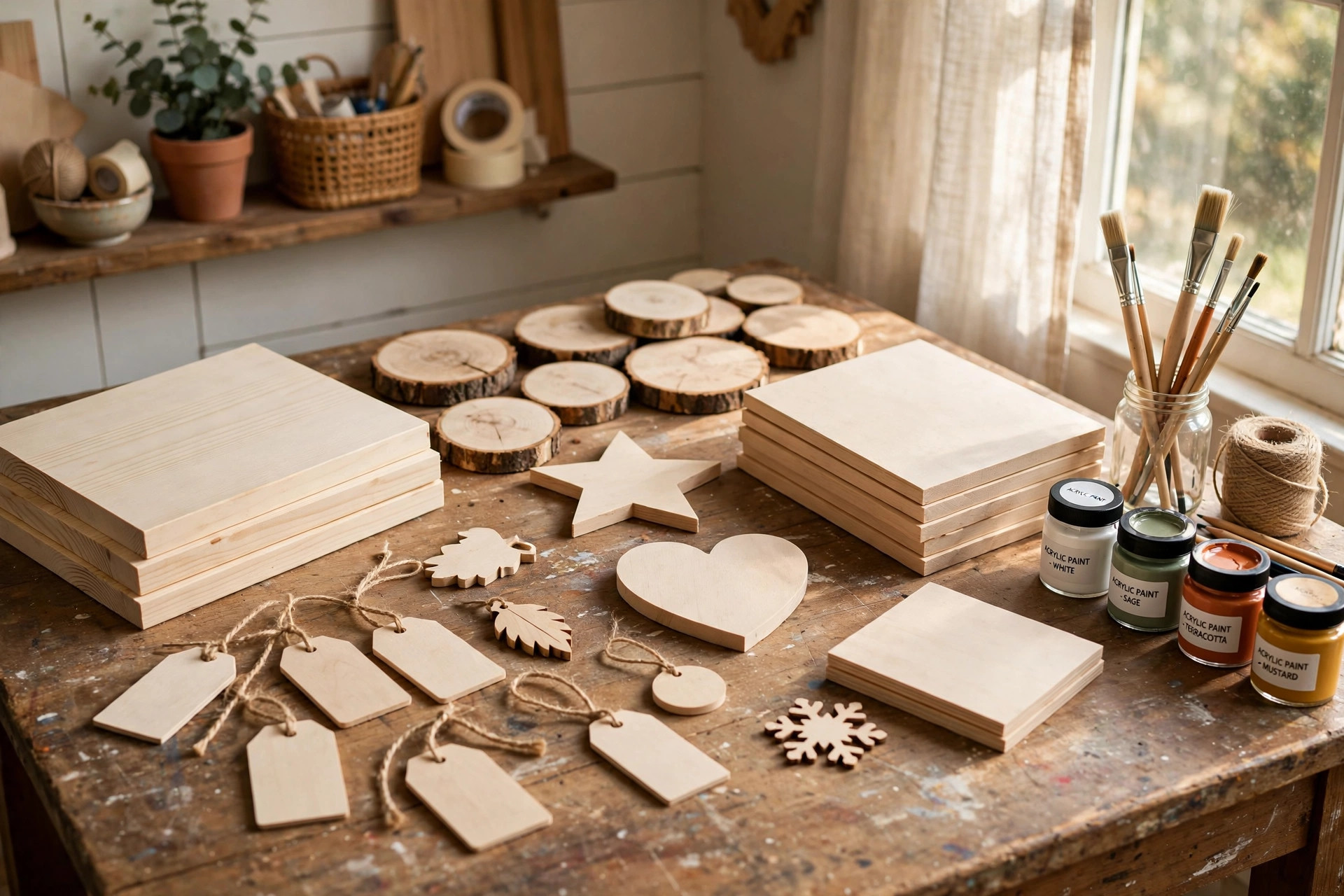
Wood craft blanks for painting and signs are plain, cut pieces of wood that serve as a clean start for painted projects. A blank has no stain, no paint, and no finish. It waits for the maker. Some blanks are simple square plaques. Others are cut into shapes like hearts, stars, or house outlines. Crafters use them to make welcome signs, farmhouse wall decor, Christmas ornaments, and door hangers. Small business owners use them too, because blanks save hours of cutting and sanding. This guide explains how to choose the right wood craft blanks for painting and signs, how to prepare and paint them, what they cost, and how to keep finished pieces looking good for years.
Why Wood Craft Blanks Matter
A head start for every maker
A good project begins with good stock. Raw lumber from a hardware store must be cut to size, planed flat, and sanded smooth before paint can touch it. A wood craft blank skips most of that work. The cutting is done. The edges are shaped. The surface is nearly ready. The maker can move straight to the fun part, which is design and paint.
This matters for beginners. A person who has never used a saw can still make a lovely painted sign. It matters for sellers as well. When a shop must fill thirty orders before the holidays, ready blanks keep the pace steady. A blank bought in bulk costs little and arrives ready to paint.
Signs are a strong craft category
Painted wooden signs have been a steady craft staple for decades. They sell at craft fairs, in gift shops, and on large online marketplaces. Buyers like them because wood feels warm and personal. A painted name plaque for a nursery or a rustic address sign for the porch starts from the same base: a wood blank.
What to Look for When You Buy: Wood Craft Blanks for Painting and Signs
Wood species
Most wood craft blanks for painting and signs are cut from soft woods. Pine is the most common. It is light, soft, and cheap, and it takes paint well. Basswood has a tight, even grain, which suits small lettered signs. Poplar is harder and heavier, good for larger signs that must stay flat. Baltic birch plywood is prized because it has few voids and a smooth face. Some blanks are made of MDF, a pressed board. MDF paints with a glass-smooth finish, but it swells badly if it gets wet, so it belongs indoors.
For outdoor signs, cedar or treated blanks last longer. Cedar resists rot and insects on its own. If a blank is marked for indoor use only, keep it inside or seal it with great care.
Thickness and flatness
Hold a blank and look along its edge. It should be flat, not bowed or twisted. A warped blank makes lettering hard and paint uneven. Thickness matters for the way a sign hangs. Thin blanks of one eighth inch suit ornaments and small tags. Blanks of one quarter to one half inch suit wall plaques and door hangers. Heavier porch signs want three quarters of an inch or more so they do not flex.
Surface quality
Run a hand over the face of the blank. It should feel smooth with no splinters or deep tool marks. Small flaws can be sanded out, but heavy planer marks eat up time. Check knots as well. A knot adds charm in rustic pieces, yet it can bleed resin through light paint.
Cut quality and edges
Laser-cut blanks have darkened edges from the heat of the beam. Those edges add a nice outline to many designs. Scroll-sawn or band-sawn blanks have clean pale edges. Pressed or routed blanks often come with beveled edges that catch light well. Decide which edge look fits your style, and buy the matching type.
Quantity and price breaks
Blanks are sold one at a time and in packs. Packs of ten, twenty-five, or fifty are common. The price per piece drops sharply in larger packs. If you sell finished signs, buy in bulk once you know a shape sells well. For fine basswood blanks and specialty finishes, art suppliers such as Dick Blick are worth a look alongside the big craft chains. Stores like Michaels and Joann carry small packs for testing, while bigger lots are easy to find at craft wholesalers and home centers such as Home Depot.
Types and Shapes of Blanks
Plaques and boards
Rectangular and square plaques are the workhorses of sign making. They come in sizes from two-inch tags to two-foot wall boards. Many have a routed edge or a simple square cut. Ship-lap style blanks, made of several thin slats joined on a frame, give the popular farmhouse look without any carpentry.
Round and oval blanks
Round wood slices, cut from logs or laminated stock, suit door hangers and wreath centers. A round blank with a drilled hole takes a ribbon or jute hanger in seconds. Ovals and scalloped rounds offer a softer frame for painted names and monograms.
Seasonal shapes
Pumpkins, trees, snowmen, hearts, and eggs drive much of the craft market. Animals, trucks, houses, and stars sell year round. These shaped blanks are often laser cut from thin plywood, which keeps the price low and the edges crisp.
Ornaments and tags
Small thin blanks make ornaments, gift tags, and keychain bases. Because they are cheap, makers can experiment freely. A pack of fifty small rounds can become a whole Christmas tree set, a set of place cards, or a run of stocking tags for a craft fair table.
How to Prepare Blanks for Painting
Sanding
Even good blanks benefit from light sanding. Start with 120-grit paper to remove rough spots, then finish with 220-grit for a smooth face. Always sand with the grain. Wipe the dust away with a tack cloth or a damp rag.
Filling flaws
Fill small holes and dents with wood filler. Let it dry fully, then sand it flush. Set badly cracked blanks aside for rustic projects where flaws read as character.
Priming
Primer is the bridge between wood and paint. A coat of white or gray acrylic primer seals the grain and stops the wood from drinking up your paint. It also keeps knot resin from bleeding through. One or two thin coats are enough.
Sealing the back and edges
Paint all sides of the blank, even the back that no one sees. Wood moves with humidity. If the front is sealed and the back is bare, the board can cup or warp over time. A coat of primer and paint on the back costs minutes and adds years.
Painting and Finishing Tips
Choosing paint
Acrylic craft paint is the standard for painted signs. It is cheap, dries fast, and cleans up with water. A basic acrylic paint set for beginners canvas art covers most sign projects, and canvas-grade acrylics work on wood just as well as on canvas. For a durable finish, use acrylics rated for outdoor use or add an exterior varnish on top. Chalk paint gives a soft matte look that suits farmhouse styles. Milk paint offers an old-world, slightly uneven finish that many buyers love. Latex house paint, thinned slightly, covers large signs at low cost.
Brushes and tools
Good craft paint brushes set for acrylics make cleaner letters and edges. Keep a flat brush for backgrounds, a round brush for curves, and a fine liner for details. Foam brushes lay down smooth base coats on flat blanks. Stencils, vinyl cutters, and transfer paper help with lettering. Many sign makers cut words from adhesive vinyl, paint over the stencil, and peel it away for crisp type.
Layering and distressing
Most painted signs need two thin coats rather than one thick coat. Thin coats dry faster and show fewer brush marks. For a distressed look, paint a dark base coat, add a light top coat, then sand the edges lightly to let the dark show through. This aged finish hides small flaws and suits rustic decor.
Varnish and topcoat
A clear topcoat protects the paint from scuffs and moisture. Water-based polyurethane is the common choice. It goes on clear, dries fast, and does not yellow much over time. Apply two or three thin coats, sanding lightly between them. For outdoor signs, use a spar varnish or marine-grade finish that flexes with the wood and resists sun and rain.
Wood burning as an alternative
Some makers skip paint and burn their designs instead. A wood burning kit for DIY crafts turns a plain blank into a piece with dark, permanent lines. Pyrography works best on light, tight-grained woods like basswood. Many sellers offer both painted and burned versions of the same sign shape.
Cost and Price
What blanks cost
Prices vary by size, wood, and pack size. Small thin ornaments may cost less than a dollar each in bulk. Standard plaques of eight by ten inches often run two to six dollars each in small packs, and less in lots of twenty-five or more. Large thick sign boards of two feet or more can reach ten to twenty dollars each. Laser-cut shaped blanks fall in the middle, since the cutting adds labor but the wood is thin.
What finished signs sell for
A small painted ornament may sell for five to twelve dollars at a craft fair. A medium wall sign often sells for twenty-five to sixty dollars, depending on the design and the local market. Material cost is only part of the price. Time, design skill, and finish quality set the value.
Keeping costs down
Buy blanks in the off season when craft stores clear holiday stock. Compare per-piece prices across pack sizes before you order. Keep a notebook of which blanks sell best, and stop buying shapes that sit on the shelf.
Care and Upkeep of Finished Signs
Indoor pieces
Indoor signs need little care. Dust them with a dry cloth now and then. Keep them out of direct sun, which fades paint over the years. If a piece hangs in a kitchen, wipe away grease with a damp cloth and mild soap. A fresh coat of clear varnish every few years renews the shine.
Outdoor pieces
Outdoor signs face sun, rain, and temperature swings. Hang them under a porch roof when possible. Check the finish each spring. If water no longer beads on the surface, sand lightly and add a fresh coat of exterior varnish. With care, a well-sealed cedar or pine sign can last five to ten years outdoors.
Repair
Small chips can be touched up with matching paint and a dab of varnish. If a board warps, it can sometimes be flattened by dampening the concave side and clamping it flat for a day.
Safety in the Craft Room
Dust and sanding
Sanding dust irritates lungs and eyes. Wear a dust mask when sanding, and safety glasses when using power sanders. Work near an open window or a small fan that pulls air away from your face. Wipe up dust often. Never let fine dust build up near heaters or open flames, since wood dust can burn.
Paints and finishes
Use paints and finishes in a ventilated space. Water-based products are safer than solvent-based ones, but they still release fumes while drying. Keep lids closed when not in use. Keep all finishes away from children and pets.
Tools
Craft knives, saws, and wood burners demand respect. Cut away from your body. Unplug hot tools when you step away. A rotary tool or small saw from a home center should be used with the guards in place. Teach children to watch rather than touch when sharp or hot tools are out. Guidance from Family Handyman and This Old House offers solid workshop safety basics for home crafters.
Small parts
Tiny blanks, beads, and hardware are choking hazards for small children. Store small pieces in closed bins. If kids craft with you, choose large blanks and washable paints, and keep sharp tools out of reach.
Frequently Asked Questions
What is the best wood for painted signs?
Pine and basswood are the best choices for most painted signs. Pine is cheap and widely sold. Basswood has a smooth, even grain that takes fine detail. For outdoor signs, cedar lasts longer. For a glass-smooth painted face, MDF works well indoors.
Do I need to prime wood blanks before painting?
Yes, priming is worth the time. Primer seals the grain, stops bleed-through from knots, and helps paint stick. One or two thin coats of acrylic primer, sanded lightly between coats, gives a clean base for any topcoat.
Can I use wood craft blanks outdoors?
Some blanks can go outdoors, but only with the right wood and finish. Choose cedar or well-sealed pine, prime all sides, paint with exterior-rated products, and finish with spar varnish. Even then, place the sign under cover when you can. Thin MDF blanks should stay indoors.
How do I stop knots from showing through paint?
Seal each knot with a shellac-based primer before you prime the whole piece. Two coats over the knot are better than one. Let it dry fully, sand lightly, and then paint as normal. This blocks the resin that causes brown stains in light paint.
What paint works best on wood blanks?
Acrylic craft paint suits most sign projects. It is cheap, fast-drying, and easy to clean. Chalk paint gives a matte farmhouse look. For outdoor pieces, use exterior acrylics and seal with exterior varnish. A starter acrylic paint set and a basic brush set will carry a beginner through the first dozen projects, and Bob Vila has clear guides on matching paint types to wood projects.
Where can I buy wood craft blanks in bulk?
Craft chains like Michaels and Joann sell small packs for testing designs. For bulk lots, check craft wholesalers, lumber suppliers, and large online marketplaces. Stores such as Walmart and Hobby Lobby also carry seasonal shaped blanks at fair prices.
A Final Word
Wood craft blanks for painting and signs turn a blank board into a finished product with less labor and less waste. Choose the right wood for the job, sand and prime with care, paint in thin coats, and seal the work well. Whether you craft for fun, for gifts, or for a small business, blanks give you a reliable start every time.
References
Blick Art Materials. (n.d.). Art and craft supplies. https://www.dickblick.com Bob Vila. (n.d.). Home improvement advice. https://www.bobvila.com Family Handyman. (n.d.). DIY home repair and maintenance. https://www.familyhandyman.com Hobby Lobby. (n.d.). Arts, crafts, and home decor. https://www.hobbylobby.com JOANN. (n.d.). Fabric and craft supplies. https://www.joann.com Lowe’s. (n.d.). Home improvement products. https://www.lowes.com Michaels. (n.d.). Arts and crafts supplies. https://www.michaels.com The Home Depot. (n.d.). Home improvement products. https://www.homedepot.com This Old House. (n.d.). Home renovation guidance. https://www.thisoldhouse.com Walmart. (n.d.). Everyday low prices. https://www.walmart.com
Was this guide helpful?

About Robert Taylor
The My Garden US editorial team writes practical, in-depth home and garden guides for American homeowners — tested advice, no fluff.