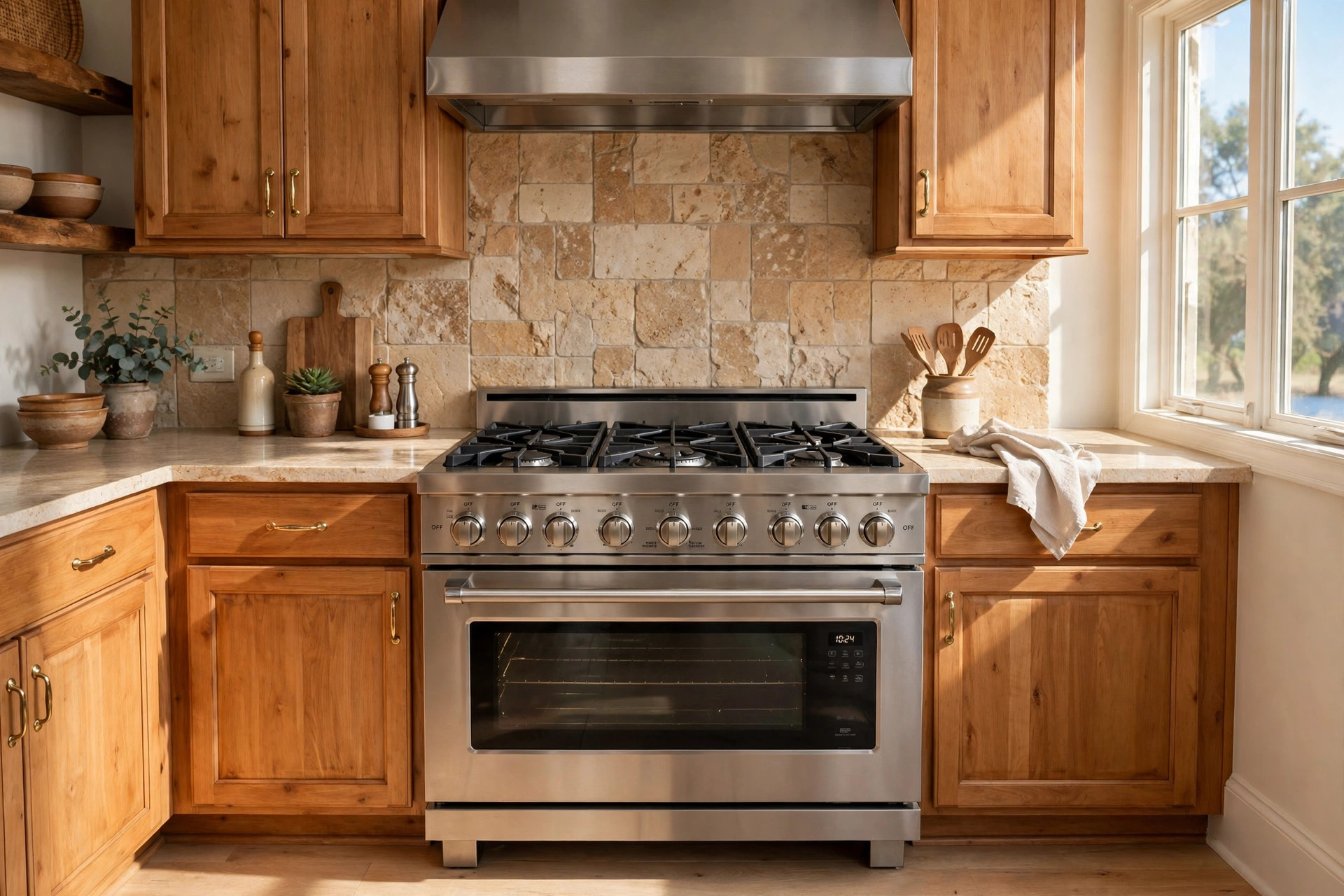

A dual fuel range gives Texas cooks the best of both worlds. The cooktop burns gas. The oven runs on electricity. Cooks in Houston, Dallas, Austin, and San Antonio prize this mix because it answers two real needs at once. Gas burners answer fast and stay strong. Electric ovens heat even and bake true. For families who cook big Sunday meals, for weekend barbecue lovers, and for bakers who want even heat, dual fuel ranges texas homes usa buyers often call this the last range they will ever want.
This guide explains what a dual fuel range is, why it fits Texas homes so well, how to choose one, what it costs, how to care for it, and how to use it safely. Read it before you shop.
Why Dual Fuel Ranges Suit Texas Homes
Texas kitchens run hot and busy. Homes are large. Families are large. Meals are large. A dual fuel range answers this pattern.
The gas cooktop gives instant flame. You can sear a steak, char peppers, and bring a stockpot to a boil in minutes. When you turn the knob down, the flame drops at once. This control matters for Texas dishes that move fast, from stir fry to gumbo to fajitas.
The electric oven bakes with steady, dry heat. Electric elements cycle on and off to hold one temperature. Cookies brown evenly. Cakes rise level. Holiday briskets roast with less worry. Gas ovens, by contrast, swing in temperature and add moisture. That swing can ruin a batch of biscuits.
Many Texas homes already have both fuels. Natural gas runs through most city neighborhoods. Rural homes often use propane tanks. Nearly every home has 240 volt electric service. A dual fuel range simply uses both lines. It plugs into the big outlet for the oven and hooks to the gas line for the cooktop. This setup suits open floor plans too. Many Texas homes join the kitchen to the living room. Electric ovens leak less heat into the room than gas ovens, which helps in a Texas summer.
Size is another Texas reason. Homes here often have wide kitchens built for 36 inch or 48 inch ranges. Slide in and pro style dual fuel models fit these spaces well. Homeowners who entertain find the extra oven space worth the price. For guidance on gas-only models, see our guide to gas kitchen ranges buying guide usa.
How to Choose the Right Dual Fuel Range: Dual Fuel Ranges Texas Homes Usa
Check Your Hookups First
A dual fuel range needs two hookups. It needs a gas line, natural gas or propane. It also needs a 240 volt electric outlet, the same kind a dryer uses. Many Texas kitchens built in the last thirty years have both. Older homes may lack one of them.
Call a licensed plumber to check your gas line. Call a licensed electrician to check your outlet. Adding a new gas line can cost hundreds of dollars. Running a new 240 volt circuit can cost about the same. Know these costs before you fall in love with a model. Retailer guides at Home Depot and Lowe’s list hookup requirements for each range they sell.
Choose the Right Width
Dual fuel ranges come in three common widths.
30 inch models are the most common. They fit the standard kitchen cutout. Most have one oven and four or five burners. This size suits most Texas homes and budgets.
36 inch models add oven space and more burners. Many have six burners and one large oven. This size suits big families and serious cooks.
48 inch models are pro style. They often have two ovens and six to eight burners. Some add a griddle or a grill section. These models suit large kitchens and homeowners who entertain often.
Measure your cutout twice. A 36 inch range will not fit a 30 inch opening. Check the depth too. Pro style ranges sit deeper than standard cabinets. Leave room for the gas line and the power cord behind the unit.
Look at the Cooktop
The cooktop is the gas half. Count the burners. Four is standard. Five or six gives room for big pots. Check the power of each burner. A high power burner should reach about 18,000 to 22,000 BTU. A low simmer burner should drop below 5,000 BTU. This spread gives you both speed and control.
Look at the grate design. Continuous grates let you slide heavy pots from burner to burner. Sealed burners keep spills out of the flame area. They also clean easier. A central oval burner or a built in griddle adds value if you cook for crowds. Makers like GE Appliances, Whirlpool, and Bosch offer strong dual fuel lines with these features.
Look at the Oven
The oven is the electric half. Check the capacity. A 30 inch range usually holds about 4.5 to 5.5 cubic feet. That fits a full turkey. Look for true convection. A third heating element and a fan move hot air around the food. This gives even browning on every rack.
Self cleaning is worth the extra money. A pyrolytic self clean cycle burns food soil to ash at very high heat. A steam clean cycle loosens light soil with water vapor. Both save hours of scrubbing. Check the racks. Telescoping racks glide out smoothly and hold heavy roasts. The ENERGY STAR site explains which oven features use energy wisely.
Types and Options
Slide In Models
Slide in dual fuel ranges fit between cabinets with a finished front. The controls sit at the front, so no back panel blocks your backsplash. They look built in without the cost of a true built in. Most slide in models are 30 inches wide. They are the best value for most Texas homes.
Pro Style Models
Pro style ranges look like restaurant equipment. They have heavy knobs, thick grates, and bold styling. Most are 36 or 48 inches wide. They need more clearance and stronger ventilation. If you cook daily and want the look of a chef kitchen, pro style is the answer. Pair one with a strong hood. Our guide to stainless range hoods buying guide usa can help you size the ventilation.
Gas Type: Natural Gas or Propane
Most city homes in Texas use natural gas. Rural homes often use propane from a tank. Nearly all dual fuel ranges ship set for natural gas. A propane conversion kit changes the burner orifices to fit propane. Many kits come in the box. The change takes a technician about an hour. Never skip this step. Burning propane through natural gas jets is dangerous.
Convection and Double Ovens
Some 48 inch models split the oven into two parts. Two ovens let you bake and roast at different temperatures at the same time. This helps at Thanksgiving and at large parties. Smaller ranges may offer a single oven with convection. For most cooks, one good convection oven is enough. If you often cook for ten or more people, two ovens earn their keep. Compare with our guide to double wall ovens buying guide usa if you want wall ovens instead.
Cost and Price
Dual fuel ranges cost more than single fuel ranges. You pay for two systems in one box. Expect these price bands in the United States market.
Entry level: $1,800 to $3,000. These are 30 inch slide in models from major brands. They have solid burners and a good convection oven. This band suits most buyers.
Mid range: $3,000 to $6,000. You get 36 inch models, higher burner power, better racks, and stronger self clean systems. Finishes and styling improve here.
Pro style: $6,000 to $15,000 or more. These are 36 to 48 inch ranges with restaurant looks, double ovens, and griddles. They suit large kitchens and heavy cooks.
Add installation costs. A gas hookup check or new line runs $200 to $800. A new 240 volt circuit runs $300 to $900. A propane conversion adds $100 to $300. Delivery and haul away add $50 to $200. Texas prices run near the national average for this work.
Running costs stay modest. Natural gas is cheap in Texas. Electric ovens use more power but only when baking. Consumer Reports testing shows dual fuel ranges cost about the same to run as all gas ranges over a year. The main cost is the purchase price, not the utility bill.
Care and Upkeep
Clean the cooktop after each use. Wipe spills from the sealed burners with a damp cloth while the grates are cool. Lift the grates and wash them in hot soapy water once a week. Dry them fully before you set them back. Wet grates can rust.
Clean the oven on a schedule. Run the self clean cycle every two to three months if you cook often. Remove the racks before a high heat self clean. Wipe out the ash with a damp cloth when the oven cools. For light soil, the steam clean cycle is enough.
Check the door seal once a year. A worn seal lets heat escape and wastes energy. Close the door on a dollar bill. If the bill pulls out with no drag, the seal needs work. Replacement seals are cheap and easy to fit.
Wipe the stainless front with a soft cloth and a mild cleaner. Rub with the grain of the steel. Avoid steel wool and harsh powders. They scratch the finish. The Spruce and Bob Vila home sites carry full cleaning schedules for kitchen ranges.
Book a service check every two to three years. A technician will check the gas connections, the igniters, and the oven calibration. In Texas heat and humidity, rubber gas connectors age faster. A quick check buys peace of mind.
Safety in Texas Homes
Gas safety comes first. Install a carbon monoxide detector near the kitchen. Test it monthly. Never use the oven to heat the house. That misuse fills rooms with carbon monoxide. It can kill.
Ventilation matters. Run the range hood every time you cook with gas. Gas burners release nitrogen dioxide and moisture. A hood that vents outside clears both. For a pro style range, you may need a hood rated at 600 CFM or more. In a Texas summer, the hood also pulls cooking heat out of the house. That saves on air conditioning.
Keep a fire extinguisher in or near the kitchen. Keep pot handles turned inward. Keep dish towels and paper away from open flame. Teach children that the blue flame is not a toy. Texas has many homes with young families, and these simple habits prevent most kitchen fires.
Propane users have one extra rule. Check the tank level before big cooking days. A Thanksgiving turkey does not care that the tank ran dry at 6 a.m. Keep the tank valve area clear of brush and debris. Texas wildfire seasons make this a real concern.
Frequently Asked Questions
Do I need both a gas line and a 240 volt outlet for a dual fuel range? Yes. The cooktop burns gas and the oven uses electricity. You need a gas supply line plus a 240 volt electric circuit. Most Texas kitchens have both, but older homes may need one added. Have a plumber and an electrician check before you buy.
Can a dual fuel range run on propane? Yes, with a conversion kit. Most ranges ship set for natural gas. The kit changes the burner jets to fit propane. A trained technician should make the change. The maker or your gas supplier can tell you which kit fits your model.
Are dual fuel ranges worth the extra cost? For cooks who bake and cook on the stovetop, yes. You get fast gas heat up top and even electric heat in the oven. If you rarely bake, a gas range costs less and may serve you just as well. Match the range to how you really cook.
How long does a dual fuel range last? About 15 to 20 years with good care. The gas burners and the electric oven age well. Igniters and door seals are the parts that wear first. Both are cheap to replace. Regular cleaning adds years to the life of the range.
Will a dual fuel range raise my electric bill much? Not much. The oven uses power only while baking. Most of the daily work happens on the gas cooktop. In Texas, natural gas costs are low. Most owners see only a small change in their bills.
What size dual fuel range fits a standard Texas kitchen? A 30 inch model fits the standard cutout. Many newer Texas homes have space for 36 inch models. Measure the width, depth, and height of your opening before you shop. Bring the numbers to the store.
A Final Word
Dual fuel ranges texas homes usa shoppers keep choosing share one trait. They remove the old trade off. You no longer pick between a fast cooktop and an even oven. You get both in one box. Check your hookups, measure your space, set your budget, and buy the best build you can afford. A good dual fuel range will serve your family for twenty years of Sunday dinners, holiday feasts, and quiet weeknight meals.
References
Bob Vila. (n.d.). Home improvement advice. https://www.bobvila.com Bosch. (n.d.). Home appliances. https://www.bosch-home.com Consumer Reports. (n.d.). Product reviews and ratings. https://www.consumerreports.org ENERGY STAR. (n.d.). Energy efficient products. https://www.energystar.gov GE Appliances. (n.d.). Kitchen and home appliances. https://www.geappliances.com Lowe’s. (n.d.). Home improvement products. https://www.lowes.com The Home Depot. (n.d.). Home improvement products. https://www.homedepot.com The Spruce. (n.d.). Home and garden advice. https://www.thespruce.com Whirlpool. (n.d.). Home appliances. https://www.whirlpool.com
Was this guide helpful?

About Michael Thompson
The My Garden US editorial team writes practical, in-depth home and garden guides for American homeowners — tested advice, no fluff.
You May Also Like
Stainless Range Hoods Reviews: A Buying Guide for USA Homes
July 24, 2026 1 views
Quartz Countertop Installation in Texas Homes: A Plain and Full Guide
January 28, 2026 0 views
Under Counter Wine Fridges for Sale in the USA
August 4, 2026 0 views