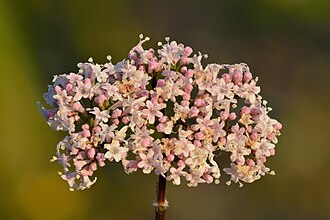

Photo: Wikimedia Commons
Valerian is grown for what you cannot see — its roots, long used in calming teas and tinctures. Above ground it is a handsome perennial with tall stems of sweetly fragrant pink-white flowers that pollinators mob. Below ground, the roots need two full seasons to reach good size, which makes valerian a crop for patient gardeners. Learning how to grow valerian is mostly about giving it damp, rich soil and then waiting, while the flowers entertain the bees. The USDA PLANTS entry for Valeriana officinalis confirms its cool-climate perennial habit. This guide covers sowing, the two-year wait, digging roots, and the famously pungent drying process. For a quick botanical overview, see the USDA PLANTS entry for Valeriana officinalis.
Choosing a Variety
Common valerian, Valeriana officinalis, is the medicinal species — do not confuse it with ornamental valerians grown for flowers. Seed is the usual start; the Old Farmer’s Almanac guide to valerian notes it germinates best with light and cool soil. Sow a quarter inch deep or set out transplants twelve inches apart. One small bed is plenty; the roots are potent and a little goes a long way in the stillroom. Because the crop takes two seasons, site it where it can sit undisturbed — the back of the herb garden, in rich, moist ground it will love.
When and How to Plant
Timing your sowing
Valerian goes straight into the ground where it will grow — it does best sown in place. Sow right around your last spring frost, sow as soon as the soil can be worked in spring. Sow about 0.25 inch deep, then thin or space seedlings to about 18 inches apart. Crowded plants stay small and invite disease, so give them the room the packet calls for.
Spacing, depth, and days to harvest
The first season is mostly about roots and establishment; the real payoff begins in the second season, so plant with patience.
If you start seeds indoors, harden the seedlings off for a week before transplanting — a few hours of outdoor shade the first day, building to full sun. Skipping this step shocks tender plants and sets them back two weeks.
Frost-date charts from a ZIP-code planting calendar help if you are new to reading your zone.
Soil and Sun
Light needs
Give it full sun where you can, though it tolerates a half day of shade without complaint.
Building good soil
The soil recipe is simple: rich, moist soil. A generous digging-in of compost at planting time fixes most imperfect soils.
Hardy in zones 4 through 8, it fits most of the country. If you garden at the cold edge of the range, a sheltered microclimate near a wall buys you a few degrees of safety.
Top the bed with compost and mulch at planting time. As the mulch decays it feeds the soil life that feeds your plants — the cheapest fertilizer program there is.
Soil testing labs listed through the University of Minnesota Extension can confirm your pH before you plant.
Watering and Feeding
Watering routine
Regular, even watering is the goal. Letting plants wilt and then drowning them stresses them and invites trouble.
Feeding
Compost at planting is enough; valerian is not a heavy feeder. Go light on fertilizer. Compost worked in at planting plus a mid-season mulch feeding will carry it; overfeeding causes more problems than it solves.
Water in the morning so foliage dries by evening — wet leaves overnight invite disease. A rain gauge, or even a tuna can set out in the rain, tells you how much fell; adjust the hose accordingly.
Irrigation basics from Clemson’s Home & Garden Information Center apply to all of these schedules.
Care Through the Season
Through the season, water generously — valerian loves damp ground and sulks in drought. Mulch to hold moisture through summer. Aphids may cluster on the tall flower stalks but rarely harm the roots; a hard spray of water handles them. Let the fragrant flowers bloom at least once for the pollinators, but if maximum root growth is the goal, remove flower heads afterward, since blooming diverts energy upward. The plants are hardy and need no winter protection in their range. Clemson’s Home & Garden Information Center covers moisture-loving perennials with similar needs. Weed by hand; the shallow roots resent hoeing.
Companions and Placement
The classic herb-garden neighbors — Yarrow, Chamomile, and Lavender — grow well alongside valerian, sharing sun and soil preferences. Plant tall herbs to the north so they never shade low ones, and group the thirsty ones together so watering is simple. Let a few plants flower for the bees; herb blossoms are among the best pollinator plants there is. Harvest often and boldly — herbs respond to cutting with bushier growth. Replace tired plants without sentiment; the garden is a kitchen, not a museum.
Harvest
Dig the roots in the second fall after the foliage dies back — that is when they are largest and most potent. Loosen the whole plant with a fork and wash the roots thoroughly, since they grow in muddy soil and hold grit in every crevice. Chop large roots into pieces and dry quickly with strong air flow; slow drying risks mold. The Missouri Botanical Garden plant finder notes the roots’ traditional use, and experienced growers all give the same warning: drying valerian smells powerfully of old socks, so dry it in a garage or shed, never the kitchen. Store fully dry roots in sealed jars away from light.
Troubleshooting
Small roots at digging time usually mean the plants were harvested too young — valerian genuinely needs two seasons, and patience is the whole technique. Wilting in summer means drought; this plant wants consistently moist soil, so mulch and water. If plants fail in hot climates, that is the zone limit — zones 9 and warmer are too warm for proper root development, as the USDA National Agricultural Library‘s resources confirm. Moldy drying roots were dried too slowly; increase air flow and spread pieces thinner. Self-sown seedlings around the bed are normal; transplant or compost them as you like.
Through the Seasons
Spring
In spring, clean up winter damage, divide overgrown clumps, and refresh the mulch. New herb plants go in after frost danger passes. Take stock of what survived winter and replace losses early, while nurseries are fully stocked. A spring shearing of evergreen herbs encourages bushy new growth.
Summer
Through summer, harvest boldly and water as needed. Valerian is at its most potent now; cut in the morning after dew dries for the strongest oils. Keep aggressive spreaders in bounds with the shears, and deadhead before seed sets unless you want volunteers everywhere. A mid-summer cutback rejuvenates tired plants.
Fall and Winter
As cold approaches, harvest what you need, mulch the crowns of tender herbs, and move pots to shelter. Winter is for planning: sketch next year’s herb bed and order seed while selection is best. Stored dry and dark, this season’s harvest flavors the kitchen until spring.
Quick Answers
How long does valerian take to grow?
The first season is about establishment; expect the real harvest to begin in the second season. Perennials reward patience.
What zones can I grow valerian in?
Zones 4 through 8. Inside that range it is hardy and reliable; outside it, grow as an annual or in containers.
How much sun does valerian need?
Full sun to part shade. A little afternoon shade is welcome where summers run hot.
How far apart should I plant valerian?
About 18 inches apart. Crowding stunts plants and invites disease, so give each one its room — the harvest is bigger, not smaller, for the space.
Using the Harvest
Dried valerian root is traditionally steeped as a tea or tinctured — it has a long folk history as a calming herb, though its flavor is famously earthy and best blended with mint or chamomile. Dry the roots quickly and completely with strong air flow; any lingering dampness invites mold. Once crackly dry, store in sealed jars away from light, where the roots keep for a year or more. A little goes a long way, so one bed’s harvest lasts a household a long time. Label jars clearly and keep them with your other dried herbs, out of the kitchen if the smell bothers you. Browse more plant profiles at Gardenia.net’s plant profiles for ideas.
Keep Growing
How to grow valerian: rich moist soil, two seasons of patience, dig after frost, and dry the roots somewhere the smell will not offend. It is slow gardening at its most rewarding. For planting dates, check your USDA zone planting dates and grow it with other traditional herbs — our guides to how to grow yarrow, how to grow chamomile, and how to grow lavender share the perennial herb bed.
References
- Old Farmer’s Almanac. (n.d.). Growing valerian in home gardens. https://www.almanac.com/
- U.S. Department of Agriculture. (n.d.). Valerian (Valeriana officinalis) plant profile. https://plants.usda.gov/home
- Clemson University Cooperative Extension. (n.d.). Home & Garden Information Center. https://hgic.clemson.edu/
- Gardenia.net. (n.d.). Valerian plant profile. https://www.gardenia.net/
Was this guide helpful?

About My Garden US
The My Garden US editorial team writes practical, in-depth home and garden guides for American homeowners — tested advice, no fluff.