

Photo: Wikimedia Commons
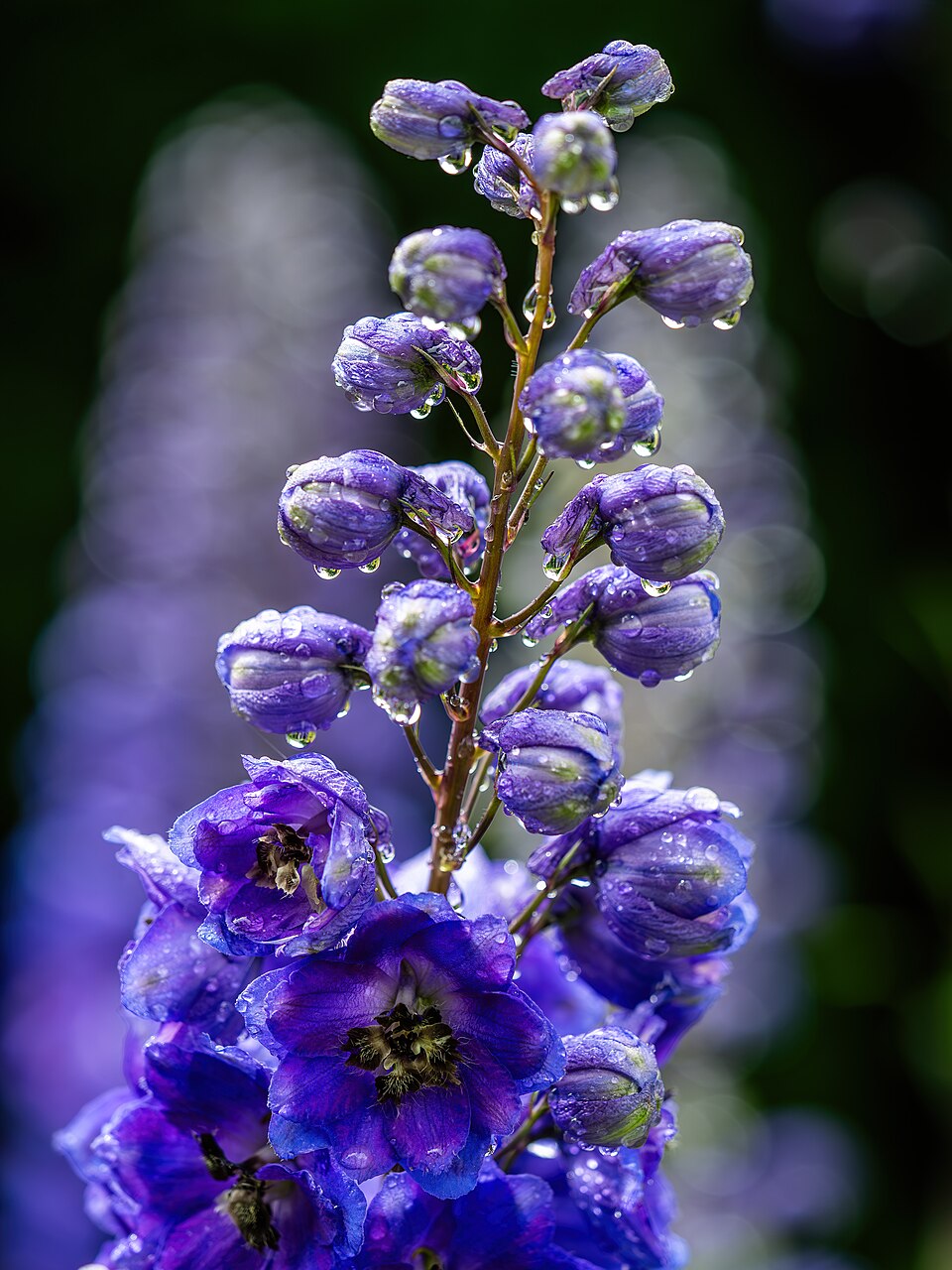
Delphiniums are the skyscrapers of the flower border — six-foot spires of blue, purple, pink, and white that stop traffic and win flower shows. Nothing else gives that vertical punch of true blue. They are also famously fussy: they demand cool summers, rich soil, staking, and protection from slugs, and they sulk in Southern heat no matter what you do. Learning how to grow delphiniums means accepting a high-maintenance diva in exchange for unmatched drama. The USDA PLANTS entry for Delphinium elatum confirms its cool-climate perennial nature. This guide covers planting, staking before disaster, watering, the second-flush cutback, and coping with slugs. For a quick botanical overview, see the USDA PLANTS entry for Delphinium elatum.
Choosing a Variety
The tall Pacific Giants and Magic Fountains series are the classic exhibition types, bred for huge spikes in clear colors; Magic Fountains stays shorter and stands up better to wind. For smaller gardens, dwarf series top out around two to three feet and need less staking. In hot climates, choose heat-tolerant series bred for warm regions, or grow delphiniums as cool-season annuals and accept one glorious season. Buy sturdy transplants rather than seed unless you are patient — the Old Farmer’s Almanac guide to delphiniums notes seed-grown plants take time to size up. All parts are toxic, so site them toward the back of the border and teach children never to touch the flowers.
When and How to Plant
Timing your sowing
Start delphiniums indoors about 8 weeks before your last spring frost. Use small pots or cell packs and keep them warm and bright; delphiniums resent having their roots disturbed, so pot up promptly if seedlings outgrow their cells. Move them into the garden about a week after your last spring frost, when nights have steadied. Seeds are tiny, so cover them only about 0.125 inch deep and keep the mix evenly moist until they sprout.
Spacing, depth, and days to harvest
The first season is mostly about roots and establishment; the real payoff begins in the second season, so plant with patience.
Harden off indoor-started seedlings over seven to ten days, lengthening their outdoor time gradually. Plants moved straight from windowsill to garden stall out, while hardened ones take off running.
Frost-date charts from a ZIP-code planting calendar help if you are new to reading your zone.
Soil and Sun
Light needs
Choose the sunniest spot you have. Full sun, six-plus hours, is what makes this plant productive.
Building good soil
The soil recipe is simple: rich, well-drained soil. A generous digging-in of compost at planting time fixes most imperfect soils.
It is rated for zones 3 to 7. Outside that range, treat it as an annual or grow it in containers you can move with the seasons.
Top the bed with compost and mulch at planting time. As the mulch decays it feeds the soil life that feeds your plants — the cheapest fertilizer program there is.
Soil testing labs listed through the University of Minnesota Extension can confirm your pH before you plant.
Watering and Feeding
Watering routine
Plan on real water here. A deep soaking that wets the root zone beats daily sprinkles, which only wet the surface.
Feeding
Feed with compost in spring; delphiniums are hungry plants but hate fresh manure near the crown. It is not a heavy feeder. Rich soil plus compost is enough — save the strong fertilizer for the hungriest vegetables.
Morning watering is the rule: leaves dry fast in rising sun, denying fungal diseases the damp nights they love. Drip irrigation or a soaker hose waters roots without wetting leaves at all.
Irrigation basics from Clemson’s Home & Garden Information Center apply to all of these schedules.
Care Through the Season
Through the season, water deeply and consistently; drought ruins the flower spikes, leaving stunted, sparse blooms. Stake tall varieties early — drive stakes at planting time, before buds open, to avoid spearing roots later, and tie stems loosely as they rise. After the first bloom, cut the spikes back to the basal foliage for a smaller second flush; the Missouri Botanical Garden plant finder confirms the rebloom habit. Slugs devour young shoots in spring — bait or handpick at night. Crown rot kills plants in soggy winter soil, so drainage is critical. Most plants fade after three to four years; plan replacements and take basal cuttings in spring to keep favorite colors going. Wear gloves handling the plants; all parts are toxic.
Companions and Placement
Delphinium earns its place in a mixed perennial border with Foxglove, Hollyhock, and Lupine, where contrasting forms — spires against mounds, fine foliage against bold — create the real drama. Plant in generous drifts rather than ones and twos, and think about what the bed looks like in winter too; seed heads and evergreen foliage carry the off-season. Keep aggressive spreaders in check with yearly edging, and divide congested clumps before bloom suffers. A border is a slow painting; expect to move plants around for the first few years.
Harvest
Cut flower spikes when the lower third of florets are open — they last over a week in water and dry beautifully for winter arrangements. Cut in the morning, strip the lower leaves, and sear the stem ends briefly in boiling water to extend vase life, a trick the Missouri Botanical Garden plant finder notes for hollow-stemmed flowers. Leave some spikes if you want seed, but deadhead most to direct energy into the second flush. For dried arrangements, hang spikes upside down in a dark, airy room; the blue holds remarkably well.
Troubleshooting
Floppy spikes that snap in wind were staked too late or not at all — stake at planting time, every time. Holes in young shoots mean slugs; patrol at night and reduce hiding places. Blackened crown centers signal crown rot from wet winter soil; replant in better drainage and never bury the crown. Powdery mildew in humid spells improves with spacing and morning watering. The USDA National Agricultural Library indexes extension bulletins on delphinium diseases. If plants melt out by midsummer in your climate, that is heat, not failure — in zones 8 and warmer, grow them as annuals or choose tougher perennials for the same blue effect.
Through the Seasons
Spring
Spring is cleanup and renewal: cut back dead foliage, divide congested clumps, and set out new plants. Stake tall growers early, before the rush of growth makes it awkward. Top-dress with compost and refresh mulch. Watch for slugs on young shoots — spring is their season too.
Summer
Summer is the payoff: deadhead spent blooms to stretch the show, water through dry spells, and cut flowers for the house in the morning. Watch for the pests noted above, and stake any stems the wind threatens. A mid-season trim of leggy plants brings fresh growth and sometimes a second flush.
Fall and Winter
In fall, leave some seed heads standing for birds and winter interest, then cut the rest back after hard frost. Mulch crowns in cold regions once the ground freezes. This is the time to move or divide anything in the wrong spot — the garden forgives fall transplants.
Quick Answers
How long until I can harvest delphiniums?
The first season is about establishment; expect the real harvest to begin in the second season. Perennials reward patience.
Where will delphiniums grow?
Zones 3 through 7. Inside that range it is hardy and reliable; outside it, grow as an annual or in containers.
Does delphiniums need full sun?
Full sun. Give it the sunniest spot you have; shade-grown plants disappoint.
What spacing does delphiniums need?
About 18 inches apart. Crowding stunts plants and invites disease, so give each one its room — the harvest is bigger, not smaller, for the space.
Garden Design Ideas
Delphiniums belong at the back of the border, where their six-foot spires rise above everything and stake discreetly against a fence or wall. Pair them with roses, foxgloves, and hardy geraniums for the full cottage-garden romance, or with ornamental grasses for contrast between spire and plume. Their true blues are rare in flowers — use them as the cool anchor among warm pinks and yellows. In a cutting garden, dedicate a row to delphiniums alone for armloads of spikes. Site them where you see them from the house window; the vertical punch reads best at a distance. Browse more plant profiles at Gardenia.net’s plant profiles for ideas.
Keep Growing
How to grow delphiniums, honestly: give them cool summers, rich well-drained soil, stakes from day one, and deep water. They are work, but no other flower does what they do. For planting dates, check your USDA zone planting dates and pair them with other cottage-garden towers — our guides to how to grow foxglove, how to grow hollyhocks, and how to grow lupine share the same romantic border.
References
- Missouri Botanical Garden. (n.d.). Delphinium. https://www.missouribotanicalgarden.org/
- Old Farmer’s Almanac. (n.d.). Growing delphiniums in home gardens. https://www.almanac.com/
- U.S. Department of Agriculture. (n.d.). Delphinium (Delphinium elatum) plant profile. https://plants.usda.gov/home
- Lady Bird Johnson Wildflower Center. (n.d.). Delphinium. https://www.wildflower.org/plants/
Was this guide helpful?

About My Garden US
The My Garden US editorial team writes practical, in-depth home and garden guides for American homeowners — tested advice, no fluff.
You May Also Like
Garlic Bulbs Planting Florida Homes USA: A Complete Grower’s Guide
September 11, 2026 1 views
Monstera Plants Sale Florida Homes USA: A Complete Buyer Guide
July 12, 2026 1 views
Snake Plants Indoor USA Online Deals: A Simple Guide to Buying Well
January 5, 2026 0 views