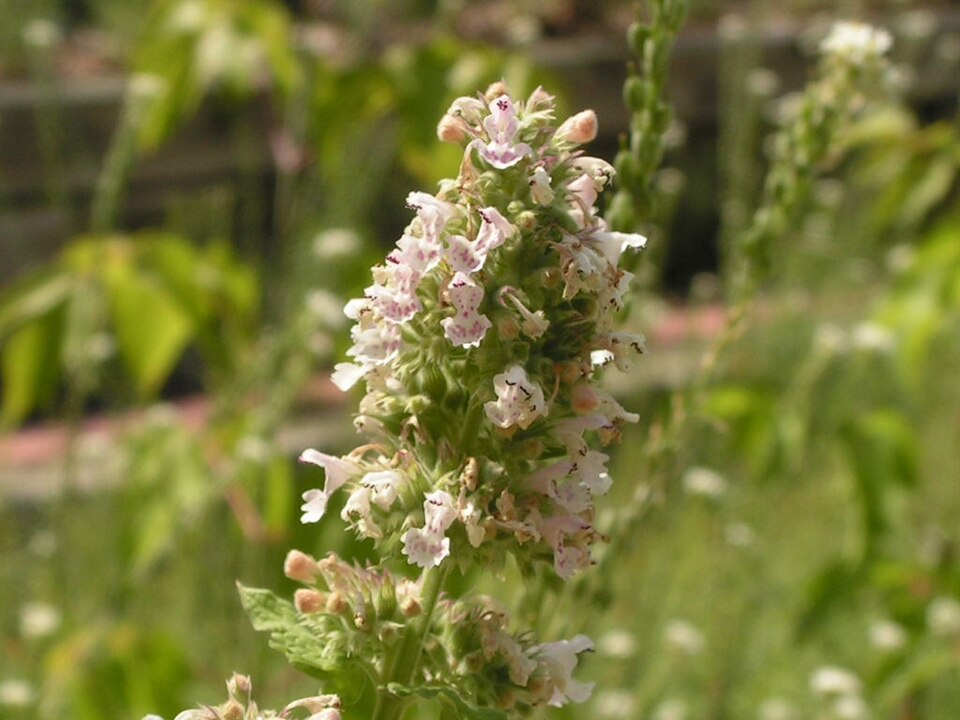


Photo: Wikimedia Commons
Catnip is the rare herb grown as much for the household pets as for the people — though its minty, lemon-scented leaves also make a calming tea humans have drunk for centuries. It is a tough, drought-tolerant mint relative that practically grows itself, which is both the good news and the warning: left alone, it seeds everywhere. Learning how to grow catnip means learning to contain it, protect it from enthusiastic cats while young, and harvest at the right moment for maximum potency. The USDA PLANTS entry for Nepeta cataria confirms its easy perennial nature. This guide covers planting, the great cat problem, harvesting for tea and toys, and keeping it from taking over. For a quick botanical overview, see the USDA PLANTS entry for Nepeta cataria.
Choosing a Variety
True catnip is Nepeta cataria, and that is what drives cats wild — do not confuse it with ornamental catmints (Nepeta faassenii types), which look similar but lack the potent oils. Within catnip, potency varies plant to plant; seed-grown patches will show variation, which is why experienced growers bruise a leaf and test it on their cat before propagating a favorite. Lemon catnip, a scented variant, has a citrus note some cats prefer. Buy plants from a herb nursery or sow seed yourself; the Old Farmer’s Almanac guide to catnip notes that fresh seed germinates best. One or two plants supply a household’s cats and tea drinkers with room to spare — this is not a plant to grow by the dozen.
When and How to Plant
Timing your sowing
Start catnip indoors about 6 weeks before your last spring frost. Use small pots or cell packs and keep them warm and bright; catnip resent having their roots disturbed, so pot up promptly if seedlings outgrow their cells. Move them into the garden about a week after your last spring frost, when nights have steadied. Seeds are tiny, so cover them only about 0.25 inch deep and keep the mix evenly moist until they sprout.
Spacing, depth, and days to harvest
From sowing to harvest takes roughly 80 to 100 days, so you can count forward from your planting date and know about when to start watching.
Harden off indoor-started seedlings over seven to ten days, lengthening their outdoor time gradually. Plants moved straight from windowsill to garden stall out, while hardened ones take off running.
Frost-date charts from a ZIP-code planting calendar help if you are new to reading your zone.
Soil and Sun
Light needs
Choose the sunniest spot you have. Full sun, six-plus hours, is what makes this plant productive.
Building good soil
Plant in well-drained, average soil. If your ground is heavy clay, plant a little high and mulch well; if it is sand, compost is your best friend.
It is rated for zones 3 to 9. Outside that range, treat it as an annual or grow it in containers you can move with the seasons.
A two-inch mulch of straw or shredded bark does triple duty: it conserves water, suppresses weeds, and moderates soil temperature. Keep mulch a finger’s width from stems to prevent rot.
Soil testing labs listed through the University of Minnesota Extension can confirm your pH before you plant.
Watering and Feeding
Watering routine
Go easy with the hose. This plant tolerates drought far better than wet feet, so water only when the soil is truly dry.
Feeding
Catnip needs almost no feeding; fertile soil dilutes the aromatic oils that cats — and tea drinkers — want. Feed lightly. A side-dress of compost mid-season is plenty for most soils; heavy chemical feeding pushes soft, pest-prone growth.
Morning watering is the rule: leaves dry fast in rising sun, denying fungal diseases the damp nights they love. Drip irrigation or a soaker hose waters roots without wetting leaves at all.
Irrigation basics from Clemson’s Home & Garden Information Center apply to all of these schedules.
Care Through the Season
Through the season, water until established, then largely ignore it — overwatering weakens the aromatic oils and invites root rot. The main pest is cats: neighborhood cats will roll on young plants and crush them flat, so protect new plantings with a wire cage or an upturned basket until the stems are woody and tough. Shear plants back by half after flowering to prevent rampant self-sowing and to force a fresh flush of potent leaves. Like all mints, catnip spreads by runners and seed, so a large pot or a contained bed is the wise choice. Clemson’s Home & Garden Information Center covers mint-family containment strategies that apply directly. Few insect or disease problems trouble it otherwise.
Companions and Placement
The classic herb-garden neighbors — Mint, Lemon Balm, and Chamomile — grow well alongside catnip, sharing sun and soil preferences. Plant tall herbs to the north so they never shade low ones, and group the thirsty ones together so watering is simple. Let a few plants flower for the bees; herb blossoms are among the best pollinator plants there is. Harvest often and boldly — herbs respond to cutting with bushier growth. Replace tired plants without sentiment; the garden is a kitchen, not a museum.
Harvest
Harvest leafy stems just before the flowers open, when the oils are strongest — the Missouri Botanical Garden plant finder confirms this pre-bloom peak. Cut stems in the morning after dew dries, tie in small bundles, and dry quickly in a dark, airy spot; light destroys the volatile oils. Once crackly, strip the leaves into sealed jars kept away from light. For cat toys, the dried leaf is ready as-is; for tea, steep a teaspoon per cup. Bruise a fresh leaf and offer it to your cat to test potency, since individual plants vary wildly in the compound cats love — about two-thirds of cats respond, and kittens under six months usually do not.
Troubleshooting
Seedlings that vanish overnight were likely loved to death by cats; cage every new planting without exception. Leggy, weak growth means too much water or too much shade — move to full sun and let the soil dry between waterings. If the patch spreads beyond its bounds, dig out the runners and deadhead religiously before seed sets; the USDA National Agricultural Library‘s resources document its enthusiastic self-sowing. Plants that die out after a few years in hot climates are simply living fast — in zones 10 and warmer, treat catnip as an annual and replant. Yellowing lower leaves on old plants usually just means it is time to divide and replant the vigorous outer pieces.
Through the Seasons
Spring
In spring, clean up winter damage, divide overgrown clumps, and refresh the mulch. New herb plants go in after frost danger passes. Take stock of what survived winter and replace losses early, while nurseries are fully stocked. A spring shearing of evergreen herbs encourages bushy new growth.
Summer
Through summer, harvest boldly and water as needed. Catnip is at its most potent now; cut in the morning after dew dries for the strongest oils. Keep aggressive spreaders in bounds with the shears, and deadhead before seed sets unless you want volunteers everywhere. A mid-summer cutback rejuvenates tired plants.
Fall and Winter
As cold approaches, harvest what you need, mulch the crowns of tender herbs, and move pots to shelter. Winter is for planning: sketch next year’s herb bed and order seed while selection is best. Stored dry and dark, this season’s harvest flavors the kitchen until spring.
Quick Answers
How long until I can harvest catnip?
About 80 to 100 days from sowing to harvest under good conditions — count forward from your planting date to know when to start watching.
Where will catnip grow?
Zones 3 through 9. Inside that range it is hardy and reliable; outside it, grow as an annual or in containers.
Does catnip need full sun?
Full sun. Give it the sunniest spot you have; shade-grown plants disappoint.
What spacing does catnip need?
About 18 inches apart. Crowding stunts plants and invites disease, so give each one its room — the harvest is bigger, not smaller, for the space.
Using the Harvest
For cats, the dried leaf is the product: crumble it into toys, scratchers, and paper bags, and watch the household entertainment sort itself out. About two-thirds of cats respond, and the effect is harmless and short-lived. For people, catnip tea — a teaspoon of dried leaf per cup, steeped covered — is a traditional calming evening drink with a minty, lemony flavor. Dried leaf in small sachets freshens drawers and closets. Store everything in sealed jars away from light; the volatile oils fade fast in open air. And keep the good stash somewhere the cat cannot smell it, or there will be a break-in. Browse more plant profiles at Gardenia.net’s plant profiles for ideas.
Keep Growing
How to grow catnip is simple: contain it, cage it from cats until tough, shear after bloom, harvest before flowers. Do that and you will have dried leaf for toys and tea for years from a couple of plants. For sowing dates, check your USDA zone planting dates and grow it alongside its mint-family cousins — our guides to how to grow mint, how to grow lemon balm, and how to grow chamomile share the same easy-care corner of the herb garden.
References
- Old Farmer’s Almanac. (n.d.). Growing catnip in home gardens. https://www.almanac.com/
- U.S. Department of Agriculture. (n.d.). Catnip (Nepeta cataria) plant profile. https://plants.usda.gov/home
- Clemson University Cooperative Extension. (n.d.). Home & Garden Information Center. https://hgic.clemson.edu/
- Gardenia.net. (n.d.). Catnip plant profile. https://www.gardenia.net/
Was this guide helpful?

About My Garden US
The My Garden US editorial team writes practical, in-depth home and garden guides for American homeowners — tested advice, no fluff.
You May Also Like

Peat Pots Seedlings USA Online Deals: A Plain Guide for Home Gardeners
August 23, 2026 0 views
Organic Herb Seeds Where to Buy USA: A Plain Guide for the Home Gardener
August 19, 2026 0 views
Snake Plants Indoor Texas Homes USA: A Plain Guide to Growing a Tough Houseplant
May 8, 2026 0 views