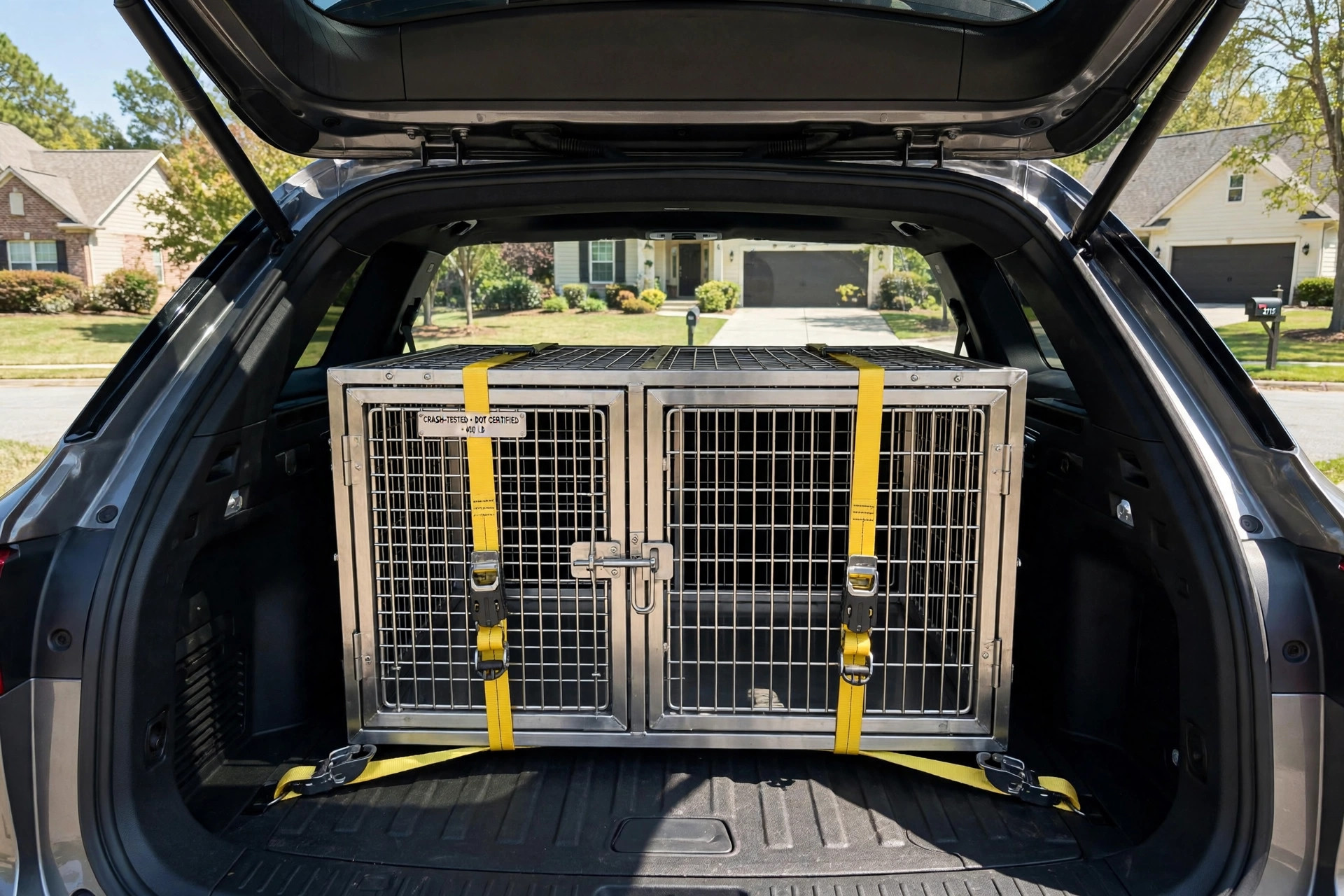

A dog is a member of the family. When the family drives, the dog rides too. Many owners let a dog roam free in the back seat. Some hold a puppy on a lap. This is risky. In a sudden stop, a loose dog becomes a danger to itself and to everyone in the car. That is why the best dog crate for car travel crash tested matters so much. A crate built and tested to survive a crash can protect a dog when things go wrong on the road.
This guide explains what crash testing means for dog crates. It shows what to look for when you shop. It covers the main types, the price range, and how to care for a crate. It also answers common questions. The goal is simple: help you pick a crate that truly keeps your dog safe.
Why Crash-Tested Crates Matter
A car crash does not take long. A crash at only thirty miles per hour can throw a loose dog with great force. A small dog can strike the dashboard or a seat. A large dog can hit the driver and cause the driver to lose control. The results can be sad and costly.
A normal crate may hold a dog at home. But a car crash is different. The force of impact can bend thin wire bars. Plastic latches can snap. A door can swing open. Then the dog is loose at the worst time. A crate that is crash tested is built to stand up to these forces. Engineers test it in a lab. They run simulated crashes. They check if the crate holds its shape. They check if the door stays shut.
Groups like the Center for Pet Safety run independent tests on pet travel products. Their work has shown that many products sold as safe fail under test. That is why a tested crate is worth its price. It gives you real proof, not just a promise on a box.
The law also matters. Some states have rules about loose animals in cars. A loose pet can bring a ticket for distracted driving. Safety groups such as the ASPCA and the Humane Society remind owners that a restrained dog is a safer dog. The AKC offers tips on safe car travel with dogs too. A crash-tested crate is the most solid choice among them.
What to Look For: How to Choose: Best Dog Crate for Car Travel Crash Tested
Shopping for the best dog crate for car travel crash tested starts with a few clear points. Keep these in mind before you buy.
Crash Test Results
First, look for real test results. A good maker will say which lab did the test. They will say what speed was used. Thirty miles per hour is a common test speed. Some test at fifty. The Center for Pet Safety certification is a strong sign. The Consumer Product Safety Commission also posts recalls and safety notes on pet products. Check these sources before you trust a claim.
Strong Build and Materials
A crash-tested crate uses strong material. Steel or aluminum frames are common. The walls must be rigid, not flimsy. Doors should lock with more than one latch. Hinges should be solid metal. Plastic can work if it is thick and reinforced. Thin wire crates made for home use are not enough for a car crash.
Correct Size
Size matters a lot. A crate must be big enough for the dog to stand, turn, and lie down. But it must not be too big. In a crash, a dog in an oversized crate can be thrown across the space inside. Measure your dog from nose to tail and from floor to head. Add a few inches. Then match the crate size to those numbers. Vets writing for PetMD often stress that proper fit is as important as strong walls.
Secure Fit in the Vehicle
A crate must stay in place in your car. Look for tie-down points or straps. The crate should be fixed to the car, not sliding loose on the seat. A crate that slides in a turn is a hazard. Measure your car trunk or back seat before you shop. Make sure the crate you pick fits flat and can be strapped down.
Ventilation and Comfort
A dog may spend hours in the crate. Good airflow keeps the dog cool. Bars or vents on several sides help. The floor should not be hard and bare. A thin pad or mat adds comfort. Some owners add a raised outdoor dog bed cot for camping style pad for long trips. Just make sure any padding does not block the vents.
Types of Crash-Tested Dog Crates
Several types of crates are sold for car travel. Each has strengths and limits.
Steel Tube Crates
Steel tube crates use thick steel bars. They are very strong. They hold up well in crash tests. They are heavy and cost more. They suit large dogs and long trips. Many are rated for the cargo area of SUVs and wagons.
Aluminum Crates
Aluminum crates are strong but lighter than steel. They resist rust. They are a good pick for owners who move the crate in and out of the car often. They also do well in crash tests. They can cost more than plastic or wire types.
Reinforced Plastic Crates
Reinforced plastic crates are molded from thick plastic. They are lighter and easy to clean. Some models pass crash tests at lower speeds. They suit small and medium dogs. They are not as strong as steel. But a tested model is far better than a thin store crate.
Soft-Sided Crates
Soft-sided crates use fabric over a light frame. They are light and easy to store. They fold flat. But they do not pass real crash tests. They are fine for calm dogs at home or in a hotel. They are not the best dog crate for car travel crash tested. Do not trust them to protect a dog in a crash.
Wire Crates
Standard wire crates are made for home use. They fold for storage. They are cheap. But thin wire bends in a crash. Some heavy-duty wire models claim to be crash tested. Check the test results with care. The Center for Pet Safety has found that many wire crates fail.
Cost and Price
Crash-tested crates cost more than basic crates. That is normal. The extra cost pays for stronger material and real testing.
– Small crates for dogs under twenty pounds: about forty to one hundred dollars. – Medium crates for dogs up to fifty pounds: about one hundred to two hundred fifty dollars. – Large crates for big dogs: about two hundred fifty to five hundred dollars. – Extra-large steel or aluminum crates: five hundred dollars and up.
Prices move with sales and brands. Big stores like Chewy and The Spruce Pets list many models with prices and reviews. Reading buyer reviews can help. But reviews are not a test. Look for test data, not just stars.
Think of cost per year. A good crate can last ten years or more. Spread over that time, even a five hundred dollar crate costs little per trip. A vet bill after a crash costs far more.
Care and Upkeep
A crash-tested crate needs care to stay safe. A bent bar or loose latch can fail when you need it most.
– Check latches and hinges before every trip. They should click shut with no play. – Look at the frame for bends or cracks. A bent frame is weaker. – Clean the crate after trips. Wipe plastic floors. Hose off mud. Let it dry. – Check straps and tie-downs. Worn straps should be replaced. – Keep the crate out of hot sun when not in use. Heat can weaken some plastics. – Store it dry to stop rust on steel parts.
If your car is in a crash with the crate inside, check the crate with care. Even if it looks fine, the frame may have hidden stress. Ask the maker if it should be replaced. Safety groups like the Humane Society note that any restraint device in a crash may need replacement.
Pair the crate with other safe travel habits. A dog that rides in a crate still needs water breaks on long drives. Park in shade. Never leave a dog alone in a hot car. The ASPCA warns that heat in a parked car can kill a dog in minutes.
Safety Tips for the Road
A crate is only part of the plan. How you use it matters too.
– Put the crate in the back seat or cargo area. Never put it near an airbag. – Strap the crate down so it cannot slide. – Let the dog get used to the crate at home first. Feed meals in it. Make it a happy place. – Stop every two to three hours on long trips. Let the dog stretch and drink. – Keep a leash handy for rest stops. – Bring water, a bowl, and waste bags. – If the dog gets carsick, ask your vet for advice before the trip. PetMD has guides on car sickness in dogs. – In hot weather, run the air conditioner and check the dog often.
Road safety data from the National Highway Traffic Safety Administration shows how fast things can go wrong in a crash. A restrained dog is one less risk. Some owners also use a freestanding pet fence for the living room at home and a muzzle for vet visits. A muzzle for vet visits and grooming is a separate tool for a separate need. For the car, the crate is the main line of defense.
FAQ
How do I know a crate is really crash tested?
Look for the test lab name and the test speed in the product details. The maker should name the lab. Independent groups like the Center for Pet Safety certify products that pass. If a box says “crash tested” but gives no details, be wary. Ask the maker for the test report.
Can I use my home crate in the car?
A home wire crate is not made for crashes. It may be fine for a calm ride to the vet if the dog is small and the drive is short. But it will not protect the dog in a crash. For regular car travel, buy a crate built and tested for the car.
What size crate does my dog need?
Measure the dog. The crate should let the dog stand up, turn around, and lie down with ease. It should not be so big that the dog slides around. Most makers print size charts. Match your dog’s weight and length to the chart.
Are crash-tested crates worth the price?
Yes, for most owners. They cost more than basic crates. But they are built to survive forces that break cheap crates. One avoided injury can save far more than the crate cost. Reviews on sites like Chewy and guides on The Spruce Pets can help you compare models.
Where should the crate go in the car?
The back seat or the cargo area is best. Strap it down. Keep it away from airbags. A crate on the front seat is unsafe. In an SUV, the cargo area with tie-down straps is a common choice.
How can I help my dog like the crate?
Start at home. Put treats and meals in the crate. Leave the door open at first. Let the dog walk in and out. Praise calm behavior. Take short car rides before long ones. Most dogs learn to settle in the crate within a week or two.
A Short Final Word
The best dog crate for car travel crash tested is not a luxury. It is a safety tool. It holds your dog in place when the road turns rough. It protects the people in the car too. Choose a crate with real test results. Fit it to your dog and your car. Strap it down. Keep it in good shape. Then drive with peace of mind, knowing your dog rides as safe as you do.
Related guides on this site include best outdoor dog kennel for large breeds usa, heated dog house for winter cold climates, and best cat tree for large cats sturdy tall.
References
American Kennel Club. (n.d.). Dog care and training resources. https://www.akc.org ASPCA. (n.d.). Pet care and animal welfare resources. https://www.aspca.org Center for Pet Safety. (n.d.). Pet travel safety research and certification. https://www.centerforpetsafety.org Chewy. (n.d.). Pet supplies. https://www.chewy.com National Highway Traffic Safety Administration. (n.d.). Road safety data and guidance. https://www.nhtsa.gov PetMD. (n.d.). Pet health information. https://www.petmd.com The Humane Society of the United States. (n.d.). Animal protection and care. https://www.humanesociety.org The Spruce Pets. (n.d.). Pet care guides and product reviews. https://www.thesprucepets.com U.S. Consumer Product Safety Commission. (n.d.). Product safety information. https://www.cpsc.gov
Was this guide helpful?

About Sarah Mitchell
The My Garden US editorial team writes practical, in-depth home and garden guides for American homeowners — tested advice, no fluff.
You May Also Like

The Best Pet Fence Wireless for Stubborn Dogs: A Plain Guide
July 17, 2026 0 views
Dog Fence Panels for Temporary Yard Enclosure
February 6, 2026 0 views
The Best Pet Water Fountain for Dogs: Large Capacity Models That Keep Water Fresh
April 27, 2026 0 views