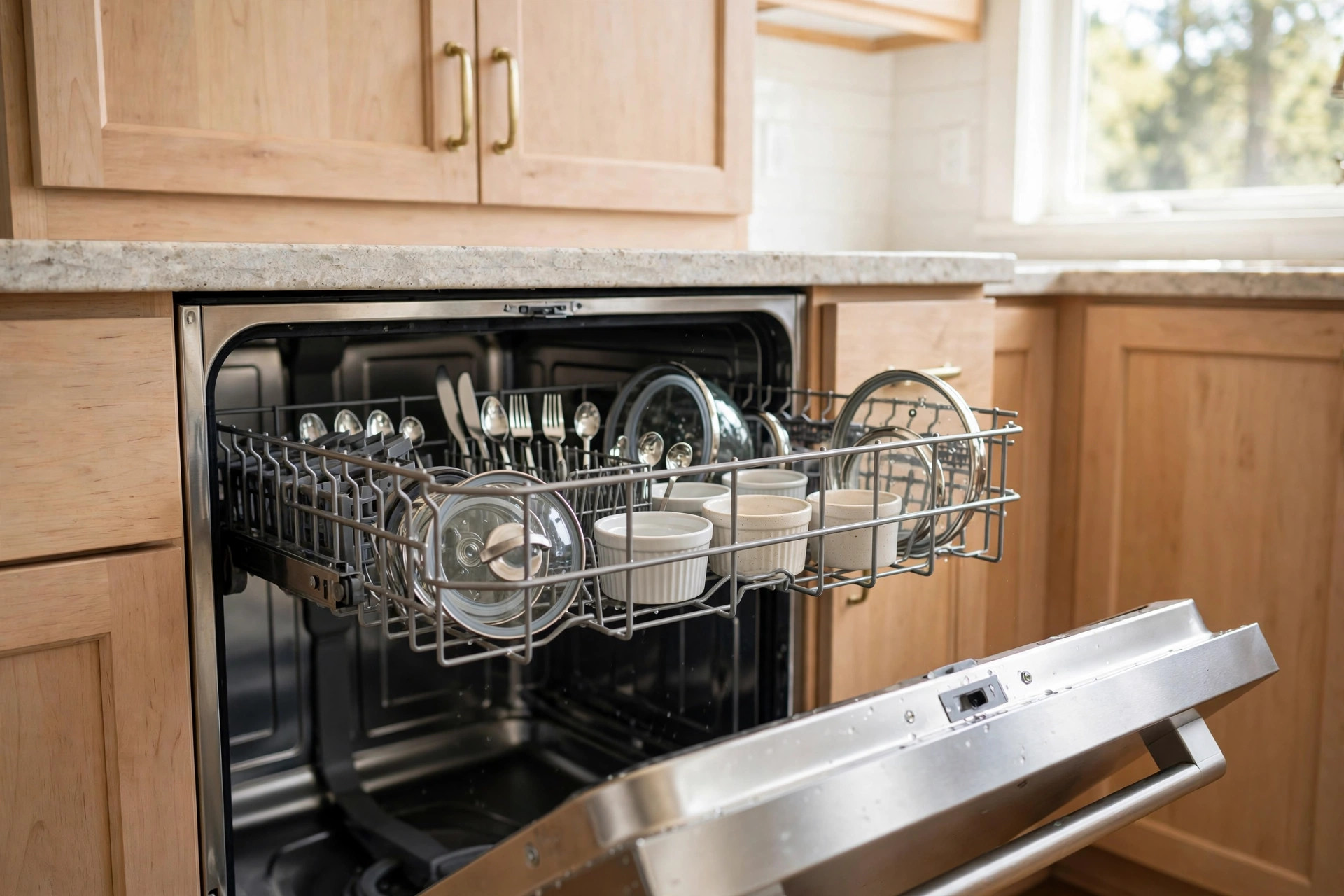

A dishwasher third rack is a shallow top tray that slides above the upper rack. Small bowls, lids, and long utensils rest flat on it. The rack frees space on the lower shelves. For many California homes, where water is precious and kitchen space is tight, this small feature earns its keep.
The dishwashers our parents bought had two racks. That was enough for a family that washed pots by hand. Today the habits have changed. Travel mugs, baby bottle parts, and sharp kitchen tools crowd the counter. A third rack takes these odd pieces. It puts them in the wash instead of on the drying mat.
This guide explains the dishwasher third rack for California homes in plain terms. It covers why the rack matters, how to choose one, the common types, the cost, care, and safety. It ends with answers to questions buyers ask most often.
Why It Matters
More Room in Every Load
A standard dishwasher holds plates, bowls, and cups in two racks. A third rack adds a thin third layer at the very top. Flat items lie there in a single row. Long spatulas, serving spoons, and chef knives fit without taking a full slot.
For a family of four, that can mean the difference between one load and two. Fewer loads mean less water and less energy. In California, where drought years return again and again, every gallon counts.
Better Cleaning for Small Items
Utensil baskets crowd small pieces together. Water cannot reach every side. On a third rack, each piece lies flat and apart. The spray arms hit them from above and below. Lids come out clean. Travel mug caps stop hiding grit in their rims.
Safer Handling of Sharp Tools
Knives sit handle-down in a basket, point down but loose. They can shift during the wash. On a third rack with knife slots, blades lie flat and stay put. You lift them out with care, one at a time. There is less risk of a cut when you unload.
What to Look for When You Shop: Dishwasher Third Rack California Homes Usa
Rack Depth and Shape
Third racks vary in depth. Some are only two inches deep. Others give three or four inches. A deeper rack takes small bowls and low cups. A shallow one suits utensils only. Check the listed depth before you buy. Measure the tallest items you plan to load.
Adjustable Height
The best third racks move up or down a few inches. You gain room for tall glasses on the upper rack when you need it. When you do not, you drop the tray back down for a full flat layer. This adjustability adds real value in a small California kitchen.
Tines and Slots
Look at how the rack holds items. Rows of slots keep knives and spatulas apart. Small tines stop lids from sliding. Some racks fold sections flat to fit odd shapes. A tray with no guides lets items drift and nest together, which spoils the cleaning.
Material and Finish
Most third racks use coated steel or strong plastic. Nylon coating resists rust in hard water. Plain wire rusts faster. In coastal California homes, where salt air reaches the kitchen, coating matters more. Ask the dealer what the rack is made of.
Spray Coverage
A third rack needs its own water. Look for a dedicated spray arm or jet array at the top of the tub. Without it, items on the tray only get splash from the middle arm. Bosch dishwashers made this feature well known, and most brands now include some form of top spray. Confirm the model you choose has it.
Noise Level
Dishwashers with third racks often run quiet. The tray adds insulation at the top of the tub. Many models hum at 42 to 48 decibels. That matters in an open-plan California home where the kitchen joins the living room. If the store shows a decibel rating, lower is better.
Energy and Water Use
An Energy Star label tells you the unit meets federal limits for water and power. New dishwashers use about three to four gallons per load. That is far less than hand washing a full sink. In a state that guards water, the label is worth checking. It can also help at resale time.
Types and Options
Standard Third Rack
This is the most common design. A flat sliding tray spans the full width of the tub. Slots run front to back. You lay utensils in the slots and small lids between them. It suits most families. It is the tray found on many mid-priced units sold through Home Depot.
Knife Tray Version
Some brands sell a dedicated knife tray. It is deeper than a standard rack and has padded slots. Chef knives, paring knives, and steak knives lie in their own channels. This type costs more. It suits home cooks who keep sharp steel in the kitchen.
Deep Third Rack
A few models give up some upper-rack space for a deeper third tray. Small bowls, low cups, and baby bottle rings fit on it. This design is clever for homes with young children. Read the manual before you load plastic on the top tray, since some plastics must stay on the upper rack only.
Adjustable Split Tray
Split trays divide into two halves. Each half slides out or folds down on its own. You can load one side while the other stays folded for tall glasses. This flexibility helps when loads mix tall items with small ones. Repair guides at This Old House note that split designs add moving parts, so keep the tracks clean.
Bottle Wash Systems
Some washers add special clips or jets for bottles on the third rack. A jet fires up into the bottle mouth. Baby bottles and sport bottles wash from the inside. California parents with infants value this option. Check that replacement clips are easy to buy.
Cost and Price
A dishwasher with a third rack costs more than a plain two-rack model. The gap is not huge. Entry models with the tray start near 500 dollars at large stores. Mid-range units run from 700 to 1,100 dollars. Premium lines reach 1,500 dollars or more.
The rack itself is part of the machine. You cannot easily add one to an old washer. A few brands sell the tray as a part for specific models, but the tub must have rails and a spray arm. Fitting a tray to a machine not built for it rarely works.
Installation costs follow the usual rules. A like-for-like swap costs little if the hookups stay. New cabinets or new wiring raise the price. California labor rates run higher than the national average, so get two quotes. Check reviews on Consumer Reports before you sign a contract.
Consider the savings over time. Fewer loads cut water and power bills. In a high-rate utility district, that adds up over ten years. The rack will not pay for the machine alone, but it trims the running cost of every load. Our dishwasher third rack buying guide lists current price bands for each tier.
Care and Upkeep
Daily Habits
Scrape plates before you load. The third rack cleans well, but it is not a food grinder. Place sharp items blade-down or flat, never loose. Leave a small gap between pieces so water flows around each one. Use a powder or pod made for automatic dishwashers.
Monthly Cleaning
Once a month, lift the tray out and rinse it in the sink. Wipe the rails with a damp cloth. Old food in the tracks makes the rack stick. Check the spray arm above the tray for clogged holes. A toothpick clears them gently. Guides at The Spruce show this five-minute routine in detail.
Filter Care
Modern dishwashers have a removable filter at the tub floor. Take it out every few weeks and rinse it under hot water. A clogged filter cuts water pressure. The third rack sits farthest from the pump, so it suffers first when flow drops.
Hard Water in California
Much of California has hard water. White film builds on racks and glasses. Run a dishwasher cleaner through an empty cycle each month. If the film persists, a water softener may be worth the cost. GE Appliances notes in its manuals that hard water shortens the life of coated racks, so this care is not optional in hard-water towns.
Repairs
Third rack parts wear like any other. Rollers crack. Coating chips. Tines bend. Most brands sell the tray and its hardware as spare parts for five to ten years. Save your model number. A service manual from Whirlpool or your brand will list part numbers. Bob Vila repair articles walk through common fixes.
Safety
Sharp Items
Knives belong flat on the tray with blades facing down or toward the back. Never stand them point-up on the rack. When you unload, take knives out first. Keep children away from the open door during unloading.
Water Temperature
Dishwashers heat water to 120 degrees or more. The sanitizing rinse reaches 155 degrees on some models. Let the steam clear before you reach for the tray. Burn risk is real in the first minute after the cycle ends.
Detergent
Automatic dishwasher detergent is caustic. Store it high and locked away from children. Pods look like candy to small hands. California poison control centers report calls about pods each year. A simple cabinet lock costs a few dollars and removes the risk.
Heavy Door
An open dishwasher door with a loaded third rack is top-heavy. Do not let children sit or stand on the door. Anchor the unit to the cabinet as the manual shows. This step matters in earthquake country. A loose unit can tip in a tremor.
Electrical and Plumbing
Turn off the breaker before you touch wires or the inlet valve. A leak under the sink can reach the motor. Check the supply line when you clean the filter. If you smell burning plastic, stop the machine and call service.
Frequently Asked Questions
Will a third rack fit my existing kitchen?
It fits a standard 24-inch opening like any full-size dishwasher. The question is height. Older California homes sometimes have low counters. Measure from floor to counter underside before you order. Most machines need 34 inches. A few compact models fit shorter spaces.
Does the third rack replace the utensil basket?
Not always. Many users keep both. The basket handles spoons and forks by the dozen. The tray takes long and sharp tools. Removing the basket gives the lower rack more room for pots. Try both layouts and see which suits your cooking.
Can plastic go on the third rack?
Only if the maker says so. The top tray sits near the heating element on some models. Plastics marked top-rack safe usually pass. Thin disposable plastic may warp. When in doubt, hand wash the piece.
Is a third rack worth the extra cost?
For most households, yes. The price gap over a plain model is modest. You gain room, safer knife storage, and cleaner small items. Over a ten-year life, the convenience adds up. Shoppers upgrading the whole kitchen often pair it with stainless range hoods for a full refresh.
Does the tray work with hard well water?
Yes, with care. Hard water leaves film on any rack. Monthly cleaner cycles and filter rinses keep it under control. Coated steel racks resist rust better than plain wire. Ask your dealer about coating quality if your water tests hard.
Can I add a third rack to my old dishwasher?
Almost never. The tub needs rails, a spray arm, and the right height. These are built in at the factory. Buying a new machine is the only sure path. Match the finish to your other cabinets, and see our note on shaker cabinet doors for California homes if you are remodeling the whole kitchen.
A Final Word
The dishwasher third rack is a small change with a large daily effect. It takes the clutter from the counter and the basket and gives it a proper place. In California homes, where water is dear and kitchens work hard, that matters.
Shop with the checklist above. Measure your space. Read the manual. Keep the tray and filter clean. Done well, the third rack will serve your family quietly for a decade or more.
References
Bob Vila. (n.d.). Home improvement advice. https://www.bobvila.com Bosch. (n.d.). Home appliances. https://www.bosch-home.com Consumer Reports. (n.d.). Product reviews and ratings. https://www.consumerreports.org ENERGY STAR. (n.d.). Energy efficient products. https://www.energystar.gov GE Appliances. (n.d.). Kitchen and home appliances. https://www.geappliances.com The Home Depot. (n.d.). Home improvement products. https://www.homedepot.com The Spruce. (n.d.). Home and garden advice. https://www.thespruce.com This Old House. (n.d.). Home renovation guidance. https://www.thisoldhouse.com Whirlpool. (n.d.). Home appliances. https://www.whirlpool.com
Was this guide helpful?

About David Wilson
The My Garden US editorial team writes practical, in-depth home and garden guides for American homeowners — tested advice, no fluff.
You May Also Like

Kitchen Island Hanging Lights American Homes Guide: Styles, Sizing, and Installation
August 6, 2026 0 views
A Guide to Shaker Cabinet Doors for Sale in the USA
July 9, 2026 0 views
Under Counter Wine Fridges Deals Near Me: A Buyer’s Guide
September 1, 2026 0 views