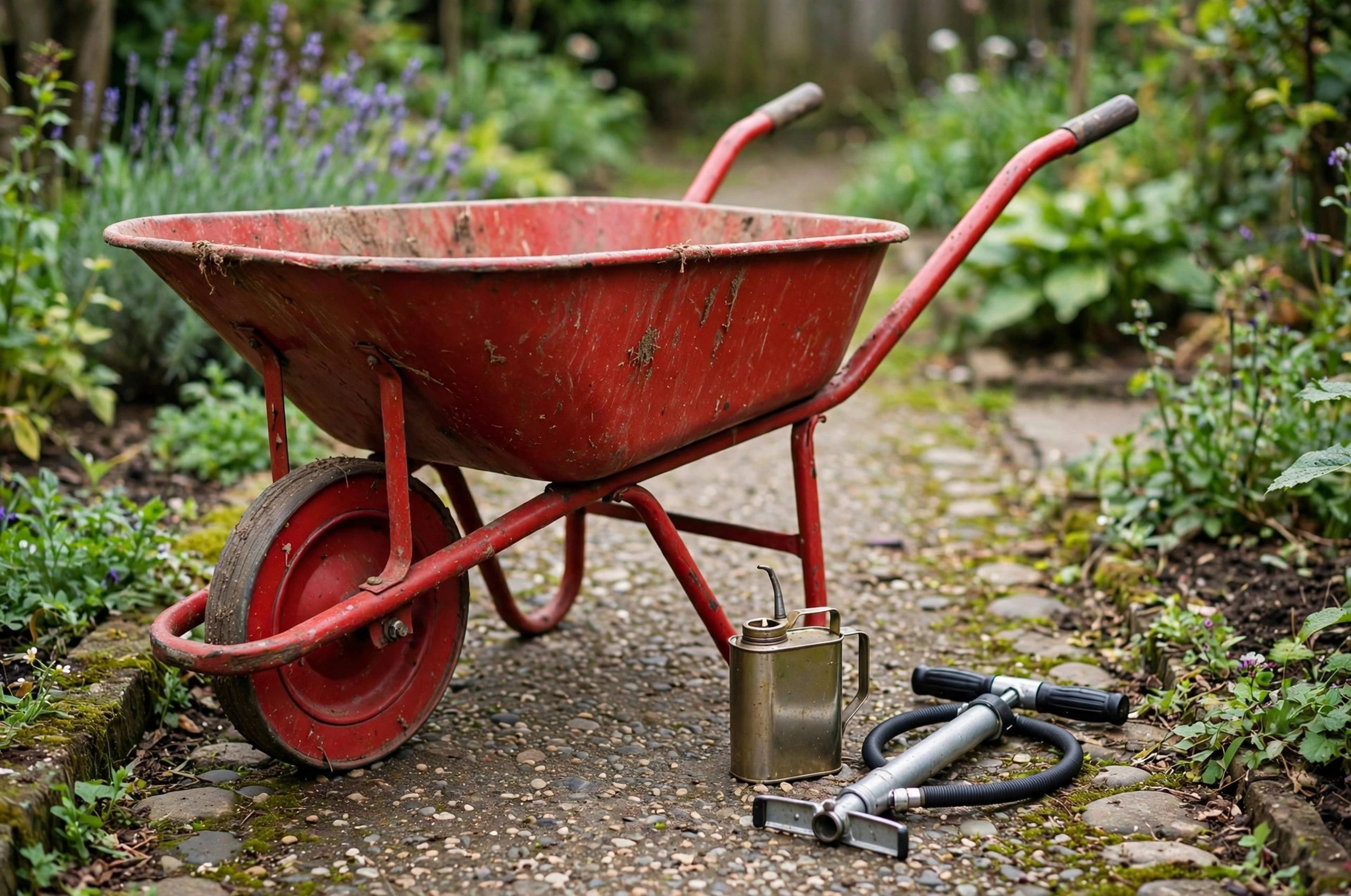
The wheelbarrow is the hardest-working tool in most gardens. It hauls soil, mulch, compost, gravel, and plants, season after season, asking nothing in return. And like every hard worker, it wears down. Tires go flat. Axles squeak. Trays rust through. Handles loosen and wobble. This article explains maintain a garden wheelbarrow in simple terms.
Table of Contents
Table of Contents
A wheelbarrow that gets basic maintenance lasts decades. One that gets ignored lasts a few rough years. The maintenance is simple: clean it, keep the tire right, oil the moving parts, fight rust, and store it sensibly. This guide covers each job in order, so your barrow stays rolling smooth for a long, long time.
Maintain a Garden Wheelbarrow: After Every Use: The Two-Minute Cleanup
When it comes to maintain a garden wheelbarrow, getting the details right makes all the difference.
Many homeowners find that maintain a garden wheelbarrow is easier than they expected once they know the basics.
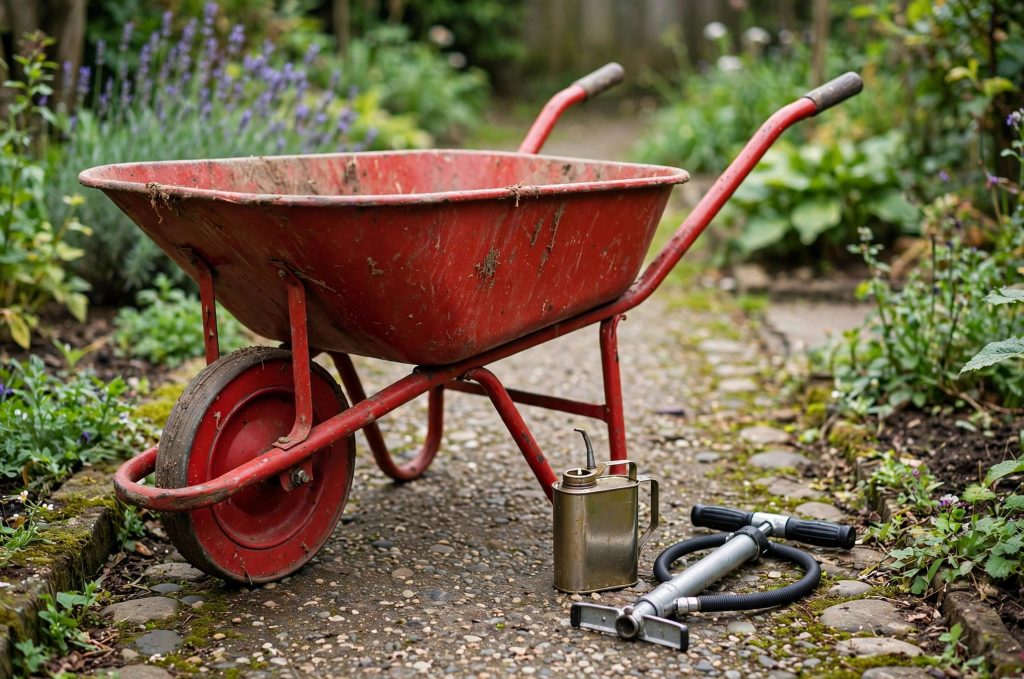
The habit that matters most takes two minutes. When you finish with the wheelbarrow, rinse out the tray. Soil, compost, and especially fertilizer left sitting in the tray hold moisture against the metal and start rust. Concrete mix is worse: it sets hard and eats the finish.
Tip the barrow and hose it out, or wipe it with a damp rag if you are away from the hose. Knock the mud off the wheel and the legs. Then let it dry before storing. A wheelbarrow put away wet is a wheelbarrow rusting.
This sounds obvious, but it is the step almost everyone skips. The maintenance tips at Garden Letter put cleaning first for a reason: every other maintenance job works better on a clean barrow, and most rust starts under a layer of old dirt.
Tire Care: Pressure, Punctures, and Replacements
Many homeowners find that maintain a garden wheelbarrow is easier than they expected once they know the basics.
The key to maintain a garden wheelbarrow is choosing the right approach for your space and budget.
The tire does all the carrying work, and it is the part that fails most often. Most garden wheelbarrows use a pneumatic tire, the air-filled kind. A few use solid rubber or foam-filled tires that never go flat.
Check the pressure regularly. An under-inflated tire makes the barrow hard to push and lets the rim pinch the tube against rocks, which causes flats. Check with a pressure gauge and inflate to the number printed on the tire sidewall. Most wheelbarrow tires run at modest pressure, so a bicycle pump is plenty. The wheel maintenance guide at Will Machinery stresses that under-inflation wears tires out faster and makes every load feel heavier.
Fix flats promptly. A flat tire left sitting ruins the tube and can damage the rim. Patch small punctures with a bicycle tube patch kit, or replace the tube. Tubes are cheap and the swap takes twenty minutes with basic tools. Keep a spare tube in the shed if flats are common in your yard.
Consider going flat-free. If you are tired of flats, solid or foam-filled replacement wheels fit most standard wheelbarrows. They ride a bit rougher and cost more up front, but they never puncture. For gardeners who haul over thorny brush or construction debris, flat-free is worth it.
Inspect the tread and sidewalls. Cracks, dry rot, and worn tread mean the tire is done. Replace the whole wheel assembly if the rim is bent or rusted through. Replacement wheels are sold by axle diameter and wheel size, so measure before ordering.
Lubricate the Axle and Bearings
The key to maintain a garden wheelbarrow is choosing the right approach for your space and budget.
With a little planning, maintain a garden wheelbarrow can fit even a busy schedule.
A squeaking wheel is asking for oil. The axle and its bearings carry the full load of every trip, and dry metal-on-metal wears fast.
Every few months, or whenever the wheel starts to complain, lubricate the axle. If your wheel has a grease fitting, use a grease gun and give it a few pumps of general-purpose grease. If there is no fitting, pull the wheel off the axle, wipe the axle clean, and coat it with grease or heavy oil before reassembling. The axle-greasing walkthrough at Shaker Design Project describes both methods and notes that a good greasing every couple of months keeps the wheel rolling free.
While the wheel is off, inspect the bearings. They should turn smoothly with no grinding or wobble. Sealed bearings that feel rough are done; replace them. Loose ball bearings can be cleaned and repacked with grease if the races are still smooth. The Cariola wheelbarrow maintenance sheet covers bearing inspection and notes that sealed precision bearings still deserve a check, since garden conditions are hard on them.
Wipe excess grease off the outside. Grease on the tire tread picks up dirt and makes a mess of paths.
Tighten Every Bolt
With a little planning, maintain a garden wheelbarrow can fit even a busy schedule.
Before you start, it helps to understand how maintain a garden wheelbarrow works in real homes.
A wheelbarrow is a collection of bolts holding a tray to a frame. Vibration and heavy loads loosen them over time. Once a season, go over the whole barrow with a wrench.
Check the bolts where the tray meets the frame, the leg braces, the axle brackets, and the handle mounts. Snug anything loose. Replace any bolt that is rusted solid or stripped. Missing a bolt lets parts flex, and flexing cracks metal and splits wood.
This is also the time to check the tray for cracks. Steel trays crack at stress points, usually near the mounting bolts. Small cracks can be stopped by drilling a tiny hole at the very end of the crack, which keeps it from spreading. Large cracks, or a tray rusted thin, mean it is time for a new tray or a new barrow.
Fight Rust on the Tray and Frame
Before you start, it helps to understand how maintain a garden wheelbarrow works in real homes.
A good plan for maintain a garden wheelbarrow saves time, money, and frustration.
The tray lives a wet life. Soil, compost, and fertilizer sit in it for hours. Rust is the constant enemy.
After cleaning, look for rust spots. Surface rust comes off with a wire brush or sandpaper. For heavier rust, a vinegar soak on a rag laid over the spot works, followed by scrubbing. Once the metal is clean and dry, touch up the paint. Any exterior metal paint works; the color does not matter much, though matching looks nicer. Paint is the tray's armor. Bare spots rust fast.
Pay special attention to the underside of the tray and the inside corners where water pools. These are the spots that rust through first because nobody looks at them. Flip the barrow over once a season and inspect the bottom.
The legs and frame rust too, especially where they meet the ground. Keep them painted and keep the barrow stored dry. The longevity guide at Flamesshine lists rust inspection alongside tire and axle care as the three pillars of wheelbarrow maintenance.
Care for the Handles
A good plan for maintain a garden wheelbarrow saves time, money, and frustration.
For most people, maintain a garden wheelbarrow comes down to a few smart choices.
Wooden handles dry out, crack, and splinter. Once a year, sand them smooth and rub in boiled linseed oil. The oil keeps the wood from drying and makes the handles comfortable to grip. Check where the handles bolt to the frame. Loose handles make the barrow wobble and are tiring to push.
Metal handles need less care but still deserve a look. Check for bends and cracks, especially at the bends where stress concentrates. Touch up paint chips before rust starts.
If a wooden handle cracks badly, replace it. Most wheelbarrow makers sell replacement handle sets, and the swap is straightforward: unbolt the old, bolt on the new. A barrow with fresh handles feels like a new tool.
Load It Right
For most people, maintain a garden wheelbarrow comes down to a few smart choices.
If you are new to maintain a garden wheelbarrow, start with the simplest option and build from there.
Maintenance is not just cleaning and oiling. How you load the barrow affects how long it lasts.
Respect the weight rating. Overloading strains the axle, bends the tray, and blows out tires. If the load is too heavy to lift comfortably, it is too heavy for the barrow. Make two trips.
Balance the load over the wheel, not at the back. Weight centered over the wheel is easy to push and steers well. Weight piled at the back tips the barrow toward you and wears you out.
Do not use the wheelbarrow as a mixing tub for concrete unless it is built for it. Concrete is heavy and caustic. If you must mix in the tray, rinse it out immediately and completely. Dried concrete is miserable to remove and its alkalinity attacks the paint.
Avoid dragging a loaded barrow sideways or dropping it off curbs. The legs and axle brackets take the hit, and bent brackets are a common reason barrows get retired early.
Store It Sensibly
If you are new to maintain a garden wheelbarrow, start with the simplest option and build from there.
When it comes to maintain a garden wheelbarrow, getting the details right makes all the difference.
Where the barrow sleeps decides how fast it ages. The best storage is under cover and dry. A shed or garage is ideal. If it must live outside, at least tip it or cover it so rain does not pool in the tray. Standing water in a steel tray is a rust guarantee.
Many gardeners store the wheelbarrow upside down or hung on a wall. Upside down keeps rain out of the tray. Hung on wall hooks keeps the tire off damp ground and frees floor space. Either beats leaving it right-side up in the weather.
For winter in cold climates, clean the barrow thoroughly, oil the axle, check the tire, and store it inside. Freezing and thawing is hard on tires and paint. The folding wheelbarrow care notes at Top5Best recommend the same dry indoor storage for any barrow that sits unused for months.
If you store tools on wall racks, the wheelbarrow can hang too. See our garden tool storage ideas for the shed for hanging setups that handle big tools.
The Seasonal Checklist
When it comes to maintain a garden wheelbarrow, getting the details right makes all the difference.
Run through this list twice a year, at the start and end of the heavy-use season:
- Rinse the tray clean and let it dry fully.
- Check tire pressure and inflate as needed.
- Inspect the tire for cracks, wear, and punctures.
- Grease or oil the axle and check the bearings.
- Tighten every bolt on the frame, legs, and handles.
- Wire-brush any rust spots and touch up the paint.
- Oil wooden handles with linseed oil.
- Check the tray for cracks and thin spots.
- Store dry, under cover, tray empty.
Thirty minutes, twice a year, plus the two-minute rinse after each use. That is the whole program. The Cherry Blossom wheelbarrow guide covers the same routine and adds the sensible advice to avoid overloading, which protects the frame as much as any wrench work.
For choosing a barrow worth maintaining, see our wheelbarrow for yard work reviews. And for the bigger picture of tool care, the wheelbarrow selection tips at Best Suppliers note that regular hardware checks prevent the small failures that sideline a barrow mid-season.
A well-kept wheelbarrow is a twenty-year tool. It asks so little: a rinse, a pump of air, a dab of grease, a dry place to sleep. Give it that, and it will haul everything your garden can grow. That is all it takes to handle maintain a garden wheelbarrow with confidence.
References
Many homeowners find that maintain a garden wheelbarrow is easier than they expected once they know the basics.
Best Suppliers. (n.d.). Top tips for selecting the best wheelbarrow. https://www.bestsuppliers.com/blog_detail/top-tips-for-selecting-the-best-wheelbarrow
Cariola Wheelbarrow. (n.d.). Maintenance. http://cariolawheelbarrow.com/PDF/Maintenance.pdf
Cherry Blossom Life. (n.d.). What is a garden wheelbarrow used for? https://cherryblossomlife.com/garden-tools/garden-wheelbarrow-used/
Flamesshine. (n.d.). How to ensure the longevity of your garden wheelbarrow. https://flamesshine.com/how-to-ensure-the-longevity-of-your-garden-wheelbarrow/
Garden Letter. (n.d.). Tips for maintaining a wheelbarrow. https://www.gardenletter.com/blog/tips-for-maintaining-a-wheelbarrow/
My Garden US. (n.d.). Best wheelbarrow for yard work reviews. https://mygardenus.com/best-wheelbarrow-for-yard-work-reviews/
Shaker Design Project. (n.d.). How do you grease a wheelbarrow axle? https://shakerdesignproject.com/students-advice/how-do-you-grease-a-wheelbarrow-axle/
Top5Best. (n.d.). Top 5 best folding wheelbarrow. https://top5best.com/folding-wheelbarrow
Will Machinery. (n.d.). Choosing the perfect wheelbarrow replacement wheel. https://willmachinery.com/wheelbarrow-replacement-wheel/
The key to maintain a garden wheelbarrow is choosing the right approach for your space and budget.
Was this guide helpful?

About My Garden US
The My Garden US editorial team writes practical, in-depth home and garden guides for American homeowners — tested advice, no fluff.