---
Table of Contents
Table of Contents
- Protect Outdoor Cameras from Spider Webs: Why Spiders Target Your Cameras
- Fix the Light: Move the Infrared Glow Away
- Make Surfaces Slippery
- Use Smells Spiders Hate
- Clean on a Schedule
- Adjust the Camera Settings
- Change the Mounting
- What About Bug Sprays and Insecticides?
- When Webs Keep Coming Back
- Pair Web Control With Good Camera Placement
- The Bottom Line
- References
You check your camera feed and see a blurry mess. A spider has built a web across the lens, and every breeze sets off a motion alert. This is one of the most common outdoor camera problems in America, and it gets worse in warm months. The good news: spiders do not love your camera. They love the bugs drawn to its infrared light. Break that chain and the webs stop. This guide shows how to protect outdoor cameras from spider webs with methods that actually work. The steps below show how to protect outdoor cameras from spider webs in plain language.
Protect Outdoor Cameras from Spider Webs: Why Spiders Target Your Cameras
When it comes to protect outdoor cameras from spider webs, getting the details right makes all the difference.
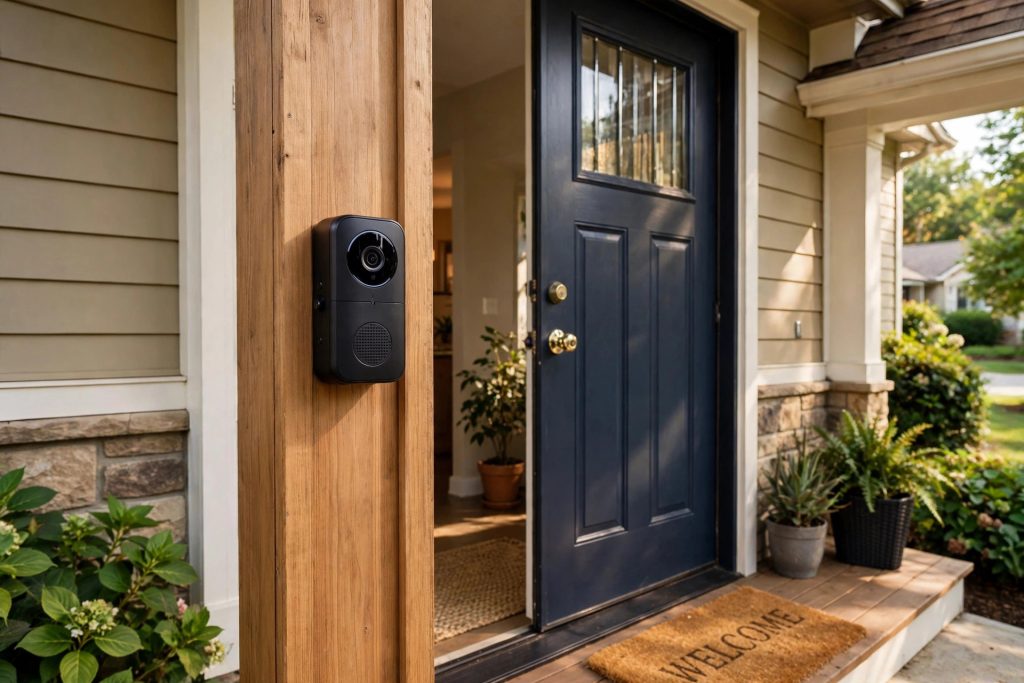
Many homeowners find that protect outdoor cameras from spider webs is easier than they expected once they know the basics.
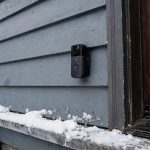
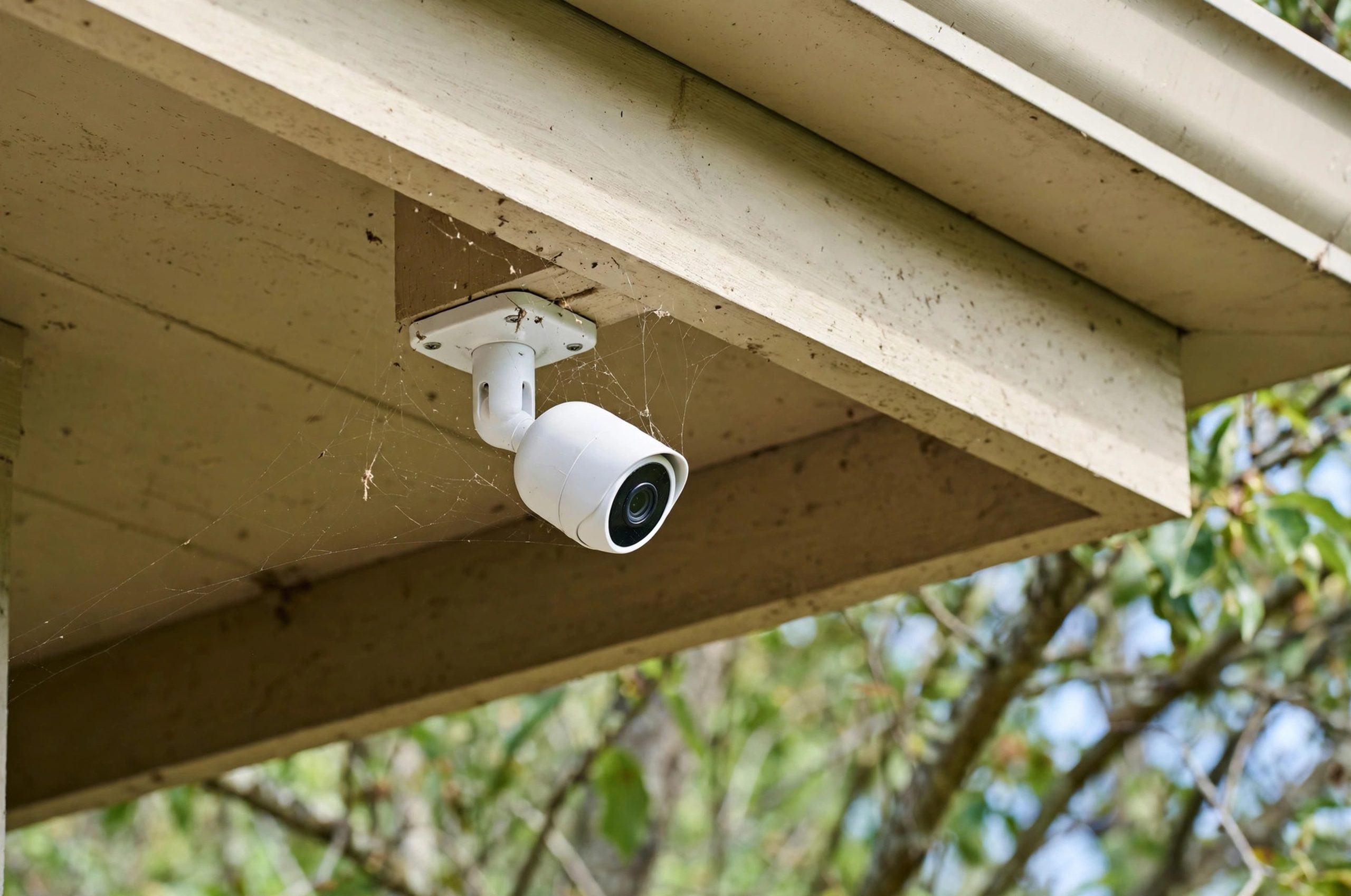
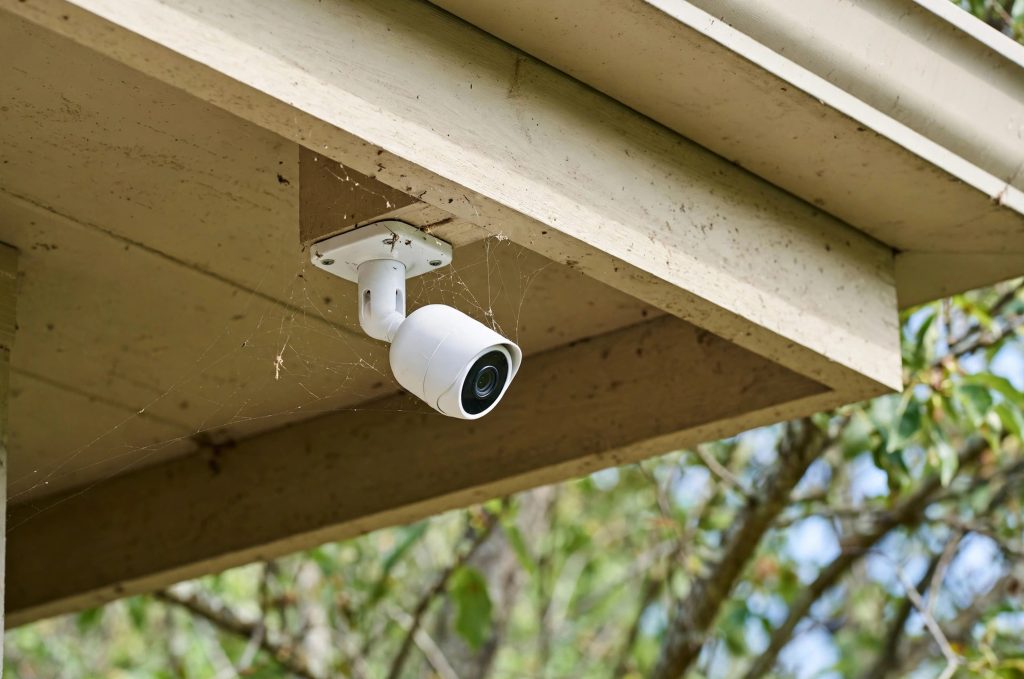
Understanding the problem makes the fix obvious. At night, your camera's infrared LEDs glow. Flying insects swarm toward that glow. Spiders follow the food. They build webs between the camera mount and the nearest anchor point, often right across the lens.
The result is a double problem. The web blurs the image, and the web moving in the wind triggers false motion alerts. A security company notes that webs can block the lens and trip motion sensors, and that the infrared light is the root cause (Vector Security on keeping webs off cameras).
So every fix below does one of two things: it makes the camera area less attractive to bugs, or it makes the surfaces unusable for web-building.
Fix the Light: Move the Infrared Glow Away
Many homeowners find that protect outdoor cameras from spider webs is easier than they expected once they know the basics.
The key to protect outdoor cameras from spider webs is choosing the right approach for your space and budget.
This is the highest-impact change you can make.
Turn off the camera's built-in IR. Most cameras let you disable the onboard infrared LEDs in the settings. Do that, and the bug magnet disappears.
Add a separate IR illuminator. You still need night vision. Mount a standalone infrared illuminator a few feet away from the camera, pointed at the same area. The bugs swarm to the separate light. The spiders build webs there instead of on your camera. The camera sees clearly because the scene is still lit in infrared. A CCTV guide explains this move-the-light trick as the most reliable long-term fix (SecurityCamCenter on keeping webs off cameras).
Switch to warm or yellow lighting. If the area has visible-light security lighting, swap white bulbs for yellow "bug light" bulbs near the camera. Yellow light attracts far fewer flying insects. Keep the bright white lights farther from the camera, aimed at the yard rather than at the mount.
Reduce always-on lighting. Lights that stay on all night draw insects all night. Motion-activated lights give you security lighting without the constant bug buffet.
Make Surfaces Slippery
The key to protect outdoor cameras from spider webs is choosing the right approach for your space and budget.
With a little planning, protect outdoor cameras from spider webs can fit even a busy schedule.
Spiders cannot spin webs on surfaces they cannot grip. This is the oldest trick in the book and it still works.
Petroleum jelly. Rub a thin layer of petroleum jelly on the camera mount, the housing, and the wall around the camera. Do not get any on the lens. Spiders slide off instead of anchoring silk. Reapply every few weeks, since dust and rain wear it down.
Silicone or Teflon spray. A light coat of silicone spray on the mount and surrounding trim does the same job and lasts longer than jelly. Cover the lens with a paper towel while you spray, then remove it. A camera maintenance guide lists silicone, Teflon, and petroleum jelly as the standard slippery treatments (Casa Security on keeping bugs off cameras).
Furniture polish. In a pinch, a spray furniture polish with silicone leaves a slick film that spiders dislike. Same rule: keep it off the lens.
Use Smells Spiders Hate
With a little planning, protect outdoor cameras from spider webs can fit even a busy schedule.
Before you start, it helps to understand how protect outdoor cameras from spider webs works in real homes.
Spiders navigate by smell and touch. Strong scents drive them away.
Dryer sheets. Rubber-band a dryer sheet to the camera mount, away from the lens. The strong scent repels insects and spiders. Replace it monthly.
Peppermint oil spray. Mix a few drops of peppermint oil in water and spray it on the mount and nearby trim. Spiders dislike peppermint, citrus, and eucalyptus. Reapply after rain. This is pet-safe and kid-safe when used as directed, which matters for cameras near play areas.
Flea collars. Loop a flea collar around the camera mount. The chemicals in the collar repel spiders and insects for weeks. Keep it away from the lens and out of reach of pets and children.
Citrus peels. Tuck dried citrus peels on the ledge near the camera. They are a mild deterrent and completely harmless.
A security camera maker rounds up these natural options alongside physical barriers and lighting changes (eufy on keeping spider webs off cameras).
Clean on a Schedule
Before you start, it helps to understand how protect outdoor cameras from spider webs works in real homes.
A good plan for protect outdoor cameras from spider webs saves time, money, and frustration.
No repellent lasts forever. A cleaning routine is the backbone of web control.
Weekly sweep. Once a week, brush the camera housing, mount, and surrounding trim with a soft-bristled brush or an old paintbrush. Knock down any web starts before the spider finishes them.
Monthly deep clean. Wipe the lens with a microfiber cloth. A dirty lens plus a web equals a useless camera. Check that the mount screws are tight. Trim back any vegetation touching the mount, since plants are spider highways. A cleaning-focused guide adds compressed air for stubborn webs in hard-to-reach spots (how to keep spider webs off security cameras).
Seasonal check. In spring and fall, when spider activity peaks, check twice as often. A camera repair guide lists dirty lenses and spider webs among the most common causes of blurry footage, and notes that most cases are fixed with simple cleaning (Boomset on common security camera problems).
Keep a long-handled duster near the back door. If the brush is handy, you will actually use it.
Adjust the Camera Settings
A good plan for protect outdoor cameras from spider webs saves time, money, and frustration.
For most people, protect outdoor cameras from spider webs comes down to a few smart choices.
Even with fewer webs, some will appear. Smart settings reduce the nuisance.
Tune motion sensitivity. Lower the motion sensitivity so a small web flutter does not trigger an alert. Most apps let you set sensitivity per camera.
Use person detection. If your camera or subscription supports person, vehicle, or pet detection, turn it on. The camera then ignores webs, rain, and swaying branches, and only alerts for real subjects.
Draw activity zones. Mask out the sky and the areas where webs form. Focus the detection zone on doors, walkways, and driveways. A trail camera guide makes the same point about false triggers: webs in front of the sensor fire the camera on ghosts, and zoning plus sensitivity fixes most of it (how to stop false triggers).
Schedule alerts. If webs are worst at dawn when dew makes them visible, consider muting non-person alerts during those hours.
Change the Mounting
For most people, protect outdoor cameras from spider webs comes down to a few smart choices.
Where and how the camera sits affects web buildup.
Avoid corners and eave junctions. Spiders love corners because two surfaces give perfect web anchors. Mount the camera on a flat wall section with open space around it, not tucked into the corner where the eave meets the wall.
Use a pendant or arm mount. A camera on a short arm, away from the wall, gives spiders fewer anchor points. A dome camera on a pendant mount is harder to web than a bullet camera tucked under an eave.
Add a drip edge or small hood. A little hood above the camera sheds rain and gives spiders one less surface. Many cameras ship with a sunshade. Use it.
Trim vegetation. Cut back bushes, tree limbs, and vines near the camera. Vegetation is the spider highway to your mount. A foot of clear space makes a big difference.
What About Bug Sprays and Insecticides?
If you are new to protect outdoor cameras from spider webs, start with the simplest option and build from there.
Bug spray around the camera housing works, but use it carefully. Spray the mount and the wall, never the lens. Keep sprays away from pets, kids, and food plants. Reapply every week or two in warm months.
A security industry Q&A suggests insecticide strips placed inside sensor housings and pepper-based cobweb sprays around mounting areas, while warning to check with the equipment maker about chemical compatibility (Security Sales on spider false alarms). The lesson: chemicals help, but they are a supplement to cleaning and lighting fixes, not a replacement.
When Webs Keep Coming Back
When it comes to protect outdoor cameras from spider webs, getting the details right makes all the difference.
If you have tried everything and one camera still webs over weekly, consider:
- Relocating the camera to a less sheltered spot with more airflow. Wind discourages web-building.
- Switching to a dome camera, which has fewer edges for anchors.
- Adding a small fan near a porch camera. Moving air disrupts web-building and blows insects away. A low-voltage computer fan works and costs little to run.
- Calling a pest control pro if the whole house exterior is overrun. Sometimes the camera is just the symptom of a bigger spider population.
Pair Web Control With Good Camera Placement
Many homeowners find that protect outdoor cameras from spider webs is easier than they expected once they know the basics.
A clean camera still needs a good view. Mount cameras eight to ten feet high, angled slightly down, covering doors and driveways first. For camera picks that handle outdoor life well, see (outdoor security camera reviews) and (floodlight camera reviews). For lighting that helps cameras without feeding the bugs, see (solar motion sensor light reviews) and (motion sensor flood light reviews).
The Bottom Line
Spiders follow bugs, and bugs follow your camera's infrared glow. Move the IR light away from the camera, make the mount slippery, use scents spiders hate, and clean on a schedule. Tune motion settings so the odd web does not spam your phone. Do these things and your night footage stays clear all season. Keep this guide handy the next time you protect outdoor cameras from spider webs.
References
Vector Security. (n.d.). How to keep spiders, bugs, and insects off security cameras. http://www.vectorsecurity.com/knowledge-center/how-to-keep-spider-webs-bugs-or-insects-away-from-security-cameras/
SecurityCamCenter. (n.d.). How to keep spider webs, bugs or insects away from security cameras. https://securitycamcenter.com/keep-off-spider-webs-cctv-security-cameras/
eufy. (n.d.). How to keep spider webs off security cameras? Effective ways. https://us.eufy.com/blogs/security-camera/how-to-keep-spider-webs-off-security-cameras
GoPro Cameras Review. (n.d.). How to keep spider webs off of security cameras. https://goprocamerasreview.com/blog/security-cameras/how-to-keep-spider-webs-off-of-security-cameras/
Casa Security. (n.d.). How to keep spiders, bugs, and insects off your security camera? https://casasecurity.com.au/how-to-keep-spiders-bugs-and-insects-off-your-security-camera/
Security Sales & Integration. (n.d.). False alarms in PIR motion sensors from spiders and roaches. https://www.securitysales.com/news/article-10939/48589/
Street Photographers. (n.d.). How to stop a trail camera from false triggering. https://street-photographers.com/how-to-stop-a-trail-camera-from-false-triggering/
Boomset. (n.d.). Common security camera problems and when to call for security camera repair. https://boomset.com/common-security-camera-problems-and-when-to-call-for-security-camera-repair/
Was this guide helpful?

About My Garden US
The My Garden US editorial team writes practical, in-depth home and garden guides for American homeowners — tested advice, no fluff.
You May Also Like

Alexa vs Google Home 2026 Comparison USA: Which Voice Assistant Wins Your Home
March 24, 2026 16 views
Best Mesh WiFi for Smart Home 2026 USA
July 24, 2026 18 views
Basement Window Security Bars Reviews USA: A Plain Buyer's Guide
January 14, 2026 20 views