Chaya is a leafy shrub from the Yucatan that Mayan families have grown for centuries as a living pantry. One plant can supply a household with greens nearly year-round, the leaves cooking up like a rich, hearty spinach. Gardeners learning how to grow chaya get a perennial vegetable that shrugs off heat, drought, and neglect, and keeps producing with almost no care.
Table of Contents
Table of Contents
There is one rule you must respect with chaya: always cook it. The raw leaves contain compounds that heat neutralizes, so chaya is never eaten raw. Boiled or simmered for at least a few minutes, it is perfectly safe and genuinely delicious. That single precaution is the price of admission to one of the most productive greens a warm-climate gardener can grow.

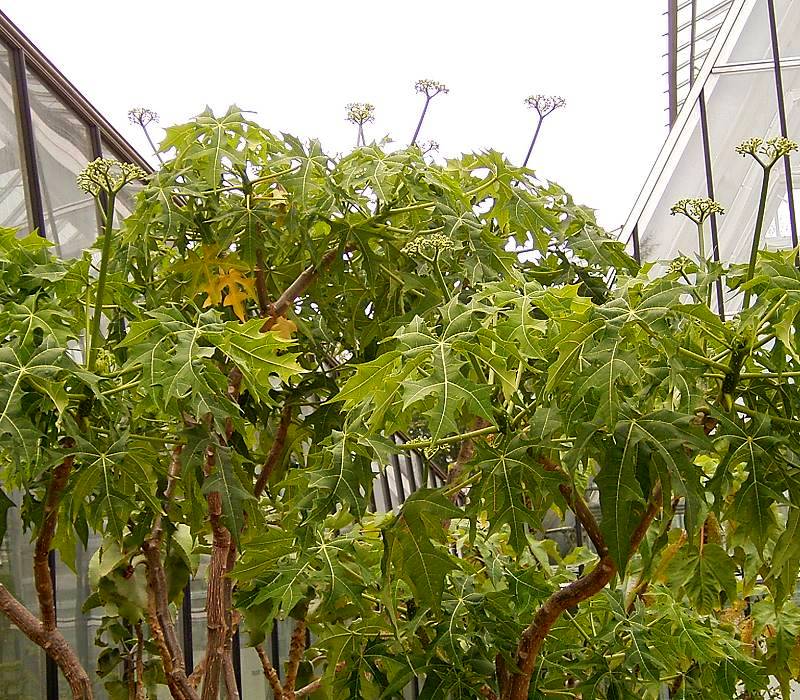
Photo: Wikimedia Commons
Quick facts: Sun: full sun. Soil: well-drained, average. Water: low once established; drought-tolerant. Space plants 36 inches apart; give each plant 6 to 8 feet of room. Days to first harvest: 90 to 120. True tropical perennial in zones 9 to 11; grow as a summer annual elsewhere.
Choosing a Variety and Getting Started
When it comes to how to grow chaya, getting the details right makes all the difference.

Many homeowners find that how to grow chaya is easier than they expected once they know the basics.
Chaya is grown from stem cuttings, not seed. Seed is unreliable and rarely offered, but cuttings root so easily that it hardly matters. A woody cutting stuck directly into soil usually takes without any special treatment. Nurseries in warm states sell potted chaya plants, and gardeners in chaya country are famously generous with cuttings, since every pruning produces more planting stock.
There are a few types, and the main distinction is the stinging hairs. Some varieties carry tiny stinging hairs on the stems and leaf undersides that irritate bare skin. Others are nearly hairless and much friendlier to handle. If you have a choice, pick a low-sting type for a home garden. Either way, wear gloves when pruning until you know your plant. Before planting, check your USDA zone planting dates on the planting calendar to plan your warm-season window.
Chaya becomes a large shrub or even a small tree, so site it like a permanent planting, not like an annual vegetable. Give it a corner where it can spread without crowding its neighbors. If you have grown kale or collard greens as long-season greens, chaya fills the same role in the kitchen, with a fraction of the replanting.
When and How to Plant
Many homeowners find that how to grow chaya is easier than they expected once they know the basics.
The key to how to grow chaya is choosing the right approach for your space and budget.
In zones 9 to 11, you can plant chaya any time the weather is warm. Elsewhere, treat it as a summer annual: start cuttings indoors about six weeks before your last spring frost, and set the rooted plants out about three weeks after the last frost, once nights are reliably warm. Chaya sulks in cool soil, so there is no advantage to rushing it outdoors.
To propagate, take a woody cutting about a foot long from a healthy stem and push the bottom few inches directly into moist soil, either in a pot or in its final spot. Keep the soil damp but not soggy. Roots form in a few weeks. Unlike fussy cuttings that need humidity domes and rooting powder, chaya is famously easy; gardeners joke that you can hardly stop it from rooting.
Space plants generously. A mature chaya wants 6 to 8 feet of room in every direction. Planting them 3 feet apart, as the quick facts suggest for young plants, works only if you commit to hard pruning, which most chaya growers do anyway. The Old Farmer's Almanac offers general guidance on siting permanent edible plantings, which applies to a shrub like chaya.
Soil and Sun
The key to how to grow chaya is choosing the right approach for your space and budget.
With a little planning, how to grow chaya can fit even a busy schedule.
Give chaya full sun for the fastest growth and the most leaves. It tolerates part shade, which is useful in blazing hot climates, but sun-grown plants are more productive. The soil should be well drained and average in fertility. Chaya is not demanding. It grows in the thin, rocky soils of the Yucatan, so most American garden soils suit it fine.
Dig a generous planting hole and mix in compost. That is the whole soil program. Chaya does not need rich feeding or precise pH. Good drainage matters most, because the roots dislike sitting in water. On heavy clay, plant on a mound. The Clemson Home & Garden Information Center has practical notes on planting shrubs in difficult soils that transfer well to chaya.
Gardeners in Florida and the Gulf Coast, where chaya is most at home in the United States, can find regional growing advice through UF IFAS Gardening Solutions. You can look up its botanical background under Cnidoscolus aconitifolius in the USDA PLANTS Database.
Watering and Feeding
With a little planning, how to grow chaya can fit even a busy schedule.
Before you start, it helps to understand how how to grow chaya works in real homes.
Water regularly through the first growing season while the plant establishes its root system. A deep watering once a week is plenty. Once established, chaya is genuinely drought tough. Mature plants in the ground can go weeks without rain and keep growing, which is why it is so valued in dry tropical regions. In a pot, of course, you must water more often, since containers dry out fast.
Feed lightly or not at all. Compost around the base once a year keeps the plant vigorous. Heavy fertilizer is unnecessary and can push weak, floppy growth. If the leaves are a healthy deep green and new shoots keep coming, the plant is feeding itself. The University of Minnesota Extension describes the same light-feeding approach for perennial vegetables generally.
Care Through the Season
Before you start, it helps to understand how how to grow chaya works in real homes.
A good plan for how to grow chaya saves time, money, and frustration.
Prune hard and prune often. An unpruned chaya becomes a small tree with its leaves out of reach, which defeats the purpose. Cut it back to head height or lower, and it responds by throwing out a flush of tender new shoots, which are exactly what you harvest. In effect, harvesting does much of the pruning for you. Wear gloves, since some varieties carry stinging hairs on the stems.
Few pests trouble chaya. Its slight toxicity to insects is part of what makes it so carefree. Caterpillars might nibble occasionally, but damage is rarely worth treating. The plant's vigor usually outruns any pest pressure. This is one of the lowest-spray greens you can grow.
In zones colder than 9, grow chaya in a large pot and move it indoors before frost. It will drop leaves and look sad in a cool garage or sunny window, but the woody stems survive, and it leafs out again in spring. Alternatively, take fresh cuttings each fall, root them indoors over winter, and plant out new plants each spring. The cuttings root so easily that this annual cycle is barely any work.
Harvest
A good plan for how to grow chaya saves time, money, and frustration.
For most people, how to grow chaya comes down to a few smart choices.
Harvest young leaves and tender shoot tips, which are the most succulent parts. Older, tougher leaves are still usable but take longer to cook tender. Pick often. Regular harvesting keeps the plant bushy and productive, and it keeps the leaves coming at the tender stage you want.
Now the important part: always cook chaya before eating. Boil or simmer the leaves for at least a few minutes; many cooks give them a full rolling boil to be safe. The heat neutralizes the naturally occurring compounds in the raw leaves. Never eat chaya raw, and do not drink the cooking water. Cooked, the flavor is like a rich, deep spinach, excellent as a side dish, in soups, or mixed into egg dishes.
One healthy plant can supply a family's greens. That is not an exaggeration; it is the reason chaya has fed Yucatan households for generations. A few plants give you more greens than you can use, which makes chaya a great plant to share with neighbors.
Chaya in the Landscape
For most people, how to grow chaya comes down to a few smart choices.
If you are new to how to grow chaya, start with the simplest option and build from there.
Chaya is handsome enough to grow where everyone can see it. The large, maple-like leaves have an appealing tropical look, and a well-pruned shrub fits into an ornamental bed without shouting "vegetable garden." Many gardeners in warm climates plant chaya along a fence or at the back of a flower border, where it provides a bold green backdrop all season.
As a hedge, chaya is hard to beat. Space plants a few feet apart, prune them to a neat waist-high row, and you get a living fence that also feeds you. The pruning the hedge needs is the harvest you want, so the maintenance and the food production are the same job. Few hedges pay rent like that.
In colder zones, a large pot of chaya makes a striking patio plant for summer. Set the pot where it gets full sun, water it regularly, and harvest the shoot tips all season. When cold threatens, move it indoors to a bright spot. It will not be pretty through winter, dropping leaves and looking like a bundle of sticks, but the stems stay alive and leaf out again when warmth returns. One potted plant, carried through winter year after year, can become an old friend.
Troubleshooting
If you are new to how to grow chaya, start with the simplest option and build from there.
When it comes to how to grow chaya, getting the details right makes all the difference.
Plant drops leaves indoors over winter. Normal. Chaya goes semi-dormant in cool, dim conditions. Keep the soil barely moist, and it will leaf out when warmth and light return.
Skin irritation when handling. Stinging hairs on some varieties. Wear gloves and long sleeves when pruning, and wash up afterward. Choosing a low-sting variety avoids most of this.
Slow growth after planting. Chaya is establishing roots. Keep it watered through the first season and be patient; the second year is when it takes off.
Frost kills the top. In marginal zones, the roots might survive under heavy mulch and resprout. Everywhere colder, the pot-and-bring-indoors routine is the reliable method.
Chaya is the closest thing to a plant-it-and-pick-it green for warm climates. Respect the cooking rule, prune it hard, and it will feed you for years. For a cool-season leafy counterpart, spinach covers the months chaya rests. Background on traditional food plants is available through the USDA National Agricultural Library, and Clemson Cooperative Extension offers general edible-landscaping guidance.
References
When it comes to how to grow chaya, getting the details right makes all the difference.
Many homeowners find that how to grow chaya is easier than they expected once they know the basics.
UF IFAS Gardening Solutions. (n.d.). Vegetable gardening in Florida. https://gardeningsolutions.ifas.ufl.edu/
Old Farmer's Almanac. (n.d.). Growing vegetables in home gardens. https://www.almanac.com/
Clemson Cooperative Extension. (n.d.). Home & Garden Information Center. https://hgic.clemson.edu/
Missouri Botanical Garden. (n.d.). Plant finder. https://www.missouribotanicalgarden.org/
The key to how to grow chaya is choosing the right approach for your space and budget.
Many homeowners find that how to grow chaya is easier than they expected once they know the basics.
Was this guide helpful?

About My Garden US
The My Garden US editorial team writes practical, in-depth home and garden guides for American homeowners — tested advice, no fluff.