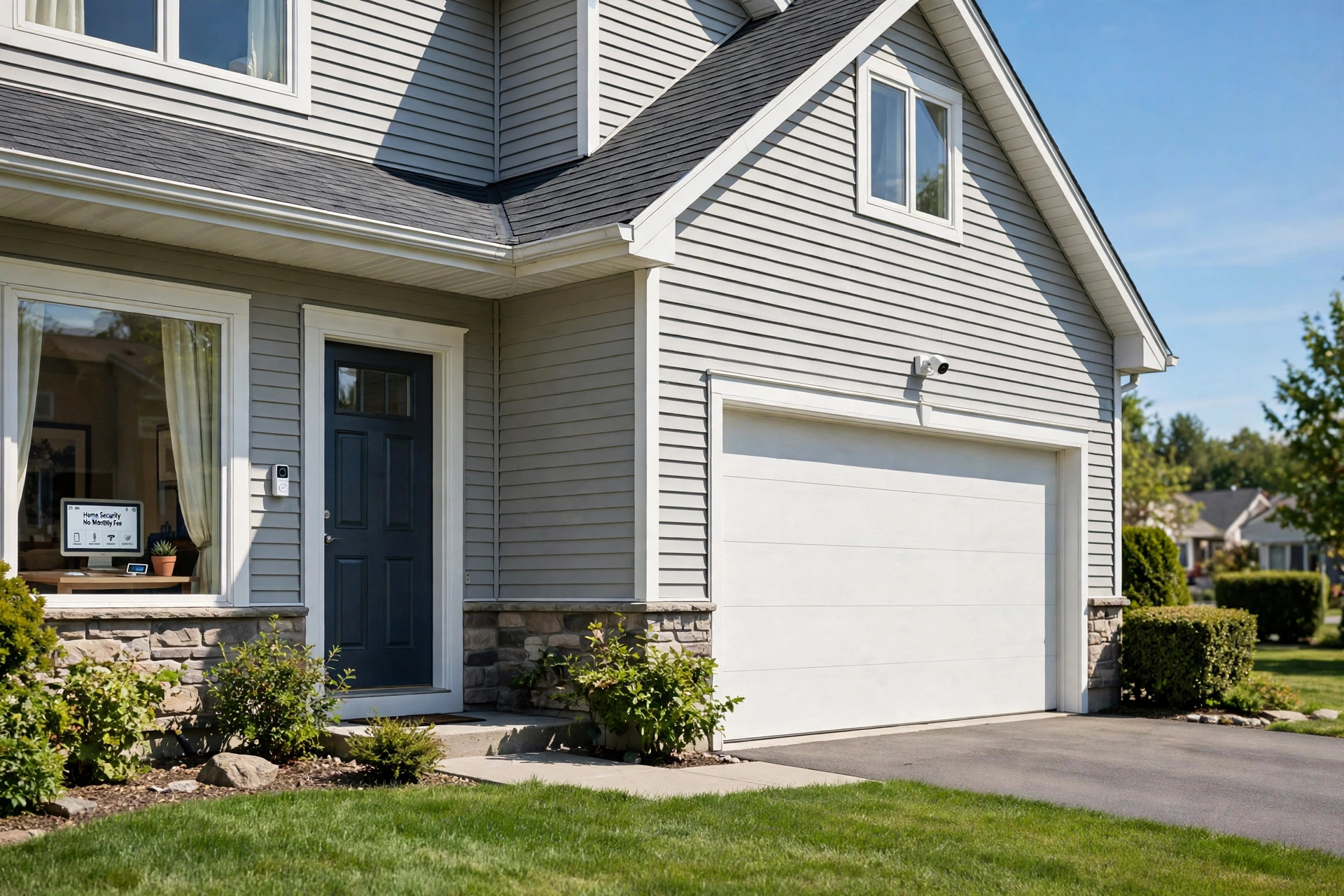

The search for the best home security system no monthly fee usa shoppers want leads to one simple idea. Many families want a system they buy once and own for good. No contract. No monthly bill. No fee that rises year after year. This guide explains how these systems work, what to look for, what they cost, and how to pick the right one for a house or apartment in the United States.
Why a No-Monthly-Fee System Matters
Home security used to mean a long contract. A company would install wires in your walls. You would sign for three years or more. Every month, a bill arrived. If you canceled early, a fee followed. That model still exists today. But it is no longer the only choice.
A system with no monthly fee changes the math. You pay one price at the store or online. The gear is yours. It works on your home internet, or on local storage, or both. You watch the cameras on your phone. You get alerts on your phone. No company sits in the middle. For many people, that control is worth more than a call center.
Money is the clearest reason. A basic monitored plan often costs thirty to sixty dollars a month in the USA. Over five years, that adds up to thousands of dollars. A no-fee kit can pay for itself in less than one year.
Peace of mind is the second reason. A break-in is rare but costly. A camera at the door can stop a thief before he touches the lock. Visible security makes a house less likely to be picked. The system does not need a monthly plan to do this job.
What to Look for When You Choose: Best Home Security System No Monthly Fee Usa
Start with the cameras. Look at picture quality first. A camera with 1080p resolution works well for most doors and porches. A 2K or 4K camera shows more detail, such as a face or a license plate, but it also needs more storage. If you want the best outdoor security camera without a subscription plan, check how the video is saved before you buy.
Storage is the heart of a no-fee system. A monitored company stores your video on its servers. You pay for that. A no-fee system must store video another way. The most common answer is local storage. That means a memory card inside the camera, a USB drive on a base station, or a hard drive in a small recorder. Local storage costs nothing after you buy the card or drive. It also keeps your video inside your own home, which many owners prefer.
Power matters too. Some cameras plug into a wall outlet. Others run on batteries you recharge every few months. Solar panels can feed a battery camera in a sunny yard. Think about where you will mount each camera, and how you will reach it later.
Check the app before you buy. The phone app is your control room. Read the ratings in the app store. A good app sends a motion alert in seconds, not minutes. It should let you watch live video, play back saved clips, and arm or disarm sensors with one tap.
Look for two-way talk. A speaker and microphone in the camera let you speak to a visitor, or warn off a stranger. This feature now comes on most mid-range cameras. It adds no monthly cost. It turns a silent watcher into a voice at the door.
Types of No-Fee Home Security Systems
DIY Sensor Kits
These kits look like the old alarm systems, but without the contract. A box holds a base station, door sensors, window sensors, and motion detectors. The base station sounds a siren when a sensor trips. Your phone gets the alert. You call the police yourself if needed. Self-install kits now ship with clear guides most people finish in an hour.
Camera-Only Systems
Some homes need eyes, not alarms. A set of two, four, or eight cameras covers the doors, the driveway, and the backyard. The cameras link to a recorder or a base station in the house. You watch live or review clips on your phone. For a look at floodlight cameras that work without a plan, many buyers pick a camera with a built-in light to cover dark yards.
Video Doorbells With Local Recording
A video doorbell is often the first piece people buy. It replaces the old doorbell with a camera, a speaker, and a chime. When someone rings, your phone rings too. Many doorbells store clips on a small memory card or a home base station, so no cloud plan is needed. Smart doorbell makers keep improving battery life and night vision each year.
PoE and NVR Camera Systems
PoE means power over ethernet. One cable carries both power and video to each camera. The cables plug into a network video recorder, called an NVR. This is the setup of small shops and serious homeowners. It takes more work to install. It also gives the best picture quality and the most storage.
How Local Storage Keeps Costs at Zero
Local storage is the feature that makes “no monthly fee” possible. Here is how it works in plain terms.
A microSD card slides into a slot on the camera. The camera writes video to the card around the clock, or only when it sees motion. A 128-gigabyte card can hold many days of motion clips. When the card fills up, the camera writes over the oldest clips. You buy the card once. You never pay again.
A base station with a USB port works the same way on a larger scale. Several cameras send video to one box in the house. The box writes to a USB drive or an internal hard drive. A one-terabyte drive can hold weeks of video from four cameras. If you want cameras built for local storage, check the product page for the card or drive size it accepts.
Some systems use a home network drive, called a NAS. This is a small box that sits on your home network and stores files. Tech-savvy owners like it because one drive can serve cameras, computers, and phones at once. It costs more up front but grows with the house.
One warning is fair. Local storage sits in your home. If a thief takes the camera or the recorder, the video may go with it. Many owners place the recorder in a hidden spot, like a closet or a locked cabinet. Some use two forms of storage at once, such as a card in the camera plus a drive in the house. Reviews from PCMag test how well each system saves and plays back video.
Cost and Price: What You Will Pay
A single video doorbell or one indoor camera costs between fifty and one hundred fifty dollars. A two-camera outdoor kit with a base station often runs from two hundred to four hundred dollars. A four-to-eight camera PoE system with an NVR and hard drive can cost five hundred to one thousand five hundred dollars. These are one-time prices. There is no bill after.
Compare that with a monitored plan. At forty dollars a month, five years of monitoring costs two thousand four hundred dollars. A seven-hundred-dollar no-fee system saves one thousand seven hundred dollars over the same span. The trade-off is simple. You watch the alerts yourself. You call for help yourself.
Watch for hidden costs. Some brands sell the camera cheap, then charge a fee to unlock person detection, smart alerts, or longer clip history. Read the box and the product page with care. Look for the words “no subscription required” and check what features work without one. Independent product testers often list which features stay free and which sit behind a paywall.
Installation adds cost if you hire help. A handyman may charge one hundred to three hundred dollars to mount four cameras and run cables. Battery cameras and doorbells need no wiring, so many owners do it themselves with a drill and a ladder. If you can hang a picture frame, you can mount most battery cameras.
Care and Upkeep
A no-fee system asks little of you, but it is not zero work. Wipe each camera lens twice a year with a soft cloth. Dust and spider webs blur the picture. Check the view on your phone after a storm. Wind can turn a camera a few degrees, and a shifted camera may stare at a wall.
Recharge battery cameras on schedule. Most apps show the battery level for each camera. A dead camera guards nothing. Solar panels cut this chore in small sunny spots, but a long cloudy winter can still drain them.
Check your storage now and then. Open the app and play an old clip. If clips stop saving, the card or drive may be full or worn out. Memory cards wear with time. Replacing a card costs a few dollars and takes one minute.
Update the software. Camera makers send updates that fix bugs and close security holes. Turn on auto-update in the app if it exists. Change the default password on the system the day you install it. Use a long password you do not use anywhere else. These small steps keep your own cameras from becoming someone else’s window.
Safety Notes for Buyers and Owners
Buy from known brands with real support lines. A cheap camera from an unknown seller may send your video to a server you cannot see. Stick to makers with clear privacy policies and a history of updates. Technology news coverage often reports when a brand has a data problem, so a quick search of the brand name plus “privacy” is a smart step before you buy.
Mount cameras with care. A camera above a door should sit eight to ten feet high. That height sees faces but stays out of easy reach. Do not point cameras into a neighbor’s bedroom window or bathroom. A safety guide from the federal product safety agency also reminds buyers to keep devices out of easy reach. Most states allow cameras on your own property, but the rules differ by place.
Secure your home network. Your cameras ride on your Wi-Fi. A weak Wi-Fi password puts the whole system at risk. Use the strong security mode on your router, the one labeled WPA2 or WPA3. Keep the router software up to date. This one step guards the cameras, the computers, and the phones in the house.
Think about power loss. A camera with no power is blind. A small backup battery, called a UPS, can keep a base station and router alive through a short outage. Battery cameras keep working when the house power fails.
Frequently Asked Questions
Do no-monthly-fee systems call the police for me?
No. That is the main difference. A monitored company calls the police when an alarm trips. A no-fee system alerts you on your phone. You look at the video. You decide. You call 911 if you see a real threat. Many owners like this control. It also means you must keep your phone charged and the ringer on.
Can I watch my cameras when I am away from home?
Yes, in most cases. The app connects through the internet to your cameras at home. You can watch live video from work or on a trip. This needs your home internet to be running. If the power or internet fails at home, remote viewing stops until it returns. Some owners add a professional monitoring brand as a backup for trips, then cancel it when they return.
How much internet speed does a camera system need?
Each camera uses a slice of your upload speed. One 1080p camera needs about two megabits per second of upload. Four cameras need about eight. Most home internet plans in the USA offer far more than that today. If your video stutters, the router may be too far from the cameras, not too slow.
Will a no-fee system work in an apartment?
Yes. Renters do well with battery cameras, video doorbells that need no wiring, and small sensor kits that stick to doors with tape. No holes in the wall. No landlord trouble. Take it all down when you move. Just check your lease for rules about cameras in shared halls.
What happens to my video if someone steals the camera?
This is the weak point of local storage. If the video lives only on a card inside a stolen camera, the video is gone. Two fixes help. First, use a base station or recorder hidden inside the house, so the video lives in two places. Second, some brands offer a small free cloud clip as a backup, even with no paid plan. Read the fine print before you count on it.
Are these systems hard to install?
Most are not. Battery cameras mount with two screws. Doorbells replace the old chime wires or run on a battery. Sensor kits stick on with adhesive. A PoE system takes more work, since you run cables through walls or along eaves. Many owners finish a four-camera battery system in one afternoon.
A Short Final Word
The best home security system no monthly fee usa buyers can find is the one that fits the house, the budget, and the owner. A small apartment may need only a doorbell and one camera. A large house with a big yard may need eight cameras and a recorder. The right system is the one you will keep charged, keep updated, and actually watch.
Buy once. Own it outright. Skip the monthly bill. With local storage, a good app, and a few minutes of care each season, a no-fee system guards a home as well as gear that costs thousands more over time. Start with the doors, add cameras where it feels right, and build the system as the need grows.
References
ADT. (n.d.). Home security and automation. https://www.adt.com Consumer Reports. (n.d.). Product reviews and ratings. https://www.consumerreports.org Google Store. (n.d.). Smart home devices. https://store.google.com PCMag. (n.d.). Technology product reviews. https://www.pcmag.com Ring. (n.d.). Smart home security devices. https://www.ring.com SimpliSafe. (n.d.). Home security systems. https://www.simplisafe.com The Verge. (n.d.). Technology news and reviews. https://www.theverge.com U.S. Consumer Product Safety Commission. (n.d.). Product safety information. https://www.cpsc.gov
Was this guide helpful?

About Michael Thompson
The My Garden US editorial team writes practical, in-depth home and garden guides for American homeowners — tested advice, no fluff.
You May Also Like

Best Smart Bulbs for Recessed Lighting USA
April 16, 2026 0 views
Best Professionally Monitored Security System USA: A Complete Homeowner Guide
July 10, 2026 0 views
Best Doorbell Transformer for Smart Doorbell: A Plain Buyer’s Guide
June 12, 2026 0 views