
Why Parents Choose a Nursery Wall Decal Tree with Animals Safari
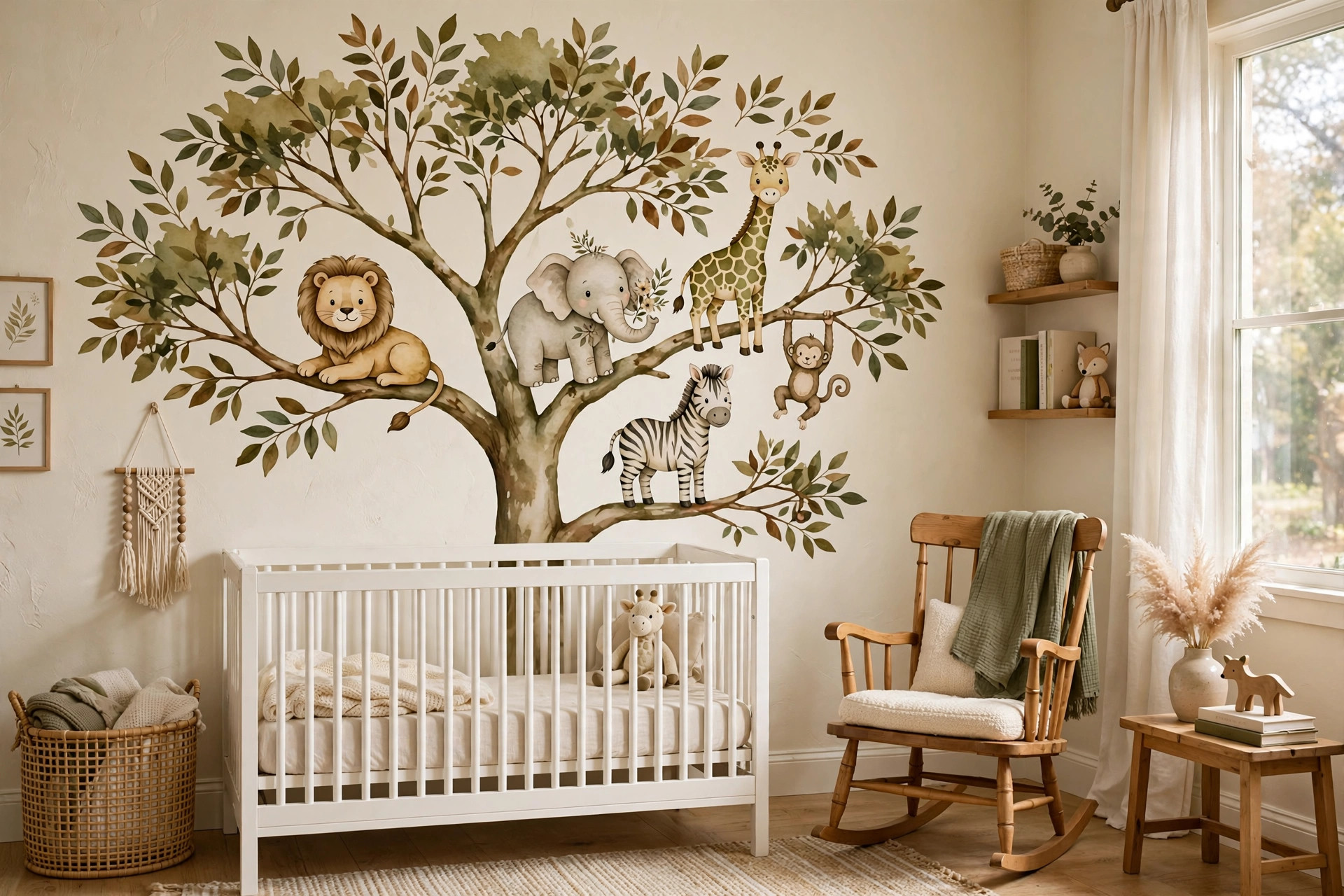
A bare wall in a nursery can feel cold. A nursery wall decal tree with animals safari changes that in an afternoon. The design is simple: a large tree with wide branches, and soft safari animals such as lions, elephants, giraffes, zebras, and monkeys resting near the roots or hanging from the limbs. The result is a warm scene that invites a child to look and point and learn.
Parents in the United States have loved the safari theme for many years. It suits both boys and girls. The colors are usually warm: soft greens, warm browns, gentle yellows, and cream. These tones calm a room instead of exciting it, which matters when the room is also a place for naps and night feedings.
The decal form is the key. Unlike paint, a decal peels off when the child grows. Unlike wallpaper, it needs no glue and no professional. A single parent can place it on a Saturday afternoon with a helper to hold the sheet. The cost stays low, often between thirty and one hundred dollars. That is why so many first-time parents start with a decal before they spend more on nursery furniture.
A safari tree also grows with the child. For a newborn, it is simply a pleasant wall. For a toddler, it becomes a game: name the animals, count the monkeys, find the bird in the branches. Few decorations serve a room for five years, but this one does.
What the Decal Is Made Of and How It Works: Nursery Wall Decal Tree with Animals Safari
Most decals sold today are made from vinyl. There are two common kinds. PVC vinyl is the old standard. It is cheap and durable, but it can release a sharp smell when new and is harder to recycle. PET film or fabric-based decals are newer. They are softer, carry no strong odor, and many brands market them as non-toxic.
For a nursery, material matters more than price. Look for decals labeled non-toxic, BPA-free, and phthalate-free. Water-based inks are safer than solvent-based inks. If the product page does not name the ink type, ask the seller. A decal will sit in the same room where a baby sleeps ten to fourteen hours a day, so the chemistry deserves attention.
The decal sticks through static cling or a light adhesive. Static cling types use no glue at all and can be moved again and again. Light-adhesive types hold better on textured walls but should be called “removable” by the maker. Removable means the decal comes off clean when you want it off, without pulling paint.
Types of Safari Tree Decals
Decals come in several sizes and styles. Each suits a different room.
Small accent decals measure about two to three feet wide. They fit above a dresser or beside a crib. They cost the least, often under forty dollars. They work well in small rooms or rented apartments where wall space is limited.
Large statement decals stretch six to eight feet across. The tree fills most of one wall. These are the designs that make guests stop and look. They cost more, from sixty to one hundred fifty dollars, and they need a full free wall.
Corner designs climb up the corner where two walls meet. The trunk rises at the joint and branches spread across both walls. This style uses dead space well and looks natural because a real tree fills a corner the same way.
Growth chart trees add measurement marks along the trunk. Parents record the child’s height with a marker year after year. The tree literally grows with the child.
Glow in the dark versions charge in daylight and glow softly at night. A faint lion or moon can comfort a child who wakes in the dark. Check that the glowing layer is also non-toxic before you buy.
Custom name trees print the child’s name on the trunk or on a hanging sign. These make fine gifts for baby showers. Order them early, since custom print shops need one to three weeks.
How to Choose the Right Decal for Your Room
Start with the wall. Measure its width and height, and note where the crib, door, and windows sit. A tree decal should not hang behind the crib where the baby can reach it and peel pieces loose. Place it on the wall you see from the rocking chair instead, so the parent and child look at it together during feeding.
Next, check the wall paint. Decals grip best on smooth, clean surfaces: flat or eggshell latex paint, clean glass, or sealed wood. They struggle on heavy texture, fresh paint, and dusty walls. If the nursery was painted in the last three weeks, wait. Fresh paint releases gas as it cures, and a decal applied too soon may not stick.
Then study the animal list. A good safari tree shows five to eight animals, drawn soft and friendly. Avoid designs with sharp teeth or fierce faces. The mood should be gentle. Lions should nap. Elephants should smile. Monkeys should play.
Color matters as well. Warm neutral walls take almost any decal. If the nursery walls are already bold green or yellow, pick a decal with strong outlines so it does not blend in. Many parents keep walls cream or light gray and let the decal carry the color.
Finally, read reviews about removal. The honest test of a decal is not how it looks on day one but how it leaves the wall in year three. Reviews that mention clean removal after two years are worth more than pretty product photos.
Step by Step: Applying the Decal
Plan for one to two hours. Work with a partner if the decal is large.
Clean the wall first. Wipe the area with a damp cloth and a drop of mild soap. Let it dry fully. Dust and grease are the main reasons decals curl at the edges.
Tape the layout. Hold the decal sheets up with painter’s tape before you peel anything. Step back to the door and look. This dry run prevents the common mistake of hanging the tree too high or too far left.
Peel slowly from one corner. Press the sheet to the wall as you go, smoothing with a soft cloth or the plastic squeegee many kits include. Work from the center outward to push air bubbles to the edges.
Fix bubbles gently. Small bubbles can be pressed toward the nearest edge. Do not prick the vinyl with a pin unless the instructions allow it.
Wait before decorating around it. Give the adhesive one full day to set before you hang shelves or bump furniture against that wall.
If you are in a rental, keep the backing paper. Many renters reuse decals in the next home by pressing them back onto the backing. Removable decals often survive one move if they are stored flat.
Cost and Price in the United States
Prices run in clear bands. Small accent trees cost twenty to forty dollars. Medium designs cost forty to eighty dollars. Large statement walls cost eighty to one hundred fifty dollars. Custom name versions add twenty to fifty dollars to the base price.
Shop at large home stores and online marketplaces to compare. Department stores and baby specialty shops tend to charge more for the same size. Shipping is usually free over a modest order total.
Watch for the hidden cost: some very cheap decals use thin vinyl that tears during application. A torn decal is money lost. Spending ten dollars more on a thicker, well-reviewed product usually pays for itself.
Care and Upkeep
A safari tree decal needs little care. Dust it once a month with a dry microfiber cloth. Wipe smudges with a barely damp cloth and no chemicals. Harsh cleaners dull the print and weaken the edges.
Keep direct sun in mind. A wall that takes strong afternoon sun will fade any decal over two to three years. If the nursery faces west, consider a lighter design that fades less visibly, or use curtains during the brightest hours.
If an edge lifts, press it back with a warm hand. Body heat softens the adhesive just enough to reseat it. For stubborn edges, a short pass with a hair dryer on low heat works, but keep the dryer moving so the vinyl does not warp.
Safety Notes for the Nursery
Safety comes before style. The United States Consumer Product Safety Commission publishes guidance on nursery safety, and the decal should fit inside those rules. Keep the decal out of the baby’s reach. A curious toddler can peel a loose piece and mouth it, which is a choking hazard. As a rule, keep decals above the height the child can touch when standing in the crib.
Choose non-toxic materials as described above. Air out the room after application. A new vinyl decal can smell for a day or two. Open the window and run the fan until the smell is gone before the baby sleeps in the room.
Check the decal every few months for lifting edges. A nursery changes with the seasons, and heat and humidity can loosen adhesive over time. A quick monthly check takes one minute and prevents a peeling hazard.
For more detail on safe nursery setup, the national pediatric guidance pages are a sound reference. They cover crib placement, room temperature, and sleep safety, all of which belong in the same plan as your wall decor.
Design Ideas That Pair Well with the Tree
A safari tree does not need to stand alone. Simple partners complete the room.
A soft crawling rug in cream or light brown grounds the scene and echoes the tree trunk. Solid-color curtains work better than patterned ones, since the wall already carries the pattern. A dimmer night light shaped like the moon or a star matches the safari sky without adding clutter.
On the dresser, a small set of plush safari animals repeats the wall theme in three dimensions. Removable wall decals for renters on the opposite wall can add a sun, clouds, or birds to balance the tree.
Keep the rest of the room calm. When one wall tells a story, the other walls should rest. White or cream bedding, plain storage baskets, and one wooden chair complete a nursery that feels warm but not busy.
When the Child Outgrows the Safari Theme
Children outgrow themes fast. A safari tree bought for a newborn may feel babyish by age six. That is the beauty of a decal: removal takes under an hour.
Peel slowly from one corner, pulling the vinyl back against itself at a low angle. Warm the vinyl with a hair dryer on low if it resists. Clean the wall with a damp cloth afterward. Most quality decals leave no mark, and a fresh coat of paint is rarely needed.
If the wall needs a small touch-up, a sample pot of the original paint covers the few spots where adhesive pulled. Keep a note of the paint color and brand in the baby book for this reason.
FAQ
Will a nursery wall decal tree with animals safari damage the paint? A quality removable decal will not damage cured latex paint. Problems come from fresh paint, cheap adhesive, or walls that were poorly primed. Wait three weeks after painting, buy from a reviewed brand, and test one small piece in a hidden corner first.
Can I put the decal on a textured wall? Light texture is fine. Heavy orange-peel or knockdown texture defeats the adhesive, and edges will lift within months. For textured walls, choose fabric-based decals, which conform better than stiff vinyl.
Is the decal safe for a newborn’s room? Yes, when you choose a non-toxic product and keep it out of reach. Air the room after application until any new-product smell fades. Place the decal where the baby cannot touch it from the crib.
How long does a safari tree decal last? Two to five years is typical. Sun, humidity, and touching shorten its life. Fabric-based decals usually outlast thin vinyl because they resist curling at the edges.
Can I reuse the decal in another room? Often yes. Peel it slowly, press it back onto its backing paper, and store it flat between two boards. Static cling types reuse best. Light-adhesive types may lose grip after one removal.
What size tree fits a standard nursery? For a ten by twelve foot room, a tree four to six feet wide fills the main wall without crowding. Measure the free wall space first, then buy the size that leaves at least a foot of clear wall on each side of the tree.
Final Word
A nursery wall decal tree with animals safari is one of the simplest upgrades a parent can make. It costs little, installs in an afternoon, and turns a plain wall into a scene a child will study for years. Choose a non-toxic removable product, place it where the family can see it together, and enjoy the jungle you built without a single drop of paint.
For more background, see The Spruce, What to Expect, and IKEA. For more background, see U.S. Consumer Product Safety Commission, Wayfair, and Pottery Barn Kids. See American Academy of Pediatrics for more detail. See also Target for further detail.
References
American Academy of Pediatrics. (n.d.). HealthyChildren.org. https://www.healthychildren.org IKEA. (n.d.). Home furnishings. https://www.ikea.com Pottery Barn Kids. (n.d.). Kids furniture and decor. https://www.potterybarnkids.com Target. (n.d.). Retail store. https://www.target.com The Spruce. (n.d.). Home and garden advice. https://www.thespruce.com U.S. Consumer Product Safety Commission. (n.d.). Product safety information. https://www.cpsc.gov Wayfair. (n.d.). Furniture and home goods. https://www.wayfair.com What to Expect. (n.d.). Pregnancy and parenting guidance. https://www.whattoexpect.com
Was this guide helpful?

About Lisa Anderson
The My Garden US editorial team writes practical, in-depth home and garden guides for American homeowners — tested advice, no fluff.
You May Also Like

Best Kids Nightstand With Drawer for Bedroom
August 29, 2026 0 views
Best Kids Room Air Purifier for Allergies: A Parent’s Guide
July 29, 2026 0 views
Toddler Potty Chair for Bathroom Training: A Simple Guide for Parents
February 22, 2026 0 views