
The myq vs tailwind garage opener comparison usa is a common question among American homeowners who want to open and close their garage door from a phone. Both myQ and Tailwind turn an ordinary garage door opener into a smart device. They do the job in different ways. One is the product of a large gate and door company with millions of users. The other is a small independent brand built around a simple idea: open the garage automatically when the car pulls in, and close it when the car leaves.
This guide walks through both systems in plain language: what each one does, how they install, what they cost, and which homes they suit. It ends with questions and answers that readers ask most often.
Why This Comparison Matters
The garage door is the largest moving part of most American homes. It is also a main point of entry. Many burglaries begin at the garage. A smart garage controller adds a layer of watchfulness. It sends an alert when the door opens. It shows whether the door is open or closed from far away. It can close the door on its own at a set time each night.
myQ comes from Chamberlain, a name long tied to garage door openers in the United States. Tailwind is a smaller company, also American, built around a simple idea: open the garage automatically when the car pulls in, and close it when the car leaves.
A buyer who picks the wrong system may face a paid subscription or a device that does not fit the car. A careful myq vs tailwind garage opener comparison usa saves that trouble.
What to Look for in a Smart Garage Opener: Myq vs Tailwind Garage Opener Comparison Usa
Before weighing the two brands, it helps to know what counts.
Compatibility. Most American garage doors run on openers made by Chamberlain, LiftMaster, Craftsman, Genie, or Overhead Door. A smart controller must speak to the motor already in place.
Control method. Some systems use a phone app and voice commands. Others use a small sensor in the car to open the door as it arrives. A household with several drivers needs a system that works for everyone.
Alerts. Good systems send a notice when the door opens, closes, or stays open too long. Some also keep a short record of each event.
Subscriptions. A few brands charge a monthly fee for full features. Others sell the hardware once and charge nothing after. Over five years, a fee can double the true cost.
Power and backup. If the power fails, the garage door still needs to work. A unit with a battery backup keeps the smart features alive during an outage.
Security. The signal between the phone and the opener should be coded. A weak signal can be copied by a thief. Reviews on Consumer Reports often point to this detail.
For readers weighing a full system upgrade, the best smart garage door opener reviews usa page offers more choices beyond these two brands.
myQ: The Big-Name System
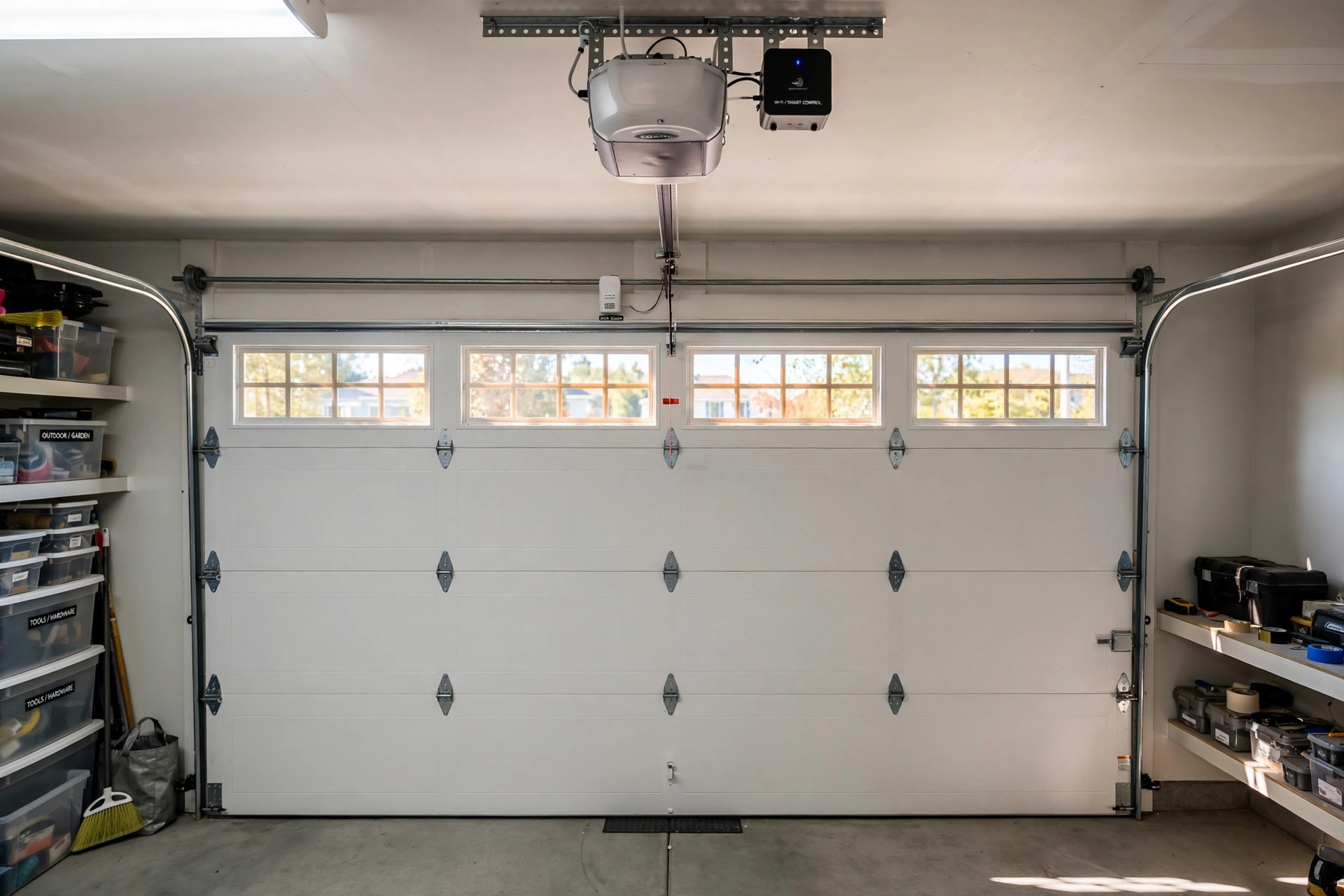
myQ is the smart line of the Chamberlain group, which also sells LiftMaster and Craftsman openers. The basic myQ Smart Garage Hub is a small box that mounts near the existing opener. A sensor goes on the garage door itself. The hub talks to the home Wi-Fi network and to the phone app.
How myQ Works
After setup, the app shows the door as open or closed. A tap opens or closes it. The app sends an alert each time the door moves. It can close the door on a timer at night. It can give guest access to a neighbor or a delivery driver for a short window.
myQ pairs with voice helpers such as Google Assistant. It once worked with HomeKit through an added bridge, though that path has changed over time. It also connects to some delivery services that place parcels inside the garage. Shoppers comparing retail stock often check The Home Depot or read hands-on notes at CNET.
myQ Strengths
The main strength of myQ is reach. It works with a huge number of openers made since the mid-1990s. The app is polished and stable, alerts arrive fast, and parts and support are easy to find in the United States.
myQ Drawbacks
The chief complaint is cost over time. Some myQ features, including connections to certain car dashboards and voice platforms, have moved behind paid tiers. The paid plans annoy those who remember when every feature was free.
Another point of friction is that the app is the center of everything. To open the door on arrival, the driver must tap the phone. There is no built-in car detection. Guests need the app too, or they stand outside.
Privacy has also drawn attention. The company collects usage data, and its terms have shifted more than once. Security guidance from the Consumer Product Safety Commission is worth a look for any home entry device.
Tailwind: The Automatic Option
Tailwind iQ3 is the current model from Tailwind, an American firm. It is a small box that wires into most existing openers. It uses the home Wi-Fi network like myQ. Its calling card is different: it tries to open and close the garage with no phone taps at all.
How Tailwind Works
Tailwind uses a vehicle sensor, a small disc that sits inside the car. When the car enters the driveway, the sensor tells the controller to open the door. When the car leaves, the door closes on its own. Each driver gets a sensor.
The Tailwind app still exists. It shows door status and sends alerts. But the daily rhythm is hands-free. For a two-car home, both cars can carry sensors. For visitors, the app gives temporary access.
Tailwind Strengths
The hands-free design is the clear win. Drivers never tap a phone at the curb. Reviews at PCMag and The Verge have noted how natural this feels after a week of use.
Tailwind charges no subscription. The box, the sensor, and the app come with the purchase price, and there is no monthly fee after. That makes the long-term cost simple to figure. The system also works with nearly any opener brand through a simple wire connection.
Tailwind Drawbacks
Tailwind is a small company, and that shows. Support is thinner than Chamberlain’s network, and retail shelf presence is small; most buyers order online.
The vehicle sensor needs the car. A teenager on a bicycle gets no automatic open. The app covers those cases, but it adds a step.
Some users report Wi-Fi quirks. The unit wants a steady signal in the garage, which sits at the edge of many home networks. A weak signal can delay the automatic open; a small range extender often fixes it.
Side-by-Side Comparison
| Point | myQ | Tailwind | |—|—|—| | Maker | Chamberlain (large, USA) | Tailwind (small, USA) | | Base hardware cost | Lower for hub-only kits | Mid-range for controller plus vehicle sensor | | Subscription | Some features paid | None | | Auto open on arrival | No, app tap needed | Yes, with vehicle sensor | | Auto close on departure | Timer only | Yes, with vehicle sensor | | App control | Yes, full | Yes, full | | Voice control | Yes, some tiers paid | Yes, Google and Alexa | | Guest access | Yes, through app | Yes, through app | | Opener compatibility | Very wide | Very wide, wired install | | Support network | Large | Small |
Cost and Price in the USA
Exact prices shift by store and season, so ranges are more honest than single figures.
The myQ hub kit usually sits at the low end of smart garage hardware. It is often the cheapest way to add phone control to a working opener. But buyers should add any paid tiers they plan to keep. A yearly plan over five years can exceed the price of the hardware.
The Tailwind iQ3 kit costs more up front. It ships with the controller and one vehicle sensor. Extra sensors for more cars cost extra. There is no fee after the sale. Over five years, the total often lands below myQ with paid features.
Installation labor adds a line either way. Both devices are sold as do-it-yourself kits, and most handy owners finish in under an hour. The garage door opener installation cost near me page gives a sense of what local labor runs.
For those starting from scratch with a new motor rather than a smart add-on, the best quiet garage door opener reviews usa roundup covers full openers built for low noise.
Home security writers at Ring, SimpliSafe, and ADT also stress that the garage should be part of the whole-home plan. A Google Store search shows how voice helpers tie these devices into a larger smart home.
Installation: What the Job Looks Like
Both systems install without replacing the opener motor. A ladder, a screwdriver, and a phone are the usual tools.
myQ setup mounts the hub on the ceiling near the opener, sticks the door sensor to the top panel, and joins the home Wi-Fi through the app. The app then runs a short test to learn the opener’s signal. Most users finish in about thirty minutes.
Tailwind setup mounts the controller near the opener and wires two leads to the opener’s wall-button terminals. The vehicle sensor pairs with the controller, then goes in the car. The wired step takes a bit more care, and the manual should be read twice before power is cut.
In both cases, the garage needs a fair Wi-Fi signal. A phone test at the opener spot before buying saves a return trip. Old openers from before the mid-1990s may need a full replacement instead, since their electronics lack the needed inputs.
Care and Upkeep
Smart garage devices ask for little care, but a few habits keep them sound.
Keep the firmware current. Both brands push updates through their apps. An update can fix a bug or close a security gap. Set the phone to allow these updates.
Check the door sensor or the wire leads once a year. A sensor knocked loose by a broom handle sends false open alerts, and a wire shaken free by vibration stops the Tailwind from firing.
Watch the batteries. The Tailwind vehicle sensor runs on a coin cell that lasts a year or more. The myQ door sensor uses a small battery too. A dying battery is the most common cause of missed alerts.
Clean the phone app now and then. Remove old guest accounts; a guest code from two summers back should not still work.
Safety
A garage door is heavy, and its spring holds great force. Never touch the spring, cable, or track while testing a new controller. Let a trained tech handle spring work.
Test the auto-reverse feature after any install. Place a roll of paper towels on the floor under the door and close it. The door should touch the roll and rise again. If it crushes the roll, call a service tech before using the door.
Keep remotes and phone access away from children, and keep the photo-eye sensors near the floor clean and aimed at each other.
The Consumer Product Safety Commission publishes garage door safety notes for American homes. They are short and worth the read.
FAQ
Can myQ and Tailwind both work with my old opener? In most cases, yes. Both support the large opener brands made since the mid-1990s. Very old units, or some newer openers with coded wall consoles, may need an adapter or a full opener swap. Check the brand’s compatibility page with the opener’s model number before buying.
Which one is better for a family with three cars? Tailwind fits multi-car homes well, since each car can carry its own vehicle sensor and the door reacts to each driver. myQ works too, but every driver needs the app and must tap the phone.
Does either system work during a power outage? The smart features need power and Wi-Fi. The door itself still opens by hand with the red release cord. An opener with battery backup keeps motor power, and the smart box comes back when Wi-Fi returns. Neither brand sells its own backup battery for the controller.
Is there really no subscription with Tailwind? At the time of writing, Tailwind charges no monthly or yearly fee. myQ keeps its core open and close functions free, but some integrations sit behind paid tiers. Plans change, so buyers should read the current terms at purchase.
Can delivery drivers use my garage with these systems? myQ offers timed guest access and links to some in-garage delivery programs. Tailwind offers app-based guest access. Both let the owner open the door from far away for a one-time drop, and the event log shows the time.
Which system should a renter choose? The myQ hub mounts with no wiring into the opener, which a landlord may accept more readily. Tailwind needs wire leads on the opener’s terminals, a change some leases bar. Either way, get written permission first and restore the setup on move-out.
A Short Final Word
The myq vs tailwind garage opener comparison usa comes down to a simple trade. myQ offers the reach of a big brand, a polished app, and wide retail support, with some features behind paid tiers. Tailwind offers hands-free driving, no subscription, and an independent design, with the thinner support of a small company.
A buyer who likes tapping a phone and wants the biggest support network will lean toward myQ. A buyer who wants the door to open as the car arrives, and to pay once and be done, will lean toward Tailwind. Either choice makes the garage safer and easier to mind.
References
ADT. (n.d.). Home security and automation. https://www.adt.com CNET. (n.d.). Technology news and reviews. https://www.cnet.com Consumer Reports. (n.d.). Product reviews and ratings. https://www.consumerreports.org Google Store. (n.d.). Smart home devices. https://store.google.com PCMag. (n.d.). Technology product reviews. https://www.pcmag.com Ring. (n.d.). Smart home security devices. https://www.ring.com SimpliSafe. (n.d.). Home security systems. https://www.simplisafe.com The Home Depot. (n.d.). Home improvement products. https://www.homedepot.com The Verge. (n.d.). Technology news and reviews. https://www.theverge.com U.S. Consumer Product Safety Commission. (n.d.). Product safety information. https://www.cpsc.gov
Was this guide helpful?

About James Carter
The My Garden US editorial team writes practical, in-depth home and garden guides for American homeowners — tested advice, no fluff.
You May Also Like
Smart Padlock for Gate Reviews 2026 USA: A Plain Guide to Buying the Right One
April 19, 2026 0 views
Generac vs Kohler Generator Comparison USA
April 3, 2026 0 views
Smart Landscape Lighting Kit Reviews USA: A Buyer’s Guide
January 21, 2026 0 views