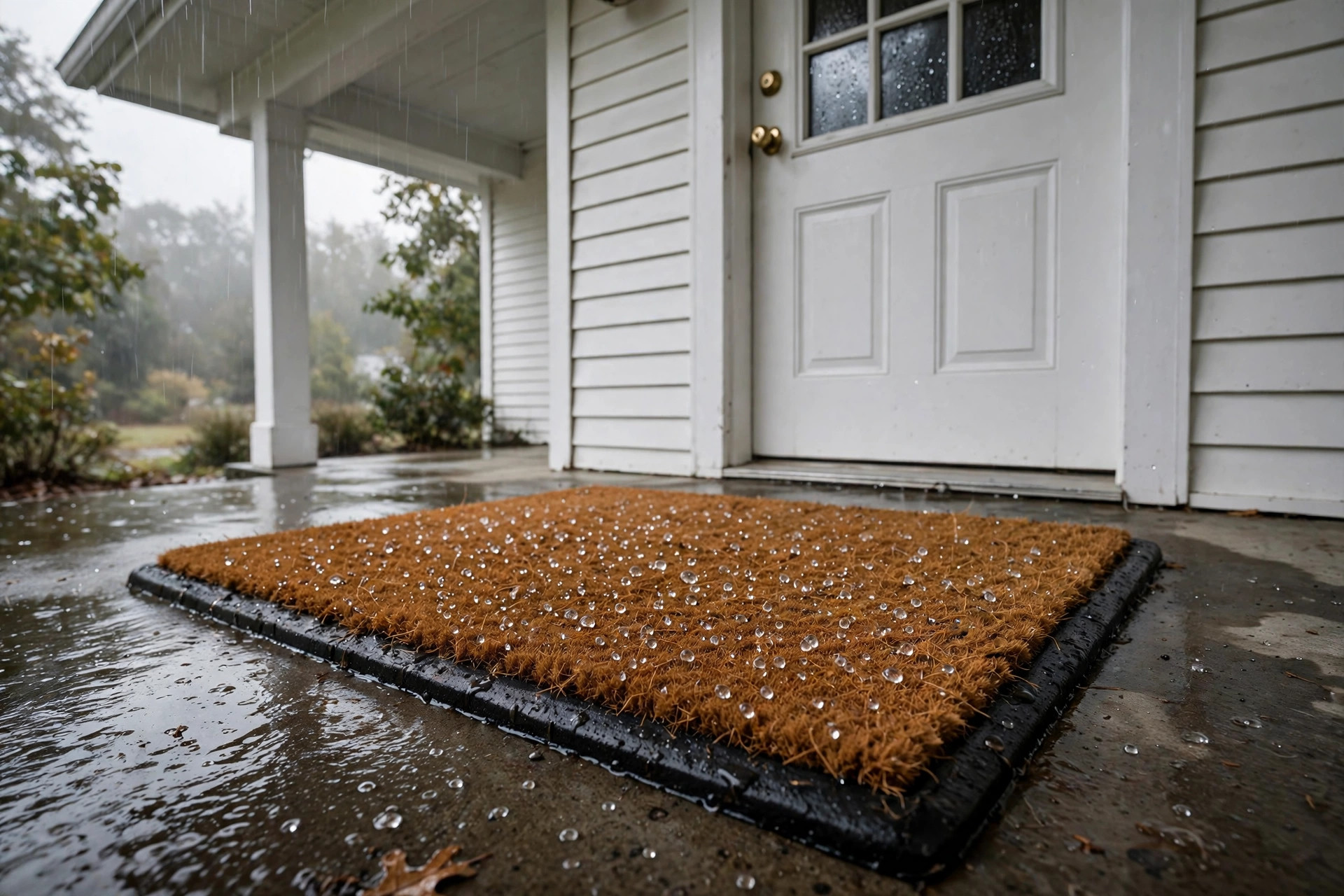

A good doormat is a small item with a big job. In wet parts of the country, the door mat is the first line of defense between a rainy day and a clean floor. The best doormat for rainy climates USA shoppers can buy is not always the one with the prettiest picture. It is the one that scrapes mud off boots, holds water instead of spreading it, and dries out fast enough to be ready for the next storm.
People who live where it rains often know the pattern well. You step in from the rain and leave a trail of wet footprints down the hall. The rug by the door turns dark and stays damp for hours. In bad cases, that damp mat can start to smell. It can also damage the floor beneath it. Wood floors swell. Carpet pads hold moisture. Tile gets slick. A proper rain-ready doormat stops most of this trouble before it starts.
Why It Matters: What a Doormat Does in Wet Weather
A doormat has three jobs in a rainy climate. First, it scrapes. The stiff top layer pulls mud, grit, and loose dirt off shoes. Second, it absorbs. The fibers take up the water that drips off shoes and pants. Third, it contains. A good mat holds that water in place until it can dry out. Cheap mats fail at the second and third jobs. They let water run across them and onto the floor.
The stakes are higher than most people think. Wet floors are a slip hazard, and the entryway is one of the most common places for falls at home. Grit tracked in from outside acts like sandpaper on wood and vinyl floors. Over time, it dulls the finish and grinds permanent scratches into the surface. Moisture that sits against wood trim can also feed mold over time, which is why the advice on flooring care from The Spruce treats the entryway as a zone that needs real protection, not just decoration.
What to Look for When You Choose a Rain Doormat: Best Doormat for Rainy Climates Usa
Not every mat sold as an outdoor mat can handle real rain. Here is what to check before you buy.
Material
Coir, rubber, and polypropylene are the three materials that show up most on quality rain mats. Coir is made from coconut husk fiber. It is stiff, rough, and excellent at scraping shoes clean. It also holds up well in damp air. Rubber is waterproof by nature. It does not rot, and it can be hosed off in seconds. Polypropylene is a tough synthetic fiber that resists mold and mildew, which makes it a smart pick for humid regions. You will find honest comparisons of fiber types in the guides at Shaw Floors and Mohawk Flooring, which explain how different fibers handle moisture and foot traffic.
Backing and Grip
A mat that slides around on a wet porch is useless and unsafe. Look for a rubber backing, which grips tile, concrete, and wood. Some mats have a flat vinyl edge instead of a fabric edge. That edging helps water stay on the mat instead of running off the side. If your porch is smooth tile, weight matters too. A heavier mat stays put when the wind blows rain sideways.
Size and Thickness
One small step on a tiny mat will not clean a shoe. For a main door, choose a mat that is at least 24 inches deep and 36 inches wide. Bigger is better. A mat that lets each foot land twice, once per shoe, does far more work. Thickness around half an inch to three quarters of an inch gives enough fiber to trap water without making the door hard to open.
Drainage
The best rain mats do not just soak up water. They let it pass through to the ground or the porch below. Grate style mats and open weave coir let water drain away so the top stays drier. If your porch is covered, an absorbent mat works well because it has time to dry between storms. If your door has no cover, choose a mat with drainage so water does not pool on top.
Types of Doormats That Handle Rain Well
Coir Doormats
Coir is the classic choice. The rough coconut fiber scrubs shoes better than almost anything else. A thick coir mat can last several years outdoors, even in steady rain, if it has a rubber backing to keep it flat. One weakness: coir sheds fibers at first. That is normal. Shake it out for the first week and the shedding stops. Coir works best under a covered porch where it can dry between rains.
Rubber Doormats
Rubber mats are the workhorses. They laugh at rain. Most have molded ridges or holes that scrape dirt and let water drain through. They never rot and never need a dryer. The trade off is looks. Rubber mats are plain. They also absorb almost nothing, so water pools on a solid rubber mat until it drains off the edges. For a side door or garage entry, plain rubber is often the smartest buy.
Water Absorbing Fabric Mats
These are the newer indoor outdoor mats made from chenille or microfiber on a rubber base. They can hold many times their weight in water. For the entryway just inside the front door, a water absorbing mat catches what the outdoor mat misses. In a rainy climate, this two mat system, scraper outside and absorber inside, is what many housekeeping guides recommend. You can browse indoor absorbent options at LL Flooring and Wayfair.
Grate and Scraper Mats
Commercial buildings use grate mats at their doors for a reason. Metal or heavy rubber grates scrape shoes hard and let water fall through to a tray or the ground below. Home versions are smaller but work the same way. If your household includes farm boots, work boots, or soccer cleats, a grate style mat may be the strongest option of all.
How to Choose the Right Mat for Your Home
Start by looking at your door. Is it covered by a porch roof or awning? If yes, you have room to use an absorbent mat outside, since rain hits it only in storms. If the door is fully exposed, choose drainage over absorption. Water that cannot drain will sit on the mat and soak the shoes of the next person through the door.
Next, count the feet. A single person who wipes shoes carefully needs far less mat than a family of five with two dogs. Heavy traffic calls for a bigger mat and tougher material. Rental homes and apartments add one more factor: the mat must not stain the floor. Some rubber backed mats leave marks on light floors when left wet for long stretches. A mat with a flat edge and a breathable backing is safer for delicate floors.
Think about style last, not first. A handsome mat that does not handle water is worse than a plain mat that does. Buy for function, then pick the nicest looking option among the good performers. Big box stores such as Home Depot and Lowe’s carry wide ranges side by side, which makes it easy to compare a coir doormat for heavy rain against a rubber scraper mat in person.
If you are updating the whole entry, it is worth thinking about the floor under the mat as well. Entry floors take the hardest abuse in the house. When the old floor is due for replacement, readers often compare it with projects like choosing large format tile for a small bathroom or weighing berber vs frieze carpet for busy rooms, and the same toughness logic applies at the front door.
Cost and Price Guide
Doormats are one of the cheapest home upgrades you can make. A basic rubber mat costs little and can last for years. A thick coir mat with a rubber backing and a printed design costs more but still sits well within a modest budget. High end options, such as extra large commercial grade scraper mats or designer indoor absorbent mats, cost more again but are still far cheaper than refinishing a damaged wood floor.
The two mat system, one outdoor scraper and one indoor absorber, is the best value for rainy climates. Together they protect floors that cost thousands to replace. Spending a bit more on the outdoor mat usually pays off, since it takes the worst of the weather. When money is tight, start with the outdoor mat. It does the heavy lifting.
Watch for false economy. The thinnest mats in the store look like a bargain, but they slide around, fold up at the corners, and wear through in a season. A mat that lasts five years at a fair price costs less per year than a cheap mat replaced every spring. Check the thickness, the backing, and the weight in your hands before you decide.
Care and Upkeep
A doormat needs a little care to keep working. Shake out the outdoor mat every week or two. In fall, leaves and pine needles can clog the fibers fast. Hose down rubber mats once a month and let them dry in the sun. Sunlight is the best cleaner a mat can get. It dries the fibers and kills the mildew that causes musty smells.
Coir mats need the least care of all. Shake them, and every few months brush them with a stiff broom to lift the flattened fibers. Do not soak a coir mat on purpose. Indoor absorbent mats can usually go in the washing machine. Check the label first, wash on a gentle cycle, and air dry them flat.
Replace a mat when it stops doing its job. Signs include fibers worn flat, edges that curl up and will not lie flat, a backing that has cracked, or a smell that does not wash out. A curled edge is also a trip hazard and should be fixed or replaced right away. Most quality mats give two to five years of hard service in a rainy climate.
If you enjoy hands on projects around the house, entryway care fits right in with weekend work. Readers who take on bigger jobs, from laying tile with a tile leveling system to simple seasonal deep cleans, often find that small habits like shaking out the mat do as much for the home as the big projects.
Safety Around Wet Entryways
A wet entryway is a fall risk, and the mat itself can be part of the problem or part of the solution. Choose mats with a low profile edge that feet do not catch on. Beveled edges are safer than square cut edges. Make sure the mat lies flat on day one and stays flat. If the corners lift, tape them down with double sided rug tape made for hard floors, or replace the mat.
Inside the door, keep a dry zone. The indoor absorbent mat should sit fully inside, past the swing of the door. Wet coats and umbrellas add to the puddle problem. An umbrella stand and a tray for wet shoes keep that water off the floor. Good lighting helps too. A well lit entry lets people see wet spots before they step in them.
Older homes deserve extra care at the entry. Door thresholds wear down over the years, and water can sneak under them. The long running renovation guides at This Old House often cover threshold and entry repairs that pair well with a good mat. A sound threshold plus a working mat keeps the rainy season outside where it belongs.
Frequently Asked Questions
What is the best doormat material for heavy rain? Coir with a rubber backing is the best all rounder for a covered porch. It scrapes well and survives damp air. For an uncovered door, choose a rubber scraper mat with drainage holes. For just inside the door, add a water absorbing fabric mat. The outdoor plus indoor pair beats any single mat.
How often should I replace my doormat in a rainy climate? Plan on every two to three years for the outdoor mat and every one to two years for the indoor absorbent mat. Heavy foot traffic, pets, and direct sun all shorten mat life. Replace sooner if the mat curls, smells, or no longer lies flat.
Can a doormat damage my floors? A wet mat left sitting on wood or light colored tile can trap moisture and leave marks. Lift the mat now and then to let the floor dry, especially after big storms. Mats with flat, smooth rubber backings are gentler on floors than mats with rough or recycled rubber edges.
Should I use one mat or two at the front door? Two is better in rainy climates. Put a scraper mat outside to remove mud and grit, and an absorbent mat inside to catch water. Each mat does one job well instead of one mat doing two jobs poorly.
Do coir mats work when they get soaked? Yes, but they work best when they can dry between rains. Under a covered porch, coir handles rainy climates very well. On a fully exposed step, rubber with drainage is the safer pick.
How do I stop my doormat from sliding? Buy a mat with a real rubber backing and enough weight to stay put. On smooth tile or sealed concrete, a non slip rug pad cut to size adds grip. Keep both the floor and the mat backing clean, since grit under the mat acts like ball bearings.
A Short Final Word
The best doormat for rainy climates USA homeowners can choose is the one that fits the door, the weather, and the household. Coir outside, absorber inside, and a little weekly care will keep floors cleaner and safer through the wettest months. It is a small purchase that pays for itself many times over. When the rain starts, you will be glad the mat is doing its job.
References
LL Flooring. (n.d.). Hardwood, vinyl, and tile flooring. https://www.llflooring.com Lowe’s. (n.d.). Home improvement products. https://www.lowes.com Mohawk Flooring. (n.d.). Flooring products. https://www.mohawkflooring.com Shaw Floors. (n.d.). Flooring products. https://www.shawfloors.com The Home Depot. (n.d.). Home improvement products. https://www.homedepot.com The Spruce. (n.d.). Home and garden advice. https://www.thespruce.com This Old House. (n.d.). Home renovation guidance. https://www.thisoldhouse.com Wayfair. (n.d.). Furniture and home goods. https://www.wayfair.com
Was this guide helpful?

About Michael Thompson
The My Garden US editorial team writes practical, in-depth home and garden guides for American homeowners — tested advice, no fluff.
You May Also Like
Composite Decking Cost Per Square Foot in the USA: A Plain Guide
July 26, 2026 0 views
Best LVP Flooring Brands 2026 USA: What Homeowners Should Know
May 29, 2026 0 views
Best Flooring for Lake House Rentals USA: A Plain Guide for Owners
September 21, 2026 0 views