
When a baby starts teething, few things stay untouched. The crib rail is often the first target. A crib rail cover for teething protection padded solves this problem in a simple way. It wraps the top rails of the crib with soft, thick layers. The baby chews on the cover instead of the wood. Gums get relief. The crib stays clean and smooth. This guide explains what these covers are, why they help, and how to pick the right one.
Why a Padded Crib Rail Cover Matters
Teething usually begins around four to six months. Babies feel pressure in their gums. They want to bite and chew on firm things. The crib rail is firm, always near, and easy to reach when they pull up to stand. It is a natural choice for a teething baby.
Chewing on bare wood can cause harm. Paint or finish can chip and flake. Small bits may end up in the baby’s mouth. Wood edges can feel sharp against tender gums. A padded cover puts a soft shield between the baby and the rail. The baby can chew freely. The parent can rest easy.
There is another benefit. Cribs are not cheap. A new crib can cost several hundred dollars. Teeth marks spoil the look and lower its value. Families who plan to reuse the crib for a second child want it to last. A rail cover protects this investment. When the cover wears out, you replace the cover, not the crib.
A soft crib rail protector for teething babies also keeps the nursery calm. Some babies chew loudly on bare wood at night. A padded layer makes the sound dull and soft. This small change can help everyone sleep a little better.
How to Choose the Right Cover: Crib Rail Cover for Teething Protection Padded
Not every cover fits every crib. A good choice starts with three simple checks: size, material, and attachment.
Measure the Rails First
Take a tape measure to the crib before you buy. Measure the length of the side rails and the width across the top. Standard cribs often have side rails near 51 inches long. Convertible cribs can differ. Mini cribs are smaller. A cover that is too short leaves bare wood at the ends. A cover that is too wide slides around.
Many covers come in sets. A set may cover two long side rails and leave the ends bare. This works for most families, since babies chew the sides most. Full sets cover all four rails. Choose what fits your crib and your budget.
Pick Safe Materials
The best padded crib rail covers use layers. A soft outer fabric touches the baby’s skin. A thick middle layer gives the cushion. An inner backing keeps the cover in place. Cotton is a common outer fabric. It feels soft and washes well. Minky fabric is softer still, though it holds more heat.
Look for covers free of harsh chemicals. Baby products should avoid lead, phthalates, and heavy dyes. Many parents check that fabrics are certified as safe for infants. If a cover has a strong chemical smell when new, air it out or wash it before use. Never place a cover on the crib while it still smells of chemicals.
Waterproof layers are a mixed blessing. They stop drool from reaching the wood. But they can trap heat and sweat. A cover with a breathable waterproof barrier works best. It blocks moisture but still lets air pass.
Check the Attachment Style
A cover is only safe when it stays put. Common attachment styles include ties, snap buttons, hook-and-loop straps, and stretch sleeves.
Ties work well when they are long and strong. They wrap around the rail and knot underneath. Make sure tied ends are short. Long strings near a baby are a hazard. Snaps are quick to use and hold firm. Check that each snap clicks fully shut. Hook-and-loop straps adjust to rail width. Stretch sleeves slide on like a pillowcase. They need no ties at all.
Whatever style you pick, test it. Tug the cover hard after fitting it. If it shifts or pulls off, it is not safe. A fitted cover should grip the rail like a glove.
Types of Padded Crib Rail Covers
Crib rail covers come in a few main types. Each suits a different need.
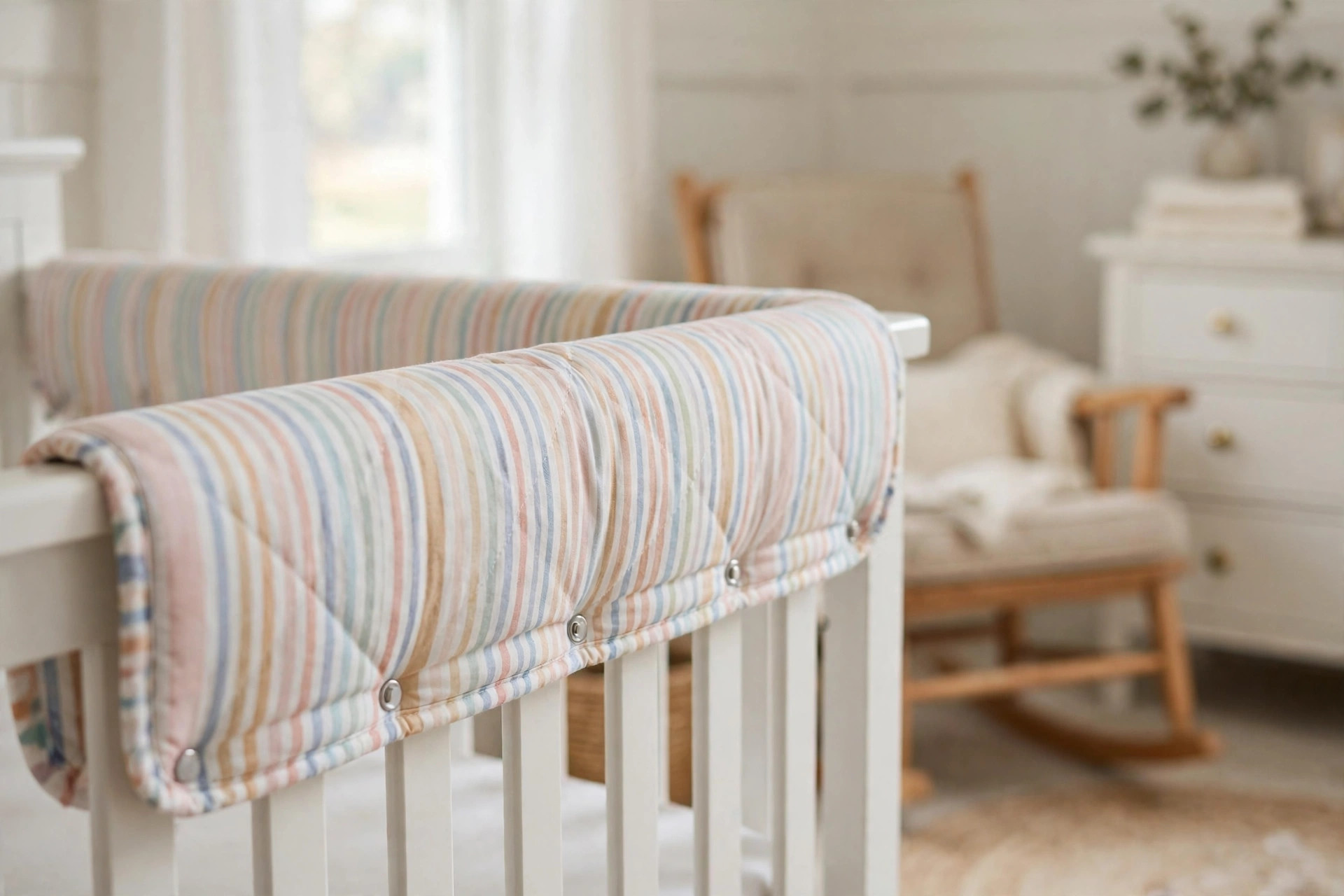
Wrap-style covers fold over the top rail and fasten below. They cover the top and sides of the rail. Most padded covers use this style. They are easy to remove for washing.
Sleeve-style covers slide onto the rail from one end. They need no fasteners. The fit must be exact. Too loose and they twist. Too tight and they will not go on.
Quilted covers add extra stitching through the layers. The quilting keeps the padding from bunching. A quilted crib rail cover for cribs stays smooth after many washes. Many parents prefer this type for heavy chewers.
Clear plastic covers are not padded. They protect the wood but give no softness for sore gums. Some families use them together with a padded cover. The plastic goes under the padded layer for extra moisture protection.
Single-rail covers protect one rail at a time. They cost less. They suit babies who chew one favorite spot. Full sets cover every rail. They suit standing babies who roam the whole crib.
Match the type to your baby’s habits. A baby who only gnaws the front rail needs less coverage. A baby who stands and chews everywhere needs a full set.
Cost and Price
Padded crib rail covers are modest in price. Single covers often sell for five to ten dollars. A two-rail set usually costs ten to twenty dollars. Full four-rail sets run from fifteen to thirty dollars. Prices vary by brand, fabric, and padding thickness.
Higher prices do not always mean better quality. A ten-dollar cover from a trusted maker can outlast a twenty-dollar one from a poor one. Read the details before you buy. Check the fabric type and the fastener style. Thick padding matters more than a fancy pattern.
Compared to the cost of a crib, a cover is a small expense. One set of covers costs far less than repairing or replacing chewed rails. For families who also shop for nursery pieces such as a crib skirt for convertible cribs, a rail cover fits well into the same small budget.
Big stores and small shops both carry these covers. Many parents compare prices at large retailers such as Target and Amazon, where many brands sit side by side. Home and nursery shops like IKEA and Wayfair also stock crib rail covers in many prints and colors.
Care and Upkeep
Teething babies drool. A lot. A padded rail cover will get wet every day. Wash it often. Most covers can go in the washing machine. Use a gentle cycle and mild baby detergent. Hot water cleans better, but check the label first. Some fabrics shrink in heat.
Dry the cover fully before putting it back. Damp padding can smell and grow mold. Tumble dry on low, or hang it in a warm room. Press the padding flat after washing to keep it even.
Buy two covers if you can. Use one while the other washes. This simple step keeps the crib rails covered at all times. It also lets each cover dry fully between uses, which keeps the fabric fresh longer.
Check the cover once a week. Look for loose threads, thin spots, and broken snaps. A heavy chewer can wear through thin padding in a few months. Pull out a worn cover before holes form. Small bits of loose fabric are not safe for a baby. Cleaning and care tips for nursery fabrics are easy to find on home care sites such as The Spruce.
Safety Notes
A crib rail cover is safe only when it is used right. Keep these points in mind.
Fit the cover to the rails and to nothing else. Do not let a cover hang loose or trail below the rail. Long ties must be short and tucked away. Any string near a baby’s neck is a risk.
Never add soft bedding along with the cover. The cover alone is fine. Extra blankets and bumpers are not. Safe sleep rules say the crib should hold a firm mattress and a fitted sheet only. The rail cover does not change this rule.
Buy covers made for cribs. Do not use towels, scarves, or homemade wraps. Products made for crib rails meet safety standards for baby gear. The U.S. Consumer Product Safety Commission sets rules for crib safety and recalls unsafe products. Check their site if you want to verify a product or read current guidance.
Watch your baby with the cover in place. If the baby pulls it loose, refit it at once. If the baby manages to remove it again and again, try a different attachment style. A cover that will not stay put should not stay in the crib.
Health guidance on teething signs and comfort can be found at HealthyChildren.org, the parent site of the American Academy of Pediatrics. Teething timelines and what to expect month by month are covered by parenting resources such as What to Expect.
Frequently Asked Questions
At what age does my baby need a rail cover?
Most babies start teething between four and seven months. You can fit the cover as soon as the baby shows signs of teething or starts to pull up. Some parents fit it early, at three months, so the crib is ready. There is no harm in starting early.
Will a padded cover fit a convertible crib?
Yes, in most cases. Measure the rails as described above. Convertible cribs sometimes have wider rails or shaped tops. Sleeve-style covers may not fit shaped rails. Wrap-style covers with ties or snaps adjust to most shapes. A padded crib rail guard for teethers with adjustable straps is the safest pick for unusual rail shapes.
Can I wash a padded rail cover in the machine?
Most can. Use cold or warm water and a gentle cycle. Mild detergent is best. Skip fabric softener, which can coat the fabric and reduce absorbency. Dry fully before refitting. Always read the care label first.
How long does a rail cover last?
It depends on the baby. A light chewer may use one set for a year. A heavy chewer can wear through a cover in three to four months. Rotate two sets to extend their life. Replace any cover that shows holes, thin padding, or broken fasteners.
Are these covers safe for overnight use?
Yes, when they fit tightly and attach firmly. A well-fitted cover is part of the crib rail, not loose bedding. Follow the safety notes above. If the cover loosens, remove it until you can fix the fit.
Should I buy one cover or a full set?
Watch your baby for a few days. If the chewing stays on the front rail, one or two covers will do. If the baby stands and chews around the crib, buy the full set. A full set also looks nicer, since the crib rails match on all sides. Nursery shops like Pottery Barn Kids sell sets that match other nursery items.
A Final Word
A crib rail cover for teething protection padded is a small item with a big job. It shields tender gums. It saves the crib. It costs little and washes easy. Measure your rails, pick safe materials, and fit the cover tight. Then let your baby chew in peace.
As your child grows past the teething stage, the nursery grows too. Later you may shop for an adjustable desk chair for growing children or a soft lamp for reading in bed. For now, a simple padded rail cover is all you need. It is one of the easiest buys a parent can make.
References
Amazon. (n.d.). Online shopping. https://www.amazon.com American Academy of Pediatrics. (n.d.). HealthyChildren.org. https://www.healthychildren.org IKEA. (n.d.). Home furnishings. https://www.ikea.com Pottery Barn Kids. (n.d.). Kids furniture and decor. https://www.potterybarnkids.com Target. (n.d.). Retail store. https://www.target.com The Spruce. (n.d.). Home and garden advice. https://www.thespruce.com U.S. Consumer Product Safety Commission. (n.d.). Product safety information. https://www.cpsc.gov Wayfair. (n.d.). Furniture and home goods. https://www.wayfair.com What to Expect. (n.d.). Pregnancy and parenting guidance. https://www.whattoexpect.com
Was this guide helpful?

About Jennifer Lee
The My Garden US editorial team writes practical, in-depth home and garden guides for American homeowners — tested advice, no fluff.
You May Also Like

A Firm Crib Mattress for Safe Infant Sleep: What Parents Should Know
May 15, 2026 0 views
Kids Bookshelf with Bins for Toy Storage: A Complete Guide for Parents
May 4, 2026 0 views
Best Kids Dresser With Mirror for Teens: How to Pick One That Lasts
May 12, 2026 0 views