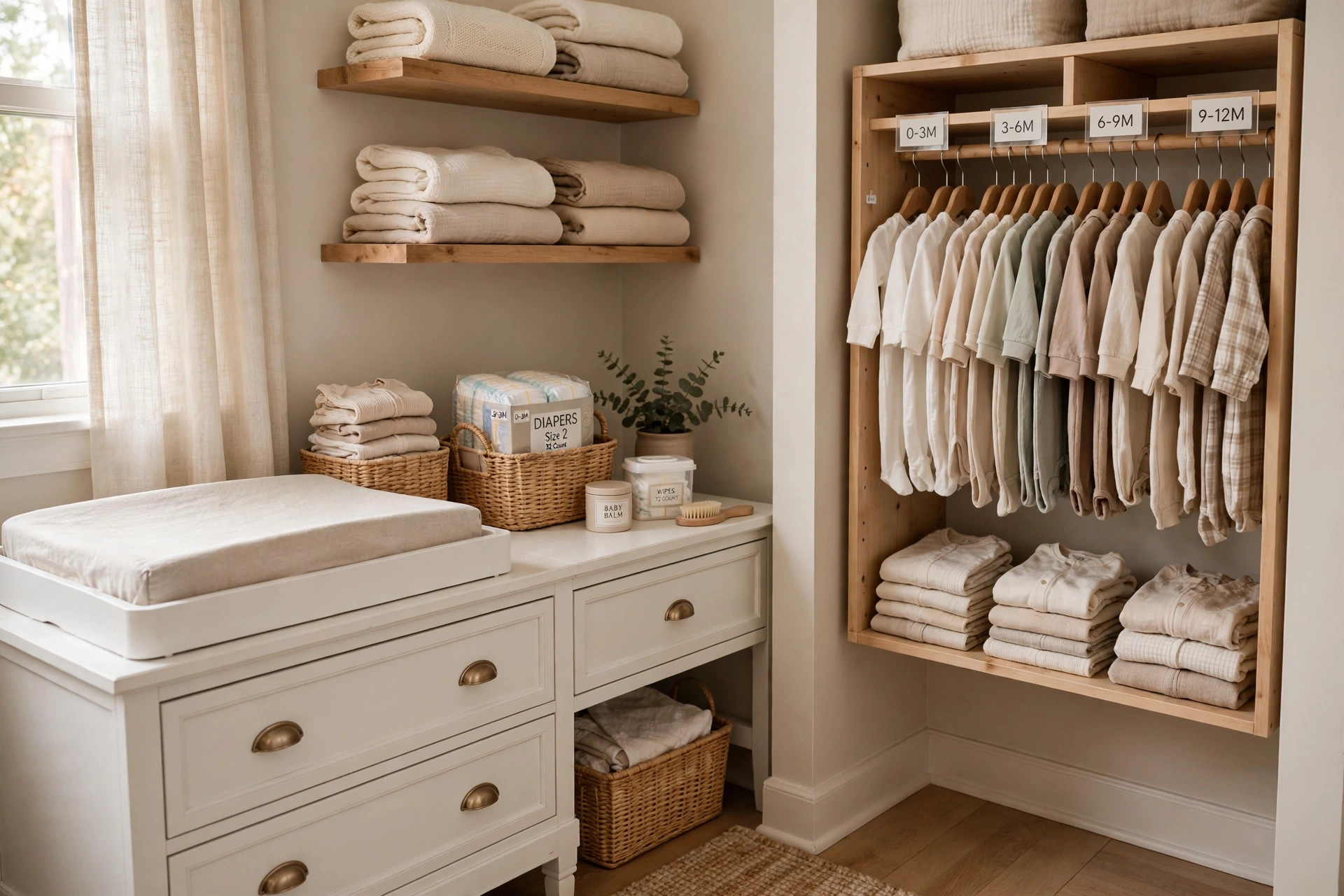

A baby brings a lot of things. Diapers. Wipes. Bottles. Clothes in many sizes. Blankets. Creams. Toys. A small apartment does not have room for all of it. That is why the best nursery storage for small apartment living matters so much. Good storage turns a tight corner into a calm, working nursery. This guide explains what to buy, how to arrange it, and how to keep it safe.
Why Small-Space Nursery Storage Matters
A baby needs care many times a day. Every feeding and diaper change should be smooth. When supplies are scattered, parents lose time and patience. In a small apartment, there is no spare room to hide clutter. Every inch must earn its place.
Smart storage also keeps the baby safe. Loose items fall. Open boxes tip over. Shelves that are too high tempt a parent to climb. The best nursery storage for small apartment living puts things where adults can reach them and babies cannot.
There is a money side too. Rent is high. Moving to a bigger place costs more. Good organizers let a family stay where they are. A few well-chosen pieces can make a one-bedroom home work for a new baby.
Storage also shapes the mood of the room. A tidy corner calms a tired parent at 3 a.m. A messy one adds stress to an already hard night. Simple bins and clear labels do more for peace of mind than most people expect. The goal is not a showroom. The goal is a room that works at midnight, one-handed, with a crying baby.
Finally, good storage grows with the child. Cube shelves that hold diapers today can hold picture books next year. Baskets that held onesies can hold blocks and crayons. Buying pieces that adapt saves money and waste.
How to Choose the Best Nursery Storage for a Small Apartment: Best Nursery Storage for Small Apartment Living
Measure Before You Buy
Start with a tape measure. Write down the size of the nursery corner. Note the door swing. Note the window. Note where outlets sit. Many parents buy a dresser that blocks the closet. Others buy shelves too wide for the wall. A sketch on paper saves returns.
Think about reach zones. The changing station should hold diapers, wipes, and creams within arm’s reach. Night feeding gear belongs near the glider or chair. Less-used items, like outgrown clothes, can live higher up or under the crib.
Plan the Layout for Flow
A small nursery works best when tasks flow in a line. Put the crib, the changing station, and the feeding chair close together. This forms a triangle. The parent moves a few steps between them. Supplies sit along the same path.
Leave the door and window clear. A crowded room feels smaller than it is. Push storage to the walls. Keep the middle of the floor open. This gives room for a play mat later. It also makes night walks safer in the dark.
Sketch two or three layouts on paper. Try the crib against one wall and the dresser against another. Turn pieces to face the door. Small changes make a big difference. Many parents find that moving one shelf opens up the whole room.
Pick Pieces That Do Two Jobs
In a small space, one piece of furniture should do more than one job. A dresser with a changing top works as both a changing table and a clothing store. A dresser changing table combo for small spaces can replace two bulky items. An ottoman with storage holds extra diapers and gives tired feet a rest.
Look for vertical design. Tall, narrow bookcases take little floor space. Wall-mounted shelves keep things off the floor. Doors can carry over-the-door organizers. Hooks on the wall hold bags, hats, and the diaper caddy.
Match Your Budget and Style
Nursery storage comes in many price ranges. Simple fabric bins cost little. Solid wood pieces cost more. Neutral colors grow well with the child. White, gray, and light wood fit most rooms. Bright colors are fun but harder to match later.
Check reviews before buying. Sites like Wayfair and IKEA show ratings from real parents. The Spruce publishes buying guides for nursery gear. These sources help you compare size, quality, and price.
Best Types of Nursery Storage for Small Apartment Living
Under-Crib Storage
The space under the crib is free real estate. Flat bins slide in and out. They hold extra sheets, blankets, and seasonal clothes. Some cribs come with built-in drawers. If yours does not, buy low-profile boxes that fit the gap.
Keep only soft or light items under the crib. Heavy boxes are hard to pull out. Label each bin so both parents know what is inside. A simple piece of tape with a marker works fine.
Wall Shelves and Hooks
Walls are wasted space in many nurseries. Floating shelves above the changing table hold creams, lotions, and small supplies. Make sure shelves are deep enough for bottles. Mount them high enough that a standing toddler cannot pull items down.
Hooks serve many uses. A row of hooks near the door holds the diaper bag, a jacket, and a hat. Inside the closet door, hooks hold headbands, bibs, or a laundry bag. Apartment Therapy often features small-nursery ideas that use wall space well.
Closet Organizers
The closet is the heart of nursery storage. A nursery closet organizer for baby clothes can double or triple its capacity. Hanging shelves divide the rod into cubbies. Small bins sort clothes by size: newborn, 0-3 months, 3-6 months. Shoe organizers on the closet door hold socks, hats, and small toys.
Use the shelf above the rod. Store out-of-season clothes there in labeled boxes. Keep a step stool nearby so adults can reach safely. Do not stack boxes where they might fall on the baby.
Storage Baskets and Bins
Baskets are the workhorse of small nursery storage. Nursery storage baskets for diapers and wipes keep the changing station tidy. One basket for diapers. One for wipes. One for creams. When the station is clean, the whole room feels calm.
Woven baskets look warm and hide clutter. Fabric bins fit cube shelves. Clear plastic bins show contents at a glance. The Container Store carries many small-space organizer options. Choose bins with handles so they slide out easily.
Dresser and Changing Combos
A wide dresser with a changing tray on top is a classic small-space answer. The top drawers hold daily clothes. The lower drawers hold blankets and extras. When the baby grows, remove the tray and the dresser serves for years. Pottery Barn Kids and other brands sell combo pieces built for nurseries.
Look for drawers that glide smoothly and stop before falling out. Anti-tip hardware is a must. Anchor every tall piece to the wall. This rule applies to bookcases and dressers alike.
Rolling Carts
A small rolling cart is a quiet hero. Load it with feeding supplies at night. Roll it to the changing station by day. Three tiers hold a lot. The cart tucks into a corner or closet when not in use. Choose one with lockable wheels so it stays put near the baby.
What Nursery Storage Costs
Prices vary by material and brand. Here is a rough guide based on common retail listings.
Fabric bins and baskets: 8 to 25 dollars each. A set of six often costs under 50 dollars. Over-the-door organizers: 15 to 35 dollars. Wall shelves: 20 to 60 dollars per shelf, plus brackets. Rolling carts: 30 to 80 dollars. Closet organizer sets: 40 to 120 dollars. Dresser changing combos: 200 to 600 dollars.
A full small-nursery storage setup can cost 300 to 700 dollars if you buy new. Thrift stores and hand-me-downs cut that sharply. Spend the most on the piece you touch every day, usually the dresser or changing station. Save on bins and baskets, which are easy to replace.
Care and Upkeep
Storage works only if it stays organized. Set a weekly rhythm. Every Sunday, spend ten minutes putting things back. Toss empty wipe packs. Restock diapers. Fold the clean laundry.
Sort clothes by size each month. Babies outgrow sizes fast. Move too-small clothes to a labeled box. Store that box high in the closet or under the crib. When the next size is needed, it is ready.
Wipe shelves and bins monthly. Dust gathers fast in a nursery. Use a damp cloth and mild soap. Avoid strong cleaners near baby items. Check baskets for worn handles. Replace bins that sag.
Teach the system to everyone who helps. Grandparents and sitters should know where diapers live. A simple label on each bin prevents confusion. Consistency keeps the small space working.
Safety Comes First
Safety is the most important part of nursery storage. Furniture tip-overs injure thousands of children each year in the United States. The Consumer Product Safety Commission warns that dressers, bookcases, and TVs must be anchored to the wall. Use the anti-tip kit that comes with the furniture. If none came with it, buy one.
Keep small items out of reach. Buttons, batteries, and coins are choking hazards. Store them high and behind closed doors. HealthyChildren.org, the parent site of the American Academy of Pediatrics, offers clear guidance on nursery safety.
Watch cords and strings. Blind cords should be cordless or secured high. Bag handles and long straps belong out of the crib zone. Heavy items go on low shelves, never high ones where they could fall.
Choose storage with safe finishes. Look for non-toxic paint and finishes. Let new furniture air out before the baby arrives. If a piece has sharp corners, add corner guards. What to Expect covers nursery setup checklists that many new parents find useful.
Frequently Asked Questions
How much storage does a newborn really need?
Less than most people think. A newborn uses diapers, wipes, a few outfits, blankets, and feeding supplies. Start with a changing station, one dresser or closet setup, and a few baskets. Add more only when you feel the pinch.
What is the best storage for a nursery in a one-bedroom apartment?
Pieces that serve two jobs win. A dresser with a changing top. A rolling cart. Wall shelves. Under-crib bins. These add capacity without taking floor space. Keep the layout open so the room does not feel crowded.
How do I organize baby clothes in a tiny closet?
Sort by size first. Use hanging shelf cubbies for daily sizes. Store the next size up in labeled boxes on the top shelf. Hang special outfits on the rod. Keep a donation box for outgrown items so the closet never overflows.
Are open shelves safe in a nursery?
Open shelves are fine if they are mounted high and hold only adult items. Keep them out of the baby’s reach as the child learns to stand and climb. Anchor all shelving to studs in the wall. Store heavy or breakable items in closed cabinets instead.
How often should I reorganize nursery storage?
Do a quick tidy each week and a deeper sort each month. Babies grow fast. Sizes, needs, and seasons change. A monthly pass keeps every bin useful and every label true.
Can I use regular home organizers in a nursery?
Yes. Many parents use standard cube shelves, fabric bins, and rolling carts. Just check that finishes are non-toxic and pieces are stable. Baby-specific gear matters most for sleep and feeding. For storage, regular organizers work well.
A Final Word
The best nursery storage for small apartment living is not the most expensive. It is the smartest. Measure your space. Choose pieces that do two jobs. Use walls, doors, and the space under the crib. Keep daily supplies close and extras tucked away. Anchor every tall piece. With a little planning, even the smallest corner can hold everything a baby needs, and still feel like home.
References
American Academy of Pediatrics. (n.d.). HealthyChildren.org. https://www.healthychildren.org Apartment Therapy. (n.d.). Home design ideas and inspiration. https://www.apartmenttherapy.com IKEA. (n.d.). Home furnishings. https://www.ikea.com Pottery Barn Kids. (n.d.). Kids furniture and decor. https://www.potterybarnkids.com The Container Store. (n.d.). Storage and organization products. https://www.containerstore.com The Spruce. (n.d.). Home and garden advice. https://www.thespruce.com U.S. Consumer Product Safety Commission. (n.d.). Product safety information. https://www.cpsc.gov Wayfair. (n.d.). Furniture and home goods. https://www.wayfair.com What to Expect. (n.d.). Pregnancy and parenting guidance. https://www.whattoexpect.com
Was this guide helpful?

About Lisa Anderson
The My Garden US editorial team writes practical, in-depth home and garden guides for American homeowners — tested advice, no fluff.
You May Also Like

A Toddler Bedding Set with Curtains Matching: A Calm Room for Your Little One
May 11, 2026 0 views
A Kids Bookshelf Tree Shaped for Playroom: What Parents Should Know
August 31, 2026 0 views
Nursery Glider Swivel for Easy Movement: A Full Buying Guide
September 4, 2026 0 views