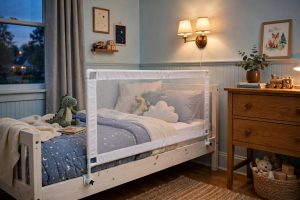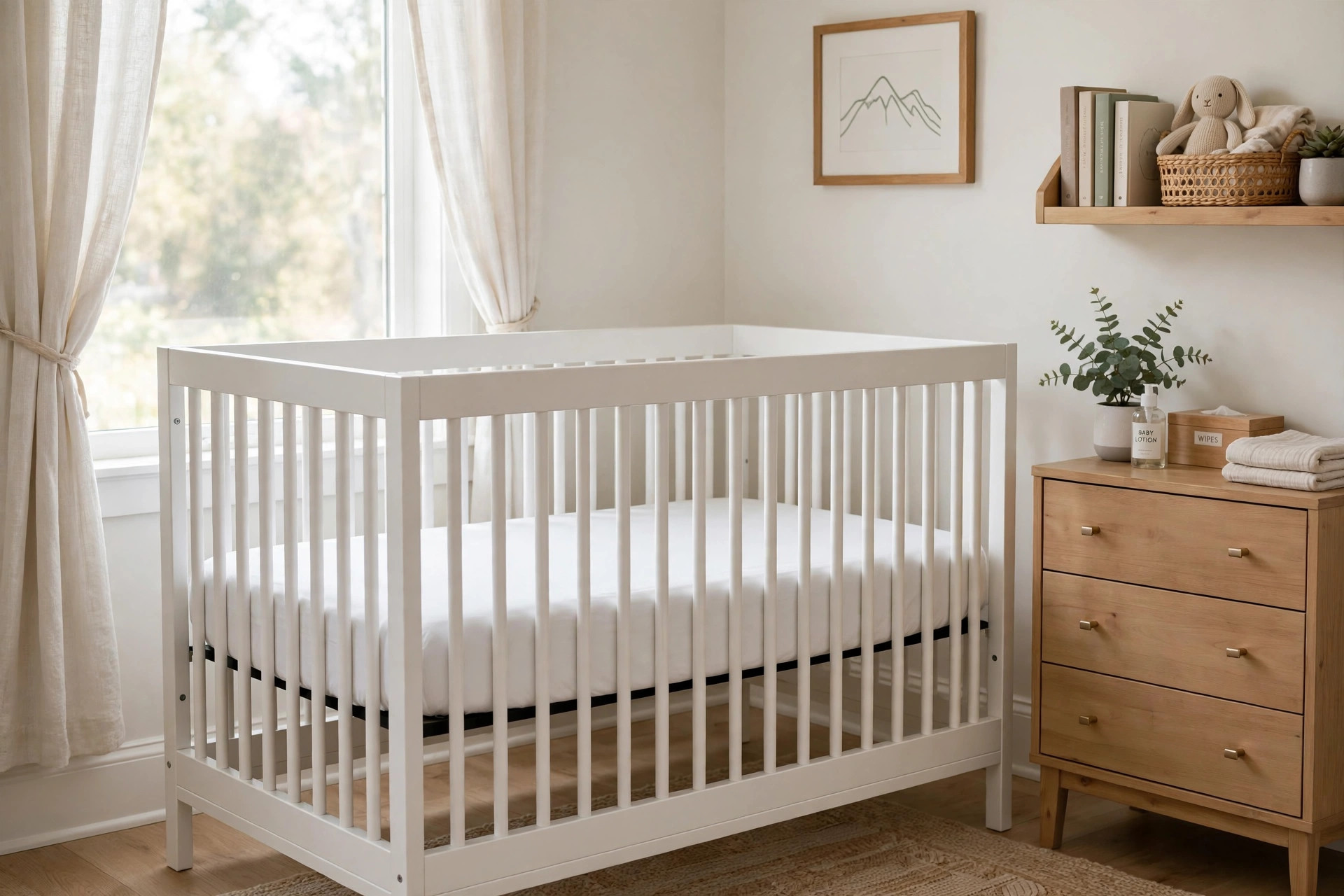

When you set up the nursery, few choices matter more than the mattress. A crib mattress firm for safe infant sleep is one of the clearest safety rules in baby care. Doctors, hospitals, and safety agencies all give the same advice: place your baby on his or her back on a firm, flat sleep surface, with nothing else in the crib.
Many new parents worry that a firm mattress will be hard for the baby. This worry is natural. Yet a baby does not need a soft bed. A baby needs a bed that holds its shape. Soft surfaces can curve around a small face, and that is where the danger lies.
This guide explains why firmness matters, how to test it at home, what to look for when you shop, and how to care for the mattress. It also answers the questions parents ask most often.
Why Firmness Matters for a Newborn
A newborn cannot lift his head well. If his face presses into a soft surface, the surface can form a small pocket around his nose and mouth. The baby may then breathe the same air again and again. Doctors call this rebreathing, and it lowers the oxygen the baby takes in.
A firm mattress keeps the sleep surface flat and does not sink under the weight of the head. Air moves freely around the face. This is why the safe sleep guidance from the American Academy of Pediatrics puts a firm mattress at the center of its advice. You can read the full guidance at healthychildren.org, the parent site of the Academy.
Firmness also protects against sudden infant death syndrome, known as SIDS. No single cause of SIDS has been found. But research has linked soft bedding and soft sleep surfaces to higher risk. The firm mattress is the base on which all the other rules rest.
There is another reason firmness matters. A baby grows fast. By four months, many babies can roll. A firm, flat surface gives the baby a steady base when he starts to move in sleep. A soft surface can trap a small limb. Firmness keeps the sleeping child where you placed him.
How to Test a Crib Mattress for Firmness: Crib Mattress Firm for Safe Infant Sleep
You do not need special tools to test firmness. You need your hands and your eyes. Stores allow you to press the floor models. When the mattress arrives at your home, test it again before the first night.
Start with the hand press. Place your open hand flat on the middle of the mattress and press down hard. A firm crib mattress should push back and not let your hand sink in. If your hand leaves a deep dip, the mattress is too soft.
Next, press with the side of your fist, using the weight of your arm. The mattress should feel almost hard. A baby’s head is heavy for its size, and the surface must hold it up, not cradle it.
Check the edges. Press down near each corner and along each side. Good mattresses hold their firmness at the edges. Weak edges can sag where they meet the crib rail, and a sagging edge can create a dangerous gap.
Finally, test the fit. Place the mattress in the crib and look at the space between the mattress and the crib sides. You should not be able to fit more than two fingers between the mattress and the frame. A tight fit means the baby cannot slip a limb, or worse, into a gap. The U.S. Consumer Product Safety Commission sets the legal size and safety standards for full-size crib mattresses, and you can review them at cpsc.gov.
What to Look For When You Buy
A safe mattress starts with the right size. A standard full-size crib mattress in the United States measures about 51 and five-eighths inches long and 27 and one-quarter inches wide, with a thickness of no more than six inches. Measure your crib before you shop. Some cribs run small. A mattress made for the wrong crib will not fit right.
Firmness comes next. Do not trust the word “firm” on the box alone. Press the mattress yourself, as described above. Online shoppers should read the return policy and keep the right to send the mattress back if it feels soft.
Look at the materials. Most crib mattresses are one of two kinds: innerspring or foam. Both can be safe when they are firm. The choice comes down to weight, price, and feel.
Check for a waterproof surface. Babies leak. A waterproof cover or a waterproof layer under the fabric keeps wetness out of the core. A dry core stays firm longer. It also resists mold and dust mites. Many parents add a fitted waterproof pad as well, which is fine as long as it fits tight and lies flat.
Look for safety certifications. Labels such as GREENGUARD Gold or CertiPUR-US mean the mattress has been tested for chemical emissions. These tests are not required by law. But they give parents extra peace of mind about what the baby breathes during the long hours of sleep.
Innerspring or Foam: Which Is Better
Innerspring mattresses hold steel coils inside a firm border. They tend to be heavy. Some weigh more than twenty pounds. The weight makes sheet changes harder. But coils give strong, even support, and these mattresses often last through more than one child.
Foam mattresses use a dense core of polyurethane or a similar foam. They are light, often only seven or eight pounds, so sheet changes take seconds. Foam must be high density to stay firm. Press the center hard and hold for ten seconds. If the foam springs back at once, the density is good.
Neither type wins on safety alone. A firm foam mattress is safer than a soft innerspring one. Judge the mattress in your hands, not the label on the side. Makers of organic crib mattresses, such as those at naturepedic.com, offer both coil and foam cores with certified materials for parents who want natural fibers.
Cost and Price: What to Expect
Crib mattress prices run from about fifty dollars to over three hundred dollars. Most parents spend between one hundred and two hundred dollars. Price buys comfort features, lighter weight, better covers, and name brands. It does not always buy more safety.
A basic firm mattress at the low end can meet every federal safety standard. The CPSC rules apply to all new crib mattresses sold in the United States, whatever the price. If the mattress is new, firm, and fits the crib, it is safe.
Mid-range mattresses often add a waterproof cover, a washable outer layer, or a two-stage design. Two-stage mattresses have a firm infant side and a slightly softer toddler side. These can be good value, since one mattress serves the crib years and the toddler bed years.
High-end mattresses add organic cotton covers, natural latex cores, or hand-built coils. These are pleasant but not required for safe sleep. Baby mattress manufacturers like Sealy, whose crib line you can see at sealy.com, sell firm options at every price level.
Do not buy a used mattress if you can avoid it. An old mattress may have soft spots you cannot see, and its history is unknown. If you must use a secondhand mattress, inspect it with care and replace it at the first sign of sagging.
Care and Upkeep
A clean mattress stays firm and healthy. Start with a waterproof layer. Use a fitted waterproof mattress protector under the sheet. It should grip the corners tight. A loose pad can bunch under the baby. Bunching creates an uneven surface. Choose a snug fit.
Wash the sheet often. Babies spit up. Diapers leak. Change the sheet at once when it gets wet. Keep two or three fitted crib sheets on hand so a clean one is always ready. Wash the waterproof protector on a regular schedule too, following the label.
Let the mattress air out when you change the sheets. Leave the bare mattress open to the air for a few minutes. Never place it near a heater or in direct hot sun to dry it. Heat can break down foam and warp covers.
Check the mattress every month. Press the center and the edges. Look for dips, lumps, or tears in the cover. Smell for must or mold. A good crib mattress should stay firm for the full crib years, which run about two to three years for most children. Replace it sooner if it softens.
If you buy a waterproof organic crib mattress, follow the maker’s care card. Organic covers often need gentler washing. The firmness rules are the same.
Safety Rules for the Whole Crib
The mattress is one part of a safe crib. The rest of the setup matters just as much. The American Academy of Pediatrics lists these rules in its safe sleep policy, and every parent should know them by heart.
Place the baby on his back for every sleep. Back sleeping has cut SIDS deaths by more than half since the 1990s. Side sleeping is not safe. Stomach sleeping is not safe. Back is best, for naps and for night.
Keep the crib bare. The mattress, a fitted sheet, and the baby are all that belong in the crib. No pillows, blankets, bumpers, stuffed animals, or sleep positioners. Loose items can cover the face or trap the baby. A bare crib may look empty. It is the safest crib.
Use the right sheet. The fitted sheet must match the mattress size and pull tight with no loose fabric. Deep-pocket sheets made for thick adult mattresses do not belong on a crib mattress.
Set the crib rail height right. When the baby can pull to stand, lower the mattress to the lowest setting. A curious toddler can climb. A high mattress makes the fall worse.
Check for recalls. Before you buy, and once a year after, search the model name on the CPSC recall list. Cribs and mattresses do get recalled. Parenting resources such as What to Expect keep running lists of recalled baby gear and explain what to do if your item is on one.
Dress the baby for the room, not the bed. If the room is cool, use a wearable blanket or sleep sack. These keep the baby warm with no loose fabric. They come in many sizes and weights. Nursery guides at The Spruce explain how to pick the right warmth level for the season.
Frequently Asked Questions
How firm should a crib mattress be? It should feel very firm to an adult hand. Press the center hard. The surface should push back and leave almost no dip. When in doubt, choose the firmer option. Babies sleep safely on hard surfaces.
Can I use a soft mattress topper for comfort? No. Do not add toppers, pads, or extra foam on top of the crib mattress. Anything that softens the surface raises the risk of suffocation. A thin, tight waterproof protector under the fitted sheet is fine. Nothing thick or soft belongs on top.
Is a used crib mattress safe? A used mattress can be safe only if it is still firm, clean, and undamaged. Check every inch for soft spots, stains, tears, and mold, and make sure it fits your crib with no gaps. Even then, a new mattress is the better choice, since you cannot know how the old one was stored.
When should I replace the crib mattress? Replace it when it loses firmness, shows dips or lumps, or the cover tears. Most quality mattresses last through the crib years. If you move the child to a toddler bed, check the mattress again. The same firmness rule holds. A convertible crib that becomes a toddler bed should get a fresh firmness check at each stage.
Do I need a special mattress for a mini crib or bassinet? Yes. Mini cribs and bassinets need their own size of mattress. Never cut a standard mattress down to fit. Never use a standard mattress in a small crib with gaps at the sides. Buy the mattress made for that exact model. The two-finger fit test applies to every size.
What bedding goes with a firm crib mattress? A fitted sheet made for crib mattresses is all you need. Choose soft cotton that fits tight. Skip the quilt, the comforter, and the pillow until the child is a toddler, and follow your doctor’s advice on timing. Simple nursery bedding sets look sweet in photos, but only the fitted sheet belongs in the crib while the baby is small.
A Final Word
A firm crib mattress is a quiet kind of protection. It does not sing or rock or light up. It simply holds its shape while your baby sleeps. That plain, steady support is what safe infant sleep rests on.
Shop with your hands, not just your eyes. Press the floor model. Check the fit in the crib. Keep the crib bare and the baby on his back. These small steps add up to real safety.
Retailers such as Wayfair and nursery furnishers like Pottery Barn Kids carry wide ranges of firm crib mattresses, and crib makers such as IKEA sell matching cribs and mattresses sized to fit each other. Wherever you buy, let firmness lead the choice. Your baby will sleep soundly on a firm bed, and you will sleep better knowing the bed is safe.
References
American Academy of Pediatrics. (n.d.). HealthyChildren.org. https://www.healthychildren.org American Academy of Pediatrics. (n.d.). Child health resources. https://www.aap.org IKEA. (n.d.). Home furnishings. https://www.ikea.com Naturepedic. (n.d.). Organic crib mattresses. https://www.naturepedic.com Pottery Barn Kids. (n.d.). Kids furniture and decor. https://www.potterybarnkids.com Sealy. (n.d.). Baby crib mattresses. https://www.sealy.com The Spruce. (n.d.). Home and garden advice. https://www.thespruce.com U.S. Consumer Product Safety Commission. (n.d.). Product safety information. https://www.cpsc.gov Wayfair. (n.d.). Furniture and home goods. https://www.wayfair.com What to Expect. (n.d.). Pregnancy and parenting guidance. https://www.whattoexpect.com
Was this guide helpful?

About Emily Rodriguez
The My Garden US editorial team writes practical, in-depth home and garden guides for American homeowners — tested advice, no fluff.
You May Also Like
Crib Sheet Saver for Quick Diaper Changes: A Parent Guide
June 29, 2026 0 views
Crib Mattress Protector Waterproof Breathable: The Complete Parent Guide
September 28, 2026 0 views
Best Toddler Tower for Kitchen Helping Stool: A Parent’s Buying Guide
January 31, 2026 0 views