When you search for window curtain panels deals near me, you want more than a list of stores. You want panels that look good, hang straight, and do not cost too much. This guide shows where to look, what to look for, and how to pay a fair price. Whether you dress one window or a whole house, the steps below will help you find window curtain panel sales worth your time.
Why Curtain Panels Matter
Curtains do quiet work in a home. They soften light. They give privacy at night. They make a room feel finished. A bare window can look cold, even in a room full of good furniture. Two simple panels change that in one afternoon.
Panels also save energy. Thick fabric keeps winter air out and summer heat in check. For bedrooms, heavy panels can darken a room for better sleep. For living rooms, sheer panels spread soft light across the floor.
Good curtain panels also protect what you own. Sunlight fades wood floors, rugs, and sofa fabric. A panel hung at the right spot blocks the worst of the midday sun. That is worth real money over the years.
When you hunt for window curtain panels deals near me, keep these benefits in mind. A cheap panel that falls apart in a year is no deal at all. A solid panel at a fair price is a true saving.
Where to Find Window Curtain Panels Deals Near You: Window Curtain Panels Deals near Me
Local shops are the best place to start. Department stores run curtain panel clearance prices at the end of each season. Home goods stores mark down panels when new patterns arrive. Outlet stores carry extra stock from big brands at lower prices.
Big box furniture stores often have a home decor section with ready-made panels. You can see the color in real light and feel the weight of the fabric. That matters. A color that looks warm online can look flat in your room. In a store, you can hold the panel next to your wall paint and know for sure.
For ideas on how panels fit into a full room plan, browse curtain panel buying guides to compare styles before you shop. Seeing the full range helps you spot a real bargain fast.
Discount home stores are another good stop. They sell closeout colors and last-season prints at deep cuts. The stock changes every week, so a regular visit pays off. Ask staff when new shipments arrive. Many stores put fresh panels on the shelves on weekday mornings.
Local drapery shops may surprise you. They cost more than discount stores, but they run sales on fabric and ready-made panels too. Their staff can tell you which header style fits your rod and which length works for your window height. That advice is free and worth a lot.
Do not skip secondhand sources. Thrift stores and consignment shops often carry nearly new panels for a few dollars. Estate sales are another fine source of quality fabric. Wash the panels well before you hang them, and they will look as good as new.
Online retailers with local pickup give you the best of both worlds. You can compare many prices from home, then pick up the panels at a nearby store. This saves shipping cost and lets you return the item fast if the color is wrong. Stores like IKEA and Crate and Barrel show store stock on their sites, so you can check before you drive.
What to Look for When You Shop
A good deal is not just a low price. Look at these points before you buy.
Fabric and Weight
Hold the panel up to the light. Thin fabric lets light pour through. That is fine for sheer panels, but not for a bedroom. Press the fabric between your fingers. It should feel even, not thin in spots. Check the seams along the edges. Straight, tight stitching lasts longer than loose threads.
Lined panels cost more but give more. The lining adds weight, blocks light, and keeps the panel from fading. Unlined panels are lighter and cheaper. They work well in rooms where you only want softness, not darkness.
Size and Fullness
Measure your window before you shop. Write down the width of the rod and the distance from the rod to the floor. Most ready-made panels come in standard lengths: 63, 84, 95, 108, and 120 inches. A panel that ends a few inches short of the floor can look wrong.
For fullness, plan on panels that are one and a half to two times the width of your window when closed. Two panels on one rod usually give enough fullness. One flat panel across a wide window will look stretched and thin.
Header Style
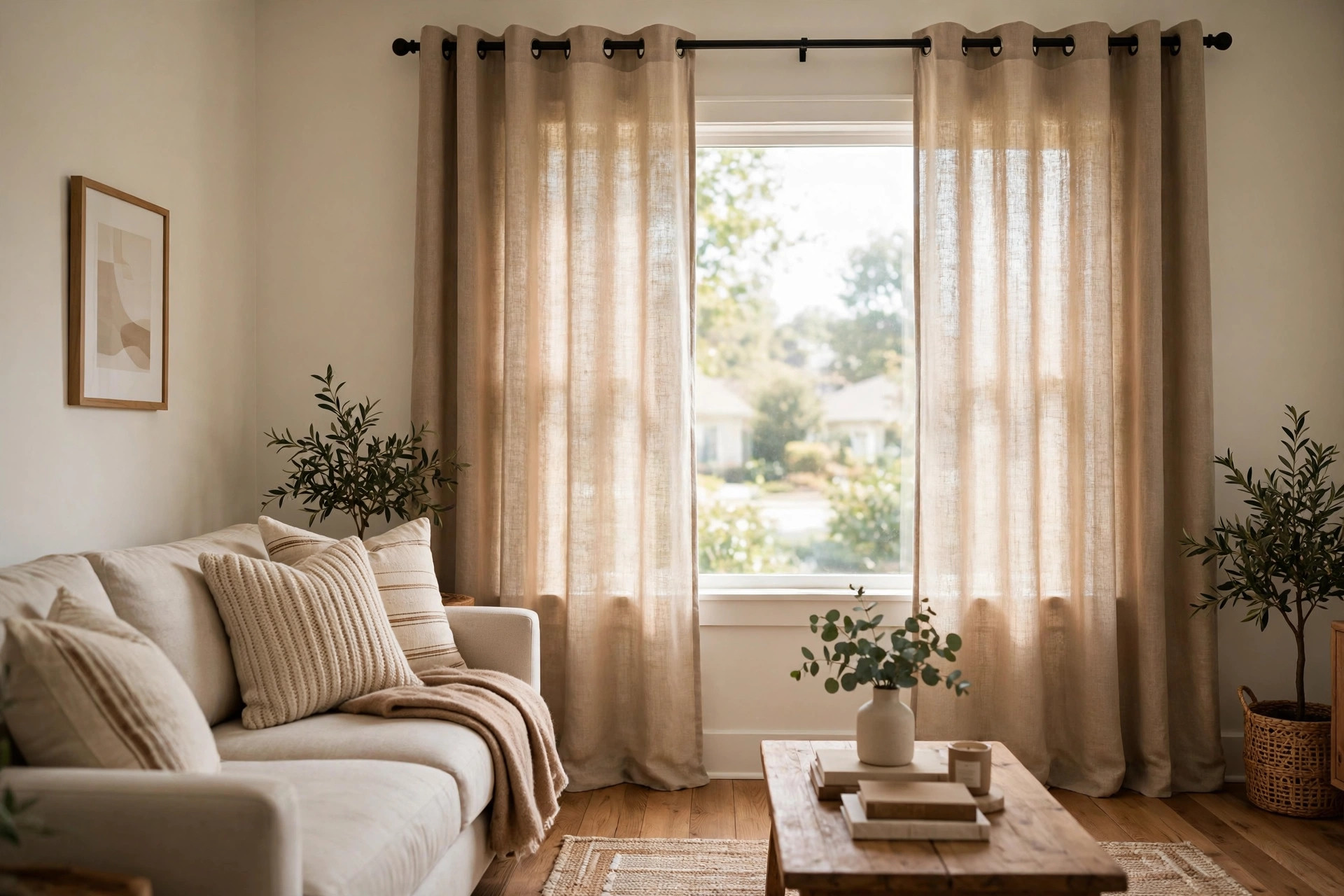
The header is the top of the panel. Rod-pocket panels slide onto the rod and hang with soft folds. Grommet panels have metal rings that slide easy and make deep, even waves. Tab-top panels have loops of fabric at the top. Back-tab panels hide the rod for a clean look.
Grommet panels are the easiest to open and close each day. Rod-pocket panels can stick on the rod. If you will move the panels daily, choose grommets or back tabs on a smooth rod.
Color and Pattern
Solid colors are the safest buy. They match more rooms and go out of style slowly. If you want pattern, pick one that repeats the colors already in your room. A rug, a sofa pillow, or a piece of living room wall art can give you the color map.
Neutrals cost less over time because you will not tire of them. A bold print on sale may feel like a deal today and a mistake next year. When the price is low, it is still smart to ask if you will love the pattern in five years.
Types of Curtain Panels
Sheer Panels
Sheers are light and airy. They soften daylight and keep some privacy during the day. They do not block much at night. Many people layer sheers behind heavier panels. Sheers are often the cheapest option, and window curtain panel sales often include them in multi-packs.
Light-Filtering Panels
These let light in but cut glare. They give daytime privacy and soft night privacy. They are a good middle choice for living rooms and kitchens.
Room-Darkening Panels
Room-darkening fabric blocks most light. It works well for bedrooms and media rooms. Check the label for the light-blocking rating. Some panels block 80 percent of light; true blackout panels block nearly all of it.
Thermal and Insulated Panels
These have extra layers that slow heat loss in winter and heat gain in summer. They are heavier and cost more, but they can lower energy bills. They work best on windows that face harsh sun or cold wind.
Outdoor Panels
Outdoor panels use weather-safe fabric. They dress patios and porches and stand up to sun and rain. Their prices vary by size and fabric grade.
Cost and Price: What You Should Pay
Ready-made curtain panel prices follow a simple pattern. Budget sheers can cost five to fifteen dollars per panel. Standard cotton or polyester panels run twenty to sixty dollars per panel. Lined or room-darkening panels run forty to one hundred dollars or more per panel. Custom panels start near one hundred fifty dollars per panel and go up from there.
Window curtain panel clearance prices can cut these numbers in half. End-of-season sales are the best time to buy. January and July bring deep markdowns as stores clear space for new stock. Holiday weekends add extra coupons on top of sale prices.
Here are ways to pay less:
– Buy panels in pairs. Two-pack sets cost less per panel than singles. – Check the clearance rack first. Slight color changes and short runs end up there. – Ask about price matching. Many local stores match a lower price from a competitor. – Sign up for store emails. A ten or twenty percent coupon often arrives in the first week. – Measure twice. Returns waste time and gas money. Right sizes the first time save both.
A full buying guide for curtain panels can help you compare fabric grades, so you know whether a low price means thin fabric or a real markdown.
If you plan to dress many windows, buy from one line in one color. That keeps the house looking tied together. Watch for bulk pricing at warehouse stores, where curtain panel deals near me often include extra discounts on multi-packs.
Care and Upkeep
Most ready-made panels can be washed at home. Read the label first. Cotton and polyester panels usually wash in cold water and dry on low heat. Linen panels may need gentler care. Always wash new panels before hanging. They may shrink a little, and the first wash removes sizing from the factory.
Take panels down once or twice a year for a full wash. In between, vacuum them with an upholstery brush to lift dust. Dust builds up along the top folds and the bottom hem. A quick pass keeps them fresh.
Steam out wrinkles instead of ironing. Hang the panel back on the rod, then run a handheld steamer from top to bottom. The weight of the fabric pulls the wrinkles smooth. For stubborn creases, a warm iron on the back side works, but test a hidden spot first.
Sunlight is the main enemy of curtain fabric. Rotate panels between windows if one side gets harsh sun. Lined panels last longer in bright rooms. When a panel starts to fade on the sun side, turn it around if the back looks clean, or move it to a shadier window.
Small repairs extend panel life. Restitch a loose hem with a few hand stitches. Replace a lost grommet with a kit from a craft store. These small fixes take minutes and save the cost of a new set.
Safety Tips
Curtains sit near windows, so a few safety rules matter.
Keep panels away from heat sources. Space heaters, radiators, and candles should stay at least three feet from hanging fabric. Long panels near a heater can catch a draft and swing into the heat.
Cord safety matters in homes with small children and pets. Choose cordless panels or tie cords high and out of reach. Many stores now sell only cordless styles. Retailers like West Elm and CB2 note cordless options on their product pages, and your local store can confirm current safety standards.
Hang rods with the right hardware. A heavy lined panel needs wall anchors, not just screws in drywall. If the rod falls, it can hurt someone or break a window. For wide windows, add a center support bracket.
Check that panels do not block exits. In a bedroom, make sure you can reach and open the window fast in an emergency. Panels should move aside with one pull.
Frequently Asked Questions
How many panels do I need for one window? Two panels are standard for most windows. They give enough fullness when closed and frame the window when open. For narrow windows, one wide panel can work. Measure the rod width and plan for one and a half to two times that width in panel fabric.
What length should curtain panels be? For a finished look, panels should just touch the floor or break slightly on it. Common lengths are 84 inches for standard windows and 95 or 96 inches for taller ones. Measure from the rod to the floor before you buy. Short panels that float above the floor look unfinished.
Are cheap curtain panels worth buying? Cheap panels can be fine for low-use rooms. Check the seams and the fabric weight before you buy. A fifteen-dollar panel with straight seams and even fabric is a good deal. A fifteen-dollar panel with crooked hems will look cheap no matter the price. Touch the fabric in the store before you decide.
Where are the best window curtain panels deals near me found? Start with local discount home stores and department store clearance racks. Big furniture retailers run seasonal sales with deep cuts. Online sellers with local pickup let you compare prices and avoid shipping fees. Stores like Wayfair and Article show wide selections, while local shops let you see true colors in person.
Should I buy lined or unlined panels? Buy lined panels for bedrooms and sunny rooms. The lining blocks light, adds body, and protects the face fabric from sun damage. Buy unlined panels for rooms where you only want softness and a light touch. Unlined panels cost less and wash more easily.
How do I match panels to my room? Pick up colors from items already in the room. Sofa pillows, rugs, and art give you the palette. Couch throw pillows are a cheap way to tie new panels to the rest of the room. If you are unsure, choose a solid neutral one shade darker or lighter than your wall. Design sites like Houzz, Apartment Therapy, The Spruce, and HGTV show real rooms that can guide your choice.
A Short Final Word
Finding window curtain panels deals near me is simple when you shop with a plan. Measure first. Know your fabric. Check the seams. Buy at the right season, and do not fear the clearance rack. A little patience at the store can save you half the price and still leave you with panels that look good for years. Start with one window, get the size and style right, and the rest of the house will follow.
References
Apartment Therapy. (n.d.). Home design ideas and inspiration. https://www.apartmenttherapy.com Article. (n.d.). Modern furniture. https://www.article.com CB2. (n.d.). Modern furniture and decor. https://www.cb2.com Crate and Barrel. (n.d.). Furniture and home decor. https://www.crateandbarrel.com HGTV. (n.d.). Home and garden ideas. https://www.hgtv.com Houzz. (n.d.). Home design and remodeling. https://www.houzz.com IKEA. (n.d.). Home furnishings. https://www.ikea.com The Spruce. (n.d.). Home and garden advice. https://www.thespruce.com Wayfair. (n.d.). Furniture and home goods. https://www.wayfair.com West Elm. (n.d.). Modern furniture and home decor. https://www.westelm.com
Was this guide helpful?

About Lisa Anderson
The My Garden US editorial team writes practical, in-depth home and garden guides for American homeowners — tested advice, no fluff.