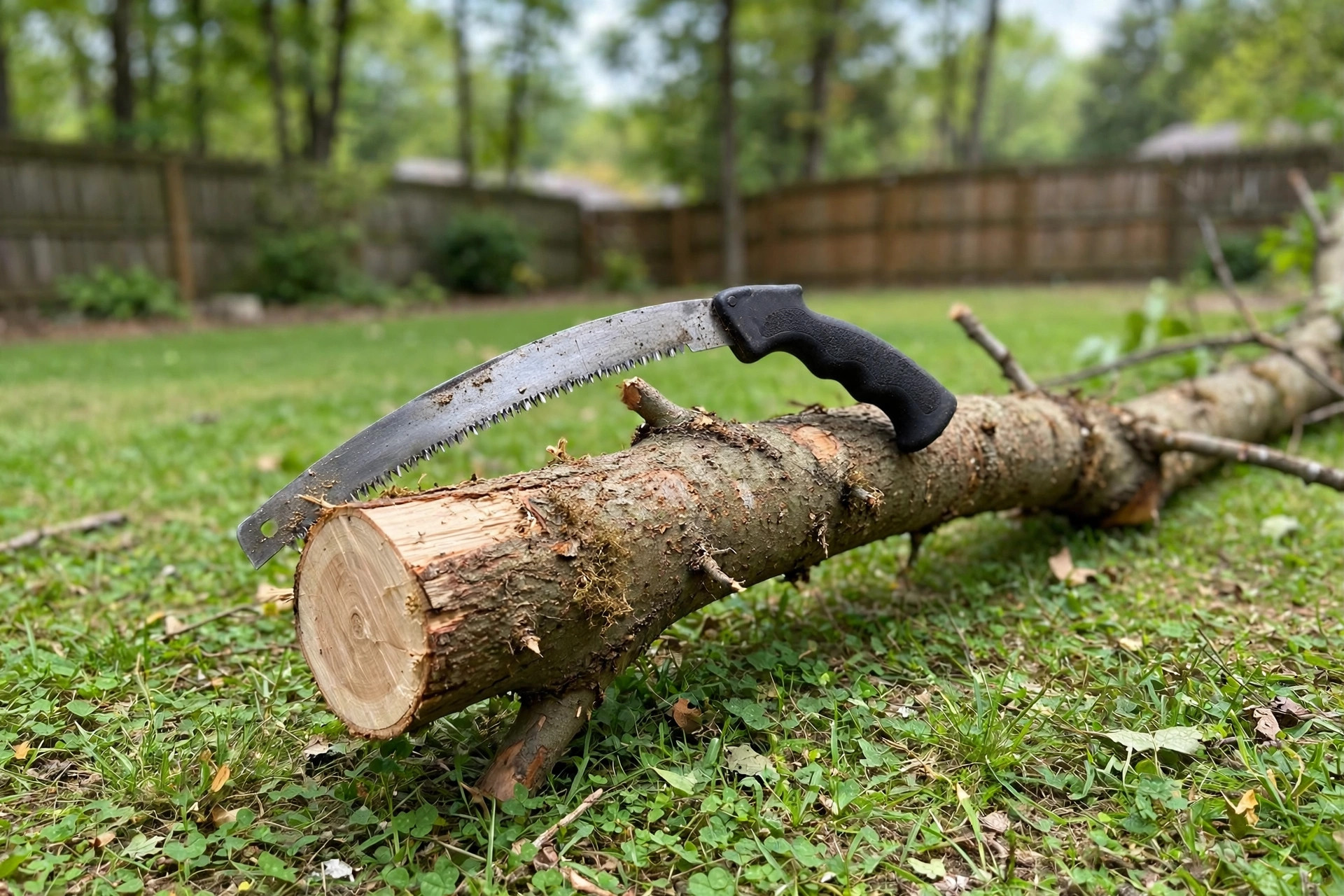

A thick branch hangs too low over the fence, or it rubs the roof of the shed. A pair of hand pruners will not cut it. The branch is too wide for the jaws. What you need is the best pruning saw for thick branches. A good pruning saw cuts through limbs of three, four, or six inches with steady strokes and little effort. It leaves a clean wound that heals fast. It keeps the tree healthy and the yard safe.
This guide explains what makes a pruning saw work well on thick wood. It covers blade types, tooth patterns, and handle styles. It covers price, care, and safety. By the end, you will know which saw fits your trees and your strength.
Why the Right Saw Matters for Thick Branches
Trees grow fast. Storms break weak limbs. Dead wood invites disease. When a limb grows thicker than an inch, hand pruners struggle. They crush the wood instead of cutting it. A crushed cut heals slowly. Fungi and insects enter the wound. A pruning saw leaves a flat, smooth surface. The tree seals the wound with new growth.
The best pruning saw for thick branches also protects the person doing the work. Thick branches often grow high up or in tight forks. A dull or wrong tool forces you to push hard. Hard pushing leads to slips. Slips lead to cuts. A sharp saw with the right tooth pattern pulls through wood on its own weight. You guide it. You do not fight it.
Good pruning also shapes the tree. A clean cut near the branch collar lets the tree form a ring of healing tissue. A ragged tear leaves a long scar. Over the years, a scar weakens the limb. It may break in wind. Pruning with the right saw is not vanity. It is maintenance. Like the right pruning shears for rose bushes, a good saw is the tool that matches the job.
What to Look For When Choosing a Pruning Saw: Best Pruning Saw for Thick Branches
Several features decide how well a saw handles thick wood. Each one matters more as branches grow thicker.
Blade length. For branches up to four inches, a blade of twelve to fifteen inches works well. Longer blades cut faster but are harder to control in tight spaces. Short blades fit between close limbs. Many owners of fruit and shade trees prefer a thirteen-inch blade as a middle ground.
Tooth pattern. Most pruning saws cut on the pull stroke. Teeth angled toward the handle bite into wood as you draw the saw toward you. Look for triple-ground teeth or impulse-hardened teeth. They stay sharp longer. On thick branches, teeth with wide gullets clear sawdust fast. Sawdust that packs into the cut slows the work.
Curved versus straight blade. A curved blade wraps around the branch. It keeps more teeth in contact with the wood. This helps on limbs wider than three inches. A straight blade suits close work and small cuts. For thick branches, the curved blade usually wins.
Handle comfort. A rubber grip with a slight curve keeps the hand from sliding when it is damp. A pistol grip gives leverage on the pull stroke. A straight handle suits overhead cuts. Hold the saw in the store if you can. A comfortable grip matters more than it seems. You will make many strokes on a thick limb.
Tapered or fixed design. Many pruning saws fold like a pocket knife. Folding saws are easy to carry up a ladder. Fixed-blade saws are stiffer. On thick branches, stiffness helps. The blade does not flex in the cut. If you mostly prune at ground level or from a low ladder, a fixed blade is fine. If you climb or carry the saw in a tool pouch, a folding model is safer to transport.
Pole saws for high branches. Some saws attach to a long pole. They reach limbs ten to fourteen feet up. If the thick branches are high, a pole saw saves you from climbing. Climbing with a saw is risky. A pole saw costs more but keeps both feet on the ground.
You can read more about tool maintenance in our guide on how to sharpen garden tools properly, which covers saws as well as blades.
Types of Pruning Saws for Thick Wood
Pruning saws come in several styles. Each fits a different branch size and work height.
Folding pruning saws. These are the most popular type for home owners. The blade folds into the handle. They are light and safe to carry. Most handle branches up to four inches. Quality folding saws cut on the pull stroke. They work well on apple, maple, and oak limbs. A thirteen-inch folding saw is a good first saw for most yards.
Fixed-blade pruning saws. The blade does not move. These saws feel solid in the hand. They suit ground-level work on trees with many thick branches. Some come with a scabbard that straps to the leg. They are a favorite of orchard workers.
Pole saws. A pruning saw head mounts on an extendable pole. Good models reach twelve to sixteen feet. The saw head often has a curved blade with a rope or a locking joint. Pole saws cut high dead limbs without a ladder. They need practice. The head swings at the end of a long pole. Short, controlled strokes work best.
Bow saws. The blade stretches between the ends of a metal bow. Bow saws are cheap and strong. They cut thick firewood and fallen limbs well. They are less handy for live pruning in tight crowns. The bow frame can catch on nearby branches. Still, for cutting thick dead wood at ground level, a bow saw earns its keep.
Chain saws versus hand saws. For branches wider than six inches, many people reach for a chain saw. A chain saw is fast but loud and dangerous. A sharp pruning saw handles most home pruning without fuel, noise, or kickback. On branches between three and six inches, a hand pruning saw is often the wiser choice.
Garden suppliers like Burpee and Gardener’s Supply carry a range of saws and explain which type suits common home tasks.
Cost and Price of Pruning Saws
Prices vary with blade quality and brand. A basic bow saw costs under twenty dollars. It will cut thick dead wood for years with little care. A mid-range folding pruning saw costs twenty-five to sixty dollars. Most home owners are happy in this range. These saws have impulse-hardened teeth and comfortable grips.
Professional saws cost sixty to one hundred and fifty dollars. They use harder steel. The teeth stay sharp through hundreds of cuts. Tree care workers buy these because they prune all day. A home owner with many trees may find the extra cost worth it. One good saw outlasts three cheap ones.
Pole saws cost forty to one hundred and twenty dollars. Telescoping poles with good locking joints cost more. Replacement blades cost ten to thirty dollars. Some folding saws take replacement blades. This is a good feature. You replace the blade, not the whole tool.
Retailers such as Lowe’s and The Home Depot list many models with prices, so you can compare before you buy.
Do not buy on price alone. A twenty-dollar saw that binds in the cut costs more in time and pain. Look for teeth that are impulse hardened. Read the weight. A saw under one pound is easier to use overhead. Check the warranty. Good makers stand behind their blades.
Care and Upkeep of Your Pruning Saw
A pruning saw lasts longer with simple care. Thick branches wear teeth faster than thin twigs. A few habits keep the blade cutting true.
Clean after each use. Sap sticks to blades. It hardens and dulls the cut. Wipe the blade with a rag damp with rubbing alcohol or soapy water. Dry it fully. A dry blade does not rust.
Oil the blade. A light coat of camellia oil or mineral oil guards against rust. Pay attention if you store tools in a damp shed. Rust pits the teeth. Pitted teeth tear wood.
Keep teeth sharp. Most modern pruning saw teeth are impulse hardened and cannot be filed. When they dull, replace the blade. Some older saws take a file. Our article on how to sharpen garden tools properly explains which blades can be sharpened and which should be replaced.
Store in a scabbard. A blade left loose in a toolbox loses teeth on other tools. A scabbard protects the edge and your hands. Hang the saw where air moves. Damp corners breed rust.
Disinfect between trees. If you cut diseased wood, wash the blade with diluted bleach or alcohol before the next tree. Disease travels on saw teeth. This step takes a minute and saves trees.
Practical guides at Family Handyman and Bob Vila show simple cleaning routines for hand tools.
Safety When Cutting Thick Branches
Thick branches are heavy. A falling limb can hurt people, pets, and fences. Safety starts before the first cut.
Plan the fall. Look at the branch. See where it will drop. Move lawn chairs, pots, and people out of the zone. Tie a rope to long branches if they hang over a roof or walkway.
Use the three-cut method. Never cut a thick branch in one stroke from the top. The weight will split the wood and tear bark down the trunk. First, cut a notch on the underside, about a foot from the trunk. Cut one third through. Second, cut from the top, a few inches farther out. The branch breaks at the notch and falls clean. Third, cut the stub back to the branch collar. This method protects the tree and keeps the fall controlled.
Wear protection. Safety glasses stop sawdust and chips. Gloves guard against blisters and splinters. A hard hat helps when cutting overhead. Sturdy boots protect feet from dropped wood.
Mind the ladder. If you must climb, use a ladder with a wide base on firm ground. Never lean a ladder against the branch you are cutting. Keep the saw sheathed while you climb. Work with a partner if you can. One person holds the ladder. The other saws.
Watch for power lines. Branches near service lines are not a do-it-yourself job. Call the power company or a licensed tree service. Electricity kills. No pruning job is worth the risk.
Know your limits. If a branch is wider than six inches, high in the tree, or over a structure, hire a certified arborist. A professional has ropes, saws, and training. The cost is less than a hospital bill or a roof repair.
Consumer testers at Consumer Reports and saw makers like Corona and Fiskars publish safety advice worth reading before your first large cut.
Frequently Asked Questions
What size branch needs a pruning saw instead of loppers? Loppers handle branches up to about two inches. Beyond two inches, a pruning saw gives a cleaner cut with less effort. The best pruning saw for thick branches earns its place once limbs reach three inches and wider.
Should I cut on the push stroke or the pull stroke? Most modern pruning saws cut on the pull stroke. Draw the saw toward you with steady pressure. Let the teeth do the work. Pushing hard bends thin blades and wastes energy.
How thick a branch can a hand pruning saw cut? A good folding saw cuts branches up to four or five inches. Fixed-blade saws and bow saws handle six inches or more. Above that, many people use a chain saw or call a professional.
Do curved blades really cut faster? On thick branches, yes. The curve holds more teeth against the wood through the stroke. On thin twigs the difference is small. For limbs wider than three inches, a curved blade cuts noticeably faster.
How do I keep a cut from tearing the bark? Use the three-cut method described above. The undercut stops the tear. The final cut goes just outside the branch collar, the swollen ring where limb meets trunk. Do not leave a long stub. Do not cut flush into the collar.
How often should I replace the blade? When the saw starts to bind or needs extra force, the teeth are dull. With regular home use, a quality blade lasts several years. Heavy use on hard wood wears it faster. Replacement blades cost far less than a new saw.
More pruning advice appears in our guide to how to prune tomato plants properly, and general tool tips are easy to find at The Spruce.
A Short Final Word
The best pruning saw for thick branches is the one that fits your trees, your reach, and your hands. A curved folding saw with a thirteen-inch blade covers most home needs. Keep it clean. Keep it sharp. Respect the weight of the wood. Cut with the three-cut method and put safety first. Your trees will heal faster, and the work will feel easier than you expect.
References
Bob Vila. (n.d.). Home improvement advice. https://www.bobvila.com Burpee. (n.d.). Seeds, plants, and gardening supplies. https://www.burpee.com Consumer Reports. (n.d.). Product reviews and ratings. https://www.consumerreports.org Corona Tools. (n.d.). Garden and landscape tools. https://www.corona-tools.com Family Handyman. (n.d.). DIY home repair and maintenance. https://www.familyhandyman.com Fiskars. (n.d.). Garden and cutting tools. https://www.fiskars.com Gardener’s Supply Company. (n.d.). Gardening tools and supplies. https://www.gardeners.com Lowe’s. (n.d.). Home improvement products. https://www.lowes.com The Home Depot. (n.d.). Home improvement products. https://www.homedepot.com The Spruce. (n.d.). Home and garden advice. https://www.thespruce.com
Was this guide helpful?

About Jennifer Lee
The My Garden US editorial team writes practical, in-depth home and garden guides for American homeowners — tested advice, no fluff.
You May Also Like

How to Attract Pollinators to Garden: A Practical Guide
October 1, 2026 0 views
Best Garden Knife for Harvesting Reviews: What Buyers Say and What Matters
July 27, 2026 0 views
How to Start Seeds Without Grow Light: A Plain Guide
February 9, 2026 0 views