A glass of good wine tastes better when it is served at the right temperature. In a Florida kitchen, that can be hard to do. The heat is strong most of the year, and a bottle left on the counter warms up fast. Many home owners now choose under counter wine fridges for Florida homes USA to solve this problem. These units slide under the kitchen counter, out of sight, and hold every bottle at a steady, cool temperature. This guide explains what these fridges are, why they matter in a warm state, what to look for when you buy one, and how to keep one running well for years.
Why Under Counter Wine Fridges Matter in Florida Homes
Florida is hot. Summers are long, and even the winter months can feel mild. Wine does not like heat. When a bottle sits in a warm room, the cork can dry out, and the flavor can fade. Some wines are ruined after only a few weeks of heat. A regular refrigerator is too cold and too dry for long storage. That is where an under counter wine fridge helps.
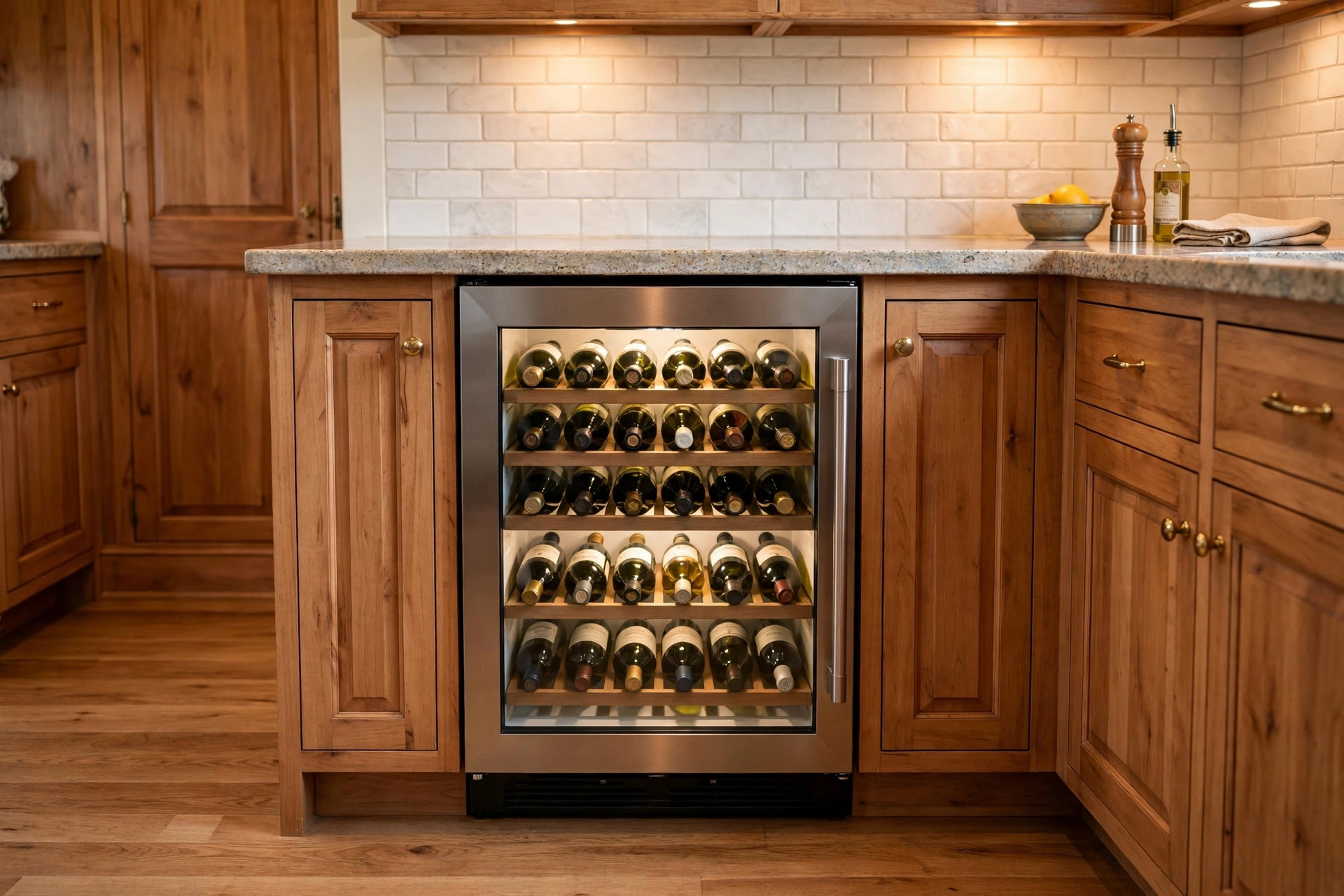
An under counter wine fridge is a small cooler made to fit under a standard kitchen counter. It keeps wine at a steady cool temperature, often between 45 and 65 degrees. It also keeps the air moist enough to protect the cork. Because it sits under the counter, it saves floor space. In a Florida home, where the kitchen is the center of daily life, a built-in unit feels neat and tidy.
Many Florida families enjoy wine with dinner, at parties, and on holidays. A built-in wine fridge keeps the bottles close to the table. There is no need to walk to the garage or the pantry. The bottles are cold and ready. For this reason, under counter wine fridges for Florida homes USA have become a common sight in new kitchens across the state.
What to Look for When You Choose One: Under Counter Wine Fridges Florida Homes Usa
Buying a wine fridge is not hard, but a few details matter. The advice from appliance guides at Consumer Reports can help you compare models side by side. Think about the points below before you buy.
Cooling System
Most under counter wine fridges use compressor cooling. This is the same system found in a regular refrigerator. It is strong and works well in warm rooms. That matters in Florida, where the kitchen can stay warm all day. Some small units use thermoelectric cooling instead. These are quiet and need less power, but they do not cool as hard in a hot room. For most Florida homes, a compressor model is the safer choice. You can read more about how cooling systems differ in the home guides at Bob Vila.
Size and Fit
Standard under counter units are about 15, 18, or 24 inches wide. They fit the same space as a dishwasher or a small cabinet. Measure your opening before you shop. Leave room for air to move around the unit. Most built-in models vent from the front, so they can sit flush with your cabinets. Check the depth too, so the door can open all the way without hitting an island or a stool.
Single Zone or Dual Zone
A single-zone fridge keeps one temperature throughout. That is fine if you drink mostly red or mostly white wine. A dual-zone fridge has two sections at different temperatures. You can keep whites colder in one zone and reds milder in the other. If your household enjoys both kinds, a dual-zone unit is worth the extra cost. The wine storage tips at The Spruce explain how serving temperature affects taste.
Capacity
Capacity is counted in bottles. Small units hold 15 to 20 bottles. Larger 24-inch units hold 40 to 60 bottles. Think about how many bottles you buy at one time. Also think about holidays and parties, when you may stock up. It is better to have a little extra room than too little. Wine collections tend to grow.
Noise and Vibration
The compressor will make some sound when it runs. In an open Florida floor plan, where the kitchen joins the living room, noise matters. Look for a unit rated at low decibels. Vibration matters too. Strong shaking can disturb wine over time. Good units have shelves that absorb vibration and a compressor mounted on soft mounts.
Types and Options
Not every under counter wine fridge is the same. The main types are listed below.
– Built-in units. These vent from the front and fit flush under the counter. They look like part of the kitchen. Most Florida kitchen remodels use this type. – Freestanding units. These need space on the sides and back for air flow. They can stand alone, but they should not be squeezed tight under a counter. – Glass-door models. A glass door with a UV filter lets you see the bottles without opening the door. This is handy, but make sure the glass blocks light. Florida kitchens get strong sun, and light can harm wine. – Solid-door models. A solid door hides the bottles and blocks all light. It looks clean and simple. Some people prefer this style in a classic kitchen.
Many brands sell these units, and you can compare current options at Lowe’s. Appliance makers such as Bosch, Whirlpool, and GE Appliances also offer built-in cooling lines worth a look.
When you plan the kitchen around the new unit, it helps to think of the whole room. New lights can make the bar area feel warm and inviting, as shown in this guide to kitchen island hanging lights. The floor under and around the unit takes daily traffic too, so a durable surface matters; see this guide to vinyl plank flooring. And the wall behind the counter can be finished to match the rest of the kitchen with kitchen backsplash tiles.
Cost and Price
Under counter wine fridges for Florida homes USA come at many prices. A small single-zone unit can cost between 300 and 600 dollars. A mid-range 24-inch dual-zone model often costs between 700 and 1,500 dollars. High-end models with wood shelves, smart controls, and premium finishes can cost 2,000 dollars or more.
Installation adds to the cost. If your kitchen already has a 24-inch opening with an outlet, a handy home owner can slide the unit in. If you need a cabinet cut or a new outlet, hire a professional. That work can add 200 to 500 dollars. Florida homes with older wiring may need an electrician to add a proper grounded outlet. The repair and install guides at This Old House show what is involved in such cabinet work.
Do not forget the running cost. A wine fridge uses power all day and night. An energy-efficient model costs less to run. Check the yellow Energy Guide label before you buy. The advice at ENERGY STAR can help you pick a unit that wastes less power. In a hot Florida garage or sunroom, an inefficient unit will run longer and cost more each month.
Retail prices change often, so it is wise to shop around. You can check prices and stock at The Home Depot and compare them with local dealers.
Care and Upkeep
A wine fridge needs little care, but regular small steps keep it running well.
First, clean the door seal. Wipe the rubber seal with a damp cloth every few months. A clean seal keeps cold air inside. If the seal is cracked or loose, replace it. A bad seal lets warm Florida air leak in, and the unit will run too long.
Second, clean the coils or vents. Dust builds up on the front vent. Vacuum it gently twice a year. Good air flow keeps the compressor from working too hard.
Third, check the temperature. Place a small thermometer inside and check it once a month. If the reading drifts from the setting, the unit may need service. In Florida heat waves, keep an eye on the room temperature too. Most units work best when the room stays below 90 degrees.
Fourth, do not overload the shelves. Bottles need air space around them. Overloading blocks air flow and makes cooling uneven. Wooden shelves can be wiped with a dry cloth. Avoid strong cleaners near the wine.
Fifth, keep the unit level. If the fridge tilts, the door may not close right. Use a small level tool and adjust the feet until the unit sits flat.
Safety
Wine fridges are safe when they are installed and used with care.
Plug the unit into a grounded outlet. Do not use a long extension cord. The compressor draws power when it starts, and a thin cord can get hot. If the outlet is far from the unit, have an electrician add a new one nearby.
Keep the front vent clear. Do not stack boxes or bags against it. Blocked vents can cause the unit to overheat. In Florida, where the air is already warm, blocked air flow is a real risk.
Keep the door locked if you have small children. Many units have a child lock. Glass doors can break if a child pulls or pushes too hard. Store corkscrews and other sharp tools out of reach.
If you smell burning or hear loud grinding, unplug the unit and call for service. Do not open the back panel yourself. Compressors hold gas under pressure, and only a trained person should handle them.
Frequently Asked Questions
How cold should an under counter wine fridge be in a Florida home? Most wines store best between 45 and 65 degrees. Keep whites and sparkling wines near 45 to 50 degrees. Keep reds near 55 to 65 degrees. Set the unit in the middle if you store both kinds. In summer, check the setting more often, since the room is warmer.
Can I put a wine fridge in a Florida garage? It depends on the heat. Many garages in Florida reach 100 degrees in summer. Most wine fridges are rated for rooms up to about 90 degrees. Above that, the unit may not keep the set temperature. If your garage is hot, keep the fridge inside the house instead.
How long do under counter wine fridges last? A good unit lasts 8 to 12 years with basic care. Compressor models often last longer than thermoelectric ones. Keeping the vents clean and the seal tight adds years to the life of the unit.
Do wine fridges use a lot of power? No, most use less power than a full-size refrigerator. A typical unit uses about as much power as a small dorm fridge. In a hot room, it will run longer, so the bill will be a bit higher in summer. An efficient model keeps the cost low.
Can I store beer and soda in my wine fridge? Yes, you can, but the temperature is a trade-off. Beer tastes best colder than most red wine. If you mix drinks, set the unit a little colder and drink your reds soon after opening. A dual-zone unit solves this: keep beer in the cold zone and reds in the mild zone.
Do I need a plumber or an electrician to install one? Most units need no water line, so no plumber is needed. You do need a standard outlet nearby. If there is no outlet in the cabinet space, call an electrician. Cutting cabinets or trim is carpenter work. Many home owners hire one pro for the whole job.
A Final Word
Under counter wine fridges for Florida homes USA are a simple way to keep wine at its best in a hot state. They save space, they look clean, and they keep every bottle at the right temperature all year. Choose a compressor model for warm rooms, measure your space with care, and pick a size that fits your habit. Clean the vents, check the seal, and the unit will serve you for many years. Whether you keep a few favorite bottles or a full collection, the right fridge makes every pour better.
References
Bob Vila. (n.d.). Home improvement advice. https://www.bobvila.com Bosch. (n.d.). Home appliances. https://www.bosch-home.com Consumer Reports. (n.d.). Product reviews and ratings. https://www.consumerreports.org ENERGY STAR. (n.d.). Energy efficient products. https://www.energystar.gov GE Appliances. (n.d.). Kitchen and home appliances. https://www.geappliances.com Lowe’s. (n.d.). Home improvement products. https://www.lowes.com The Home Depot. (n.d.). Home improvement products. https://www.homedepot.com The Spruce. (n.d.). Home and garden advice. https://www.thespruce.com This Old House. (n.d.). Home renovation guidance. https://www.thisoldhouse.com Whirlpool. (n.d.). Home appliances. https://www.whirlpool.com
Was this guide helpful?

About James Carter
The My Garden US editorial team writes practical, in-depth home and garden guides for American homeowners — tested advice, no fluff.