
When the first warm days of spring arrive, one question returns to every home with central air: what will the ac tune up cost near me spring 2026 run? A spring tune up is a routine visit from a heating and cooling company. A trained tech checks, cleans, and tests the whole system before the hot season starts. It is not a repair visit. It is care done on purpose, while the unit still works fine. This guide explains the price range most homes see, what the visit includes, and how to find fair deals in your own town. You will also learn what raises the bill, what plans are worth buying, and which small jobs you can handle on your own.
Why a Spring Tune Up Matters
An air conditioner works harder than almost any other home machine. It runs for months without a break, pulling heat from the house and pushing it outside. Dust builds up on coils. Screws shake loose. Refrigerant levels drift. Small drains clog. None of this stops the unit at once. It just makes it work harder, cost more to run, and wear out sooner.
A spring tune up finds these small problems early. The tech looks at parts you never see and tests readings you never check. The U.S. Department of Energy explains that regular maintenance keeps systems at their rated efficiency, and neglect can cut efficiency by a meaningful share (energy.gov). That loss shows up in the electric bill every month.
There is a second reason to book in spring. Contractors are less busy in March and April than in July. Many shops run spring special prices to fill their books. You also beat the rush. When the first heat wave hits, wait times for service can stretch to days. A spring visit means cool air from day one.
Goodman notes that many equipment warranties ask for regular professional maintenance (goodmanmfg.com). Skipping yearly service can void that coverage. For a system that cost thousands of dollars, one missed visit is a poor trade.
What a Full AC Tune Up Includes: Ac Tune Up Cost near Me Spring 2026
Not every company defines a tune up the same way. Before you agree to a price, ask what the visit covers. A solid full tune up should include these steps.
First, the tech checks the refrigerant level and pressure. Low refrigerant means poor cooling and extra strain on the compressor. The compressor is the most costly part to replace, so this check matters most.
Next comes cleaning. The indoor evaporator coil and the outdoor condenser coil both get dirty. Dirty coils cut heat transfer and force longer run times. The tech also clears the condensate drain line, which carries away water pulled from the air. A clogged drain can flood a basement or a closet.
Electrical parts get a close look too. The tech inspects the contactor, capacitors, wiring, and breakers. Weak capacitors are a top cause of summer failures. Tightening loose lugs and testing voltage takes minutes and stops many breakdowns.
Airflow is measured as well. The tech checks the blower motor, the filter condition, and the temperature drop across the coil. A healthy system usually drops air temperature by about fifteen to twenty degrees as it passes through. If the drop is far off, the tech looks for the cause.
Finally, the thermostat is tested. The tech makes sure it calls for cooling, reads true room temperature, and runs the system through a full cycle. Some visits include a written report with readings. Ask for one. It gives you a record to compare year to year.
How to Find the AC Tune Up Cost Near Me for Spring 2026
The phrase “near me” matters because prices vary by town. Labor rates in a big coastal city can run far above those in a small inland town. A call placed in spring 2026 may also catch seasonal offers. Here is how to find your local price.
Start with three calls. Ring three local heating and cooling companies and ask the same question: what is your spring tune up price, and what does it include? Write down both the price and the list of steps. Two companies at the same price may offer very different visits.
Ask about spring specials. Many shops post coupons for March through May. Some cut ten to twenty percent off the standard tune up price. Others bundle the visit with a free filter or a discounted plan. Trane publishes seasonal maintenance tips and often lists dealer offers through its dealer network (trane.com).
Check large review sites for local pricing threads, but take them with care. A price quoted online two years ago may not hold today. Ask neighbors too. Word of mouth still finds honest shops.
Finally, ask each company about its service agreement. Many shops charge less per visit if you sign a yearly plan. For one system, a plan often costs less than two single visits. See the section below on plan types before you sign.
For homes with ductless systems, a yearly service visit works much the same way. If you want price context for those units, read our guide to mini split maintenance cost.
What Drives the Price Up or Down
Most homeowners pay between about one hundred and two hundred dollars for a single spring tune up. The exact number depends on several factors.
System type. A basic central air unit is the cheapest to service. Heat pumps cost a bit more because the tech checks both heating and cooling modes. If you are weighing new equipment, our look at heat pump installation cost can help you plan.
System age and size. Older units take longer to check. Larger homes need larger units with more coils and more refrigerant to test. Both add time, and time adds cost.
Location. Labor rates set the floor. Urban shops with high overhead charge more than rural ones. Some states require special licenses, which also shows up in the rate.
Extra parts. The tune up price covers labor and basic cleaning. If the tech finds a weak capacitor or a clogged filter, those parts cost extra. Ask for the price before the tech installs anything.
Plan versus one visit. A one-time visit is the most costly per visit. Yearly plans bring the per-visit price down. Some plans also include priority scheduling and small repair discounts.
Time of booking. Spring specials run lower than peak summer rates. Booking early in the season is one of the simplest ways to save.
Types of Tune Up Plans and Options
Shops sell three common plan types.
The single visit is a one-time tune up with no contract. You pay the full posted price. This suits renters, new buyers waiting to learn their system, or anyone who wants to test a company before committing.
The yearly plan covers one tune up per year, usually in spring. It often includes priority booking and a small discount on repairs. For one central air system, this is the most common choice in the country.
The two-visit plan covers spring and fall. The spring visit handles cooling. The fall visit handles the furnace or heat pump heating side. Homes with a full heating and cooling setup benefit most. Two visits cost more than one, but the per-visit price is usually lower.
A few shops sell monthly club plans. These spread the cost over twelve months and add perks like free filters or no trip fees. Read the fine print. Some clubs renew on their own and are hard to cancel. A plan that renews without a reminder is not a deal.
Lennox maintains a dealer finder that can point you to local shops offering maintenance agreements (lennox.com). Compare the plan price against the single-visit price before you sign. If the plan costs more than the single visit with no added value, skip it.
Care and Upkeep Between Visits
A spring tune up is not the whole story. Small jobs between visits keep the system running well and stretch the years between costly repairs.
Change the air filter on schedule. A clogged filter cuts airflow and raises energy use. Most homes need a new filter every one to three months during cooling season. Mark it on the calendar. ENERGY STAR reminds homeowners that a clean filter is the simplest efficiency step of all (energystar.gov).
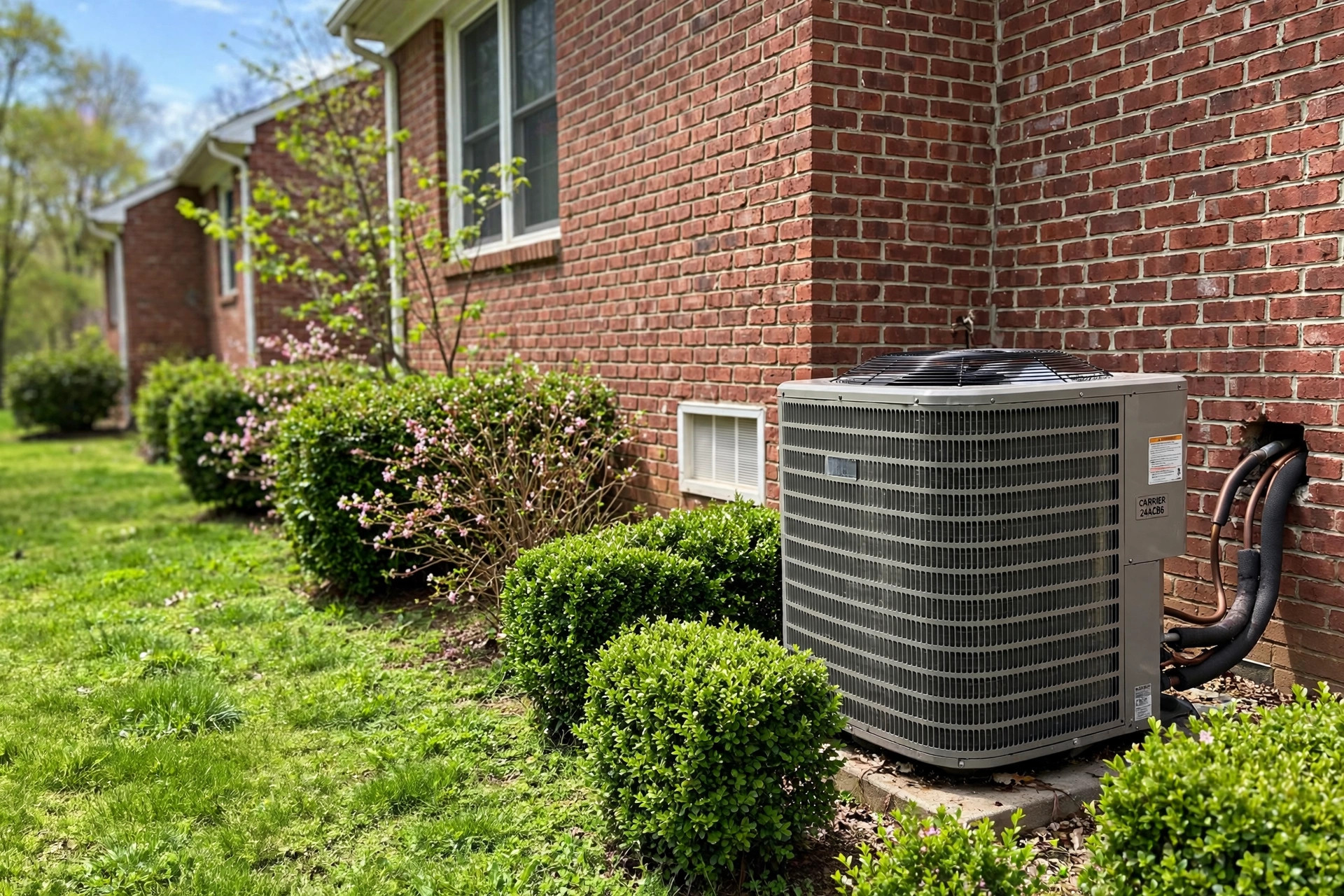
Keep the outdoor unit clear. Leaves, grass clippings, and mulch pile up against the condenser. Clear at least two feet of space around it. Rinse the outside fins gently with a garden hose in spring. Never use a pressure washer. It bends the thin metal fins and blocks airflow.
Trim plants back from the unit. Bushes look nice near the house, but they block airflow when they crowd the condenser. Keep shrubs trimmed a few feet away.
Check the condensate drain. Pour a cup of white vinegar into the drain line opening each spring. This slows mold growth that causes clogs. If you see water pooling near the indoor unit, call for service rather than waiting.
Family Handyman has clear step-by-step guides for filter changes and condenser cleaning that a handy homeowner can follow safely (familyhandyman.com).
Safety Notes
Air conditioners run on high voltage and hold pressurized refrigerant. Some jobs belong to a licensed tech, and homeowners should leave them alone.
Do not open the electrical panel on the unit. Capacitors can hold a charge even with the power off. A shock from a capacitor can cause serious harm.
Do not handle refrigerant. Federal law limits refrigerant work to certified techs. Venting refrigerant into the air is illegal and harms the ozone layer.
Turn the power off at the breaker before any cleaning near the unit. The disconnect switch by the outdoor unit is not enough on its own. Use the breaker panel too.
Watch for warning signs between visits. Ice on the refrigerant lines, loud grinding or buzzing, and warm air from the vents all signal trouble. Shut the system off and call a pro. Running a struggling unit can turn a small fix into a major repair.
This Old House covers common safe homeowner checks and clearly marks where to stop and call a professional (thisoldhouse.com).
Frequently Asked Questions
How much should a spring AC tune up cost in 2026?
Most homes pay roughly one hundred to two hundred dollars for a single visit. Plans bring the per-visit price down. Prices above two hundred dollars are not unusual in high-cost cities or for older, larger systems. Always ask what the visit includes before you compare prices.
Is a spring tune up really needed every year?
Yes. Manufacturers and the Department of Energy both back yearly maintenance. It keeps efficiency up, catches small faults early, and protects the warranty on most new systems. Skipping a year or two rarely causes instant harm, but it raises running costs and shortens equipment life.
Can I do the tune up myself?
You can handle the easy parts: changing filters, clearing the outdoor unit, and rinsing the fins. Leave refrigerant checks, electrical tests, and coil deep cleaning to a licensed tech. A good middle path is to do the simple jobs and pay for a pro visit each spring.
What is the difference between a tune up and a repair visit?
A tune up is scheduled care on a working system. The tech checks and cleans everything and finds small issues early. A repair visit fixes a system that already fails. Tune ups cost less and take less time. They are meant to stop repair visits from happening.
Do heat pumps need a spring tune up too?
Yes, and many need a fall check as well since they heat in winter. A spring visit focuses on cooling mode. If your home uses a heat pump for both jobs, ask about a two-visit plan. For price context on zoned ductless setups, see our guide to ductless mini split installation cost per zone.
How long does the visit take?
A standard tune up takes about one to two hours. Older or dirty systems take longer. If the tech finishes in twenty minutes, the visit was likely rushed. Ask for the checklist or report so you know the work was done.
A Final Word
The ac tune up cost near me spring 2026 search is worth the few minutes it takes. A spring visit is one of the cheapest ways to protect one of the costliest machines in the home. Call three local shops, compare what each visit includes, and ask about spring specials. Then keep up the simple jobs between visits: change the filter, clear the outdoor unit, and watch for warning signs.
Rheem notes that well-maintained equipment runs quieter, cools more evenly, and lasts longer (rheem.com). Carrier echoes the point, with maintenance guides that walk through each step a tech performs (carrier.com). The money spent on a spring tune up comes back in lower bills, fewer breakdowns, and a system that is ready when the first hot day arrives. Book early, before the summer rush, and your home will be ready for the season.
References
Carrier. (n.d.). Heating and cooling systems. https://www.carrier.com ENERGY STAR. (n.d.). Energy efficient products. https://www.energystar.gov Family Handyman. (n.d.). DIY home repair and maintenance. https://www.familyhandyman.com Goodman. (n.d.). Heating and cooling equipment. https://www.goodmanmfg.com Lennox. (n.d.). Heating and cooling systems. https://www.lennox.com Rheem. (n.d.). Heating, cooling, and water heating. https://www.rheem.com This Old House. (n.d.). Home renovation guidance. https://www.thisoldhouse.com Trane. (n.d.). Heating and air conditioning. https://www.trane.com U.S. Department of Energy. (n.d.). Energy efficiency and renewable energy. https://www.energy.gov
Was this guide helpful?

About Robert Taylor
The My Garden US editorial team writes practical, in-depth home and garden guides for American homeowners — tested advice, no fluff.
You May Also Like
The Best Boiler for Radiant Floor Heat in the USA: A Plain Guide
July 23, 2026 0 views
Best Fire Pit for Backyard Reviews USA: A Plain Guide
August 9, 2026 0 views
Best Smart Ceiling Fan Reviews 2026 USA
July 27, 2026 0 views